

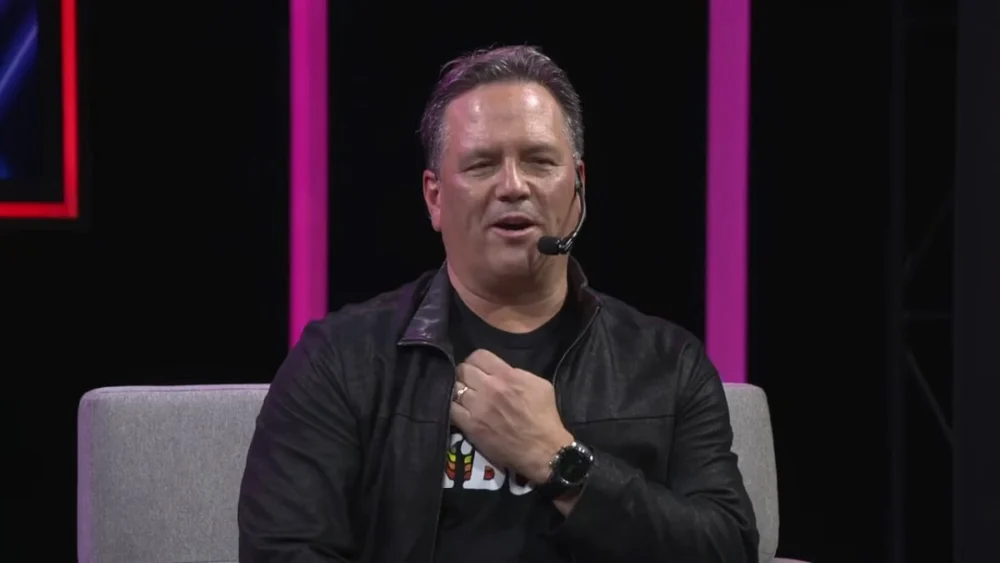
In a seismic shift at the helm of Microsoft’s gaming division, Phil Spencer, a veteran of Xbox for 25 years and its leader for over a decade, is set to retire as Chief Executive of Xbox. His departure marks the end of a transformative era for the brand, with Asha Sharma, currently the president of Microsoft’s CoreAI division, slated to take over the reins. Sharma, who joined Microsoft earlier in 2024, will assume the role of CEO of Microsoft Gaming, effective next Monday, February 23. This significant organizational change, first confirmed by anonymous sources to IGN and not yet officially announced to the public, positions artificial intelligence expertise at the forefront of Xbox’s future strategy.
Spencer’s retirement from the top position is structured to ensure a seamless transition. He will remain in an advisory capacity to Sharma until at least the summer, facilitating a comprehensive handover of responsibilities and institutional knowledge. This deliberate approach underscores the criticality of the Xbox division to Microsoft’s broader ecosystem and the importance of continuity during a period of significant strategic evolution for the gaming industry. Alongside Sharma’s appointment, Matt Booty, previously the head of Xbox Game Studios, will be promoted to Chief Content Officer (CCO), a newly created role that will see him work closely with Sharma to shape the creative direction and portfolio of Microsoft Gaming.
A Legacy Defined: Phil Spencer’s Transformative Tenure
Phil Spencer’s journey at Microsoft began in 1988, long before the advent of Xbox. He held various technical and leadership roles within the company, eventually becoming general manager of Microsoft Game Studios in 2008 and corporate vice president of Microsoft Studios in 2013. His ascension to Head of Xbox in March 2014 came at a pivotal and challenging time for the brand. The Xbox One, launched in late 2013, faced significant headwinds, including controversial policies regarding always-online requirements, used game restrictions, and a higher price point compared to its primary competitor, Sony’s PlayStation 4.
Spencer is widely credited with orchestrating a remarkable turnaround for the Xbox brand. Under his leadership, he pivoted the company’s focus back to gamers, reversing unpopular policies, and emphasizing player-centric initiatives. Key milestones during his tenure include the launch of Xbox Game Pass in 2017, a subscription service that revolutionized access to games and is often dubbed the "Netflix for games." Game Pass became a cornerstone of Xbox’s strategy, expanding its reach beyond console sales to PC and cloud gaming, and significantly growing its subscriber base to tens of millions globally.
Beyond Game Pass, Spencer championed a strategy of aggressive studio acquisitions to bolster Xbox’s first-party content. This included the purchase of Mojang (creators of Minecraft) in 2014, followed by a spree of acquisitions such as Ninja Theory, Playground Games, Obsidian Entertainment, and Double Fine Productions. The most monumental acquisitions under his watch were ZeniMax Media (parent company of Bethesda Softworks) in 2020 for $7.5 billion, and the colossal $69 billion acquisition of Activision Blizzard King, which concluded in late 2023 after extensive regulatory scrutiny. These moves dramatically expanded Xbox’s intellectual property portfolio, bringing iconic franchises like The Elder Scrolls, Fallout, Call of Duty, Warcraft, and Candy Crush under the Microsoft umbrella, positioning Xbox as a formidable content powerhouse.
Spencer also oversaw the introduction of new console generations, including the Xbox One X (a mid-generation refresh focused on 4K gaming) and the Xbox Series X|S in 2020, which emphasized raw power and innovative features like Quick Resume. His leadership style, characterized by transparency, approachability, and a genuine passion for gaming, earned him respect from both the industry and the player community. His efforts significantly diversified Xbox’s ecosystem, moving it beyond a console-centric model to a broader gaming platform accessible across multiple devices.
The Transition: Intentional Planning and Shared Vision
In an internal email to Microsoft staff, Spencer revealed that the idea of retirement had been discussed with Microsoft CEO Satya Nadella for some time. "From that moment, we aligned on approaching this transition with intention, ensuring stability, and strengthening the foundation we’ve built," Spencer wrote, emphasizing a planned and deliberate succession rather than an abrupt exit. This proactive planning highlights Microsoft’s commitment to a smooth leadership change at a critical juncture for its gaming division.
Spencer expressed profound confidence in Asha Sharma, stating, "Working with her over the past several months has given me tremendous confidence. She brings genuine curiosity, clarity, and a deep commitment to understanding players, creators, and the decisions that shape our future." He acknowledged the significance of this moment for fans, partners, and the internal team, reiterating Microsoft’s dedication to "getting it right." His commitment to advise Sharma until the summer further solidifies the notion of a carefully orchestrated handoff designed to minimize disruption and ensure continuity.
A New Era: Introducing Asha Sharma and Her Vision
Asha Sharma’s appointment signals a strategic pivot for Microsoft Gaming, bringing an executive with a strong background in product, engineering, and AI leadership to the forefront. Sharma joined Microsoft in 2024 as the president of the CoreAI division, a role that placed her at the heart of Microsoft’s overarching strategy to integrate AI across its products and services. Her rapid ascent to lead Microsoft Gaming underscores the company’s belief in the transformative potential of AI within the gaming landscape.
Prior to joining Microsoft, Sharma built an impressive career across several high-profile technology companies. At Meta, she served as Vice President of Product and Engineering, where she was instrumental in developing and scaling critical features for the social media giant. Her experience at Meta, particularly in managing complex product roadmaps and engineering teams for a vast user base, provides valuable expertise in scaling platforms and understanding user engagement at a massive scale. Before Meta, Sharma held a Chief Operating Officer (COO) position at Instacart, the leading online grocery delivery service, where she was responsible for operational efficiency, growth, and strategic initiatives. This blend of product development, engineering leadership, and operational management positions her uniquely to navigate the multifaceted challenges and opportunities within the gaming industry.
In her own internal email to Microsoft staff, Sharma outlined her immediate priorities and long-term vision for Xbox, emphasizing three core commitments. First and foremost, she pledged a renewed focus on "great games." "Everything begins here," Sharma asserted. "We must have great games beloved by players before we do anything. Unforgettable characters, stories that make us feel, innovative game play, and creative excellence. We will empower our studios, invest in iconic franchises, and back bold new ideas. We will take risks. We will enter new categories and markets where we can add real value, grounded in what players care about most." This statement reassures the gaming community that despite her AI background, the core artistic and creative elements of game development will remain paramount.
Her second commitment, "the return of Xbox," signals a renewed dedication to the brand’s loyal fanbase and its console heritage. "We will recommit to our core Xbox fans and players, those who have invested with us for the past 25 years, and to the developers who build the expansive universes and experiences that are embraced by players across the world," she wrote. "We will celebrate our roots with a renewed commitment to Xbox starting with console which has shaped who we are. It connects us to the players and fans who invest in Xbox, and to the developers who build ambitious experiences for it." This emphasis on the console, especially after recent discussions around Xbox games potentially going multiplatform, could be interpreted as a reaffirmation of the Xbox ecosystem’s distinct identity.
Finally, Sharma addressed the future of intellectual property and monetization, drawing a clear line against short-sighted strategies. She stated that Xbox would not approach its franchises as "static IP to milk and monetize," but rather focus on "build[ing] a shared platform and tools that empower developers and players to create and share their own stories." Crucially, she directly addressed the role of AI, asserting, "As monetization and AI evolve and influence this future, we will not chase short-term efficiency or flood our ecosystem with soulless AI slop. Games are and always will be art, crafted by humans, and created with the most innovative technology provided by us." This strong stance, coming from a leading AI executive, is designed to allay fears within the creative community about the potential for generative AI to dilute artistic integrity. It suggests a vision where AI serves as an innovative tool for creators, not a replacement for human artistry.
Strategic Implications and Broader Context
Sharma’s appointment, particularly from Microsoft’s CoreAI division, is a clear signal of Microsoft’s intent to deeply integrate artificial intelligence into its gaming strategy. While her statements emphasize human-crafted art, the underlying implication is that AI will play a significant role in enhancing development tools, improving player experiences (e.g., smarter NPCs, procedural generation, personalized content), optimizing backend operations, and potentially even shaping new game genres. This aligns perfectly with Microsoft CEO Satya Nadella’s overarching vision to position Microsoft as a leader in the AI revolution, making AI a fundamental layer across all its products, from Azure to Office to Xbox.
The promotion of Matt Booty to Chief Content Officer also reflects a strategic refinement. Booty, with his extensive experience in overseeing Xbox Game Studios, will now have an even more focused mandate on the creative output and quality of first-party titles. His close cooperation with Sharma suggests a dual leadership approach where Sharma drives the strategic and technological vision, while Booty ensures the delivery of compelling, high-quality gaming experiences. This structure aims to balance innovation with creative excellence.
For the gaming industry, this leadership change at Xbox will be closely watched. The brand has evolved significantly under Spencer, moving from a console-centric model to a broader gaming ecosystem encompassing PC, cloud, and subscription services. Sharma’s challenge will be to build upon this foundation while navigating increasing competition from Sony, Nintendo, and the burgeoning mobile and PC gaming markets. Her commitment to "the return of Xbox" and focus on consoles, combined with her AI expertise, could lead to innovative hardware or platform features that differentiate Xbox in the market.
Microsoft’s substantial investments in gaming, particularly the Activision Blizzard acquisition, have made it a dominant force. The integration of these new studios and IPs, alongside the ongoing growth of Game Pass, will be key areas of focus for Sharma. Her background in scaling products and managing large user bases will be invaluable in maximizing the potential of these assets.
Conclusion: A New Chapter for Xbox
Phil Spencer’s departure marks the end of an era defined by bold strategic shifts, a renewed focus on the player, and unprecedented growth through content acquisition. He leaves Xbox in a far stronger, more diversified position than he inherited. Asha Sharma’s arrival, fresh from Microsoft’s CoreAI division, signifies a new chapter where artificial intelligence is poised to become an even more integral part of Xbox’s future. Her initial commitments, balancing a reverence for human-crafted games with a forward-looking perspective on technology, suggest a vision for Xbox that seeks to innovate while honoring its legacy. The coming months, with Spencer’s advisory role facilitating a smooth handoff, will be crucial in defining the trajectory of Microsoft Gaming under its new leadership and its impact on the wider video game industry.