

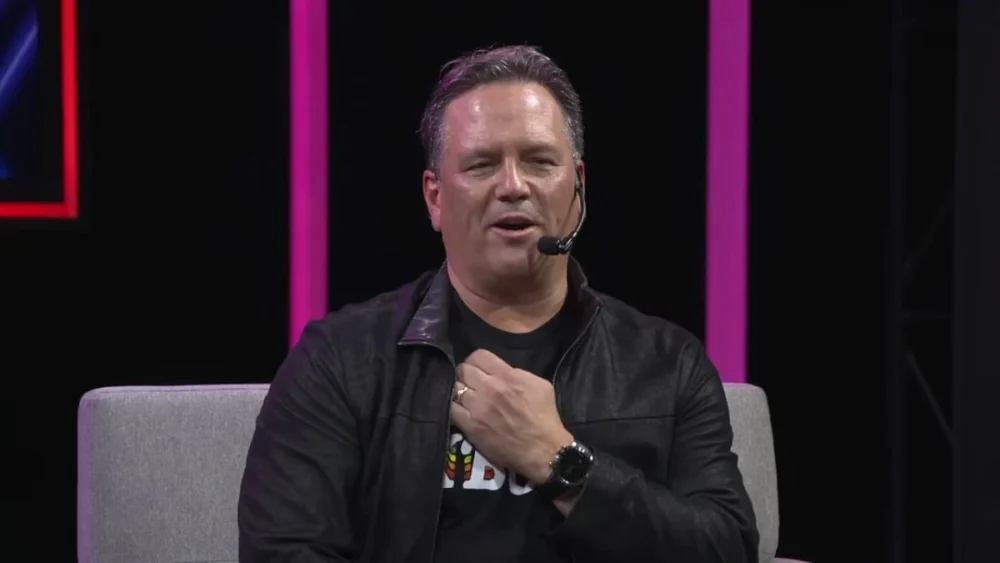
In a significant leadership transition for the gaming industry, Phil Spencer, the widely respected chief executive of Xbox, is set to retire from his role after an impactful 25-year career with the company and over a decade at the helm of its gaming division. The baton will be passed to Asha Sharma, currently the president of Microsoft’s CoreAI division, who joined the tech giant in 2024. This strategic shift, confirmed by anonymous sources familiar with the matter to IGN, signals a new era for Microsoft Gaming, with the official transition slated for February 23rd.
A New Chapter for Xbox Leadership
Spencer’s departure from the chief executive position at Xbox marks the end of an era. During his tenure, he has been instrumental in shaping Xbox’s identity, navigating challenging market dynamics, and fostering a more inclusive and player-centric approach to the brand. His influence has been felt across console development, subscription services like Xbox Game Pass, and the expansion of Xbox into PC gaming and cloud streaming.
While stepping down from the day-to-day operations, Spencer will not be entirely detached from the Xbox ecosystem. He is expected to remain in an advisory capacity to Asha Sharma until at least the summer, a move designed to ensure a seamless and stable transition of leadership. This period of mentorship is crucial for imparting institutional knowledge and maintaining continuity as Sharma assumes her new responsibilities.
Strategic Realignment and Key Appointments
The leadership shake-up extends beyond Spencer’s departure. Asha Sharma is slated to be appointed as the CEO of Microsoft Gaming, a role that will encompass the entirety of Microsoft’s gaming interests. In parallel, Matt Booty, the current chief of Xbox Game Studios, will be elevated to the newly created position of Chief Content Officer (CCO). This organizational adjustment suggests a sharpened focus on content development and strategic partnerships under Sharma’s leadership, with Booty playing a pivotal role in overseeing the creative output of Microsoft’s vast portfolio of game development studios. His close collaboration with Sharma is expected to be a cornerstone of the new leadership structure.
Spencer’s Farewell and Vision for the Future
In an internal communication to Microsoft staff, Spencer revealed that his decision to retire had been a long-considered one, a contemplation he had shared with Microsoft CEO Satya Nadella. "From that moment, we aligned on approaching this transition with intention, ensuring stability, and strengthening the foundation we’ve built," Spencer stated in his email. This indicates a planned and deliberate succession process, rather than an abrupt departure.
Spencer expressed strong confidence in Sharma’s ability to lead Xbox forward. "Working with her over the past several months has given me tremendous confidence," he remarked. "She brings genuine curiosity, clarity, and a deep commitment to understanding players, creators, and the decisions that shape our future. We know this is an important moment for our fans, partners, and team, and we’re committed to getting it right." His endorsement highlights Sharma’s perceived qualifications and her potential to build upon the existing strengths of the Xbox brand.
Asha Sharma’s Strategic Imperatives
Asha Sharma, in her own internal address to Microsoft employees, articulated a clear vision for her leadership. Her immediate priority, she stated, is to deeply understand the core mechanics that drive Xbox’s success and to safeguard them. She outlined three key commitments that will guide her tenure.
1. The Primacy of Great Games: Sharma emphasized that "great games" are the bedrock of Xbox’s success. This commitment entails fostering creativity and innovation within Microsoft’s studios, investing in established franchises, and supporting bold new intellectual property. Her vision extends to exploring new categories and markets where Xbox can offer genuine value, always prioritizing what matters most to players. This suggests a balanced approach, acknowledging the importance of both beloved legacy titles and the potential for groundbreaking new experiences.
2. Recommitment to the Xbox Identity: Sharma explicitly stated a renewed focus on the core Xbox player base, recognizing the loyalty of those who have been with the brand for decades, as well as the developers who create the immersive worlds enjoyed by gamers globally. A significant part of this recommitment involves a renewed appreciation for the Xbox console, acknowledging its foundational role in the brand’s identity and its direct connection to players and developers. This signals a potential emphasis on hardware innovation and the unique experiences that can be delivered through the console ecosystem.
3. A Future Rooted in Creation, Not Monetization: Perhaps the most striking aspect of Sharma’s message is her stance on the future of gaming and intellectual property. She declared that Xbox will not approach its franchises as mere "static IP to milk and monetize." Instead, the focus will be on "building a shared platform and tools that empower developers and players to create and share their own stories." This is a powerful statement against a trend of aggressive monetization and a clear endorsement of user-generated content and a more collaborative approach to game development and engagement.
Sharma further elaborated on this philosophy by addressing the evolving landscape of monetization and artificial intelligence. "As monetization and AI evolve and influence this future, we will not chase short-term efficiency or flood our ecosystem with soulless AI slop," she asserted. "Games are and always will be art, crafted by humans, and created with the most innovative technology provided by us." This stance directly contrasts with her background in AI, suggesting a nuanced understanding of AI’s potential as a tool for creative enhancement rather than a replacement for human artistry. It also positions Xbox as a champion of authentic, human-driven game development in an increasingly automated world.
Historical Context and Industry Impact
Phil Spencer’s leadership at Xbox began in 2014, a period when the brand faced considerable challenges. He inherited a division that had seen some missteps, including the initial controversial direction of the Xbox One console. Spencer’s tenure was characterized by a pragmatic and player-focused approach. He was a vocal advocate for cross-play, invested heavily in Xbox Game Pass, transforming it into a cornerstone of Microsoft’s gaming strategy, and played a key role in the acquisition of major studios like Bethesda and Activision Blizzard, significantly bolstering Xbox’s content library and market position. His departure comes at a time when Xbox is in a stronger competitive position than it has been in years, largely due to his strategic decisions.
Asha Sharma’s background, particularly her leadership roles at Meta as VP of Product and Engineering and her COO position at Intercart, equips her with extensive experience in product development, technological innovation, and large-scale operational management. Her recent transition into Microsoft’s CoreAI division suggests a forward-looking perspective on the role of artificial intelligence in various technological sectors. Her commitment to human-crafted games, while potentially surprising given her AI specialization, underscores a nuanced understanding of the creative process and the intrinsic value of art in gaming.
Analyzing the Implications
The appointment of Asha Sharma as CEO of Microsoft Gaming, coupled with Phil Spencer’s advisory role and Matt Booty’s promotion, signals a strategic evolution for the company. Sharma’s emphasis on "great games" and recommitment to the Xbox identity suggests a desire to solidify the core strengths of the brand while exploring new avenues. Her strong stance against exploitative monetization and "soulless AI slop" could position Xbox as a more principled player in an industry often criticized for prioritizing profit over player experience.
The significant investment in content, exemplified by the Activision Blizzard acquisition, will likely continue to be a focal point. Booty’s role as CCO will be critical in integrating these new studios and ensuring the continued delivery of high-quality titles. The focus on empowering developers and players to create their own stories also aligns with trends in the gaming industry, where community engagement and user-generated content are increasingly important.
However, the juxtaposition of Sharma’s AI background with her pronouncements on human-crafted art will undoubtedly be a subject of ongoing observation. It suggests that Microsoft views AI not as a replacement for creativity, but as a tool to augment and enhance it, potentially leading to new forms of game development and player interaction.
The transition period, with Spencer providing guidance, is crucial for ensuring that the established momentum of Xbox is maintained. His continued involvement, even in an advisory capacity, offers a degree of stability and continuity that can mitigate potential disruption. The industry will be watching closely to see how Sharma and her team navigate the competitive landscape, leverage their expanded content portfolio, and define the future of gaming under the Xbox banner. This leadership change represents not just a shift in personnel, but a potential recalibration of strategy and philosophy for one of the most influential entities in the global entertainment industry.