

The chilling premise of OBEY THE VOICE thrusts players into a stark white room, dominated by a whiteboard etched with four inviolable rules. Survival hinges on adherence, yet the environment is far from solitary. Whispers and conflicting directives fill the space, forcing players to question their trust when monstrous entities lurk just beyond the periphery. Developed by the same studio behind the disorienting IN THE FACADE WE TRUST, OBEY THE VOICE promises a similarly reality-bending experience, prompting an in-depth exploration of its narrative and symbolic elements.
Unveiling the Psychological Labyrinth
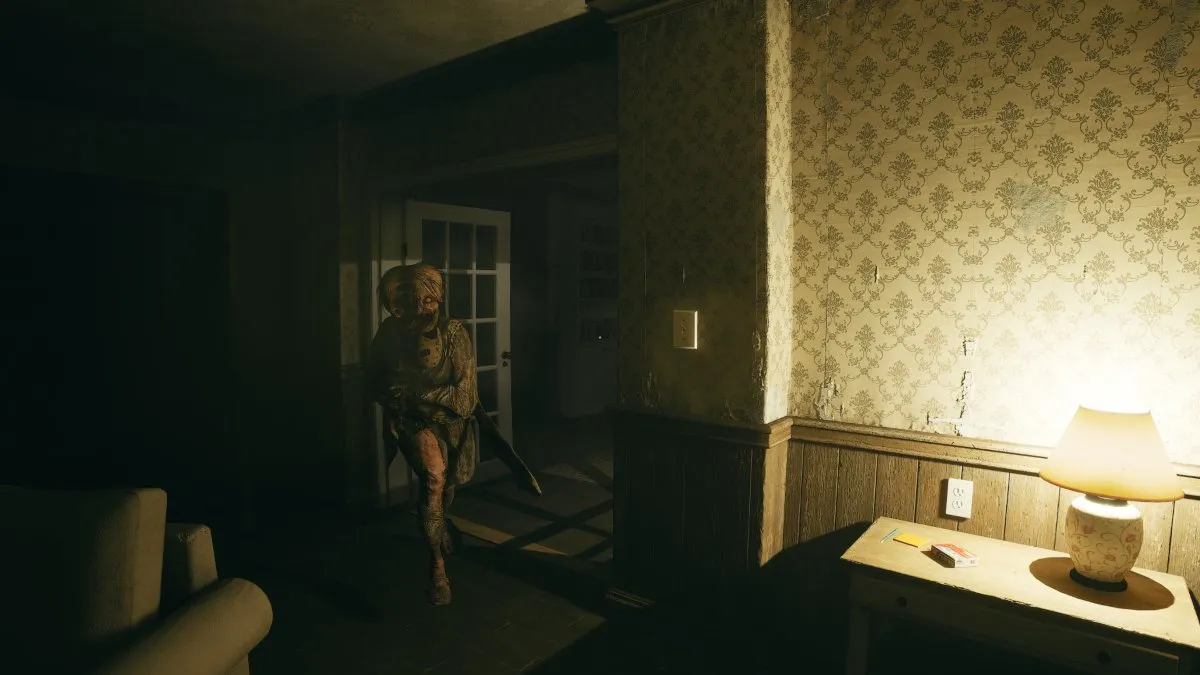
OBEY THE VOICE masterfully blends the mundane with the surreal, presenting environments that oscillate between sterile, clinical facilities and unnervingly familiar domestic spaces. This duality, reminiscent of psychological thrillers that question the nature of reality, creates a pervasive sense of unease. The game’s design, which juxtaposes the stark, rule-bound environment with the chaotic presence of monsters and deceptive voices, suggests an internal struggle rather than an external one. Players are not merely navigating a physical space; they are traversing the fragmented landscape of a troubled psyche. This approach draws parallels with acclaimed psychological horror titles that delve into the depths of human consciousness, such as Silent Hill 2, known for its allegorical monster design reflecting the protagonist’s inner turmoil.
The game’s aesthetic shares a clear conceptual lineage with the highly influential, albeit cancelled, Silent Hills P.T. demo. The recurring house layout, a staple of psychological horror that traps characters in a loop of dread, is a prominent feature. Beyond visual cues, OBEY THE VOICE weaves in psychological elements through environmental storytelling. Radio broadcasts offer cryptic hints about the protagonist’s fractured past, hinting at a traumatic incident that serves as the catalyst for the unfolding horrors. The monsters themselves are not random apparitions but manifestations of the protagonist’s psyche, a narrative device that imbues the game with profound thematic depth.
Deconstructing the Manifestations: A Bestiary of the Mind
The entities encountered in OBEY THE VOICE are not mere obstacles; they are potent symbols, each representing a facet of the protagonist’s mental state and his distorted perception of reality. Understanding these manifestations is key to unraveling the game’s narrative.
The "Hot and Cold" Entity: The Duality Within
The "Hot and Cold" entity presents a striking figure: restrained by a straitjacket, its head split in half, and wearing a restrictive mask. This entity is widely interpreted as the protagonist’s inner self, a representation of his internal conflict and the warring factions within his mind. The straitjacket and mask symbolize the protagonist’s perceived inability to control his violent impulses, suggesting that in the real world, he is seen as a danger to himself and others, necessitating such restraints. This visual metaphor speaks to a profound internal struggle for self-control, where opposing desires and thoughts battle for dominance.

"Spot the Difference": The Erosion of Identity
The appearance of mannequins and a shadowy figure in the "Spot the Difference" sequence points towards a loss of identity. The mannequins may represent the protagonist’s struggle to maintain a sense of self amidst his psychological fragmentation, while the shadowy figure could embody his fragmented and traumatic memories of the incident that led to his current state. This aspect of the game highlights the existential dread that accompanies a fractured sense of self, where one’s own memories and identity become unreliable and elusive.
"The Voice Says": Echoes of a Tragic Past
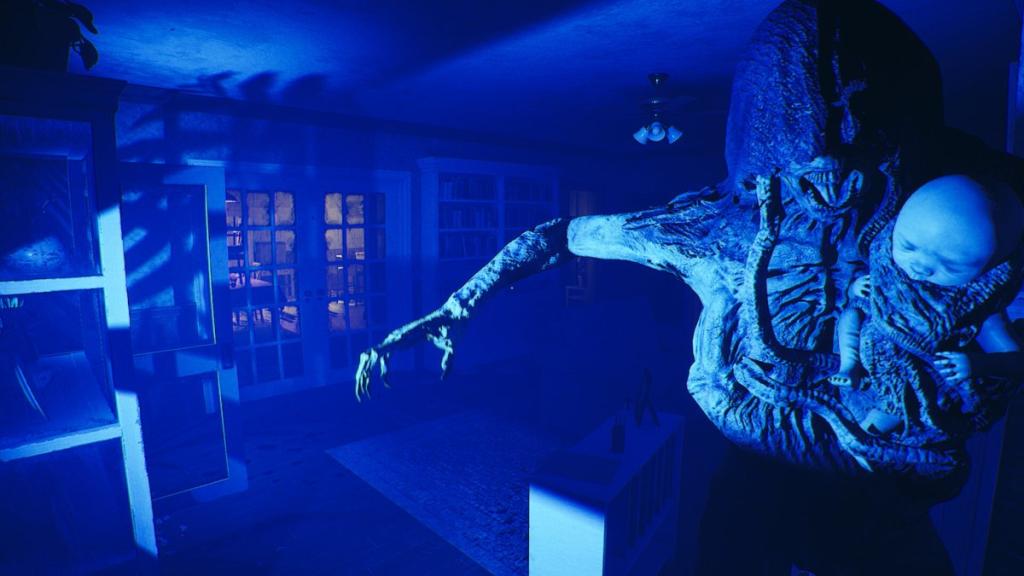
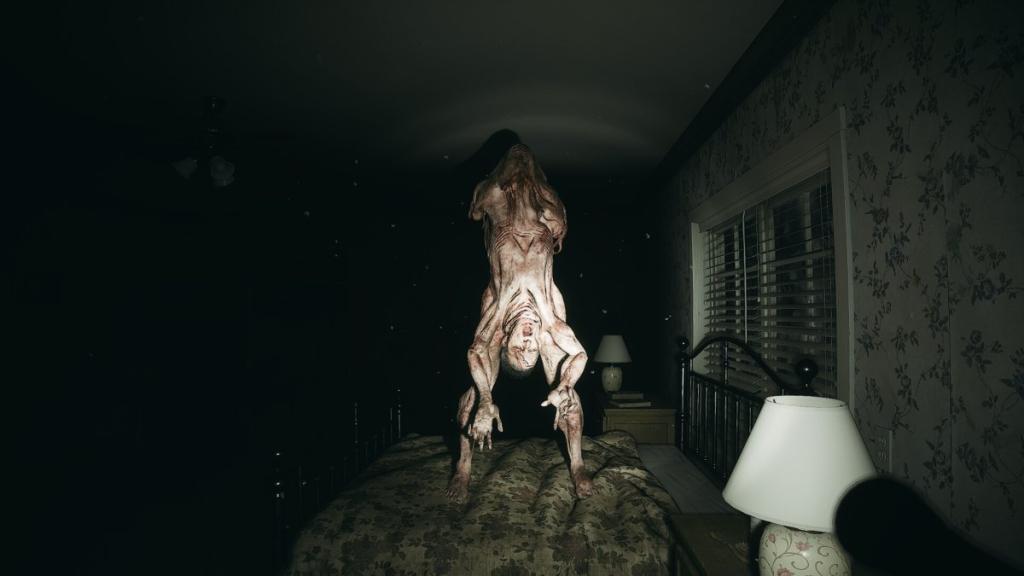
The "The Voice Says" level introduces a tall female figure with a fetus in her abdomen, a clear and harrowing representation of the protagonist’s mother. The narrative suggests she was murdered by her son, the protagonist, who stabbed her in the stomach. This entity’s limping gait and increasing speed when the player errs are symbolic of guilt and the inescapable nature of his past actions. This encounter serves as a direct and brutal reliving of the traumatic event, a twisted memory that haunts the protagonist’s subconscious. The visual of the mother carrying a fetus amplifies the tragedy, symbolizing the loss of innocence and the destruction of a family unit.
"Red Light Green Light": A Glimmer of Maternal Comfort
In the "Red Light Green Light" sequence, the mother entity reappears, but with a subtle yet significant alteration: her hands are fused to her stomach, positioned in an embrace. This detail is interpreted as a reference to the mother’s final moments, a desperate attempt to comfort her son even in the face of his horrific act. This small gesture of affection, distorted by the trauma, underscores the complex emotional landscape of the protagonist and the lingering impact of his mother’s love, even amidst the violence.
"Find the Melody": The Birth of a New Persona
The "Find the Melody" entity is a grotesque amalgamation, visible only through the flash of a camera. Its body is a fusion of two distinct human forms, with a new head and limbs seemingly emerging from the groin area, while the original remains dangling. This disturbing imagery is thought to represent the malevolent influence attempting to take control of the protagonist. It symbolizes the birth of a new, aggressive persona or the struggle for dominance between conflicting internal voices. The exposed nature of this entity, appearing only under specific conditions, suggests it is a figment of the protagonist’s fractured mind, representing a confused and conflicted idea of himself, a potential loss of his original identity and the emergence of something new and terrifying.
"Morse Code": The Unwilling Gaze at Trauma
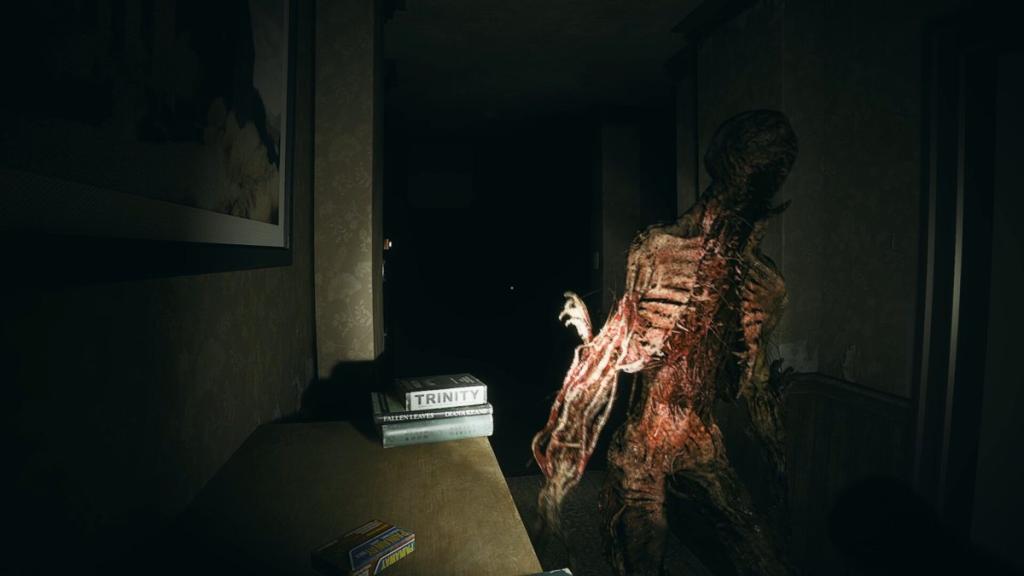
The "Morse Code" entity is a multi-armed figure devoid of facial features, save for a large, unnervingly curved mouth that follows the shape of its ribcage. This entity is interpreted as the protagonist’s psyche unraveling, his inability to confront or "look" directly at the trauma he has experienced. The lack of a face signifies a loss of self and an inability to process or express his emotions, while the gaping mouth represents an overwhelming urge to confess or scream, a release that remains just out of reach.
The Chorus of Inner Voices: Who Speaks the Truth?
OBEY THE VOICE features three distinct voices that guide, manipulate, and challenge the player, each representing a different aspect of the protagonist’s internal world.
The primary directive comes from "The Voice," an authoritative overseer who dictates the rules and objectives for each level. This voice is presented as a real entity, yet its pronouncements are constantly challenged by the other, more chaotic voices that infiltrate the protagonist’s consciousness.
Alongside The Voice, a female voice attempts to aid the protagonist by actively questioning and defying its commands. This voice is believed to represent the innocent aspects of the protagonist’s psyche, perhaps the younger brother who survived the incident.
A third, male voice emerges, driven by a desire for control. This voice is thought to embody the aggressive persona, the perpetrator of the violent act. While all voices ostensibly seek survival, their methods and motivations diverge dramatically, creating a complex web of internal conflict.
The narrative suggests that the incident involved not only the protagonist’s mother but also a teenage girl and her older brother, who survived. These survivors, it is posited, have manifested as distinct identities within the protagonist’s mind. A crucial element of the plot reveals that a week prior to the violent incident, "something else" took over a part of the older brother’s persona, suggesting an external or supernatural influence that may have triggered the events.
The conflicting voices that players are instructed to ignore are, in fact, separate identities co-existing within the protagonist. This elaborate portrayal of internal conflict is a clear depiction of Dissociative Identity Disorder (DID). As the player progresses through the "consciousness transfer procedure," these identities become increasingly active, reflecting the escalating psychological turmoil. The trials within OBEY THE VOICE are designed to analyze the protagonist’s cognitive functions – memory, attention, problem-solving, and decision-making – with the ultimate goal of stabilizing his primary identity.
The Unsettling Resolution: A Fractured Identity’s Fate
The revelation of Dissociative Identity Disorder in OBEY THE VOICE leads to a profoundly unsettling conclusion. The game’s ending hinges on the inability of the separate identities to communicate directly with one another. While The Voice observes the internal clashes and the attempts by the two secondary identities to cooperate against the procedure, it becomes apparent that these identities were only speaking to the protagonist.
Based on this lack of direct inter-identity communication, The Voice concludes that the protagonist is being controlled by the aggressive persona, the perpetrator of the violence. The purpose of the procedure, therefore, appears to be the isolation and elimination of the aggressive persona. The other identities, deemed innocent bystanders to the crime, are systematically deleted from the protagonist’s consciousness. This leaves only the guilty party, the perpetrator, to face judgment. The game suggests that by eliminating the other identities, the task of sentencing becomes simplified, as there is now, ostensibly, only one individual responsible for the murder of his mother.
The implications of this ending are stark. It raises questions about the nature of justice, the definition of self, and the ethical considerations of psychological procedures. While the game frames the deletion of innocent identities as a necessary step towards resolution, it also leaves the player with a profound sense of loss and moral ambiguity. The protagonist, stripped of his other selves, becomes a singular vessel of guilt, a chilling testament to the devastating consequences of trauma and the complex, often brutal, pathways to confronting it. The game leaves players to ponder whether this singular focus on guilt truly constitutes justice or merely a simplified, albeit horrifying, form of closure.