

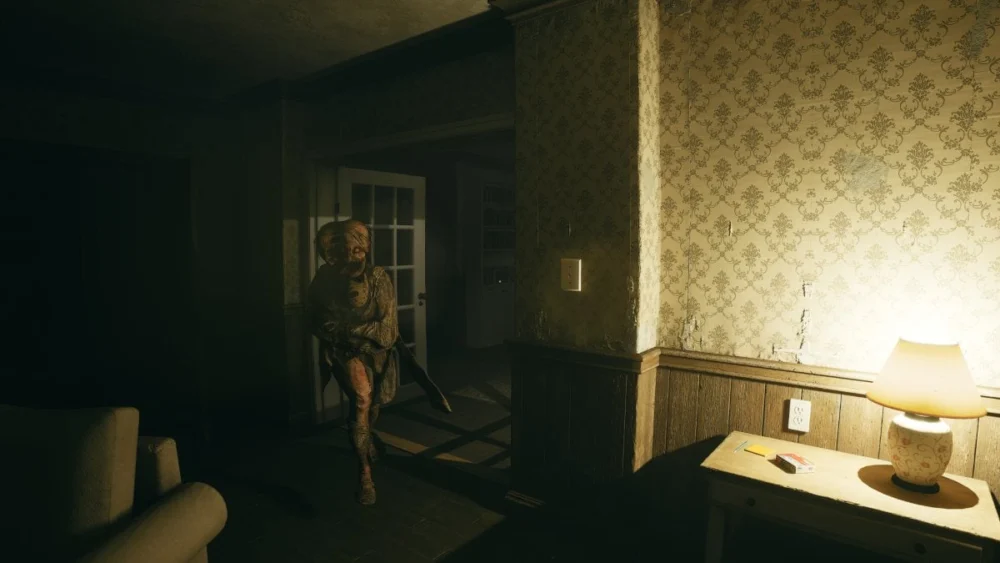
The stark white room, a minimalist canvas of psychological introspection, serves as the primary stage for the unsettling narrative of OBEY THE VOICE. Here, players are immediately confronted with a whiteboard bearing four cardinal rules, the supposed keys to survival within this enigmatic experience. Yet, this seemingly straightforward directive is complicated by the presence of other, competing voices, creating a tense environment where trust becomes a fragile commodity, especially with the palpable threat of monstrous entities lurking in the periphery. Developed by the same studio behind the similarly disorienting IN THE FACADE WE TRUST, OBEY THE VOICE plunges players into a reality that is constantly in flux, forcing a profound questioning of what is perceived as real. This analysis delves into the intricate layers of the game, interpreting its cryptic title and the psychological depths it explores.
The Foundation of Reality: Environment and Procedure
The game’s setting masterfully blends the comforting familiarity of domestic interiors with the sterile, almost clinical atmosphere of a pristine white facility. This juxtaposition, reminiscent of other experimental psychological thrillers like The Cabin Factory, creates a disquieting dreamscape that attempts to mimic reality. The environment feels meticulously controlled, designed to evoke a sense of an ongoing experimental procedure. The clear, precise rules laid out for survival reinforce this feeling of routine and adherence to protocol. However, this carefully constructed order is systematically dismantled by the introduction of monstrous figures and the insidious whispers of untrustworthy voices. These elements actively contradict the presented reality, suggesting that the player is not navigating a physical facility but rather the labyrinthine confines of a fractured mind. The visual design deliberately blurs the lines between the external world and the internal psychological landscape of the protagonist.
Echoes of Trauma: Monsters as Manifestations of the Psyche
OBEY THE VOICE draws clear parallels to iconic psychological horror experiences, notably the unreleased Silent Hills playable teaser, P.T., with its recurring house layout and atmospheric tension. The game further embeds psychological depth through elements like radio broadcasts that subtly hint at the protagonist’s troubled past and the presence of monstrous entities that appear to be deeply connected to the character’s psyche, echoing the symbolic creature design found in Silent Hill 2. The nature of these entities is central to understanding the game’s narrative.
Each monster encountered is not merely a physical threat but a symbolic representation, intricately tied to the protagonist’s mental state and his distorted perception of reality. The specific rules associated with each creature further underscore this connection, acting as a cryptic guide to navigating the internal turmoil.
The Fragmented Self: The "Hot and Cold" Entity
The "Hot and Cold" entity is a particularly striking depiction of internal conflict. Restrained by a straitjacket and a restraint mask, its head split down the middle, this figure strongly suggests an internal representation of the protagonist’s fractured identity. The split head symbolizes a mind at war with itself, two opposing inner selves locked in a perpetual struggle. The straitjacket and mask imply that the protagonist, in the real world, is perceived as too volatile and dangerous, necessitating such external constraints following a traumatic incident. This entity embodies the core conflict of a mind struggling with its own duality, bound by external forces that reflect its perceived uncontrollability.

Lost Identity and Distorted Memories: "Spot the Difference"
The "Spot the Difference" segment introduces elements that further explore the protagonist’s psychological unraveling. The presence of mannequins within this section is interpreted as a representation of the protagonist’s profound loss of self, a fading of his personal identity. Complementing this, a shadowy figure emerges, believed to embody the protagonist’s fragmented and fractured memories of the pivotal incident that led to his current state. These elements collectively paint a picture of a mind struggling to retain a cohesive sense of self amidst overwhelming trauma.
The Weight of Guilt: The "The Voice Says" and "Red Light Green Light" Entities
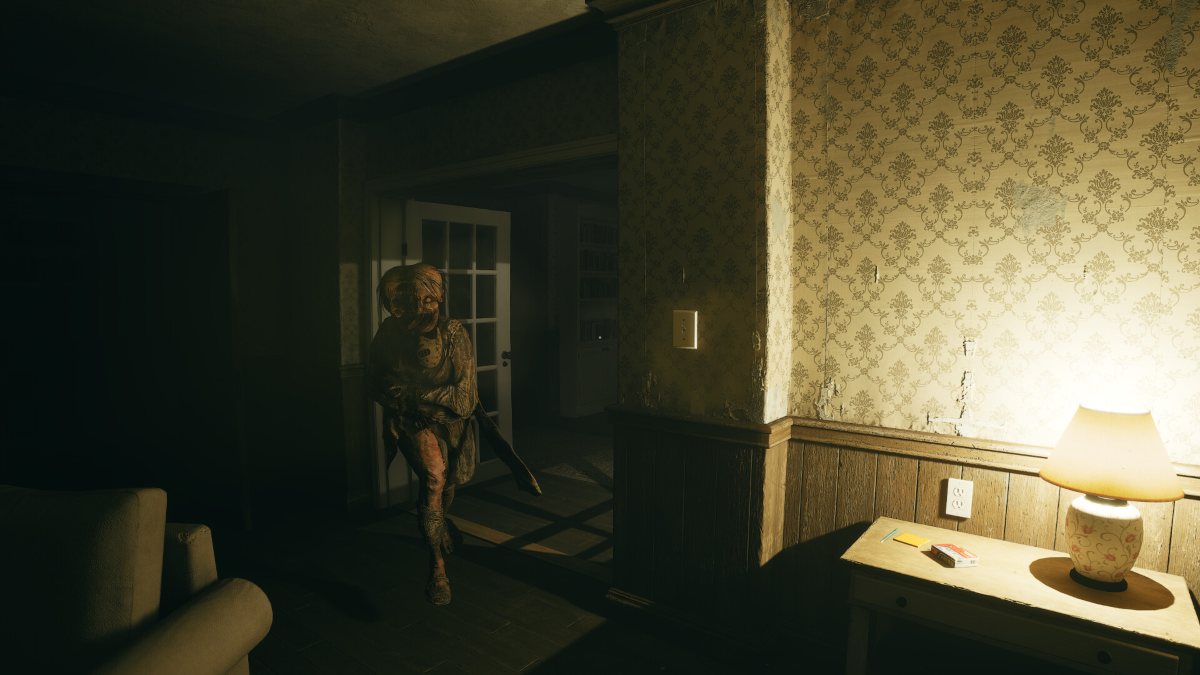
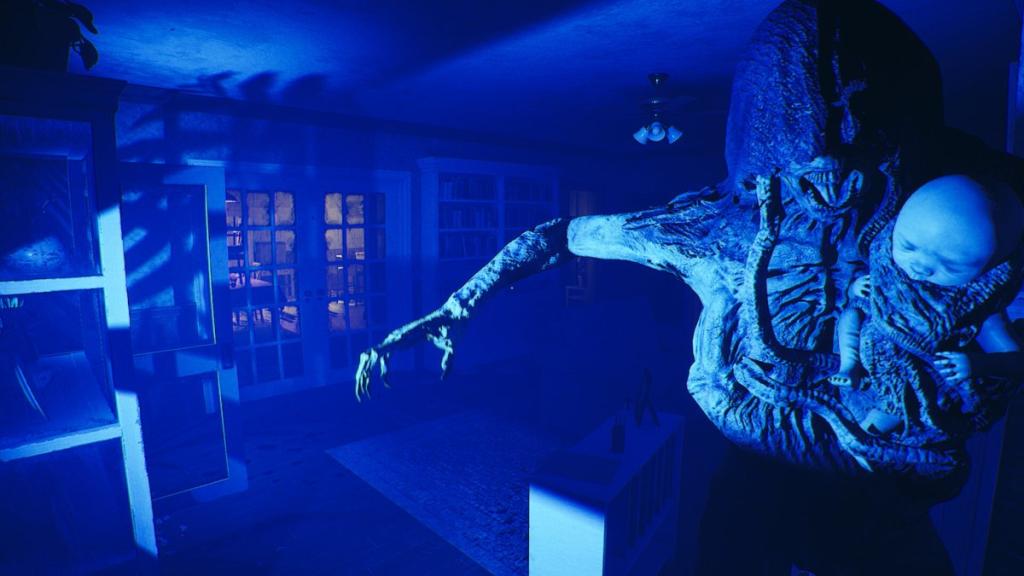
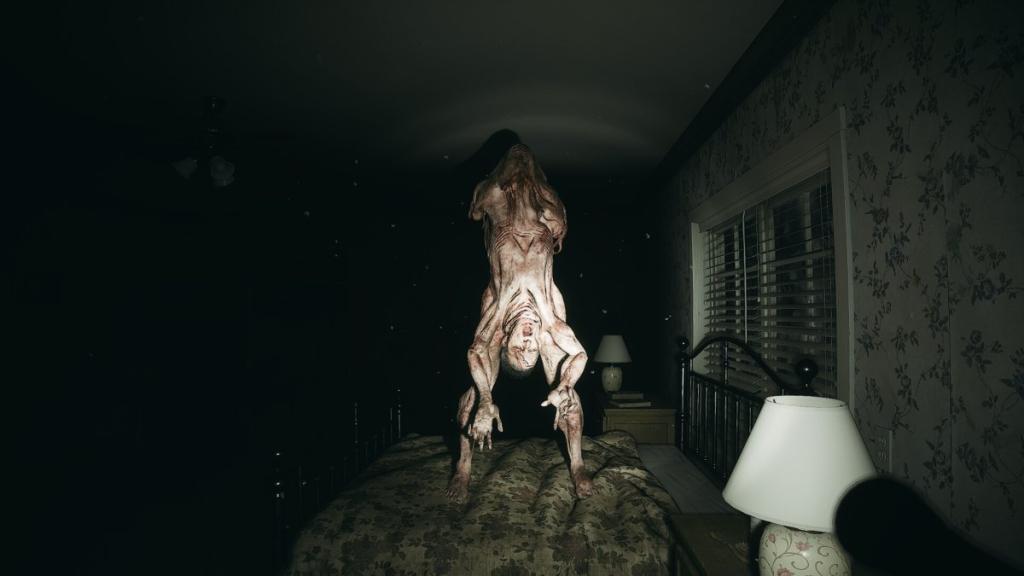
The "The Voice Says" level introduces a tall, female entity with a distinct fetal presence within her abdomen. This figure is directly linked to the protagonist’s act of matricide, having been stabbed by her son with a kitchen knife. The entity’s limping gait and increasing speed as the player errs suggest a relentless, guilt-ridden presence that mirrors the protagonist’s own psychological torment. This encounter is interpreted as a vivid, albeit twisted, recollection of the traumatic event.
The "Red Light Green Light" level revisits this maternal figure, but with a significant alteration: her hands are now fused to her abdomen, held in a posture that resembles a protective embrace. This subtle yet powerful change is seen as a reference to the mother’s final moments, an instinctual act of comfort directed towards her son during the tragic incident. This evolution of the entity underscores the complex emotional residue of the trauma, blending violence with a lingering sense of maternal connection.
The Emerging Persona: The "Find the Melody" and "Morse Code" Entities
The "Find the Melody" entity is a particularly disturbing manifestation, only visible when illuminated by a camera flash. Its body is a grotesque amalgamation of two fused human forms. This entity is theorized to represent a dominant male voice within the protagonist’s mind, actively seeking to assert control. The visual of one body seemingly birthing a new head and limbs, with the remnants of the old dangling precariously, suggests a struggle for dominance and a distorted sense of self. This entity embodies the emergence of a new, aggressive persona, a confused and conflicted idea of the self, potentially signifying a loss of original identity and the birth of something entirely new and terrifying.
The "Morse Code" level features an entity characterized by multiple arms and a striking absence of facial features, save for a large, unsettling mouth that curves unnaturally around its ribcage. This grotesque depiction is interpreted as a symbol of the protagonist’s psyche beginning to unravel, his profound inability to confront or directly acknowledge the traumatic events he has endured. It represents a mind recoiling from its own pain, unable to face the reality of its trauma.
The Chorus of Consciousness: The Competing Voices
Within the psychological landscape of OBEY THE VOICE, three distinct voices vie for influence. The primary authority is "The Voice," an overseer figure who guides the player through each level, dictating objectives and survival strategies. This voice is presented as a real entity, yet its authority is constantly challenged by two other, more internal voices that invade the perceived reality of the player.
A female voice emerges, actively defying and questioning every command issued by The Voice, acting as a counterpoint of resistance and a potential ally. Conversely, a male voice seeks to assert dominance, aiming for ultimate control. Both of these internal voices, however, share a singular, primal motivation: survival.
The narrative suggests that the incident involved more than just the protagonist’s mother. A teenage girl and the protagonist, an older brother, were also present and survived. These individuals appear to have manifested as distinct identities within Patient 10’s consciousness. Crucially, it is implied that a week prior to the violent incident, an external force, something beyond the older brother’s persona, began to exert influence.
These dissenting voices, initially presented as extraneous and to be ignored, are revealed to be separate identities co-existing within the protagonist. Their increasingly active presence as the player progresses towards completing a "consciousness transfer procedure" highlights the game’s exploration of Dissociative Identity Disorder (DID). The challenges and tests presented in OBEY THE VOICE are, in essence, a form of cognitive analysis, designed to assess memory, attention, problem-solving capabilities, and decision-making processes, all in an effort to help Patient 10 integrate into a primary, stable identity.
The Unraveling of Identity: Explaining the Ending
The revelation of DID introduces a complex twist to the narrative. A peculiar aspect of this internal conflict is the apparent lack of direct communication between the disparate identities. While The Voice observes the two internal identities frequently clashing or speaking as if engaged in dialogue, and even working in concert to resist the procedure, their direct interactions are solely with the protagonist. This inability for the identities to communicate directly with each other leads The Voice to conclude that Patient 10 is being manipulated by an aggressive persona, identified as the perpetrator.
The ultimate purpose of the "consciousness transfer procedure" appears to be the isolation and expulsion of this aggressive persona. While the other identities were not directly culpable in the violent crime, they are systematically deleted from the protagonist’s consciousness. This process leaves only the guilty party, creating a singular, seemingly unified identity to bear the sole blame for the matricide. The implication is that by eradicating the other identities, the task of sentencing the perpetrator becomes simplified, as there is now, ostensibly, only one individual responsible for the tragic events. This ending raises profound questions about justice, identity, and the ethical implications of psychological manipulation, even when ostensibly aimed at achieving a form of resolution. The game leaves players to ponder the true cost of such a procedure and whether the elimination of innocent fragments of a personality constitutes a justifiable means to an end.