

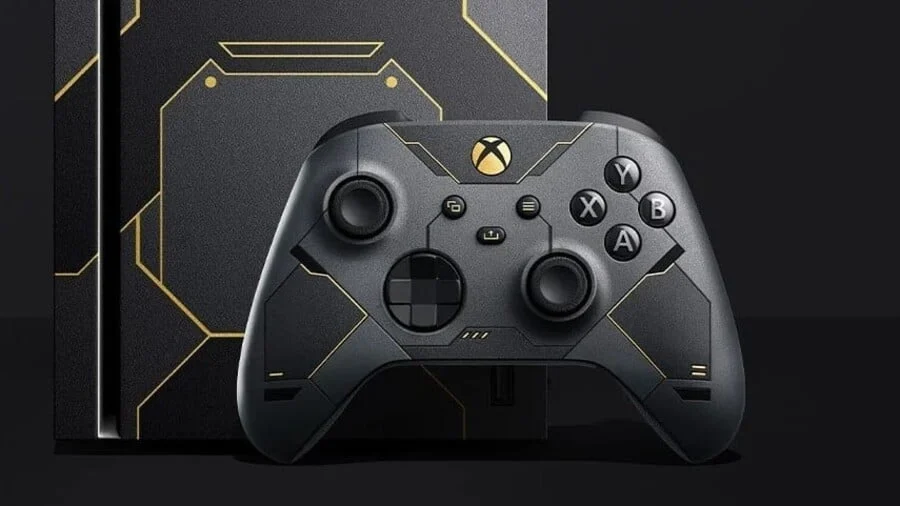
The current generation of Xbox Series X and Series S consoles has now been firmly established for several years, naturally turning the gaze of the gaming community towards the horizon for what Microsoft’s next flagship console will deliver. Expected to arrive in the not-too-distant future, this forthcoming system, currently known by its codename Project Helix, is poised to redefine the Xbox experience with a strong emphasis on performance, advanced AI integration, and a groundbreaking commitment to PC game compatibility. This comprehensive guide synthesizes all available official information, credible rumors, and expert analyses surrounding the next planned Xbox console, ensuring a regularly updated resource as more details emerge from Team Xbox and beyond.
Project Helix: The Official Codename for Xbox’s Next-Gen Vision
Microsoft has officially confirmed that "Project Helix" is the developmental codename for its next-generation Xbox console. Following a well-established tradition within the company, this codename will undoubtedly be replaced by a consumer-facing brand name closer to its eventual market release. This practice mirrors the journey of the current generation, where the Xbox Series X was known as "Project Scarlett" and the Xbox Series S as "Project Lockhart" during their respective development cycles. These internal monikers serve to identify projects without prematurely revealing branding or specific features, allowing for flexibility in strategic messaging.
Until the formal unveiling of its final name, Project Helix is expected to be the prevalent identifier across social media, gaming forums, and news outlets. The choice of "Helix" itself, evocative of a double spiral structure, might subtly hint at interconnectedness, evolution, or perhaps the dual nature of its anticipated console and PC gaming capabilities. This early announcement of the codename marks a significant step in Microsoft’s communication strategy, signaling the company’s confidence and transparency regarding its future hardware plans.
A Chronology of Xbox’s Next-Generation Announcements
The journey towards Project Helix has been punctuated by a series of strategic announcements and executive insights, painting an increasingly clear picture of Microsoft’s ambitions.
-
June 2025: The AMD Partnership and Core Vision Unveiled
Xbox first formally announced its next-generation console strategy in June 2025, revealing a pivotal, multi-year strategic agreement with AMD. This partnership, crucial for high-performance computing in modern consoles, committed both companies to co-engineer silicon across a broad portfolio of devices, encompassing not only future Xbox consoles but also PC, handheld, cloud, and accessory hardware. The announcement underscored a foundational shift towards a unified gaming ecosystem. Key promises made at this juncture included "the next generation of graphics innovation," delivering "a deeper level of visual quality," "immersive gameplay," and player experiences "enhanced with the power of AI." Critically, this initial reveal also firmly established backwards compatibility as a core pillar for the upcoming Xbox console, ensuring that players’ existing game libraries would transition seamlessly.The official statement from Xbox highlighted: "We’ve established a strategic, multi-year agreement with AMD to co-engineer silicon across a portfolio of devices, including our next-generation Xbox consoles. Together, we’re delivering deeper visual quality, immersive gameplay, and AI-powered experiences – grounded in a platform designed for players, not tied to a single store or device, and fully compatible with your existing Xbox game library." This quote emphasized a platform-agnostic approach, signaling Microsoft’s intent to broaden its reach beyond traditional console boundaries.
-
August 2025: Deep Dive into Technological Aims
Further elaborating on the technical aspirations, Xbox’s Jason Ronald discussed three core aims for Microsoft’s next console during an August 2025 Xbox podcast episode. He detailed the deep investment in next-generation rendering technologies, specifically mentioning "neural rendering," designed to bring an unprecedented level of fidelity and immersion to game visuals. Furthermore, Ronald emphasized the allocation of dedicated silicon for "next generation of AI capabilities." These AI advancements are not merely for graphical enhancements but are intended to be transformative for gameplay experiences, offering developers new tools to create innovative interactions previously unattainable.Ronald stated: "So together with AMD, we’re designing dedicated silicon and hardware to enable the next generation of gaming experiences, and so that means we’re investing deeply in the next generation of rendering technologies, such as neural rendering, which will bring a new level of fidelity to the quality of the games that you’re having, and it’s really about deepening the immersion between you and the gameplay experience that you have. We’re also investing in dedicated silicon to enable the next generation of AI capabilities that will be transformative in how you actually experience your gameplay and also provides a new surface that developers can actually take advantage of and deliver new kinds of experiences that they’ve never been able to deliver before."
-
October 2025: A "Premium" Experience Informed by Handheld Innovation
Former Xbox president Sarah Bond provided additional insight in October 2025 during an interview with Mashable, characterizing the upcoming console as a "very premium, very high-end curated experience." Intriguingly, Bond also suggested that the design philosophy would be partially "informed by" devices like the ROG Xbox Ally handheld. This comment fueled speculation about potential cross-pollination of features, user interface elements, or perhaps even a modular design philosophy that could bridge the gap between traditional console and portable PC gaming.Bond’s remarks were: "I can tell you you’re right, that the next-gen console is going to be a very premium, very high-end curated experience. You’re starting to see some of the thinking that we have in this handheld, but I don’t want to give it all away." This hints at a refined, perhaps even boutique, approach to the console’s identity, moving beyond sheer horsepower to encompass a holistic user experience.
-
March 2026: Asha Sharma Confirms Performance Lead and PC Game Support
The most recent and significant official information arrived in March 2026, shortly after Asha Sharma assumed leadership as the new Xbox boss. In one of her inaugural major announcements, Sharma officially confirmed Project Helix as the codename for the next-gen Xbox console. More importantly, she explicitly stated that the console would "lead in performance" and, perhaps most strikingly, would support both Xbox and PC games. This confirmation of PC game compatibility marks a potentially revolutionary shift in console gaming paradigms.Sharma’s quote laid bare the company’s intent: "Great start to the morning with Team Xbox, where we talked about our commitment to the return of Xbox including Project Helix, the code name for our next generation console. Project Helix will lead in performance and play your Xbox and PC games." This statement solidified many prior rumors and set a clear direction for the console’s capabilities.
Project Helix: A Deep Dive into its Core Identity
The official statements highlight several critical aspects that will define Project Helix, positioning it as a significant evolution for the Xbox brand and potentially for the wider gaming industry.
-
Unparalleled Performance and Visual Fidelity:
The repeated emphasis on "leading in performance" and "deeper visual quality" suggests a console engineered to push the boundaries of graphical realism and processing power. With the Xbox Series X already capable of 4K resolution at high frame rates, Project Helix is expected to target even more ambitious benchmarks, possibly leveraging advanced ray tracing capabilities, higher resolutions (e.g., 8K gaming for specific titles), and consistently high refresh rates. The mention of "neural rendering" points to a future where AI assists in real-time graphics generation, potentially enabling more dynamic environments, lifelike character models, and complex lighting effects without disproportionately taxing the hardware. This would represent a substantial leap beyond traditional rendering techniques, offering developers unprecedented tools for visual storytelling. -
AI-Enhanced Gameplay Experiences:
Beyond graphics, the integration of dedicated silicon for AI capabilities is perhaps the most intriguing promise. This isn’t merely about smarter NPCs (Non-Player Characters) but could extend to procedural content generation, dynamic difficulty adjustments based on player skill, or even AI-driven narrative branches that adapt to player choices. The potential for AI to create unique, personalized gameplay experiences or to enhance immersion by making game worlds feel more reactive and intelligent is vast. This aligns with Microsoft’s broader AI initiatives across its product portfolio, signaling a concerted effort to weave advanced artificial intelligence into the very fabric of its gaming platform. -
Unwavering Commitment to Backwards Compatibility:
In an era where digital libraries are paramount, Xbox’s confirmation of full backwards compatibility for Project Helix is a welcome assurance for consumers. This means that players’ extensive collections of Xbox One, Xbox 360, and original Xbox titles, alongside their Series X/S games, will be playable on the new hardware. This commitment not only preserves player investment but also ensures a robust launch library for the new console, mitigating the typical lull in new releases that often accompanies a generation transition. It also reinforces Xbox’s philosophy of player-centric design, where access to content is prioritized over hardware generations.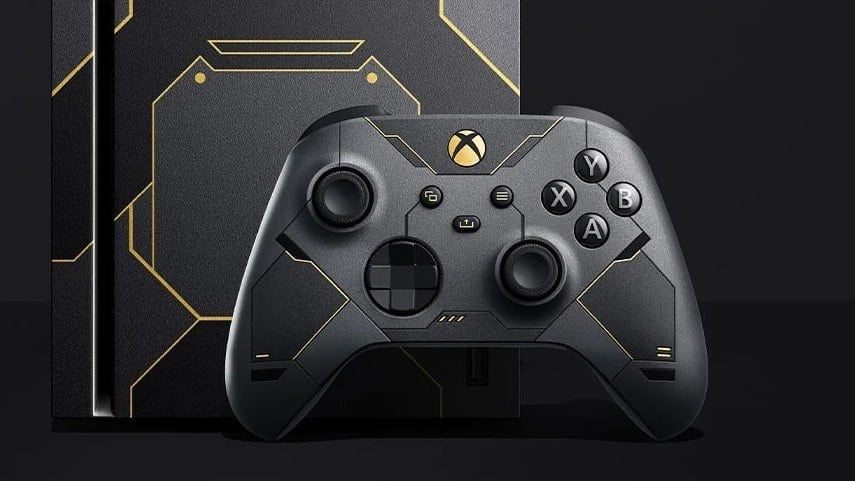
The "Open Xbox" Paradigm: PC Integration and Storefronts
Perhaps the most disruptive and widely discussed feature of Project Helix is its confirmed support for PC games. This strategic move could fundamentally alter the console landscape, blurring the lines between dedicated gaming consoles and personal computers.
-
Native PC Game Support and Multi-Storefront Access:
The integration of PC game support suggests that Project Helix might operate with a more open architecture than previous consoles. Rumors, particularly from Windows Central in March 2026, indicate that Project Helix could be "the most open Xbox ever," potentially allowing users to exit to a Windows-like environment, access multiple PC storefronts, and even run productivity applications like Adobe Premiere Pro. This would transform the console from a single-purpose gaming machine into a versatile home entertainment and computing hub. Such a paradigm shift could attract PC gamers looking for a console-like experience with access to their existing libraries, or console gamers eager to explore the vastness of PC gaming without investing in a full-fledged gaming rig. -
Steam and Epic Games Store Integration:
The prospect of major PC storefronts like Steam and the Epic Games Store arriving on an Xbox console is a monumental development. Pure Xbox reported in May 2025 that Xbox had been in talks to bring Steam to its next console. Given that the ROG Xbox Ally handheld already features Steam integration by default, and Microsoft’s broader strategy of platform agnosticism, the stars appear to align for Steam’s presence on Project Helix. Furthermore, Epic Games, owner of the Epic Games Store, officially expressed interest in being part of the next Xbox console ecosystem even before PC support was confirmed, as reported in February 2026. If both major PC storefronts become accessible, it would provide an unparalleled breadth of gaming options directly on a console, from indie titles to AAA blockbusters, many of which are exclusive to PC or different storefronts. This move would directly challenge the traditional console-exclusive model and potentially draw a significant portion of the PC gaming market towards Xbox. -
Potential Removal of Online Multiplayer Paywall:
A significant rumor from Windows Central in October 2025 suggested that the paywall for online multiplayer could be entirely removed on the next Xbox console. This would be a radical departure from the current model, where an Xbox Game Pass Core or Ultimate subscription is required for most online multiplayer functionalities. If implemented, this change would be a massive consumer-friendly move, potentially increasing player engagement and drawing in new users who are hesitant about recurring subscription fees for basic online access. While Game Pass would still offer a compelling value proposition with its vast game library, removing the multiplayer paywall would position Project Helix as an exceptionally accessible platform for online gaming, providing a distinct competitive advantage against rivals like PlayStation, which currently retains a subscription model for online play.
Market Dynamics, Strategic Positioning, and Pricing Considerations
Project Helix is entering a dynamic and highly competitive market, and its strategic positioning will be critical for its success.
-
The Competitive Landscape:
The console market is dominated by PlayStation and Nintendo, with PC gaming representing an ever-growing segment. Project Helix’s strategy of merging console and PC experiences could be a direct response to this multifaceted landscape. By offering a "premium" console that can also play PC games, Microsoft aims to carve out a unique niche, appealing to both traditional console players and PC enthusiasts. This could be seen as an evolution of Microsoft’s "play anywhere" philosophy, extending it from specific titles to entire platforms. -
A "Very Premium, Very High-End Curated Experience":
Sarah Bond’s characterization of Project Helix as a "very premium" experience strongly indicates a focus on high-quality hardware, advanced features, and potentially exclusive experiences that leverage its unique capabilities. This contrasts with the current two-tiered approach of the Series X (high-end) and Series S (entry-level). While it’s unknown if a successor to the Series S will exist, the "premium" moniker for Project Helix suggests a flagship device designed for discerning gamers who prioritize performance and cutting-edge technology. -
Projected Pricing: The Most Expensive Xbox Ever?
Given its advanced specifications, confirmed performance leadership, and unprecedented PC game support, analysts widely anticipate Project Helix to be a significantly expensive console, potentially making it the most expensive Xbox console of all time. The Xbox Series X itself saw a price increase to $649 in some regions by September 2025, setting a high benchmark. Integrating powerful AMD silicon, advanced AI processors, and a robust operating system capable of handling both console and PC ecosystems will undoubtedly contribute to a high manufacturing cost.However, former Xbox boss Phil Spencer previously stated that Microsoft wouldn’t grow the market by building $1000 consoles, suggesting an upper limit to their pricing strategy. The challenge for Microsoft will be to balance cutting-edge technology and premium features with a price point that, while high, remains within the realm of what a significant consumer base is willing to pay. The existence of a potentially cheaper, less powerful variant (a Series S successor) remains an open question that could mitigate the overall market entry cost for consumers.
Release Window and the AMD Partnership’s Role
While official release dates are tightly guarded secrets, industry whispers and partner statements offer a potential timeline for Project Helix’s arrival.
-
AMD’s 2027 Target:
AMD, Microsoft’s crucial hardware partner, has explicitly mentioned its readiness to support a 2027 release date for the next Xbox console. In a February 2026 statement, AMD noted: "Development of Microsoft’s next-gen Xbox featuring an AMD semi-custom SoC is progressing well to support a launch in 2027." This is a strong indicator of the hardware component readiness and points towards a potential launch year. -
Microsoft’s Internal Flexibility:
Despite AMD’s readiness, a Windows Central report from February 2026 suggested that Microsoft itself hasn’t set a "hard launch window" for Project Helix. The report indicated that the release date "hinges on improvements to Windows 11 and other factors." This suggests that while the hardware might be on track, the software ecosystem, particularly the integration of Windows capabilities for PC game support, is a significant variable. Microsoft’s desire to ensure a seamless, robust, and feature-rich experience could lead to adjustments in the launch timeline. The current console generation typically spans 7-8 years, and a 2027 launch would place Project Helix roughly 7 years after the November 2020 launch of the Xbox Series X/S, fitting within historical generational cycles.
Implications for the Gaming Landscape
Project Helix has the potential to be a watershed moment for the gaming industry, driving several significant shifts.
- Convergence of Console and PC Gaming: The most profound implication is the further blurring of lines between console and PC gaming. If Project Helix successfully integrates a broad range of PC games and storefronts, it could accelerate a trend towards a more unified gaming experience, where the choice of platform becomes less about exclusive games and more about preferred input methods, form factors, and user interfaces.
- Developer Opportunities: For game developers, an "open Xbox" with PC game support offers a massive new potential audience without necessarily requiring extensive porting efforts. If the console can natively run Windows-based PC games, it could simplify development pipelines and encourage a wider array of titles to be available on Xbox.
- Subscription Model Evolution: The potential removal of the multiplayer paywall, combined with the continued growth of Xbox Game Pass, could force competitors to re-evaluate their own subscription strategies. Microsoft’s bold moves could intensify competition in the subscription service arena, ultimately benefiting consumers with more value and flexibility.
- Handheld Gaming Influence: The acknowledgment that the ROG Xbox Ally handheld is informing Project Helix suggests a potential future where console design incorporates more elements of portable PC gaming, perhaps leading to more compact designs, flexible input options, or deeper integration with mobile gaming ecosystems.
Conclusion
Project Helix represents Microsoft’s ambitious vision for the future of gaming, aiming to deliver a console that leads in performance, innovates with AI, and bridges the gap between traditional console and PC gaming. With official confirmations regarding its codename, performance leadership, and PC game support, coupled with insights into its "premium" positioning and a potential 2027 release, the excitement surrounding Project Helix is palpable. As Microsoft continues to refine its strategy and prepare for the next generation, the gaming world watches with keen interest to see how this "most open Xbox ever" will reshape the landscape of interactive entertainment.
As more information, official reveals, and credible leaks emerge, this guide will be meticulously updated to provide the most current and comprehensive overview of Microsoft’s next-generation Xbox console. The coming months and years promise to be exhilarating for Xbox fans and the gaming industry as a whole.