
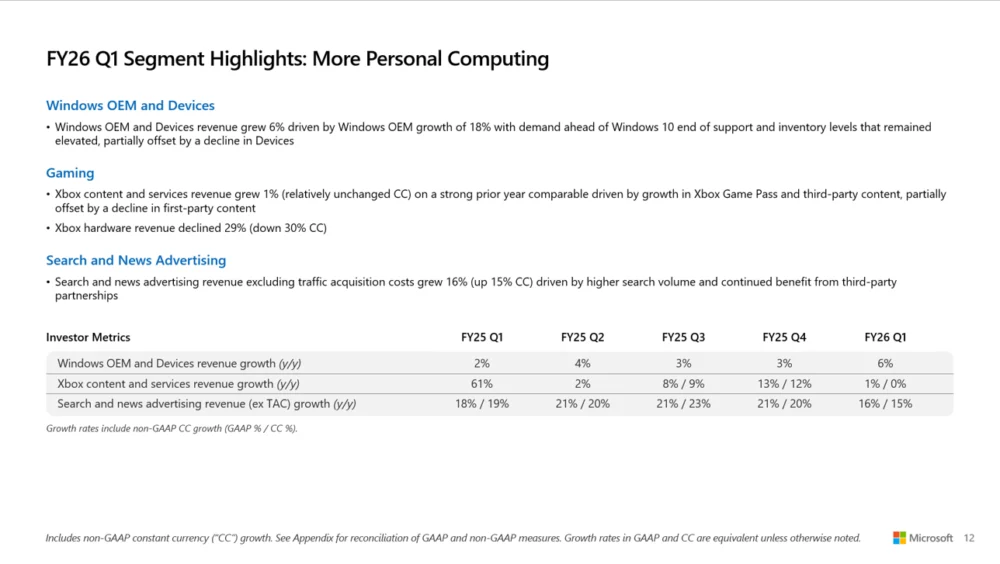
Microsoft appears undeterred by the recent wave of criticism and subscriber apprehension following the significant price increase for its Xbox Game Pass subscription service. Contrary to the prevailing sentiment within parts of the gaming community, the technology giant is projecting an increase in Game Pass subscriptions and anticipates a reduction in losses within Xbox’s services division for the upcoming fiscal quarter. This optimistic outlook was revealed during Microsoft’s latest earnings call for the first quarter of fiscal year 2026, which covers the period from July to September.
Financial Performance and Future Projections
During the Q1 FY2026 earnings call, Microsoft executives presented a picture of stability and even growth for Xbox’s content and services revenue, a segment that prominently includes the Game Pass subscription offering. This financial reporting period, however, predates the full impact of the Game Pass price adjustments, which commenced in most global markets in October and are scheduled for a wider rollout in November. Consequently, the financial repercussions of the price hikes will become fully apparent in Microsoft’s subsequent earnings report, slated for release in late January 2026.
Despite a general expectation of revenue decline in the Xbox content and services sector, a notable point of discussion during the call was the executive forecast of an increase in Game Pass subscriptions. One executive specifically stated, "And in Xbox content and services, we expect revenue to decline in the low to mid-single digits against a prior year comparable that benefited from strong first-party performance, partially offset by growth in subscriptions." This statement has generated considerable discussion, as it suggests a potential divergence between overall revenue trends and subscriber acquisition or retention figures.
The nuanced language employed by Microsoft executives raises questions about whether the anticipated growth refers to an increase in the sheer number of subscribers or a rise in revenue generated per subscriber. If the revenue growth stemming from the price increase outpaces any potential decline in subscriber numbers, the overall financial outcome could still be viewed favorably by the company. However, the emphasis on subscription growth strongly implies that Xbox is making a strategic bet on its ability to attract and retain a larger subscriber base, even with the elevated pricing structure.
The Strategic Imperative of Day-One Releases
Microsoft’s confidence in the continued appeal of Game Pass, even at higher price points, is likely rooted in its robust strategy of incorporating a steady stream of high-profile, day-one releases. This commitment ensures that subscribers gain immediate access to major titles, a key differentiator for the service. Upcoming and recently added games that are expected to bolster Game Pass subscriptions include highly anticipated titles such as "Outer Worlds 2" and the latest installment in the "Call of Duty: Black Ops" franchise. Xbox has demonstrably invested significant capital in securing exclusive or early access to a wide array of new gaming content. The company’s leadership evidently believes that this continually expanding library of high-quality games will serve as a powerful incentive for both existing subscribers to maintain their memberships and for new players to join the platform.
Community Backlash and Shifting Perceptions
The recent price adjustments have not been met with universal approval. The announcement of the Game Pass price hikes elicited a significant negative reaction from many players, a sentiment that was widely reflected across gaming forums, social media platforms, and gaming publications. This backlash stems from a perception that the increased cost may diminish the accessibility and perceived value of the service. For many, a core tenet of Game Pass’s appeal was its affordability, offering access to a vast library of games—including both independent titles and premium, full-priced releases—for a monthly fee that was often less than the cost of a single new game.
The new pricing structure, particularly for the premium tiers, has led some consumers to question whether the value proposition remains as compelling. With subscription costs rising, some players have expressed a preference for saving that money to purchase individual games outright, thereby gaining permanent ownership of their digital libraries rather than relying on a subscription model. This shift in consumer perspective highlights the delicate balance Microsoft must strike between maximizing revenue and maintaining the goodwill and loyalty of its subscriber base.
Analyzing Microsoft’s Strategic Positioning
Microsoft’s assertive stance and projected subscription growth in the wake of the price increases suggest a calculated strategy. There are two primary interpretations of this approach. The first posits that the company genuinely believes its curated library of games, particularly its day-one releases and exclusive content, possesses sufficient inherent value to command a higher price point and will continue to attract a substantial subscriber base. This perspective emphasizes the long-term investment in content creation and acquisition as a primary driver of future success.
The second interpretation suggests that Microsoft may be employing this strategy to reassure investors and demonstrate financial resilience in the face of community disapproval. By projecting positive subscription figures, the company aims to mitigate concerns about the potential negative impact of the price hikes on its overall revenue streams and market position. This approach could be aimed at bolstering investor confidence during a period of potential market volatility or scrutiny.
Historical Context of Game Pass Evolution
The Game Pass service was initially launched in June 2017 as Xbox Game Pass. Its foundational premise was to offer subscribers a curated, rotating library of games for a monthly fee, aiming to emulate the success of services like Netflix but for gaming. The service quickly gained traction due to its aggressive pricing and the inclusion of major first-party titles. A significant turning point for Game Pass was the introduction of Xbox Game Pass Ultimate in June 2019, which bundled console and PC access, along with Xbox Live Gold benefits, providing a more comprehensive offering.
The strategy of releasing first-party Xbox Game Studios titles on Game Pass on their launch day, a practice that began in earnest with titles like "Sea of Thieves" and "State of Decay 2," became a cornerstone of the service’s value proposition. This move was a strategic departure from traditional industry models, which typically relied on direct game sales. Microsoft’s commitment to this day-one release strategy has been a significant factor in the service’s growth, attracting a large and dedicated user base over the years.
The acquisition of Bethesda Softworks in March 2021 and, more significantly, Activision Blizzard in October 2023, represented massive strategic investments aimed at bolstering the Game Pass content library. These acquisitions were designed to bring a vast portfolio of popular franchises under the Xbox umbrella, further enhancing the appeal and perceived value of Game Pass. The integration of Activision Blizzard’s titles, in particular, was expected to significantly boost subscriber numbers and engagement.
Data and Trends in the Gaming Subscription Market
The global gaming market has witnessed a significant shift towards subscription-based models. According to Statista, the global gaming subscription market revenue was projected to reach $11.3 billion in 2024, with an anticipated compound annual growth rate (CAGR) of 10.79% from 2024 to 2029, resulting in a projected market volume of $18.8 billion by 2029. This overarching trend suggests a favorable environment for subscription services, provided they can maintain a compelling content offering and competitive pricing.
However, the Game Pass price increases come at a time when some analysts have expressed concerns about market saturation and the potential for subscriber fatigue. While the overall market is growing, individual services must continually innovate and demonstrate value to retain and attract users. The recent price adjustments by Microsoft could be seen as an attempt to capture a larger share of the market revenue, banking on the loyalty and perceived indispensability of Game Pass to its user base.
The company’s financial reports consistently highlight the growing importance of its Gaming segment. In fiscal year 2023, Microsoft’s Gaming revenue reached $23.2 billion, an increase of 17% year-over-year, largely driven by the acquisition of Activision Blizzard. While content and services revenue saw a 5% increase, driven by Game Pass and Xbox content, the overall growth was significantly bolstered by the inclusion of Activision Blizzard’s revenue. The Q1 FY2026 earnings call, therefore, provides crucial insights into the organic performance of the Game Pass service independent of recent major acquisitions.
Implications for the Gaming Ecosystem
The pricing strategy adopted by Microsoft has broader implications for the entire gaming industry. A successful implementation of higher price points for Game Pass could embolden other subscription services to consider similar adjustments. Conversely, if the backlash leads to a significant churn of subscribers or a dampening of enthusiasm, it could signal a limit to how much consumers are willing to pay for access to game libraries.
Furthermore, the debate surrounding Game Pass pricing touches upon fundamental questions about the economic sustainability of game development and distribution. While subscription services offer predictable revenue streams for platforms, concerns have been raised about the long-term impact on game developers and publishers, particularly regarding royalty structures and the perceived devaluation of individual game purchases.
Microsoft’s continued investment in Game Pass, coupled with its apparent confidence in the face of criticism, underscores its long-term vision for Xbox. The company is clearly positioning Game Pass not just as a service, but as a central pillar of its gaming ecosystem, aiming to drive engagement and revenue through a comprehensive offering of content and connectivity. The success of this strategy will hinge on its ability to continuously deliver compelling value that justifies the elevated cost to its subscriber base, while navigating the evolving expectations and economic realities of the global gaming market. The coming quarters will be critical in determining whether Microsoft’s defiant stance on pricing will translate into sustained subscriber growth and financial success.