
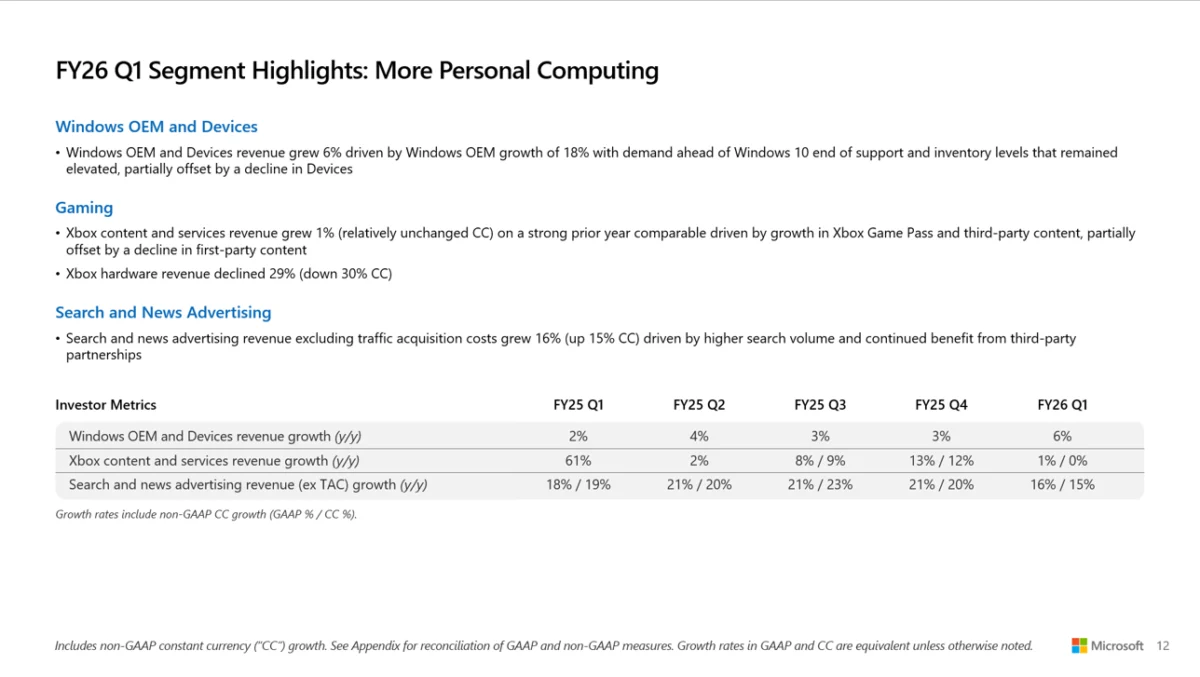
Microsoft appears unfazed by the recent wave of criticism following its decision to increase the subscription prices for its popular Xbox Game Pass service. In fact, the technology giant is projecting an uptick in Game Pass subscriptions and anticipates a reduction in losses within its Xbox services division for the upcoming fiscal quarter. This optimistic outlook was revealed during Microsoft’s first-quarter earnings call for fiscal year 2026, which covered the period from July to September.
Financial Performance and Future Projections
During the earnings call, Microsoft executives presented a financial picture for Xbox’s content and services segment, which encompasses Game Pass, as stable with underlying growth. It is crucial to note that the financial results for this period do not incorporate any revenue generated from the Game Pass price adjustments, which were implemented in most global markets in October and are set to roll out in remaining regions by November. Consequently, the true financial impact of these price hikes will become evident in the company’s next earnings report, expected in late January 2026.
Despite the broader financial context, a notable point of discussion during the call was the executive commentary regarding anticipated performance in the Xbox services sector. While the company acknowledged expecting some decline in overall services revenue, a significant counterpoint was the forecast for an increase in Game Pass subscriptions. This nuanced projection has sparked discussion about Microsoft’s strategic direction and its confidence in the enduring appeal of its subscription gaming model.
One executive’s statement specifically highlighted this dynamic: "And in Xbox content and services, we expect revenue to decline in the low to mid-single digits against a prior year comparable that benefited from strong first-party performance, partially offset by growth in subscriptions." This phrasing suggests a dual trend: a potential overall decrease in revenue for the services division, likely influenced by factors such as the phasing out of certain revenue streams or a normalization after a period of strong performance, juxtaposed with an anticipated rise in the number of individuals subscribing to Game Pass.
Analyzing the "Growth in Subscriptions" Statement
The ambiguity within the executive’s statement prompts further analysis. The critical question is whether "growth in subscriptions" refers solely to an increase in the total number of active subscribers, or if it signifies a rise in subscription revenue that could potentially be achieved even with a static or slightly declining subscriber base due to the price increase. If the revenue generated from a higher per-subscriber price outweighs any potential decrease in the absolute number of subscribers, the company might still consider this a positive outcome. However, the language strongly implies a belief that more users will opt for or continue their Game Pass subscriptions.
This strategic bet on Game Pass subscriptions is likely underpinned by Microsoft’s substantial investment in its gaming portfolio. The company has consistently emphasized its commitment to offering a robust lineup of day-one releases on Game Pass. Titles such as the highly anticipated Outer Worlds 2 and the forthcoming Call of Duty: Black Ops 7 are examples of major franchises that are expected to be available at launch on the service. This strategy aims to leverage the allure of a vast and constantly updated library of games, including major AAA titles and a diverse range of independent productions, as a primary driver for both attracting new subscribers and retaining existing ones.
Context of the Price Adjustments
The recent price adjustments for Game Pass represent a significant shift in the service’s long-standing pricing structure. Historically, Game Pass has been lauded for its exceptional value proposition, allowing subscribers to access a vast library of games for a monthly fee that was often less than the cost of a single new retail game. This affordability was a cornerstone of its appeal, making premium gaming experiences more accessible to a broader audience.
The announcement of the price hikes in late September 2025, which took effect in early October, was met with considerable skepticism and criticism from a segment of the gaming community. Many players voiced concerns that the increased cost would diminish the service’s value and potentially make it less accessible, challenging its identity as a budget-friendly gateway to a wide array of gaming content. For example, the premium tier, often referred to as Game Pass Ultimate, saw its price increase significantly in many regions. In the United States, for instance, the monthly cost for Game Pass Ultimate rose from $14.99 to $16.99, and the annual plan saw a more substantial jump. Similarly, the PC Game Pass and Console Game Pass tiers also experienced price adjustments.
The core of the criticism revolved around the perceived diminishing return on investment. When the cost of Game Pass approaches or exceeds the price of a single premium title, some consumers might question the economic rationale of subscribing. The argument is that for a similar or slightly higher outlay, players could opt to purchase games outright, thereby owning them permanently rather than having access contingent on an ongoing subscription. This perspective suggests that the "golden age" of highly accessible, premium gaming via subscription might be facing a critical juncture.
Microsoft’s Strategic Rationale and Investor Confidence
Microsoft’s unwavering stance in the face of community backlash suggests a calculated strategy. The company’s projections for subscription growth, even amidst price increases, indicate a deep-seated belief in the intrinsic value and future potential of the Game Pass ecosystem. This confidence is likely rooted in several key factors:
- Content Pipeline: As previously mentioned, the consistent influx of high-profile, day-one releases is a major draw. Microsoft’s acquisition of Bethesda and Activision Blizzard, along with continued investment in its own studios, has significantly bolstered its first-party content pipeline. This ensures a steady stream of exclusive or highly anticipated titles that are exclusive to or launch simultaneously on Game Pass, a powerful incentive for subscribers.
- Ecosystem Integration: Game Pass is an integral part of the broader Xbox ecosystem, which includes Xbox hardware, cloud gaming (Xbox Cloud Gaming), and PC gaming. Microsoft aims to create a seamless and interconnected gaming experience across all platforms, with Game Pass serving as a central hub for content access. This holistic approach is designed to foster user loyalty and engagement.
- Long-Term Vision: The company’s strategy may also reflect a long-term vision for the evolution of gaming consumption. Subscription models are becoming increasingly prevalent across various entertainment industries, and Microsoft is positioning Game Pass as a leader in this evolving landscape. The current price adjustments could be seen as a necessary step to ensure the long-term sustainability and profitability of this model, allowing for continued investment in content and infrastructure.
- Investor Relations: In some instances, a company’s public stance following a price increase, particularly when met with negative consumer reaction, can also serve as a message to investors. By projecting confidence in future growth and financial performance, Microsoft aims to reassure its shareholders that the strategic decisions made are sound and will ultimately benefit the company’s bottom line. The company is likely emphasizing its ability to navigate consumer sentiment while pursuing its business objectives.
Potential Implications and Future Outlook
The success of Microsoft’s strategy hinges on its ability to balance subscriber acquisition and retention with the need for profitability. If the projected increase in subscriptions materializes and the revenue generated from higher prices meets expectations, it could validate Microsoft’s approach and set a precedent for other subscription services.
Conversely, if the price hikes lead to a significant churn in subscribers or deter new users, Microsoft may need to re-evaluate its strategy. The gaming community is known for its passionate engagement and willingness to voice its opinions, and sustained negative sentiment could impact brand perception and long-term user loyalty.
The coming quarters will be crucial in determining the true impact of the Game Pass price increases. The financial reports will provide concrete data on subscriber numbers, revenue streams, and the overall health of the Xbox services division. The gaming industry will be closely watching to see if Microsoft can indeed overcome consumer resistance and continue to grow its subscriber base, solidifying Game Pass as a dominant force in the subscription gaming market. The company’s ability to deliver compelling content and a high-quality user experience will be paramount in justifying the increased cost and maintaining its market position.