

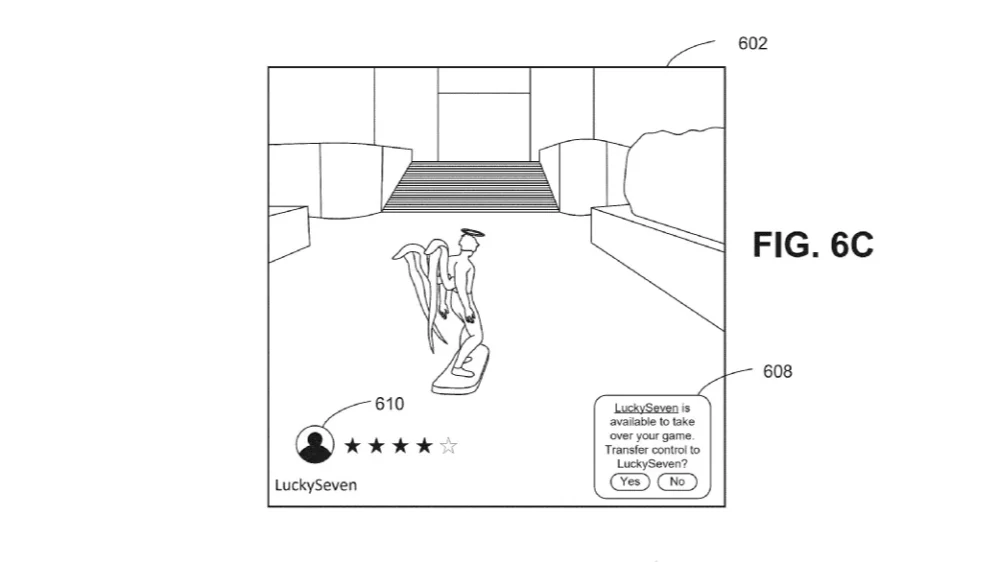
Microsoft has officially filed a patent that could fundamentally alter the way players interact with challenging video game content, introducing a concept known as "help sessions." The patent, titled "STATE MANAGEMENT FOR VIDEO GAME HELP SESSIONS," was initially submitted in 2024 and has recently become public, revealing a sophisticated framework designed to bridge the gap between player frustration and game completion. This technological exploration seeks to allow either an advanced machine learning model or a remote human player to temporarily assume control of a user’s game session to navigate difficult obstacles, boss fights, or complex puzzles.
The core premise of the patent rests on the observation that current methods of seeking assistance are inefficient and immersion-breaking. Microsoft’s documentation characterizes existing solutions—such as searching for walkthroughs on YouTube, browsing community forums like Reddit, or consulting digital guides—as "rudimentary." According to the filing, these external methods force players to disengage from the gaming environment, creating a disjointed experience that can lead to "player churn," where a user simply stops playing a game because they cannot overcome a specific hurdle.
The Mechanics of the Help Session Framework
A "help session," as defined by the patent, is a multi-tiered assistance experience. At its most basic level, it may involve a real-time tutorial overlaying the game screen, utilizing text, chat, or video-based instructions. However, the more revolutionary aspect of the filing is the "transfer of control." This feature would enable a player to hand over their input authority to a third party. This third party could be a "helper" player—potentially a friend or a highly-rated member of the Xbox community—or a machine learning model trained to handle specific gameplay scenarios.
The technical infrastructure required for this is referred to as "state management." In gaming, a "state" includes every variable of the current moment: the player’s health, inventory, position in the world, and the status of enemies. For a help session to function, the system must capture this state, transmit it to the helper, and then seamlessly reintegrate the progress made by the helper back into the original player’s save file. This process mirrors the "save state" functionality seen in emulators but applies it to live, high-fidelity modern gaming environments.
Chronology of Development and Leadership Context
The timing of this patent is significant within the broader timeline of Xbox’s evolution. While the patent was filed in 2024, its public disclosure comes shortly after a major leadership transition within Microsoft’s gaming division. In February 2026, Asha Sharma was appointed as the head of Xbox, succeeding a long lineage of industry veterans. While the patent predates Sharma’s tenure, it aligns with the strategic direction the company has taken regarding cloud integration and artificial intelligence.
The development of these AI-driven features follows years of Microsoft’s investment in its Azure cloud infrastructure and its "Gaming for Everyone" initiative. The company has historically led the industry in physical accessibility, most notably with the release of the Xbox Adaptive Controller in 2018. This patent represents the software-side evolution of that philosophy, aiming to remove cognitive or skill-based barriers in the same way the Adaptive Controller removed physical ones.
Comparative Industry Analysis: Microsoft vs. Sony
Microsoft is not alone in exploring AI-assisted gameplay. In early 2026, reports surfaced regarding a similar patent from Sony Interactive Entertainment. Sony’s proposed system involves an "AI ghost" or assistant that can analyze a player’s performance and provide real-time prompts or even take over controls to "beat the game for you."
The industry is currently witnessing an "arms race" in player retention technology. Data from game telemetry suggests that a significant percentage of players do not finish the games they purchase. By implementing "help sessions," platform holders like Microsoft and Sony aim to increase "completion rates," which in turn boosts the value of subscription services like Xbox Game Pass. If a player feels they can always progress through a difficult title, they are more likely to maintain their subscription and engage with future content.
Technical and Social Implications
The implementation of control-transfer technology raises several questions regarding the integrity of the gaming experience. Microsoft’s patent addresses these by suggesting various scenarios. In a racing game, the AI might take over to navigate a particularly sharp turn that the player keeps failing. In an adventure game, a human helper might guide the player through a complex labyrinth.
However, the "help session" model introduces several logistical and ethical considerations:
- Achievement Integrity: One of the primary concerns for the gaming community is how this will affect "Achievements" and "Trophies." If an AI or another player defeats a difficult boss, should the original player receive the associated reward? Microsoft’s patent suggests that state management could track which portions of a game were completed via a help session, potentially allowing developers to flag or disable achievements for those specific segments.
- Security and Privacy: Transferring control of a console session to another human player requires robust security protocols. Microsoft would need to ensure that the "helper" cannot access sensitive account information or perform unauthorized actions outside of the game environment.
- Community Moderation: If human players act as helpers, a rating system or "proctor" program would likely be necessary to prevent griefing—where a helper intentionally ruins a player’s progress or deletes items.
- Network Latency: For a help session to be effective, especially in fast-paced action games, the latency between the player and the helper must be minimal. This suggests that the feature would be heavily reliant on Xbox Cloud Gaming (xCloud) technology, where the game is already running on a remote server, making the "hand-off" of control virtually instantaneous.
Machine Learning and the Future of the "AI Helper"
The use of machine learning models as helpers is perhaps the most forward-looking aspect of the patent. Unlike a static "Easy Mode" which simply lowers enemy health or increases player damage, a machine learning model could act as a dynamic tutor. By analyzing millions of hours of gameplay from the community, the AI could learn the "optimal" path or strategy and demonstrate it to the player in real-time.
This aligns with Microsoft’s broader corporate push toward AI integration across all platforms, spearheaded by its Copilot initiatives. An "Xbox Copilot" could eventually become a standard feature of the dashboard, offering voice-activated assistance and hands-on demonstrations of game mechanics.
Market Impact and Player Retention
From a business perspective, the "help session" framework is a tool for ecosystem "stickiness." In the current gaming market, competition for a user’s time is fierce, not just from other games but from social media and streaming services. When a player hits a "wall" in a game—a point of frustration where they cannot progress—they are at high risk of abandoning the platform.
By providing an immediate, in-engine solution to frustration, Microsoft reduces the friction of the gaming experience. This is particularly relevant for the "casual-core" demographic—players who enjoy deep, complex games like Elden Ring or Starfield but may lack the time or mechanical skill to overcome every challenge. Providing a "help session" keeps these players engaged with the product, increasing the likelihood of in-game purchases and long-term brand loyalty.

Potential Implementation and Developer Adoption
While Microsoft has secured the patent, the actual implementation would likely be at the discretion of individual game developers. Similar to how developers must opt-in to features like "Auto-HDR" or "Quick Resume," the "help session" framework would require integration during the game’s development phase.
Some developers may embrace the tool as a way to make their games more accessible to a wider audience. Others, particularly those whose games are defined by their difficulty—such as "Soulslike" developers—might view the feature as a compromise of their creative vision. Microsoft’s patent appears to offer a flexible "state management" system that could be tailored to different genres and developer preferences, allowing for anything from a simple hint to a full control takeover.
Conclusion
The "STATE MANAGEMENT FOR VIDEO GAME HELP SESSIONS" patent is a clear indicator of Microsoft’s vision for the future of interactive entertainment. By leveraging machine learning and the connectivity of the Xbox community, the company aims to transform the isolated experience of "getting stuck" into a collaborative or AI-supported milestone. While the technology is still in the patent stage and there is no confirmed release date for these features, the filing underscores a shift in the industry: a move away from the "get good" mentality of the past toward a more inclusive, friction-free future where every player is empowered to reach the credits, regardless of the obstacles in their path. As the gaming landscape continues to evolve under new leadership and advancing AI capabilities, the "help session" may soon become as standard as the pause menu.