


Bungie’s upcoming extraction shooter, Marathon, has generated considerable buzz following its recent server slam, with players commending the intricate and fluid contract system that forms a core pillar of its gameplay experience. Among the array of challenges presented, the NuCaloric corporation’s "Data Reconstruction" contract line stands out as a particularly engaging series, demanding both navigational prowess and keen observational skills. This guide delves into the specifics of "Data Reconstruction: Part 1," offering a comprehensive walkthrough alongside a broader contextual analysis of its design, implications, and strategic considerations for runners navigating the hostile environments of Tau Ceti IV.

Marathon’s Re-Emergence and the Contract System
Marathon, a spiritual successor to Bungie’s acclaimed 1990s sci-fi FPS series, marks a significant return for the developer to the arena of competitive and cooperative multiplayer. Positioned as an extraction shooter, the game tasks players, known as Runners, with undertaking perilous missions on alien worlds, collecting valuable data and artifacts, and successfully extracting before succumbing to environmental hazards or hostile entities. The server slam offered a critical early look at the game’s mechanics, particularly highlighting the "contract" system as a primary driver of progression and narrative engagement. These contracts, often issued by various in-game corporations like NuCaloric, serve as structured objectives that guide players through diverse maps, requiring them to interact with the environment, combat enemies, and recover crucial intelligence. The fluidity and dynamic nature of these contracts have been a point of positive feedback, suggesting a robust foundation for Marathon‘s evolving gameplay loop.

NuCaloric and the "Data Reconstruction" Initiative
NuCaloric, presented as a major corporate entity within the Marathon universe, appears to be deeply invested in scientific research, environmental monitoring, or perhaps even terraforming efforts on Tau Ceti IV. The "Data Reconstruction" contract line implies a critical need to recover fragmented or lost information, suggesting a potential crisis, a historical investigation, or ongoing research efforts that have been disrupted. The objectives—scanning "Sparkleaf bioprinters," "fungal bioprinters," and downloading an "agriculture report"—hint at a focus on biological and ecological data, possibly related to the planet’s flora, fauna, or attempts to cultivate new life forms in its challenging conditions. Understanding NuCaloric’s overarching goals provides a narrative anchor for these seemingly disparate tasks, enriching the player’s motivation beyond mere objective completion.
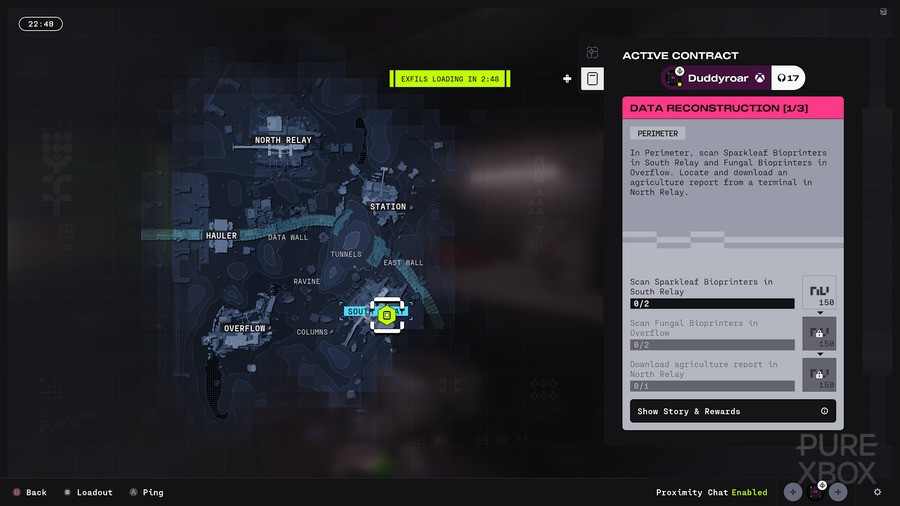
"Data Reconstruction: Part 1" – Objectives and Overview
The initial phase of the "Data Reconstruction" contract is set across two distinct but interconnected regions of the Perimeter map: the South Relay and Overflow sectors, culminating in a data retrieval mission at North Relay. This introductory contract is designed to familiarize players with basic navigation, objective interaction, and environmental puzzle-solving, while also introducing the concept of multi-stage missions that require transitioning between areas. The primary objectives for Part 1 include:
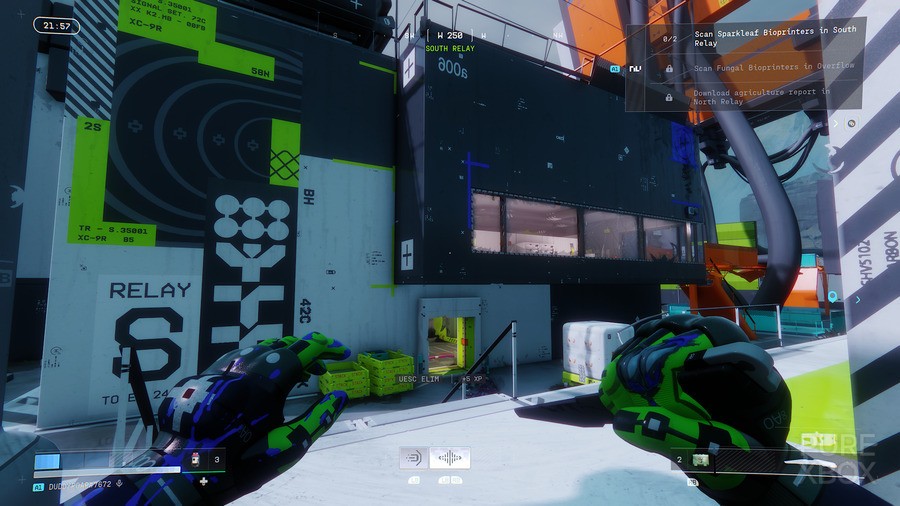
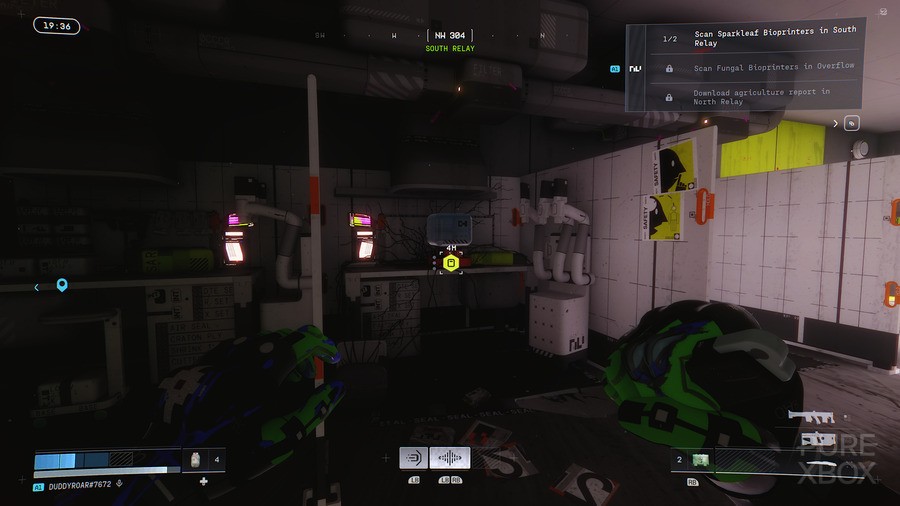
- Scanning two Sparkleaf bioprinters in the South Relay area.
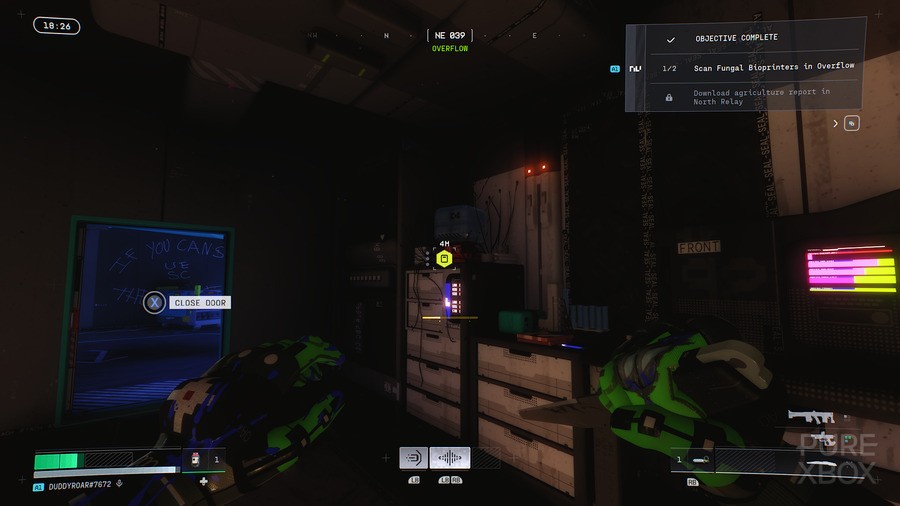
- Scanning two fungal bioprinters in the Overflow area.
- Downloading an agriculture report from a terminal in the North Relay, which involves an additional power restoration step.
Each step is critical, not just for contract completion but also for understanding the nuanced design principles Bungie employs in Marathon.
Phase 1: South Relay – Locating Sparkleaf Bioprinters
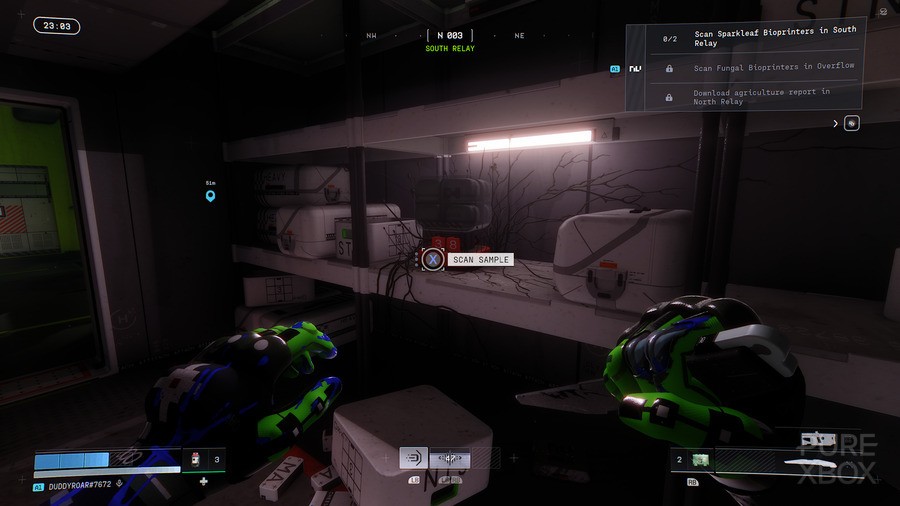
The mission commences in the South Relay point of interest on the Perimeter map. This area, characterized by its industrial architecture and relay stations, often presents initial skirmishes with enemy factions, requiring players to maintain situational awareness from the outset.
- Initial Navigation: From the South Relay spawn, Runners must orient themselves towards a prominent building located directly to the south. The entrance point is crucial: locate a door that faces southwest, allowing access into the structure. This initial navigational challenge emphasizes map reading and spatial awareness, skills paramount in an extraction shooter where precise movement can mean the difference between success and failure.
- First Sparkleaf Bioprinter: Upon entering the building, players should proceed straight ahead before making a decisive left turn into a designated storage room. This room, often cluttered with various crates and containers, conceals the first Sparkleaf bioprinter. The placement encourages thorough exploration and highlights the game’s tendency to embed objectives within seemingly ordinary environmental elements. Scanning this device initiates the data collection process, contributing to NuCaloric’s larger reconstruction efforts.
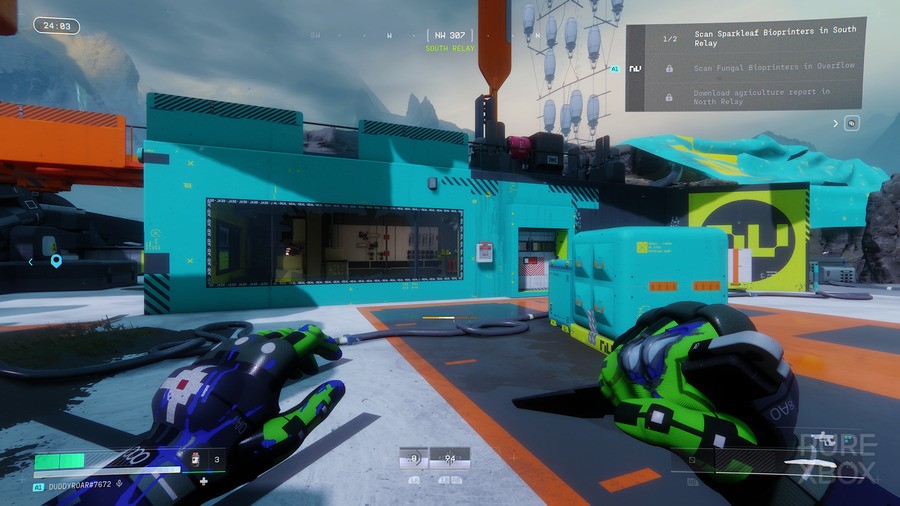
- Second Sparkleaf Bioprinter: After securing the first bioprinter’s data, players must retrace their steps out of the building and navigate north. The second Sparkleaf bioprinter is housed within a separate, distinct building further north of the initial structure. The journey between these two points may involve encountering additional hostiles or environmental obstacles, underscoring the dynamic threat assessment required in Marathon. Entering this second building reveals the final Sparkleaf bioprinter, which, once scanned, completes the first segment of the data acquisition process and prepares players for the next geographical transition.
The Sparkleaf bioprinters themselves are speculative devices, possibly involved in the propagation or analysis of indigenous plant life, or perhaps even early-stage terraforming projects. Their presence in what appears to be research or storage facilities suggests a systematic approach by NuCaloric to catalog and potentially manipulate the planet’s biology.
Phase 2: Overflow – Discovering Fungal Bioprinters
With the Sparkleaf data secured, the contract directs players towards the Overflow sector, a potentially more complex and densely packed area of the Perimeter map. Overflow typically features multi-level structures and more intricate layouts, demanding careful vertical navigation and an understanding of interior spaces.
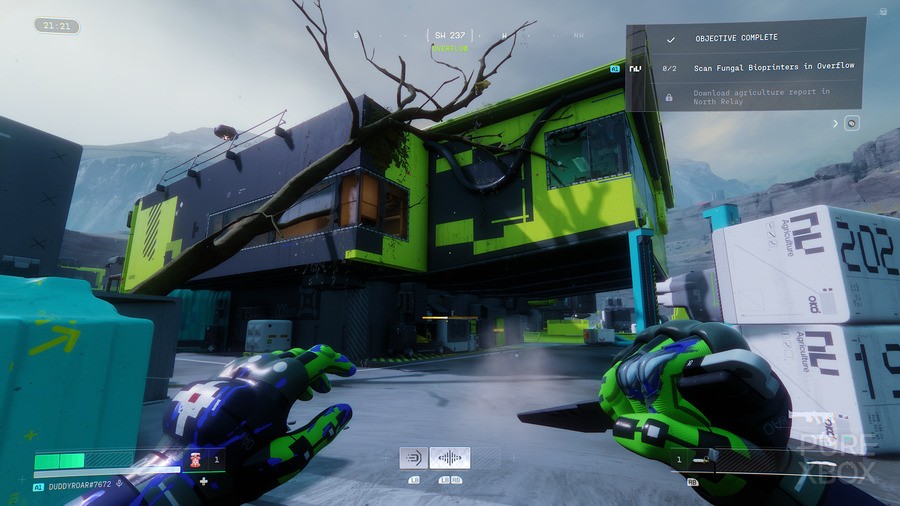
- Entry to Overflow’s Main Building: The transition to Overflow’s main building marks a shift in environmental challenge. This central structure is likely a hub of activity, potentially housing more formidable enemy encounters due to its strategic importance. Players must locate and enter this main building, which often has multiple entry points, allowing for varied tactical approaches depending on team composition or individual playstyle.
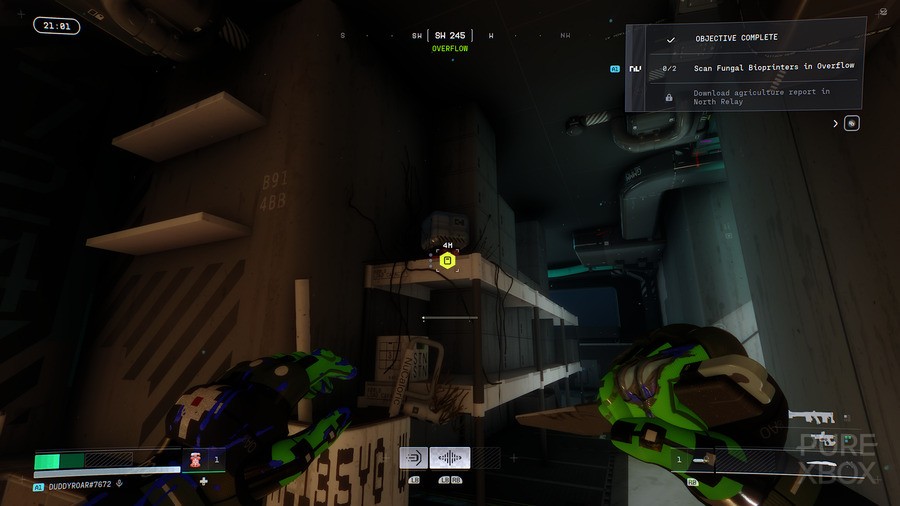
- Northern Fungal Bioprinter: Inside the main building, the first fungal bioprinter is situated on the northern side. To reach it, players should enter the first accessible door on this side and immediately begin an ascent. This typically involves scaling boxes, crates, or other environmental assets that form makeshift staircases or platforms leading to an upper level. Once upstairs, navigating towards the northernmost part of the building will reveal a shelf. The fungal bioprinter rests atop this shelf, a subtle placement that rewards attentive exploration. This verticality adds a layer of complexity to navigation, a common design element in modern shooters that encourages players to utilize all dimensions of the map.
- South-Western Fungal Bioprinter: Following the scan of the northern bioprinter, players must then traverse the building to its south-western area. This often means descending from the upper levels or finding alternative routes through the main floor. The final fungal bioprinter for this section is located in the south-westernmost room, positioned discreetly next to one of the doors leading into that room. Its placement requires players to carefully sweep rooms, emphasizing the importance of not rushing through objectives.
Fungal bioprinters, by inference, suggest a focus on mycological research or the cultivation of fungal organisms, which could be critical for nutrient cycling, bioremediation, or even as a food source in the harsh conditions of Tau Ceti IV. The distinction between "Sparkleaf" and "fungal" bioprinters hints at a diverse biological ecosystem under NuCaloric’s scrutiny, reinforcing the game’s world-building efforts.
Phase 3: North Relay – The Agriculture Report and Power Restoration
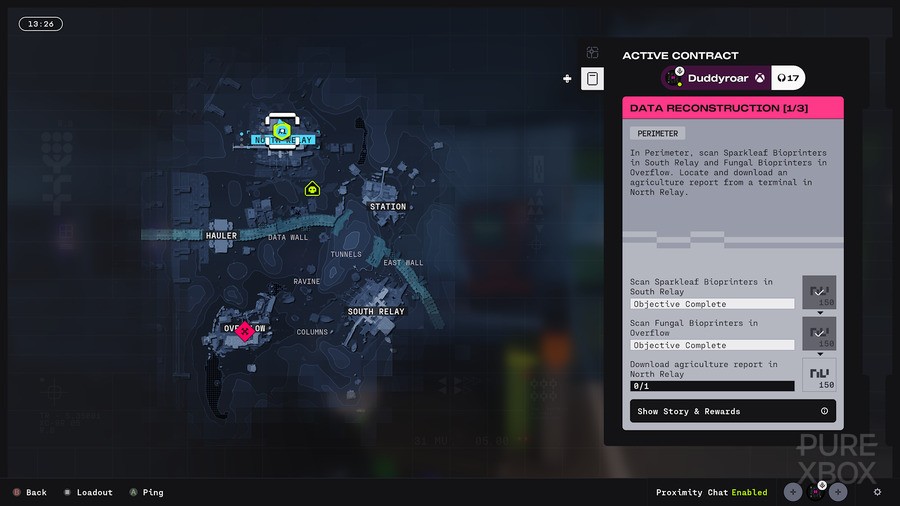
The final and arguably most critical step of "Data Reconstruction: Part 1" leads players to the North Relay, where they are tasked with downloading an "agriculture report." This objective not only concludes the data collection but also introduces a multi-stage puzzle element, demonstrating Bungie’s intent to diversify mission design beyond simple scans.
- Arrival at North Relay: Players must make their way to the North Relay, an area that typically features more pronounced corporate infrastructure. The target building is easily identifiable by its white exterior and the prominent "NuCaloric" text emblazoned upon it. Entry is gained through doors located on the side bearing this text, guiding players to the central terminal.
- The Terminal and the "Secret Step": Upon reaching the terminal, the initial interaction will not immediately yield the agriculture report. Instead, players are prompted to restore power to the terminal—a classic video game trope reimagined with Marathon‘s environmental storytelling. This "secret step" prevents a straightforward download, adding an unexpected layer of engagement and difficulty.
- Restoring Power: The power restoration mechanism is located downstairs, directly beneath the terminal room. Players have two primary routes to descend:
- Internal Route: A vent situated in the right-hand corner of the terminal room serves as a conduit to a staircase, leading directly to the lower level. This path emphasizes environmental traversal and hidden pathways, rewarding observant players.
- External Route: Alternatively, players can exit the building, navigate to a balcony, and jump down a level to access the lower floor from the exterior. This route offers a quicker, albeit potentially more exposed, option.
Once downstairs, the control panel required for power restoration is found in the room situated directly below the terminal. Interacting with this panel re-energizes the system, making the agriculture report accessible.
- Final Data Download: With power restored, players must ascend back to the terminal room, using either the internal staircase or re-entering from the exterior. The terminal will now be fully operational, allowing for the successful download of the agriculture report. This final interaction completes the "Data Reconstruction: Part 1" contract.
The requirement to restore power adds a significant layer of immersion and strategic depth. It transforms a simple interaction into a minor environmental puzzle, forcing players to understand the building’s layout and often exposing them to additional threats during the power restoration process. This design choice implies that vital infrastructure on Tau Ceti IV is either degraded, under constant attack, or subject to intermittent power failures, further painting a picture of a harsh and unpredictable environment. The agriculture report itself would likely contain crucial data on crop yields, soil conditions, or the viability of various food sources, essential for sustained operations on the planet.
Strategic Considerations and Gameplay Tips
Completing "Data Reconstruction: Part 1" effectively requires more than just following waypoints. Players should consider:
- Threat Assessment: Each area—South Relay, Overflow, and North Relay—will likely contain different types and densities of hostile entities. Adapting loadouts and tactics (e.g., stealth vs. direct engagement) is crucial.
- Team Coordination: While possible solo, Marathon‘s design often rewards cooperative play. Designating roles, covering flanks, and communicating objective locations can significantly ease the difficulty.
- Resource Management: Keeping track of ammunition, grenades, and health items is vital, especially during transitions between areas where resupply might be scarce.
- Map Familiarity: Learning the intricacies of the Perimeter map, including common enemy patrol routes, cover points, and alternative paths, will reduce mission time and risk. The "secret step" at North Relay particularly highlights the importance of understanding verticality and interconnected spaces.
- Extraction Planning: Upon contract completion, players must successfully exfil with their acquired data and any loot. Planning the extraction route and securing the exfil point is the final, critical hurdle in Marathon‘s extraction shooter loop.
Implications and Broader Context
"Data Reconstruction: Part 1" serves as an excellent primer for Marathon‘s contract system, showcasing Bungie’s commitment to dynamic mission design and environmental storytelling. The contract subtly introduces lore elements concerning NuCaloric’s scientific endeavors and the challenging ecological state of Tau Ceti IV. The progressive nature of the objectives, moving from simple scans to a multi-stage puzzle involving power restoration, demonstrates a thoughtful escalation of complexity that players can expect in subsequent contracts.
The emphasis on data recovery and the diverse types of bioprinters suggest that players are not merely engaging in combat, but are actively participating in a larger scientific or corporate agenda, unraveling the mysteries of the planet piece by piece. This foundational contract prepares players not just for mechanical proficiency but also for deeper engagement with the evolving narrative and challenges that Marathon promises to deliver in its full release. As players continue to navigate the treacherous landscapes of Tau Ceti IV, understanding the underlying purpose of these contracts will be as crucial as mastering their combat skills.