

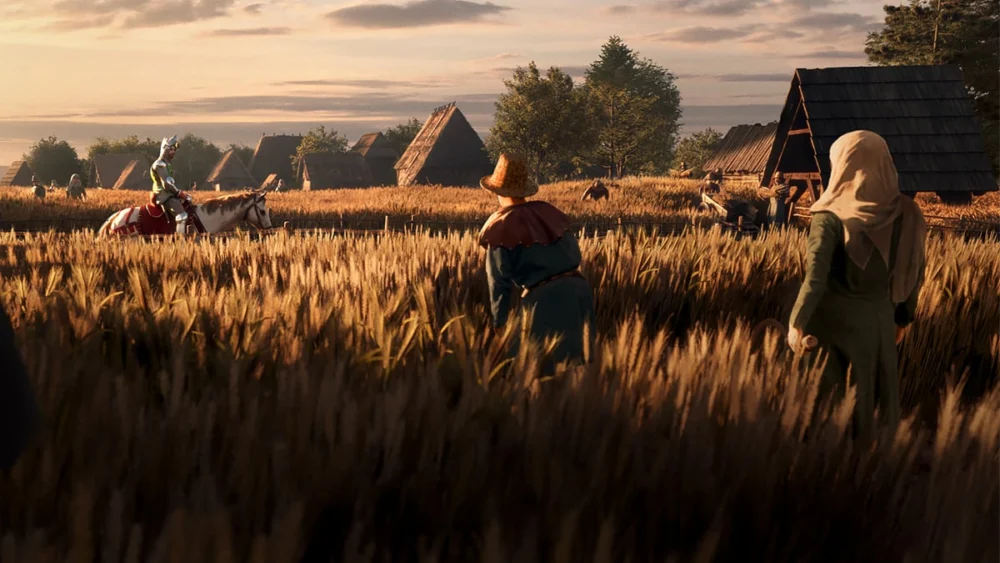
Farming stands as a cornerstone of survival and prosperity in the strategic city-builder Manor Lords, dictating the very rhythm of life for your nascent medieval settlement. From providing essential sustenance to fueling burgeoning industries and maintaining settler morale, an efficient agricultural system is paramount for navigating the challenges of early medieval life. This guide delves into the intricacies of farming, offering a strategic framework for cultivating a robust food supply and leveraging agricultural resources for long-term growth.
The Indispensable Role of Early Agriculture
Upon establishing a new settlement in Manor Lords, the immediate priority shifts to securing a reliable food source. Without it, your villagers face starvation, leading to plummeting morale, population decline, and ultimately, the collapse of your fledgling manor. Farming offers the most sustainable and scalable solution to this fundamental need, positioning itself as an activity that players should prioritize from the earliest stages of the game. Beyond mere survival, a surplus of agricultural products lays the groundwork for economic expansion, enabling trade, supporting craft industries, and even contributing to the social fabric through the production of ale.
The initial focus for any lord or lady should invariably be on Wheat cultivation. Wheat is directly processed into grain, which can then be milled into flour and baked into bread – the primary and most accessible food source for your townsfolk. The early game, characterized by limited resources and a small population, presents a delicate balance where every harvest can mean the difference between growth and decline. Strategic planning for wheat production is especially critical to ensure a substantial surplus before the onset of winter. The colder months bring an abrupt halt to all outdoor farming activities, making a well-stocked granary and pantry indispensable for preventing widespread hunger and discontent.
As your settlement stabilizes and a reliable wheat supply is secured, attention can then shift to diversifying agricultural output. Barley emerges as the next crucial crop, primarily because it forms the essential ingredient for producing ale. Ale, while not a food staple, plays a vital role in the game’s economy and social dynamics. It contributes significantly to regional wealth, serves as a valuable trade commodity, and, perhaps most importantly, boosts the morale and satisfaction of your villagers, ensuring their continued loyalty and productivity.
The Seasonal Cycle and Agricultural Progression
Farming in Manor Lords is deeply intertwined with the game’s seasonal cycle, demanding foresight and strategic planning. The year progresses through distinct phases, each impacting agricultural operations:
- Spring (March – May): The season for planting. Fields must be plowed and sown with seeds. Efficiency during this period is crucial, as delays can impact the harvest yield.
- Summer (June – August): The growing season. Crops mature, requiring minimal direct intervention but benefiting from sustained good weather.
- Autumn (September – November): Harvest time. This is the busiest period for farmers, as the ripe crops must be gathered before the first frosts. A successful autumn harvest is the culmination of a year’s labor and the primary determinant of winter food security.
- Winter (December – February): The dormant season. No crops can be grown or harvested. Farmers may turn to other tasks, such as forestry, construction, or tending to livestock, while the settlement relies on its stored reserves.
This cyclical nature necessitates a robust infrastructure. Early on, a Farmhouse is the foundational structure, housing families dedicated to agricultural labor. As grain begins to accumulate, the construction of a Windmill becomes essential for converting raw grain into flour. Following this, a Communal Oven allows for the baking of flour into bread, completing the basic food production chain. When barley production begins, a Malthouse (to process barley into malt) and subsequently a Brewery (to convert malt into ale) are required to capitalize on this valuable resource. Adequate Granaries and Storehouses are also critical throughout this progression to prevent spoilage and ensure efficient resource flow.
Understanding Crop Types and Land Fertility
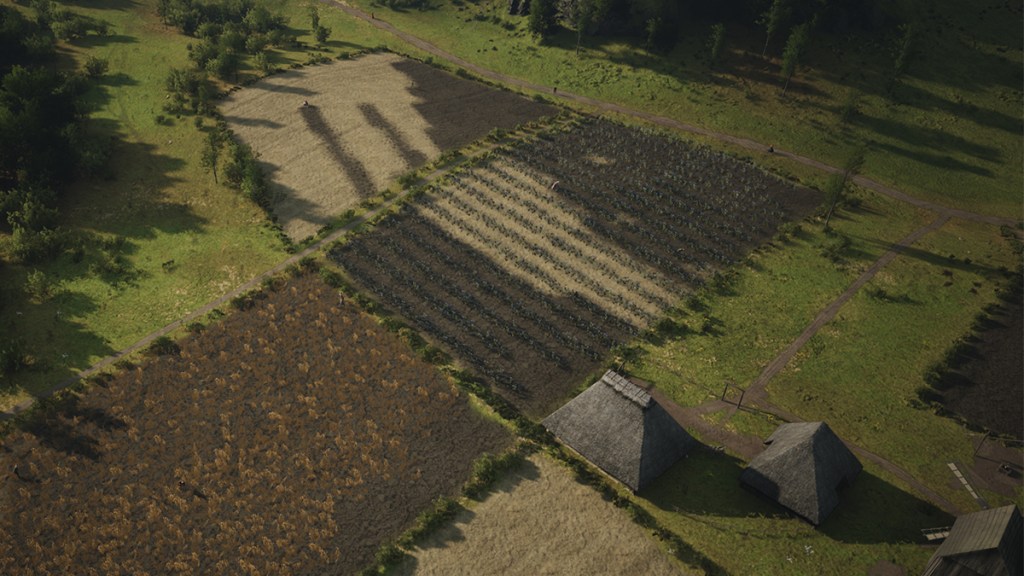
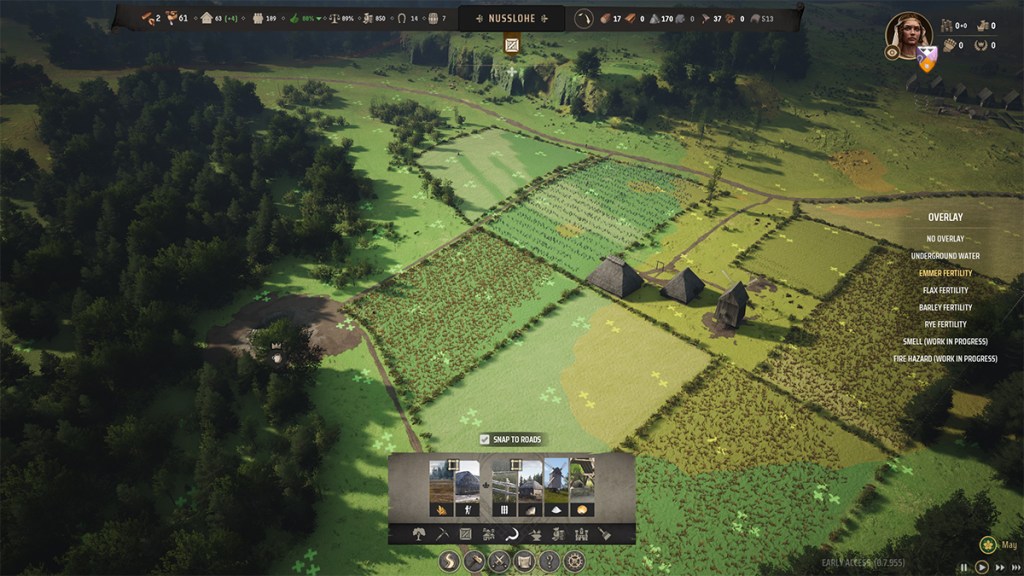
Manor Lords features a nuanced system of crop types, each with specific uses and fertility requirements. These include:
- Emmer (Wheat): This ancient grain is the bedrock of your settlement’s food supply. As clarified within the game’s mechanics, "Emmer" is the historical term for the type of wheat cultivated in medieval Europe, serving as the direct source for grain, flour, and bread. Its primary purpose is to feed your population, making its consistent cultivation non-negotiable for early-game survival and sustained growth.
- Barley: Crucial for the production of Ale. While not directly consumed as a primary food source, ale significantly boosts regional wealth, acts as a valuable trade commodity, and enhances the approval and morale of your villagers. A happy populace is a productive populace, and ale plays a surprisingly central role in maintaining social stability and economic buoyancy.
- Flax: Unlike Emmer and Barley, Flax is not a food crop. Instead, it is harvested to produce Linen, a vital raw material for crafting clothing and other textile-based goods. These goods can satisfy the needs of your settlers (improving their burgage plot levels) or be traded for substantial profits, diversifying your economy beyond mere subsistence.
- Rye: Similar to Emmer, Rye is another grain crop, primarily used for food production. Historically, Rye was often more resilient to harsh climates and poorer soil conditions than wheat, offering a valuable alternative or supplement, particularly in less fertile regions. While its exact in-game properties regarding resilience might vary, its role as a food staple is clear.
To optimize agricultural output, understanding land fertility is paramount. Within the Construction menu, under the "Farming" tab, players can access a detailed overlay showing the fertility for each specific crop type (Emmer, Flax, Barley, Rye). This color-coded map is an invaluable tool: bright green areas indicate highly fertile land, ideal for maximizing yields, while orange and red zones signify poor fertility, which should generally be avoided for that specific crop. Choosing fertile ground directly impacts the success of your harvests and the efficiency of your farming operations, reducing the need for larger fields or more labor to achieve sufficient yields.
Sustainable Farming: Crop Rotation and Field Management
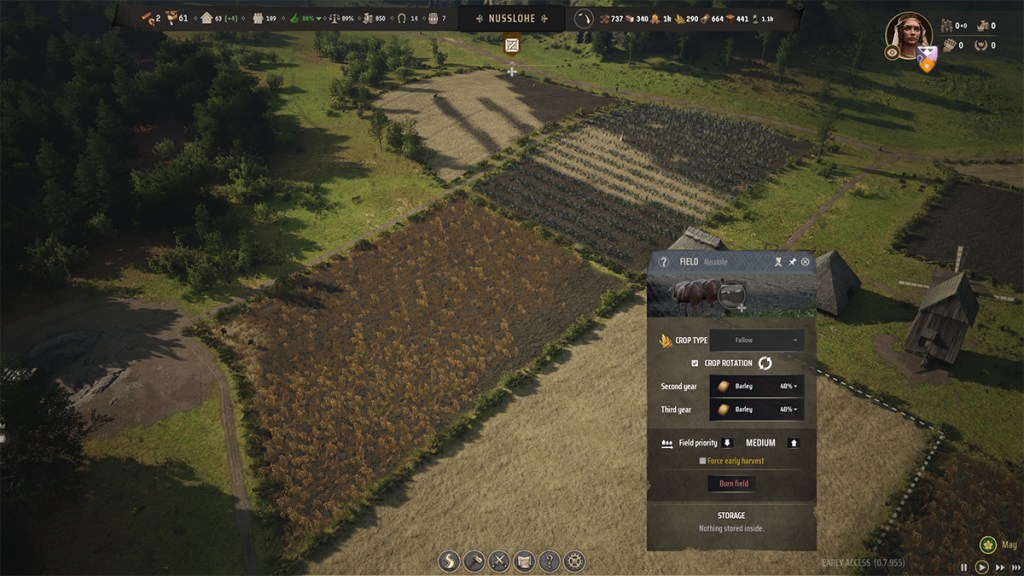
A key element of Manor Lords‘ agricultural realism is the implementation of soil fertility degradation. Continuous cultivation of the same crop on a single plot of land will deplete its nutrients, leading to diminishing returns over time. To counteract this and ensure long-term sustainability, the game incorporates a crop rotation system.
Players can assign a three-year cycle to each field, strategically rotating crops or allowing periods for the soil to recover. The most effective strategy involves a three-field system, a common practice in medieval agriculture:
- Year 1: Crop Cultivation (e.g., Emmer)
- Year 2: Crop Cultivation (e.g., Barley or another Emmer field if you have enough)
- Year 3: Fallow Period: The field is left uncultivated for an entire year. During this time, the soil naturally replenishes its nutrients, significantly boosting its fertility for future planting cycles.
- Alternatively, a field can be designated as Pasture during its fallow year. This allows livestock (sheep or cattle) to graze, which further enhances soil fertility through their manure, offering a dual benefit of land recovery and animal product generation.
Regarding field sizing, the game utilizes the historical unit of morgen. A single morgen is roughly equivalent to 0.86 acres, representing the amount of land that could theoretically be plowed by an ox in a morning. The game advises that a single family can effectively manage approximately 2/3 of a morgen per year. While a 1-morgen field might initially seem sufficient to feed a small town, the reality of diminishing fertility means that relying on a single large field is unsustainable. Therefore, establishing at least three fields for each primary crop type (e.g., three wheat fields) is a recommended strategy: two fields can be actively cultivated in a given year, while the third lies fallow or is used for pasture, ensuring a continuous and sustainable food supply without exhausting the land. This cyclical approach not only maximizes yields over time but also minimizes the risk of catastrophic crop failures due to depleted soil.
Advancing Agriculture: Development Points and Strategic Investments
As your settlement grows and you upgrade Burgage Plots, you earn Development Points, which can be invested in various skill trees to enhance different aspects of your economy and infrastructure. The farming-specific development points offer significant improvements to agricultural efficiency and output:
- Heavy Plow: This crucial upgrade allows for the use of oxen in plowing fields. Oxen dramatically increase the speed and efficiency of field preparation, enabling larger fields to be worked by fewer families or existing families to manage more land, thereby boosting overall agricultural output. This is particularly beneficial for expanding settlements with increasing food demands.
- Fertilization: This development point provides methods to actively improve soil fertility. This could involve techniques like spreading manure from livestock or developing specific crop rotations that naturally enrich the soil. Fertilization reduces the reliance on extensive fallow periods or allows for more intensive farming on existing plots, optimizing land use.
- Sheep Farming: While not directly a crop-farming development, sheep farming is intrinsically linked to sustainable agriculture. Sheep provide wool (for clothing and trade) and meat (food). More importantly, their grazing can contribute to field fertility when fields are used as pasture during fallow periods, creating a symbiotic relationship between livestock and crop production.
- Irrigation/Advanced Husbandry (Hypothetical but plausible): While not explicitly detailed, similar city-builder games often feature developments that enhance crop yields through water management or improve the productivity of farm animals, which could indirectly benefit farming by providing additional resources or labor.
Investing development points strategically into farming enhancements can transform a struggling agricultural sector into a highly efficient engine of growth, allowing your settlement to support a larger population, generate more trade goods, and build regional wealth.
Broader Implications and Long-Term Prosperity
The mastery of farming in Manor Lords extends far beyond merely feeding your villagers. It forms the bedrock of your entire medieval economy and social structure.
- Economic Stability: A reliable surplus of grain and ale allows for robust trade with neighboring regions, bringing in much-needed regional wealth and resources not produced locally. Flax production similarly feeds into the textile industry, creating valuable manufactured goods for trade.
- Population Growth: Consistent food security is a prerequisite for attracting new families to your settlement and enabling existing families to upgrade their Burgage Plots, leading to population expansion. A larger population, in turn, provides more labor for all industries, including advanced ones.
- Social Harmony: Well-fed and content villagers, regularly supplied with ale, are less prone to dissent and banditry. High approval ratings ensure steady labor and contribute to the overall stability of your manor.
- Military Strength: A prosperous and well-fed population can support a larger and better-equipped militia, crucial for defending your territory against bandits and rival lords.
- Strategic Expansion: With a strong agricultural base, you are freed to focus resources and labor on developing specialized industries, expanding your territory, and asserting your dominance in the region.
In conclusion, farming in Manor Lords is not a simple mechanic but a complex, multi-faceted system that demands careful attention, strategic planning, and an understanding of its interconnectedness with every other aspect of your settlement. While it may be tempting to blanket the landscape with fields, true mastery lies in efficient, sustainable practices. By understanding crop types, leveraging land fertility, implementing thoughtful crop rotation, and investing in agricultural development, players can ensure their manor not only survives but thrives, evolving from a humble village into a formidable regional power. The success of your medieval domain, truly, begins in the fields.