

Bungie, the Bellevue-based developer renowned for revolutionizing the first-person shooter (FPS) genre with Halo and redefining the looter-shooter with Destiny, has returned to its foundational roots with the 2026 release of Marathon. This reimagining of the studio’s 1994 science-fiction classic marks a significant strategic pivot for the company, moving away from the sprawling space-opera narratives of its previous decade to embrace the high-stakes, competitive environment of the extraction shooter. Set on the desolate yet vibrant planet of Tau Ceti IV, the new Marathon seeks to establish a dominant position in a market currently occupied by titles like Escape from Tarkov and ARC Raiders. Launched at a premium price point of $39.99 USD/EUR, the game challenges the prevailing industry trend of free-to-play multiplayer titles, positioning itself as a high-polish, premium PvPvE experience.

The Evolution of Bungie and the Extraction Shooter Genre
The extraction shooter genre, which found its footing in 2016 with the release of Tom Clancy’s The Division and the early access debut of Escape from Tarkov, represents a hybrid of traditional player-versus-player (PvP) and player-versus-environment (PvE) gameplay. Unlike the battle royale phenomenon where a single victor is crowned, extraction shooters focus on individual or team-based objectives. Players enter a "raid" or match, secure valuable loot, and must successfully navigate to an extraction point to retain their findings. Death typically results in the total loss of all gear carried during the session.
For Bungie, Marathon is more than a simple revival; it is a bold attempt to lead the FPS movement once more. The studio’s history is defined by era-defining icons: the original Marathon and Myth in the 1990s, the Halo trilogy in the 2000s, and the Destiny franchise in the 2010s. By returning to the Marathon IP, Bungie is attempting to apply its signature "gunplay feel" to a genre that demands tactical patience and high-risk decision-making.

Chronology of Development and the Road to Tau Ceti IV
The journey to the 2026 launch of Marathon was characterized by internal shifts and public scrutiny. Officially announced in 2023, the project initially faced skepticism from a player base accustomed to Destiny’s cooperative focus. Rumors circulated within the industry that Bungie had toyed with a battle royale concept before committing to the extraction shooter format.
The development timeline saw a critical juncture in April 2025 during a closed alpha test. Feedback from participants was reportedly mixed, citing issues with player onboarding and balance. This prompted Bungie to delay the release, refining the experience to meet the high expectations associated with the studio’s brand. To ensure infrastructure stability, Bungie conducted a "Server Slam" in early 2026, a pre-release trial that allowed the developer to stress-test servers against a massive influx of players.

The final product is set many years after the events of the original 1990s trilogy. Players assume the roles of "Runners," cybernetic mercenaries exploring Tau Ceti IV to recover lost technology and biological artifacts for various rivaling factions. The narrative is delivered through an organic, shared world rather than a traditional single-player campaign, a first for a major Bungie release.
Gameplay Mechanics: Risk, Reward, and Sponsored Kits
Marathon’s core gameplay loop centers on three-player squads, though solo play is supported. Currently, the game lacks a dedicated matchmaking queue for duos, meaning pairs will frequently find themselves at a numerical disadvantage against trios. At launch, the game features three distinct maps, each offering a different tactical environment.

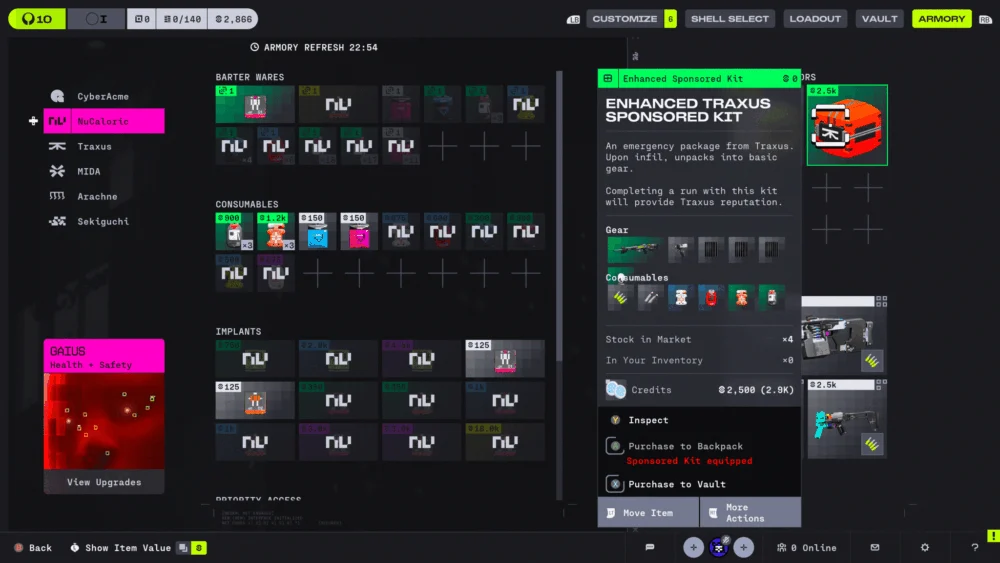
A key differentiator in Marathon’s economy is the "Sponsored Kit" system. To mitigate the frustration of "gear fear"—the hesitation to use high-level equipment for fear of losing it—Bungie provides Runners with free, basic equipment packages. These kits include a standard weapon, ammunition, and basic medical supplies. While effective for resource gathering, they are outclassed by the rare loot found within the arenas, creating a constant tension between playing it safe with free gear or risking expensive, customized loadouts for a competitive edge.
The game features six playable classes, each with unique tactical abilities:

- The Assassin: Utilizes stealth-oriented skills, including invisibility and smoke screens, to disengage from combat or ambush rivals.
- The Rook: A specialized solo-centric class that enters existing matches mid-way through the session. The Rook possesses the ability to disguise itself as an AI enemy, allowing for high-stakes infiltration and "scavenger" gameplay.
- Support-Oriented Classes: Various other classes focus on team utility, such as deployable shields, healing pulses, and advanced enemy-pinging systems.
These abilities are governed by lengthy cooldowns, ensuring that Marathon remains a shooter first and a "hero-based" game second.
Artistic Direction and Technical Execution
Visually, Marathon departs from the gritty realism common in the genre, opting for a "graphic realism" aesthetic. The art style is defined by bold primary colors, high-contrast environments, and futuristic yet retro-inspired UI elements. This visual flair extends to the game’s dynamic environmental events, such as the "Heat Cascade Protocol," which triggers flaming rain that forces players to seek cover, drastically altering the flow of combat.

Technical polish is evident in the small details. For instance, fallen player bodies undergo a visible decay process over the course of a match, providing observant players with clues about how recently a skirmish occurred. However, the game’s technical execution is not without criticism. The user interface (UI) utilizes a cursor-based navigation system—a carryover from Destiny—that many critics argue is clunky and ill-suited for controller users. Furthermore, the looting screens and inventory icons have been described as cluttered and difficult to distinguish during high-pressure situations.
Narrative Structure and Lore Integration
True to Bungie’s established design philosophy, Marathon eschews traditional storytelling in favor of an "environmental narrative" and a dense, text-based Codex. Players will not find cinematic cutscenes explaining the state of the world; instead, the story is told through stylish, brief animations for each faction, cryptic dialogue, and an Alternate Reality Game (ARG) hidden within the world.

While this approach appeals to "lore hunters," it has proven divisive. Critics note that the vast majority of the player base may remain unaware of the game’s deeper plot, as it is buried under layers of menus and cryptic hints. Returning names and themes from the 1990s Marathon universe are present, providing a sense of continuity for long-time fans, but the barrier to entry for new players interested in the story remains high.
Comparative Analysis: The 2026 Competitive Landscape
In the context of the 2026 gaming market, Marathon faces stiff competition. Its $39.99 entry fee puts it in direct competition with ARC Raiders, while its seasonal content model is compared to giants like Call of Duty: Black Ops 7.

| Supporting Data: Content Volume Comparison (Projected 2026) | Feature | Marathon (Launch) | Call of Duty: Black Ops 7 (Current Season) |
|---|---|---|---|
| Maps | 3 (4th arriving late March) | 9 Multiplayer / 1 Battle Royale | |
| Classes/Roles | 6 Classes | Loadout-based / Multiple Operators | |
| Entry Price | $39.99 | $69.99 (or Subscription) | |
| Monetization | Paid Battle Pass / Skins | Paid Battle Pass / Extensive Store |
While Marathon offers superior gunplay and atmospheric depth, it currently lags behind its competitors in terms of pure content variety. The reliance on three maps and a limited selection of boss encounters has led to concerns regarding the game’s longevity, especially given the "mandatory wipe" system that resets player progression every three months.
Official Responses and Market Implications
Bungie has acknowledged the feedback regarding the game’s onboarding process. Early reviews and player data suggest that the tutorial is inadequate, failing to explain complex mechanics such as faction-based stat upgrades and weapon attachment systems. In response to these concerns, Bungie representatives have stated that the studio is committed to a long-term "live service" evolution, similar to the trajectory of Destiny 2.

The success of Marathon is critical for Bungie as it navigates its role within the Sony Interactive Entertainment ecosystem. After years of diminishing returns on Destiny 2 expansions, Marathon represents a necessary diversification of the studio’s portfolio. Industry analysts suggest that if Bungie can successfully refine the UI and expand the map pool within the first six months, Marathon could become the premier "tactical" alternative to more frantic shooters.
Conclusion: A Bold but Incomplete Vision
Marathon is a game of stark contradictions. It boasts some of the most satisfying shooting mechanics and stylish art direction in the modern FPS market, yet it is hampered by an impenetrable narrative delivery and an unrefined user interface. The high-intensity combat and the rush of a successful extraction provide a unique adrenaline spike, but the lack of content depth at launch may alienate casual players.

As it stands, Marathon is a competent and occasionally brilliant addition to the extraction shooter genre. Bungie has demonstrated that it still possesses the technical prowess to create a standout multiplayer experience. However, the transition from "halfway there" to an "unmissable experience" will depend entirely on the studio’s ability to respond to player feedback and deliver a consistent stream of meaningful content in the months following launch. For now, Marathon is a high-stakes gamble that shows immense promise but requires further refinement to truly lead the genre.