

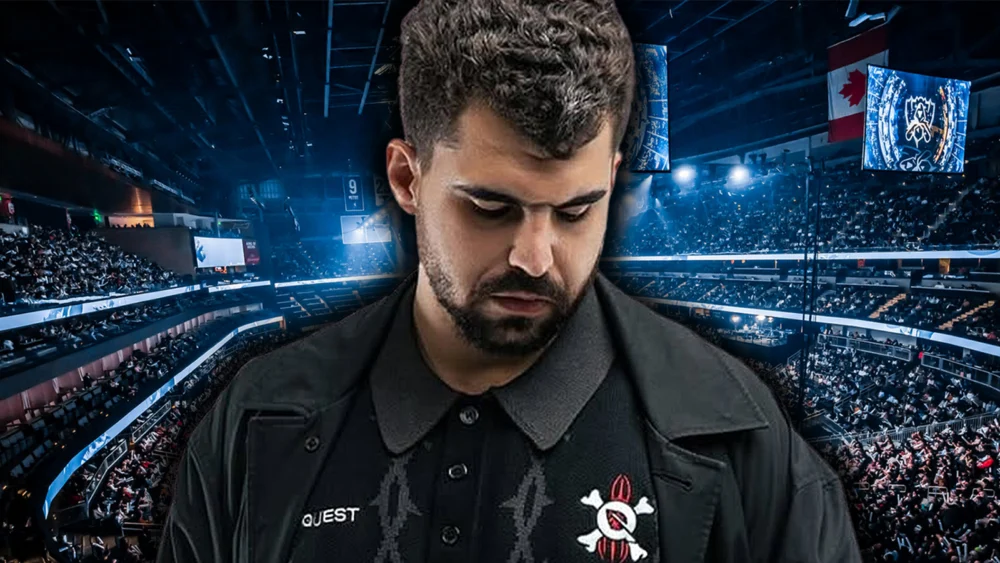
The highly anticipated music video accompanying the League of Legends World Championship has been significantly delayed, with Riot Games, the developer and publisher of League of Legends, confirming that the production timeline has been extended due to the intricate process of digitally removing professional player Gabriël "Bwipo" Rau from the final cut. This decision, announced via the official League of Legends Esports social media channels, underscores the scrutiny faced by prominent figures in the esports community and the evolving standards for representation in official league content.
The League of Legends World Championship, often referred to as Worlds, represents the pinnacle of competitive play within the game’s burgeoning esports ecosystem. This year’s tournament is slated to commence on October 14 and conclude on November 9, with matches hosted across three major Chinese cities: Beijing, Shanghai, and Chengdu. Historically, LoL Esports has cultivated a tradition of releasing a visually stunning and thematically rich music video in the days leading up to the tournament’s opening. These videos typically feature a roster of participating players and their respective teams, interwoven with the iconic characters and lore of the League of Legends universe, serving as a powerful anthem to ignite fan excitement.
However, in a departure from this established norm, the release of this year’s Worlds music video has been pushed back to October 13, just one day before the global competition is set to kick off. The reason behind this unusual postponement has rapidly gained traction and become a talking point within the game’s vast player base.
The Bwipo Controversy and the Decision to Edit
The official League of Legends Esports Twitter account issued a statement on October 8, 2025, clarifying the situation. The tweet revealed that the music video’s launch date was being rescheduled to October 13 specifically because the production team was engaged in the complex task of editing out Bwipo. The statement explicitly linked this decision to his recent controversial remarks concerning women in esports.
In September 2025, during a Twitch stream, Bwipo made comments that insinuated women should avoid participating in competitive gaming during their menstrual cycles. He articulated his views by stating, "When a woman is on the wrong part of the month, for playing competitively – you know what I mean? There is a time of the month where you should not be playing competitive games as a woman in my opinion." He further elaborated, citing personal observation, "This is my experience. I lived with one for a while, and she played a lot of League ranked. It was really obvious when she was getting super irritated at every little thing. I’m not trying to be sexist or anything, that’s just the way it was."
These comments immediately ignited widespread backlash across social media platforms and within various esports communities. In response to the public outcry, LoL Esports explained their rationale: "Bwipo was featured in the original cut, but given his recent comments, we decided it wouldn’t be right to showcase him in a piece that represents LoL Esports, pro players, and fans."
The statement continued to detail the logistical challenges posed by this decision: "Editing him out required significant changes during the final stages of production, and because he was the player representing the Americas, that region will not appear in this year’s video as originally intended." This means that a segment of the video that was meant to highlight the players from the North American region will be absent from the final release.
Riot Games emphasized that this decision was not a punitive measure or a competitive ruling. Instead, it was framed as a strategic choice concerning brand representation: "This was not part of any sanction or competitive ruling, but a decision about how we represent our sport and community on a global stage."
Chronology of Events and Community Reaction
The controversy surrounding Bwipo’s comments unfolded over several weeks, leading up to the music video delay.
- September 2025: Bwipo makes controversial remarks about women in competitive gaming during a Twitch stream.
- Late September 2025: Widespread criticism and outrage emerge across esports communities and social media platforms.
- Late September 2025: Bwipo issues an apology for his statements, acknowledging the hurt caused and promising to reflect and learn.
- Late September 2025: Bwipo’s team, FlyQuest, benches him for one match as a consequence of his comments. FlyQuest later qualified for Worlds.
- October 8, 2025: LoL Esports announces the delay of the Worlds music video, citing the need to edit Bwipo out due to his recent comments.
The decision to edit Bwipo out has polarized the League of Legends community. Supporters of the move view it as a necessary step to uphold inclusivity and demonstrate a commitment to a respectful esports environment. They argue that featuring someone who made disparaging remarks, regardless of an apology, would send the wrong message to a global audience. Conversely, critics contend that the editing process is an overreach, suggesting that the league is going "too far" in its response, especially considering Bwipo’s apology and temporary benching by his team. This debate highlights the ongoing tension between accountability for public figures and the boundaries of artistic or promotional content.
The Impact of Bwipo’s Comments and Previous Sanctions
Bwipo’s comments regarding women’s participation in competitive gaming during their menstrual cycles tapped into a sensitive and often under-discussed aspect of player well-being and the broader discourse around gender in esports. His assertion that women might be too "tilted" or emotionally affected during their periods to compete at a high level has been widely refuted by medical professionals and advocacy groups, who emphasize the vast individual differences in menstrual experiences and the lack of scientific basis for such generalizations.
The immediate aftermath saw Bwipo’s team, FlyQuest, take disciplinary action by benching him for a single match. This action, while a step towards accountability, did not prevent FlyQuest from qualifying for the World Championship, where Bwipo is still slated to compete. The contrast between his continued participation in the tournament and his removal from the promotional music video underscores the nuanced approach Riot Games is taking, differentiating between competitive integrity and brand representation.
Historically, LoL Esports has navigated various controversies involving player conduct. Sanctions have ranged from fines and suspensions to more severe penalties for actions deemed to violate the league’s code of conduct, which typically includes clauses on harassment, discrimination, and bringing the game into disrepute. Bwipo’s situation, however, appears to be a case where the decision to edit him out was not a direct competitive ruling but a proactive measure to manage brand image and community perception in the lead-up to its most significant global event.
Broader Implications for Esports Representation
The decision by LoL Esports to edit Bwipo out of the Worlds music video carries significant implications for the broader esports industry. It signals a growing awareness among major esports organizations of the importance of representation and the potential impact of controversial statements made by their featured talent.
Firstly, it sets a precedent for how esports leagues and tournament organizers might handle public relations challenges stemming from player misconduct. The emphasis on "how we represent our sport and community on a global stage" suggests that promotional materials are being viewed not just as entertainment but as a crucial tool for shaping brand identity and fostering a positive community image.
Secondly, this event highlights the increasing power of social media and public opinion in influencing corporate decisions within esports. The rapid spread of Bwipo’s comments and the subsequent community reaction likely played a substantial role in prompting Riot Games’ swift response. This underscores the need for players, teams, and league operators to be acutely aware of their public personas and the potential ramifications of their words and actions.
Thirdly, the logistical challenge of editing out a featured participant, particularly a representative of a major region, points to the complexity of managing content in the digital age. It also underscores the potential for future conflicts between contractual obligations, player participation, and the need to maintain a brand-safe image.
Finally, the debate ignited by this incident further fuels ongoing discussions about diversity, inclusion, and the creation of respectful environments within esports. As the industry continues its trajectory towards mainstream recognition, the demand for higher standards of conduct and representation is likely to intensify, forcing all stakeholders to adapt and evolve. The League of Legends World Championship, with its massive global audience, serves as a critical platform where these evolving norms are both tested and shaped. The delayed music video, while a consequence of controversy, ultimately becomes a focal point for these important industry conversations.