

Keeper, the latest interactive narrative experience from Double Fine Productions and lead designer Lee Petty, arrives on Xbox Game Studios platforms with a distinct artistic vision and a gentle, contemplative approach to gameplay. While the game excels in its visual presentation and unique premise, it ultimately struggles to leave a lasting impact, falling short of the benchmarks set by its genre contemporaries and leaving players yearning for greater depth and engagement. This analysis delves into the core mechanics, narrative delivery, and comparative standing of Keeper within the evolving landscape of interactive storytelling.
Developed by the acclaimed studio behind titles like Psychonauts and Broken Age, Keeper represents a deliberate departure from the more complex and character-driven games for which Double Fine is known. Instead, it embraces the role of a "playable cinematic," a term that aptly describes its emphasis on atmosphere, environmental storytelling, and minimal player intervention. This design philosophy, while commendable for its ambition to explore the broader spectrum of what games can be, results in an experience that, for many, may feel more like an art installation than a fully realized interactive journey.
A Lighthouse’s Light in the Narrative Fog
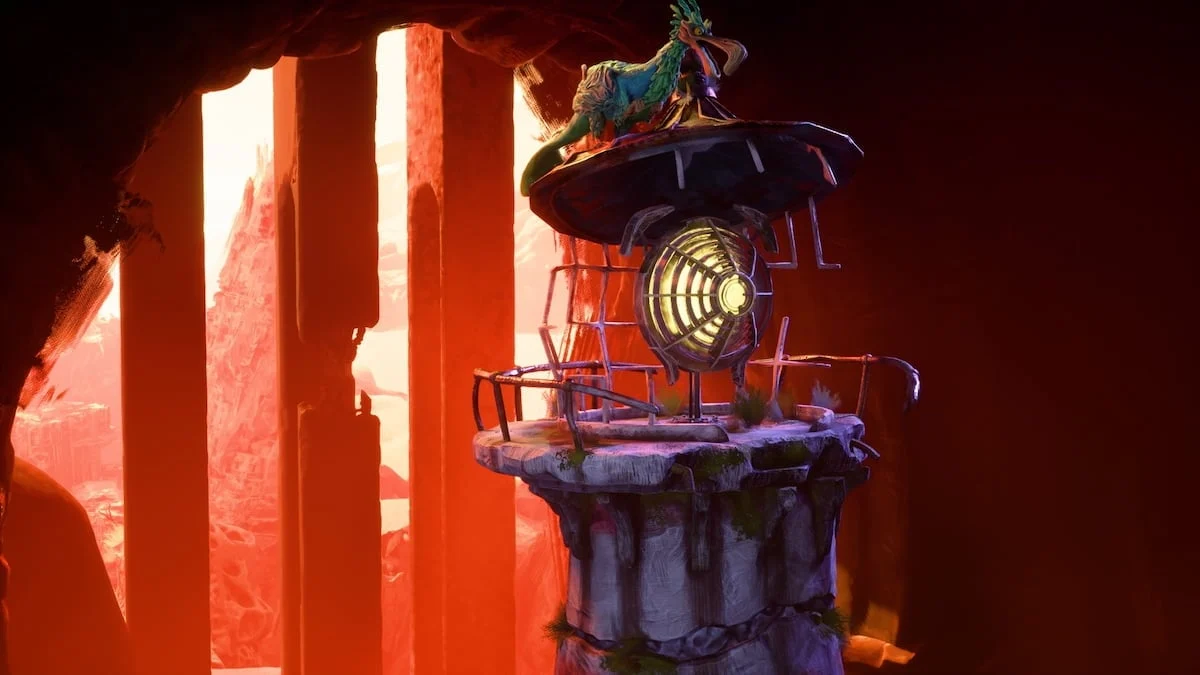
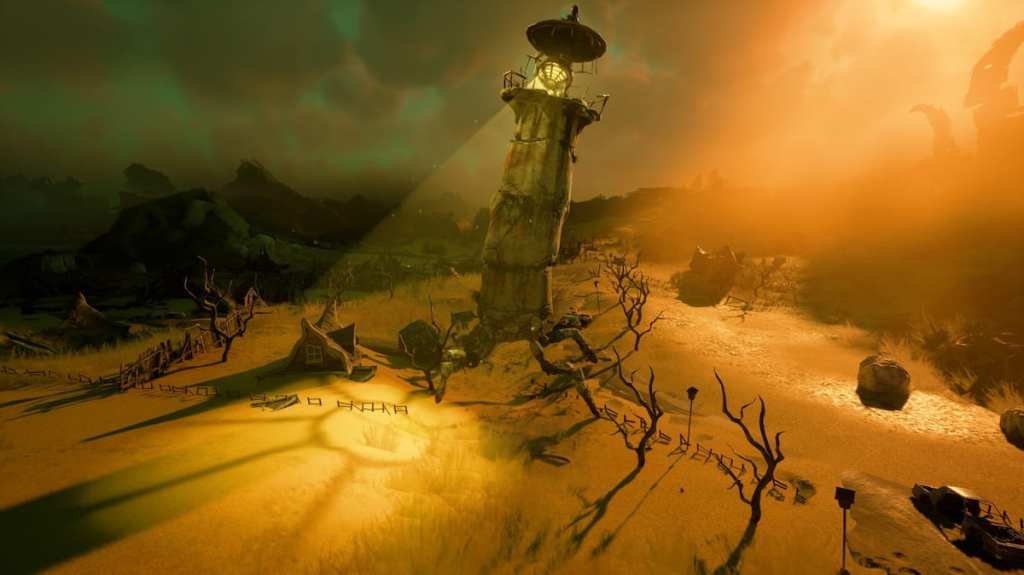
Keeper’s premise is immediately intriguing: players embody a lighthouse and a sea bird on a vital quest to heal their ailing world, afflicted by an unseen blight that threatens its flora and fauna. The narrative unfolds entirely through environmental cues, contextual clues, and a series of understated cutscenes, eschewing any form of spoken dialogue. This minimalist approach to storytelling is both a strength and a weakness. On one hand, it fosters a sense of discovery and encourages players to actively interpret the world around them. On the other, the lack of explicit guidance or character development can lead to a feeling of detachment, making it difficult to forge a strong emotional connection with the plight of the world or its protagonists.
The core gameplay loop revolves around exploration, traversal, and rudimentary puzzle-solving. Players manipulate the lighthouse’s beam to illuminate pathways, solve environmental puzzles, and interact with the world, while the sea bird offers assistance with specific actions and mobility. Double Fine has incorporated optional on-screen prompts to guide players, a feature that, while catering to a wider audience, underscores the game’s often-linear progression and straightforward challenges. Even without these prompts, the puzzles are generally designed to be intuitive, requiring little in the way of complex thought or strategic planning. This accessibility is a double-edged sword; it ensures that Keeper is approachable for those new to gaming or seeking a relaxing experience, but it simultaneously strips away the sense of accomplishment that comes from overcoming significant obstacles.
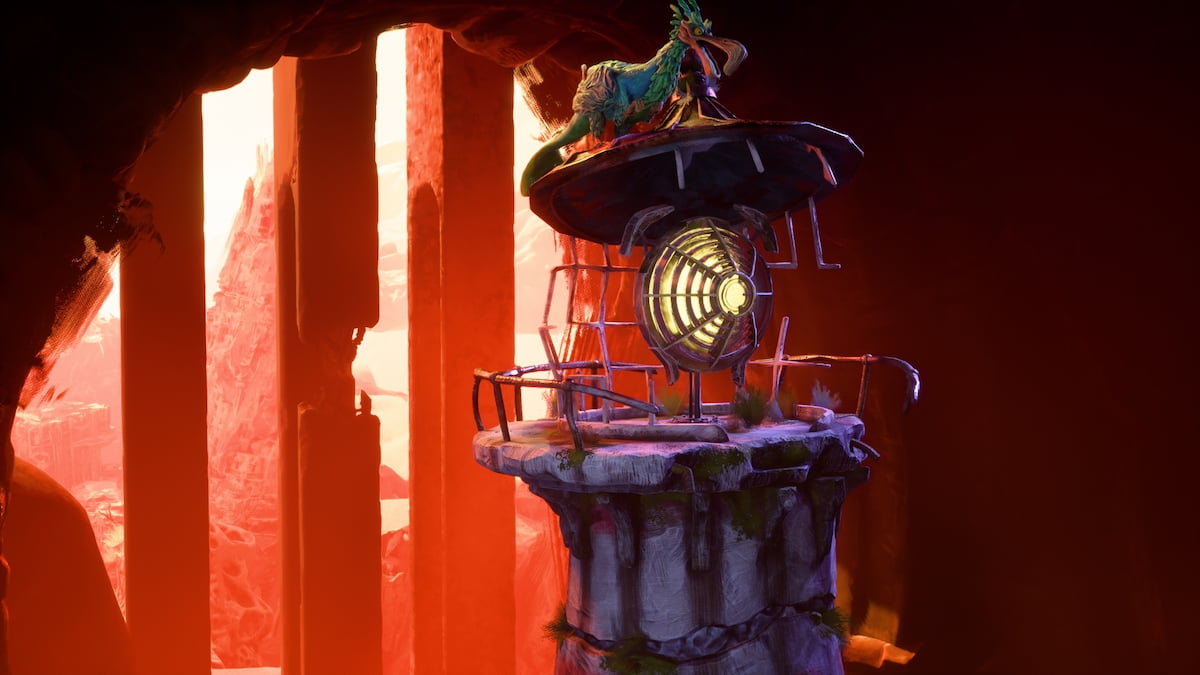
The control scheme is intentionally streamlined, utilizing the left stick for movement, the right stick for aiming the lighthouse’s spotlight, the RT button for focus, and the X and A buttons for the bird’s abilities and general interaction. While this simplicity contributes to the game’s meditative pace, it also contributes to a feeling of being on a predetermined path, with player agency feeling somewhat limited. For players who typically find puzzle games frustrating, this gentle approach might be a welcome respite. However, for those who seek a more engaging challenge or a deeper sense of involvement, Keeper’s straightforward design can feel overly simplistic and ultimately unsatisfying.
Navigating the Fixed Camera’s Challenges
One of the most notable gameplay hurdles encountered in Keeper is its reliance on fixed camera angles. While these perspectives are clearly chosen to showcase the game’s meticulously crafted environments and artistic direction, they frequently become cumbersome. The camera’s often abrupt shifts, coupled with the need to precisely aim the lighthouse’s beam in various directions, can lead to moments of frustration and disorienting navigation. This design choice, intended to enhance the visual experience, paradoxically detracts from the player’s ability to fluidly interact with the world and appreciate its beauty without interruption.
The game’s stunning visual aesthetic is undoubtedly its strongest asset. Keeper presents a surreal and captivating world, populated by inanimate objects that seem to possess a life of their own. The art direction evokes a sense of wonder and melancholy, creating an atmosphere that is both beautiful and poignant. However, this visual splendor is presented within a remarkably short runtime. Many players have reported completing Keeper in approximately five hours, a duration that, while not inherently problematic for all game types, feels particularly brief for an experience that relies so heavily on atmosphere and passive observation.
The Shadow of Genre Predecessors
Keeper enters a crowded and well-established genre of atmospheric, narrative-driven games, often referred to as "walking simulators" or "interactive art pieces." Titles such as Abzû, Gris, and Journey have set a high bar for emotional resonance, visual storytelling, and engaging gameplay within this space. When compared to these luminaries, Keeper’s shortcomings become more apparent. While it shares their commitment to artistic expression and non-traditional gameplay, it lacks the compelling narrative hooks, emotional depth, or unique mechanics that made those titles so memorable.
The review of Keeper suggests a struggle to recall specific moments or impactful sequences beyond a particular time-travel segment that required players to navigate between past, present, and future to overcome obstacles. This lack of lasting impression is a significant concern for a game that prioritizes experiential storytelling. The central conceit of the lighthouse and bird collaborating on various tasks, while conceptually sound, fails to translate into genuinely remarkable or emotionally resonant gameplay moments.
A Brief and Understated Journey
The developers have intentionally kept the specifics of Keeper’s plot and narrative progression under wraps to preserve the player’s sense of discovery. However, the overarching sentiment from early players and critics is one of oversimplification. While a certain level of accessibility is desirable, Keeper’s narrative and gameplay are so streamlined that many may find themselves wanting more substantive challenges or a more profound thematic exploration. The game’s brevity further exacerbates this feeling, leaving players with a sense of what could have been.
For individuals with an active Xbox Game Pass subscription who are seeking a brief, visually appealing experience, Keeper might offer a few hours of gentle diversion. The game’s low barrier to entry and its emphasis on a relaxed pace make it suitable for a casual playthrough. However, when considered as a standalone purchase at its current price point of $30, the value proposition diminishes significantly. The market in 2025 offers a wealth of more engaging and rewarding interactive experiences that provide greater depth, replayability, and overall satisfaction for the investment.
Broader Implications for Interactive Storytelling
The release of Keeper by a studio as respected as Double Fine Productions raises broader questions about the evolution of interactive storytelling. As the medium matures, there is a growing appreciation for experiences that push boundaries and explore new forms of narrative engagement. Keeper’s attempt to craft a story without dialogue and through purely environmental means is a commendable artistic endeavor. However, it also highlights the delicate balance required to create an experience that is both artistically coherent and sufficiently engaging for a broad audience.
The success of games like Journey, which masterfully blended simple mechanics with profound emotional impact and a sense of shared experience, demonstrates that minimalism in gameplay does not necessitate a lack of depth. Keeper’s challenge lies in its inability to fully translate its artistic ambitions into a consistently compelling interactive narrative. The fixed camera issues and the overly simplistic puzzles, while not outright failures, detract from the otherwise beautiful presentation and the intended meditative experience.
The implications for future game development are twofold. Firstly, Keeper underscores the continued viability and artistic merit of non-traditional narrative structures and minimalist gameplay. Secondly, it serves as a cautionary tale, illustrating that artistic vision alone is not enough. Successful interactive storytelling requires a careful consideration of player engagement, pacing, and the intrinsic rewards that come from overcoming challenges, even within a contemplative framework. As studios like Double Fine continue to experiment, the industry will undoubtedly learn valuable lessons from both the triumphs and the shortcomings of titles like Keeper, further shaping the diverse landscape of interactive entertainment. The journey for truly impactful playable narratives is ongoing, and each release, including Keeper, contributes to that evolving understanding.