

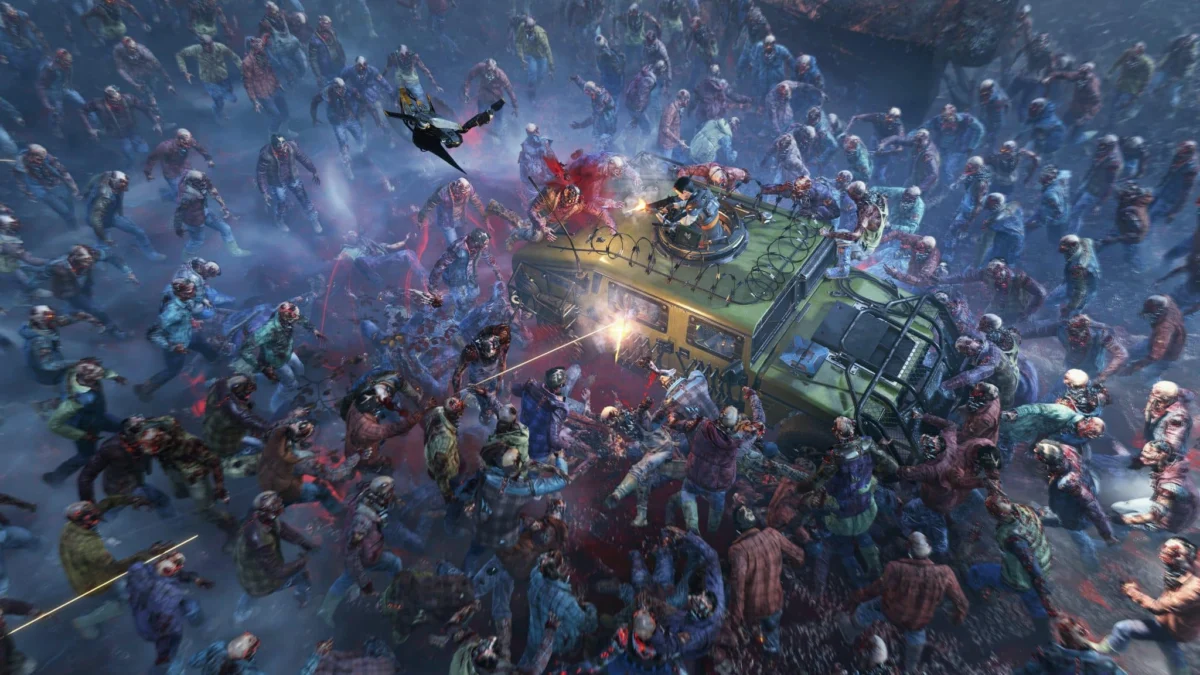
Saber Interactive and Focus Entertainment have officially released their latest collaborative project, a first-person cooperative shooter that merges the high-intensity horde mechanics of the Swarm Engine with the aesthetic sensibilities of 1980s horror and action cinema. Developed under the creative guidance of legendary filmmaker John Carpenter, the title represents a significant technical undertaking for Saber Interactive, utilizing proprietary technology previously seen in titles such as World War Z and Warhammer 40,000: Space Marine 2. The game introduces a distinctive blend of class-based combat, vehicular navigation, and environmental deformation, aiming to carve a niche within the saturated cooperative shooter market.

Narrative Framework and Global Context
The premise of the title centers on a catastrophic failure in renewable energy research. In a near-future setting, an experimental attempt to harness the Earth’s core for clean energy inadvertently breached a subterranean pocket, releasing an eldritch entity known as the Sludge God. This entity possesses the ability to terraform the surrounding environment into a toxic wasteland, characterized by necrotic growths and the reanimation of deceased biological matter.

The narrative follows a group of mercenaries who, while attempting to deliver a specialized package to Leon Dorsey—the eccentric billionaire scientist responsible for the initial disaster—become infected by the Sludge God’s influence. Dorsey, utilizing advanced proprietary technology, provides the group with specialized containment vests that arrest the infection’s progress, effectively turning the squad into "Toxic Commandos." These commandos are tasked with neutralizing the Sludge God’s influence across various global hotspots, utilizing Dorsey’s hub-style base as a center for tactical operations and gear procurement.

Technical Foundations: The Swarm Engine and Terrain Deformation
A primary technical highlight of the production is the implementation of the Swarm Engine. According to developer specifications, this engine is designed to render hundreds of individual enemies on screen simultaneously without compromising performance stability. This technology, which was a cornerstone of the success of the World War Z video game, allows for "horde" physics where enemies can climb over one another to reach players on elevated platforms.

In addition to the Swarm Engine, the developers have integrated terrain deformation mechanics originally perfected in the Mudrunner and SnowRunner franchises. This inclusion adds a layer of "vehicular puzzling" to the traditional shooter formula. Players must navigate treacherous landscapes where mud, sludge, and biological growths physically impede movement. The interaction between vehicle tires and the shifting ground requires players to utilize winches and specialized driving maneuvers to reach mission objectives. This mechanical crossover represents a rare instance of a high-speed action game adopting physics-heavy simulation elements.

Gameplay Mechanics and Class Structures
The game is structured as a four-player cooperative experience, though it supports solo play through the implementation of AI-controlled teammates. Players can select from four distinct character classes, each offering specialized offensive and defensive capabilities designed to encourage squad synergy:

- The Strike: A high-mobility offensive class capable of channeling energy directly into close-quarters combat.
- The Defender: A tank-style class equipped with defensive barriers. Technical assessments of the class indicate that its primary ability involves deploying a protective shield that emits electrical discharges, neutralizing nearby threats.
- The Operator: A tactical class focused on utility and reconnaissance.
- The Medic: A support-oriented role essential for maintaining squad health during high-intensity encounters.
Progression is managed through a tiered currency system centered on "Sludgite," a crystal-like substance found during missions. Sludgite is divided into three rarity tiers, with higher-tier rewards locked behind increased difficulty settings. This currency is utilized at the central hub to upgrade weapon attachments, including optics, magazines, and barrels, which affect handling, damage output, and accuracy. Furthermore, the game features a "Prestige" system for weaponry, allowing dedicated players to further enhance the statistical ceiling of their favorite gear.

Mission Structure and Randomization
The launch version of the title includes eight primary missions, each designed to be highly replayable. To prevent stagnation, the developers have implemented a randomization system for objective locations and environmental events. While the overarching goal of each mission usually follows a pattern—deployment, objective completion, and a final "last stand" extraction—the specific pathing and enemy encounters vary with each session.

Missions are characterized by their scale, often featuring large, open-air environments that contrast with the claustrophobic corridors typical of the genre. Points of interest are scattered across these maps, encouraging players to deviate from the main path to find "spare parts." These parts are a critical resource used to repair environmental defenses, such as:

- Electrical traps
- Automated mortars
- Barbed wire barricades
The inclusion of these defensive structures suggests a hybrid gameplay loop that blends traditional first-person shooting with light "tower defense" elements, particularly during the finale sequences where players must hold a position against overwhelming odds.

Vehicular Integration and Utility
Vehicles serve as more than mere transportation in this title; they are mobile tactical assets. The game features a variety of vehicles with specialized roles, including:

- Ambulances: Capable of healing the entire squad when all members are inside.
- Pick-up Trucks: Outfitted with rear-mounted flamethrowers for area denial.
- Military Vehicles: Equipped with heavy machine guns and winches.
The winch mechanic is a critical utility tool, used not only to pull vehicles out of thick mud but also to interact with the environment. Players must use the winch to tear down reinforced doors or open heavy cargo containers, integrating the vehicle directly into the mission’s puzzle-solving requirements.

Development Timeline and Market Context
The journey of the project began with its high-profile reveal during the 2023 Summer Game Fest, where it was introduced as a tribute to the "B-movie" action horror of the 1980s. Following several rounds of closed beta testing throughout 2024 and 2025, the game was refined based on player feedback regarding gunplay responsiveness and technical stability.

The release comes at a time of increased interest in the "horde shooter" subgenre. With the success of titles like Helldivers 2 and the enduring popularity of Left 4 Dead 2, Saber Interactive is positioning this title as a more arcade-focused, stylistically distinct alternative. The "John Carpenter" branding serves as a significant marketing lever, appealing to fans of retro-horror while promising a specific tone that balances gruesome violence with dark humor.

Analysis of Implications and Industry Reception
Industry analysts note that the success of the title will likely depend on its post-launch support and the effectiveness of its live-service elements. The inclusion of deep weapon customization and character skill trees suggests a long-term engagement model. However, technical reports during the pre-release review period indicated some challenges, including occasional software crashes and the lack of certain modern movement mechanics, such as a "slide" function when transitioning from a sprint to a crouch.

Despite these critiques, the game’s core loop—combining vehicular physics with massive enemy counts—offers a unique selling point. The "Swarm" technology remains a formidable asset for Saber Interactive, providing a level of on-screen carnage that few competitors can match.

Conclusion and Broader Impact
The title stands as a testament to the evolving nature of cooperative shooters, moving away from simple "point A to point B" structures toward more complex, systems-driven experiences. By integrating elements from disparate genres—simulation-grade driving physics, class-based RPG progression, and horde-style combat—the developers have created a multifaceted product.

As the gaming industry continues to explore collaborations with legendary cinematic figures, the partnership between John Carpenter and Saber Interactive illustrates a successful fusion of filmic atmosphere and modern gaming technology. Whether the title can maintain a long-term player base in a competitive landscape remains to be seen, but its technical foundations and commitment to its "B-movie" identity provide a strong starting point for the franchise.