
The digital motorsport landscape is currently undergoing a significant transformation as iRacing, the company behind the premier subscription-based racing simulator, continues to broaden its reach through a series of diverse development projects. Following the release of the off-road focused ExoCross and the highly anticipated NASCAR 25, the organization has partnered with Original Fire Games to produce iRacing Arcade. This new title represents a departure from the "serious" simulation roots of its namesake, offering a vibrant, stylized, and accessible take on professional track racing. Tested extensively on the PC platform, iRacing Arcade serves as a critical case study in how high-level simulation mechanics can be distilled into a format suitable for a broader audience without losing the core tenets of competitive motorsport.
The Evolution of the iRacing Publishing Portfolio
For over a decade, the iRacing brand was synonymous with uncompromising realism, strict licensing, and a subscription model that catered almost exclusively to the hardcore sim-racing community. However, the last 24 months have signaled a pivot in corporate strategy. By acquiring developers like Monster Games and partnering with independent studios like Original Fire Games, iRacing is positioning itself as a comprehensive racing publisher.
iRacing Arcade is the latest result of this expansion. It is built upon the foundational design philosophy of Original Fire Games, the studio previously recognized for Circuit Superstars and Karting Superstars. While those titles utilized a top-down perspective to evoke nostalgia for classic arcade racers like Micro Machines, iRacing Arcade shifts the camera to a more traditional third-person "chase" view. This change in perspective is more than aesthetic; it recontextualizes the game’s physics and provides a bridge for players who are accustomed to the visual language of modern racing titles but may find full-scale simulators too daunting.

Hybrid Mechanics: Merging Accessibility with Simulation Depth
The primary objective of iRacing Arcade is to reconcile two often-conflicting genres: the arcade racer and the technical simulator. Standard arcade racers typically prioritize speed and spectacle, often at the expense of authentic racing variables like tire degradation or fuel consumption. Conversely, simulators can be inaccessible to casual players due to the steep learning curve associated with these very mechanics.
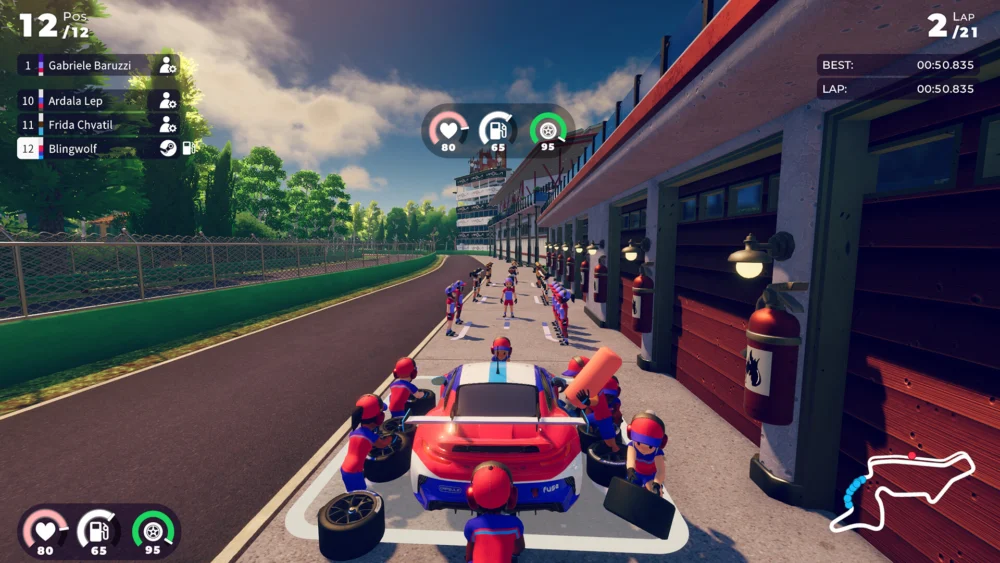
iRacing Arcade attempts to inhabit the middle ground. While the driving model is inherently accessible, allowing for bold cornering and aggressive maneuvers, it integrates "serious" racing elements that are rarely found in the arcade subgenre. Players must manage tire wear, monitor fuel levels, and account for a visual damage model that impacts performance. The inclusion of mandatory pit stops in longer race formats adds a layer of strategic depth, requiring players to decide when to service their vehicles based on their driving style and the remaining race distance.
Advanced driving techniques, such as "lift and coast" to preserve fuel or smooth steering inputs to reduce tire scrubbing, are actively rewarded. This creates a gameplay loop where a novice can complete a race with ease, but a veteran can optimize their performance through technical discipline.
Chronology of Progression and the Campaign Structure
The single-player experience in iRacing Arcade follows a linear progression path designed to educate the player on the nuances of different vehicle classes. The campaign begins with the Fiat 500, a choice that serves as a practical learning tool. The modest horsepower and compact dimensions of the Fiat allow players to master the "snappy" driving physics without the overwhelming speed of top-tier machinery.

As players progress through the initial three-to-five-lap sprints, the game introduces a variety of iconic international circuits, including Imola, Bahrain, and Motorland Aragon. The AI difficulty scales accordingly; computer-controlled opponents utilize slipstreaming and defensive positioning, forcing the player to adopt a more calculated approach to overtaking.
The campaign eventually transitions from entry-level road cars into more complex categories, including:
- Touring Cars: Balanced vehicles that emphasize door-to-door racing.
- GT Class: High-performance sports cars requiring better throttle control.
- Single-Seaters: High-downforce machines that test the limits of the game’s steering sensitivity.
- Endurance Prototypes: The pinnacle of the game’s roster, where pit strategy and long-term vehicle management become paramount.
Between racing events, the game features a foundational base-building mechanic. Players can invest in garage expansions and additional facility buildings. While these features provide a sense of progression and offer cosmetic unlocks—such as custom driver suits and vehicle liveries—their impact on the actual racing performance remains secondary, serving more as a meta-game for completionists rather than a deep management simulation.
Technical Performance and Hardware Optimization
One of the most noteworthy aspects of iRacing Arcade is its technical execution on the PC platform. In an era where many high-profile releases struggle with optimization at launch, iRacing Arcade demonstrates exceptional stability across a wide range of hardware configurations.

The visual style is intentionally stylized rather than photorealistic, utilizing a bright, saturated color palette and clean asset design. This aesthetic choice facilitates high frame rates even on modest hardware. During testing, the game performed efficiently on the MSI Claw—a handheld PC with relatively limited graphical power compared to high-end desktops. Even on this device, the game maintained consistent performance at high settings with 12 cars on track simultaneously.
The technical suite includes:
- Detailed Track Modeling: Despite the arcade aesthetic, the circuits retain the essential layouts and characteristic bumps of their real-world counterparts.
- Lighting Effects: Dynamic lighting contributes to the atmosphere of the race, particularly during transition periods in endurance-style events.
- Multiplayer Infrastructure: The game supports online leaderboards and a 12-player multiplayer mode, leveraging iRacing’s experience in networked racing to ensure low-latency competition.
Critical Analysis of Handling and Input Challenges
Despite its many strengths, iRacing Arcade faces significant hurdles regarding its input sensitivity, particularly when using a standard controller. The "snappy" nature of the steering—which feels responsive and rewarding in slower vehicles like the Fiat 500—becomes a liability as the player moves into faster vehicle classes.
In high-downforce cars, minute movements of the analog stick result in exaggerated vehicle reactions. This makes maintaining a smooth racing line at high speeds difficult, as the cars can feel twitchy and prone to over-correction. This issue is exacerbated by the AI, which appears to operate on a physics model that is less susceptible to these handling inconsistencies. For players looking to transition into the "serious" arcade space, this disparity between player control and AI stability can lead to frustration in the later stages of the campaign.

Furthermore, the 12-car grid limit feels restrictive on larger, modern circuits like Bahrain. While this limitation likely aids the game’s impressive optimization, it reduces the sense of scale and chaos typically associated with multi-class or endurance racing.
Broader Impact and Market Implications
The release of iRacing Arcade signifies a broader trend in the gaming industry: the "gamification" of simulation brands. By lending its name to an arcade title, iRacing is attempting to create a funnel for new users. A player who enjoys the accessible depth of iRacing Arcade today may be more inclined to subscribe to the flagship iRacing simulator in the future.
Industry analysts note that this strategy mirrors that of the Formula 1 franchise, which offers various levels of assists to cater to both casual fans and professional eSports athletes. However, iRacing Arcade distinguishes itself by maintaining a distinct visual identity that does not attempt to mimic the flagship product, thereby avoiding brand confusion while still benefiting from the prestige of the iRacing logo.
While the game may not yet reach the "royalty" status of established arcade-sim hybrids like Gran Turismo or the Forza Motorsport series, it represents a significant step forward for Original Fire Games. It successfully proves that the "Superstars" formula can be adapted to a 3D environment and a more professional presentation.

Conclusion
iRacing Arcade is a competent and well-optimized entry into the racing genre that successfully bridges the gap between casual play and technical simulation. Its strengths lie in its accessibility, its inclusion of real-world tracks, and a technical polish that ensures it runs smoothly on a variety of devices. However, the experience is hampered by a campaign structure that feels overly familiar to veteran racing fans and a handling model that struggles to scale with the game’s faster vehicles.
As iRacing continues to expand its digital footprint, iRacing Arcade stands as a testament to the publisher’s willingness to experiment. It provides a fun, albeit occasionally flawed, alternative for those who respect the rules of track racing but prefer a more colorful and forgiving presentation. For the developer, Original Fire Games, it is a clear evolution of their craft, suggesting a bright future for their particular brand of accessible motorsport.