


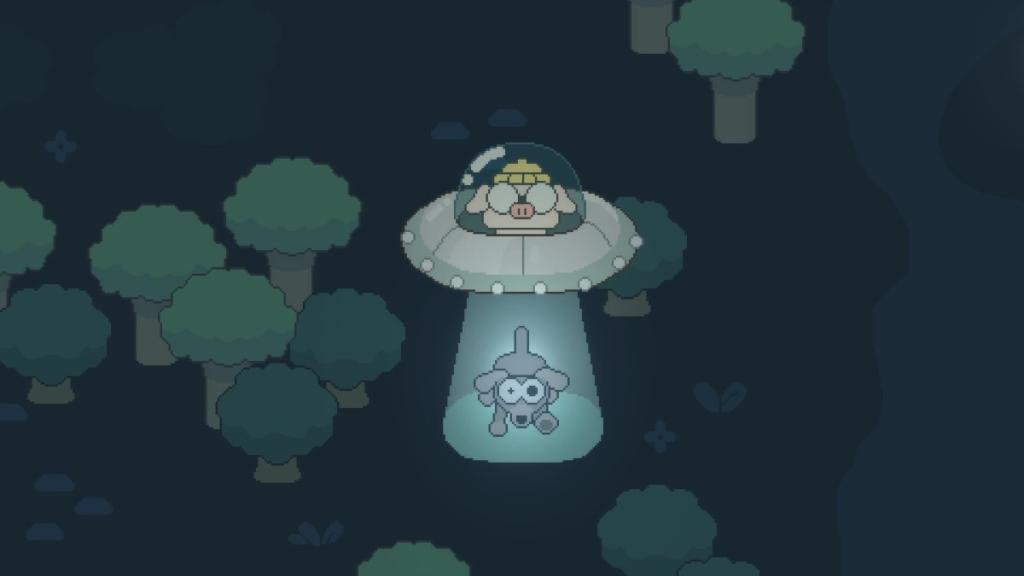
In a digital landscape often dominated by complex narratives and demanding gameplay, the emergence of "Hermit and Pig" offers a refreshing departure, presenting a charming turn-based RPG that prioritizes character, humor, and accessible design. Developed with a focus on delivering a story-rich yet compact narrative, the game invites players into the secluded life of Hermit, a social recluse who shares his days with his loyal pet pig. Their tranquil existence is abruptly disrupted by the arrival of an extraterrestrial anomaly – a magic mushroom crash-lands on Earth, setting in motion a chain of events that pulls the unlikely duo into the heart of a burgeoning town conspiracy.

The premise of "Hermit and Pig" begins with an seemingly ordinary morning for its titular protagonists. Hermit, by day a dedicated forager, meticulously scours the landscape for mushrooms and truffles, his sole companion the ever-present Pig. This routine is shattered when a peculiar blue mushroom, discovered and consumed by Hermit with a casual "why not?", triggers a fantastical journey. What follows is an unexpected foray into the nearby town, where Hermit and Pig find themselves embroiled in a conspiracy that rapidly escalates, characterized by an unusual phenomenon: everything, from the flora to the fauna, seems inclined to engage in combat and conversation. This escalating peculiarity poses a significant challenge for Hermit, whose solitary nature is ill-equipped for such an onslaught of social interaction and conflict.
"Hermit and Pig" is meticulously crafted as a turn-based RPG, distinguishing itself through its commitment to a narrative that, while perhaps surface-level in its plot, is deeply resonant due to its character interactions. The game’s developers have openly acknowledged that the primary draw for players is not the complexity of its overarching plot, which rarely ventures beyond its immediate implications, but rather the sheer delight derived from its well-written dialogue and endearing characters. This focus on narrative charm and character development is a deliberate design choice, aiming to provide an experience that is both emotionally engaging and lighthearted, even as the stakes within the game’s world continue to rise.
The Power of Penmanship: Dialogue as the Driving Force
From the outset, "Hermit and Pig" establishes a distinct identity, brimming with an abundance of character that immediately sets it apart. Drawing parallels with critically acclaimed titles such as "Frog Detective," "Thank Goodness You’re Here!," and "Night in the Woods," this game cultivates a quirky, humorous, and undeniably funny dialogue system that ensures the adventure remains buoyant. The developers have masterfully employed comedic relief as a counterpoint to any burgeoning tension, effectively diffusing potentially serious situations with lightheartedness. This approach serves as a gentle reminder, particularly for players who may grapple with social anxiety, that the world, and by extension the game’s narrative, is not inherently adversarial. The continuous cycle of escalating stakes followed by comedic resolution underscores a core message: the importance of not taking every situation too seriously.
The vibrant and endearing art style, coupled with the sharp writing, collectively fosters an atmosphere of relaxation. Even in the absence of voice acting, each character possesses a unique and memorable voice, conveyed through their written dialogue. These personalities, while often whimsical, are presented in a manner that feels surprisingly believable, thereby strengthening the coherence of the overarching narrative. The quirky characters and their dynamic interactions breathe life into the otherwise static environments, transforming a simple landscape into a living, breathing world. This sense of playful eccentricity extends to Hermit and Pig’s dream sequences, which also evoke a nostalgic resonance, reminiscent of the surreal and introspective moments found in "Night in the Woods."

Navigating the World: Gameplay Mechanics and Accessibility
"Hermit and Pig" is designed for ease of access, with its core gameplay mechanics and overall design proving exceptionally easy to digest. The pacing and level design are commendably straightforward yet highly effective. The in-game map is an invaluable tool, providing clear guidance to objectives without resorting to excessive hand-holding, a common pitfall in many RPGs. While some players may find side quests to be disruptive to immersion, "Hermit and Pig" skillfully integrates them into the main narrative, making them feel like natural extensions of the story rather than obligatory diversions. This seamless integration ensures that engaging with optional content remains fun and never tedious, contributing to the overall flow of the narrative and making backtracking an engaging experience rather than a chore.
The game is replete with meticulously crafted details that enhance the player’s immersion. Hermit’s animations, such as holding quest items prominently, balancing precariously on wooden beams, or offering a comforting pat to Pig for a minor health boost, add layers of personality. His visible discomfort and profuse sweating when approaching a conversation further emphasize his social anxieties. The soundtrack is equally impressive, drawing inspiration from the iconic sounds of early "Crash Bandicoot" titles, a nostalgic touch that many players will find deeply resonant, transporting them back to cherished childhood memories.

Combat and Customization: An Approachable Challenge
Beyond its narrative strengths, "Hermit and Pig" offers a surprising depth in its combat system, emphasizing accessibility and player choice. While the game may not be laden with hidden secrets, it provides ample opportunities for players to engage with its core mechanics through the collection and bartering of Trinkets, the foraging of Mushrooms, and the digging up of Truffles. The combat options are robust, and a standout feature is the ability to simplify controls independently of the overall difficulty setting, a welcome inclusion that more games would do well to emulate. As enemy health bars increase, the combat system evolves, introducing new fighting strategies that paradoxically make the battles more manageable. The user interface is clean and intuitive, presenting all necessary information on easily navigable menus, ensuring that players can quickly refresh their understanding of the game’s mechanics.
The game’s approach to combat is particularly noteworthy. It incorporates elements reminiscent of arcade-style fighting games, with a system of Combos and Special moves that require quick reflexes and strategic thinking. This design choice shifts the gameplay experience away from the turn-based combat typical of titles like "Pokémon" and closer to the rapid-fire challenges of a "WarioWare" game. However, the developers have also implemented robust accessibility options. Players can significantly reduce the challenge by adjusting the difficulty settings or simplifying the combat mechanics altogether. This flexibility ensures that "Hermit and Pig" can be enjoyed by a wide range of players, regardless of their prior experience with RPGs or their preference for difficulty. The game’s overall lack of significant challenge, even on Normal difficulty, suggests that it is not intended to be a punishing experience but rather a forgiving and enjoyable one.

The resource management aspect of combat is also well-integrated. Trinkets provide tactical buffs, Mushrooms serve as essential healing or status-effect items, and Truffles are crucial for reviving fallen allies. While there is an element of randomness (RNG) involved in combat encounters and strategic thinking required to identify effective attack patterns, the game’s overall design leans towards a more relaxed playthrough. The inclusion of the "Run" option, even in scripted fights, does lead to some amusing narrative inconsistencies, such as being praised for defeating a bear after having successfully fled from the encounter.
Social Dynamics and Player Well-being
The game’s exploration of social anxiety through its unique socializing mechanic is particularly interesting. This system functions similarly to combat encounters, requiring players to select the most socially appropriate dialogue options. Hermit’s health can decrease by 1 HP for each "cringe-worthy" response, a clever representation of social awkwardness. While entertaining, these sections are also remarkably easy to navigate without penalty, often positioned conveniently near save points. This accessibility, while ensuring a smooth player experience, also highlights a missed opportunity for higher stakes, where greater HP loss could have introduced a more tangible challenge and consequences for poor social choices.

Despite its relatively straightforward difficulty and limited replayability, "Hermit and Pig" ultimately succeeds in its objective of delivering a cozy and authentically entertaining turn-based RPG experience. The game’s emphasis on character, humor, and accessibility creates a world that is both inviting and rewarding to explore. The abundance of save stations and readily available resources like Mushrooms further contribute to the game’s forgiving nature, ensuring that players can enjoy their journey without undue stress. The game’s short playtime, around seven hours for a full playthrough, makes it an ideal choice for those seeking a delightful and engaging experience that can be completed in a relatively short period.
Broader Implications and Player Reception
The design philosophy behind "Hermit and Pig" reflects a growing trend in the gaming industry towards titles that prioritize player well-being and emotional engagement alongside traditional gameplay mechanics. By incorporating elements that are both humorous and comforting, the game offers a form of digital escapism that can be particularly appealing in stressful times. The inclusion of accessibility features, such as adjustable difficulty and simplified controls, demonstrates a commitment to inclusivity, ensuring that the game can be enjoyed by a wider audience.
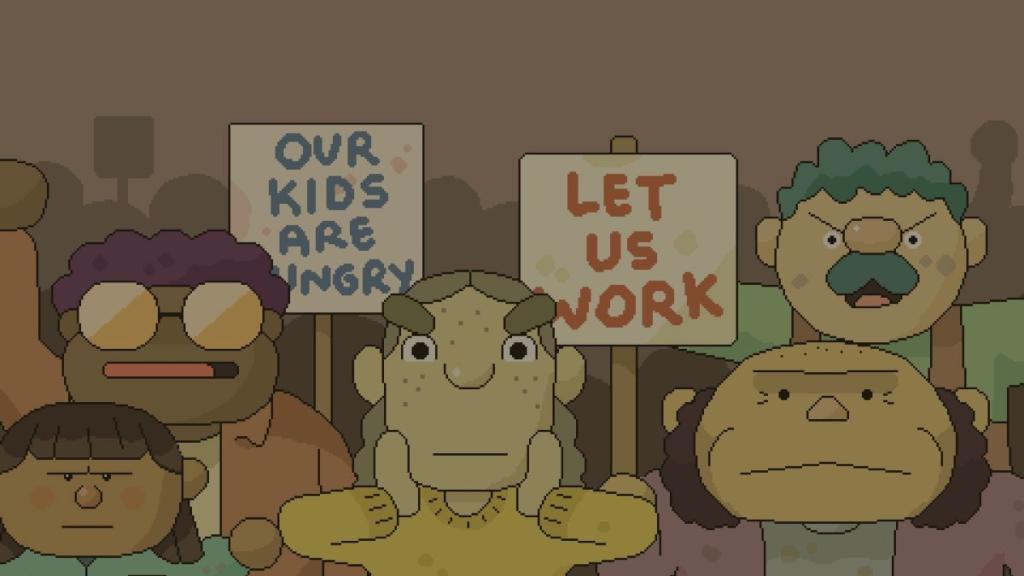
The game’s narrative, while not groundbreaking in its complexity, resonates due to its relatable themes of social anxiety and the power of companionship. The dynamic between Hermit and Pig serves as a heartwarming core, illustrating how even the most introverted individuals can find strength and purpose through their bonds with others, whether they be human or animal. The developers’ decision to focus on character-driven humor and a lighthearted narrative has been met with positive reception, suggesting a strong player appetite for games that offer a more gentle and emotionally resonant experience.
In conclusion, "Hermit and Pig" stands out as a testament to the idea that compelling gameplay and a memorable experience can be achieved through creative writing, charming art design, and a thoughtful approach to player accessibility. While its plot may be unassuming, the game’s true strength lies in its ability to craft a world brimming with personality, humor, and a surprising amount of heart. It is a journey that, while perhaps not the most challenging, is undeniably a joyous one, proving that sometimes, the most profound adventures are found in the simplest of friendships and the most unexpected of circumstances.