

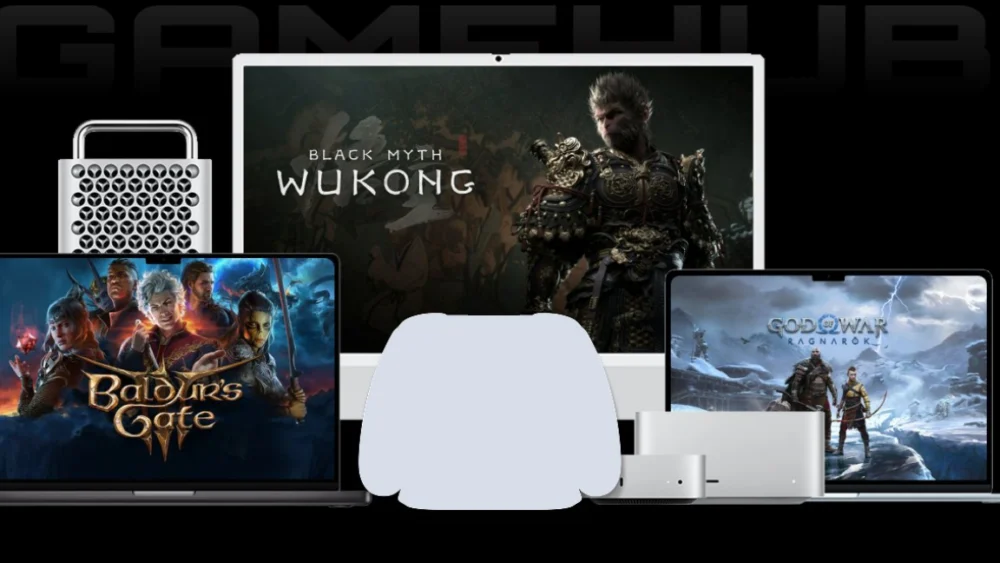
GameSir’s ambitious foray into Windows emulation, particularly with its upcoming Mac version of GameHub, is generating significant discussion within the gaming and technology communities. While the prospect of playing a wider range of Windows games on macOS is an exciting one for many users, the project is not without its significant concerns, stemming from the company’s stated commercial motivations, past controversies surrounding its Android application, and the nature of its underlying emulation technology.
A Strategic Pivot Driven by Hardware Sales
At the heart of the burgeoning controversy is GameSir’s frank admission in a recent interview with The Memory Core newsletter regarding the primary impetus behind the development of its Windows emulation tool. The company revealed that its strategic objective was explicitly to drive sales of its proprietary gaming controllers. This direct acknowledgment has raised questions about the purity of the development effort, suggesting that the software’s primary function may be to serve as a Trojan horse for hardware promotion, rather than a purely altruistic effort to expand gaming accessibility on non-Windows platforms.
This commercial underpinning is particularly notable when contrasted with the Android version of GameHub. GameSir stated that its controllers are not a prerequisite for using the Android iteration. Even before its official launch on the Google Play Store in November, the Android version had reportedly achieved a significant user base, with an estimated 5 million installations, predominantly within the Chinese market. This widespread adoption prior to official distribution channels underscores the demand for such emulation solutions, but also highlights the significant user acquisition GameSir has achieved outside of traditional app store metrics, a practice that can sometimes raise transparency concerns.
Echoes of Past Controversies: Tracking and Open Source
The Android version of GameHub has previously been the subject of scrutiny due to the inclusion of numerous invasive trackers. These telemetry components, which collect user data, were a significant point of contention, leading to the development of a community-driven "Lite" version that intentionally removed these tracking elements. In response to these concerns, a GameSir representative explained to The Memory Core that the inclusion of such trackers was considered "standard practice in the Chinese market," citing a perceived lower sensitivity to user tracking among that demographic. While the company asserted that these trackers have since been removed from the official Android application, this explanation has done little to assuade privacy-conscious users and developers, particularly in Western markets where data privacy is a paramount concern.
Further complicating the narrative are questions surrounding the technological foundations of GameHub’s emulation capabilities. When questioned about the reuse of open-source compatibility code, GameSir maintained that its Windows emulator was "developed in-house by GameSir’s core engineering team." They elaborated that the technology utilizes "its own in-house compatibility layer (such as syscall hooks, GameScopeVK, and other technologies), rather than modifications to Wine’s core code." Wine, an open-source compatibility layer that enables applications designed for Microsoft Windows to run on POSIX-compliant operating systems, has long been a foundational technology for Windows emulation.
However, the same representative later conceded that GameHub does "reference and use UI components from Winlator," an established open-source Windows emulation tool for Android. This admission suggests a more complex development process than initially presented, potentially involving a degree of reliance on existing open-source projects, even if the core emulation engine is claimed to be proprietary. The line between "in-house development" and leveraging existing open-source components can be nuanced, and this acknowledgment has fueled further debate about the originality and transparency of GameSir’s technological claims.
The Timeline of Development and Market Entry
The development and release trajectory of GameHub, while not exhaustively documented publicly, can be pieced together through available information and the company’s statements. The initial focus appears to have been on the Android platform, where GameHub achieved significant pre-release traction, with an estimated 5 million sideloaded installations primarily in China. This period of organic growth and widespread unofficial distribution likely occurred throughout much of 2025, culminating in the official Google Play Store release in November of that year.
Following this Android success, GameSir’s attention turned towards expanding its reach to other platforms. The announcement of a forthcoming Mac version of GameHub signals a strategic expansion, aiming to tap into the growing macOS gaming user base. This pivot to macOS can be seen as a response to market demand for more versatile gaming solutions on Apple hardware, a segment that has historically been underserved by Windows-centric gaming technologies. The development of the Windows emulation tool, therefore, appears to be a continuous project, adapting its core technology for new operating systems.
The Broader Implications for macOS Gaming
The potential arrival of GameHub for Mac, while offering a new avenue for playing Windows games, is unlikely to be the paradigm-shifting event that Apple gamers have long anticipated, often referred to as a "Valve SteamOS/Proton moment." Valve’s Proton, a compatibility layer developed for SteamOS and Linux, has been instrumental in bringing a vast library of Windows games to Linux-based systems with remarkable success. Proton’s effectiveness stems from its deep integration with the Linux gaming ecosystem, extensive community support, and Valve’s significant investment in ongoing development and optimization.
GameSir’s GameHub, by contrast, enters the Mac market with a different set of challenges and origins. The concerns regarding its commercial motivations, past privacy issues on Android, and the nuanced claims about its open-source utilization cast a shadow over its potential impact. For Mac users, the hope for a seamless and robust Windows gaming experience might remain largely unfulfilled by this particular solution.
However, the existence of GameHub for Mac still represents an additional option for MacBook owners seeking to expand their gaming horizons. In a market where native macOS support for many AAA Windows titles remains limited, any tool that can facilitate the playing of these games, even with potential compromises, is a welcome addition. The development signifies a broader trend of increasing efforts to bridge the gaming ecosystem divides between operating systems.
Analysis of Challenges and Future Outlook
The success of GameHub for Mac will hinge on several critical factors. Firstly, the company must address and overcome the lingering concerns about its past practices, particularly regarding user privacy and data tracking. Transparency in its development and a commitment to user data protection will be paramount in building trust with the macOS community.
Secondly, the technical performance and compatibility of the Mac version will be crucial. Emulating Windows on macOS is a complex undertaking, and the effectiveness of GameSir’s "in-house" technology, especially in light of its admitted use of Winlator UI components, will be closely scrutinized. Game developers and the gaming community will be looking for stable performance, minimal graphical glitches, and broad game support.
Finally, the company’s stated motivation of driving controller sales, while honest, could also impact user perception. If the emulator is perceived as primarily a marketing tool rather than a genuine effort to enhance the gaming experience, it may face resistance from a user base that values open and independent solutions. The comparative advantage of GameHub over potential future solutions or existing workarounds will be a key determinant of its adoption rate.
In conclusion, GameSir’s GameHub for Mac presents a tantalizing prospect for macOS gamers, offering a potential gateway to a wider world of Windows titles. However, the project is intrinsically linked to the company’s commercial ambitions and carries the baggage of past controversies. The journey from its Android iteration to a successful Mac application will require not only technological prowess but also a concerted effort to build trust and demonstrate a genuine commitment to the gaming community. Whether it becomes a niche utility or a more significant player in the macOS gaming landscape remains to be seen, but its development undoubtedly marks a noteworthy, albeit complex, chapter in the ongoing evolution of cross-platform gaming.