

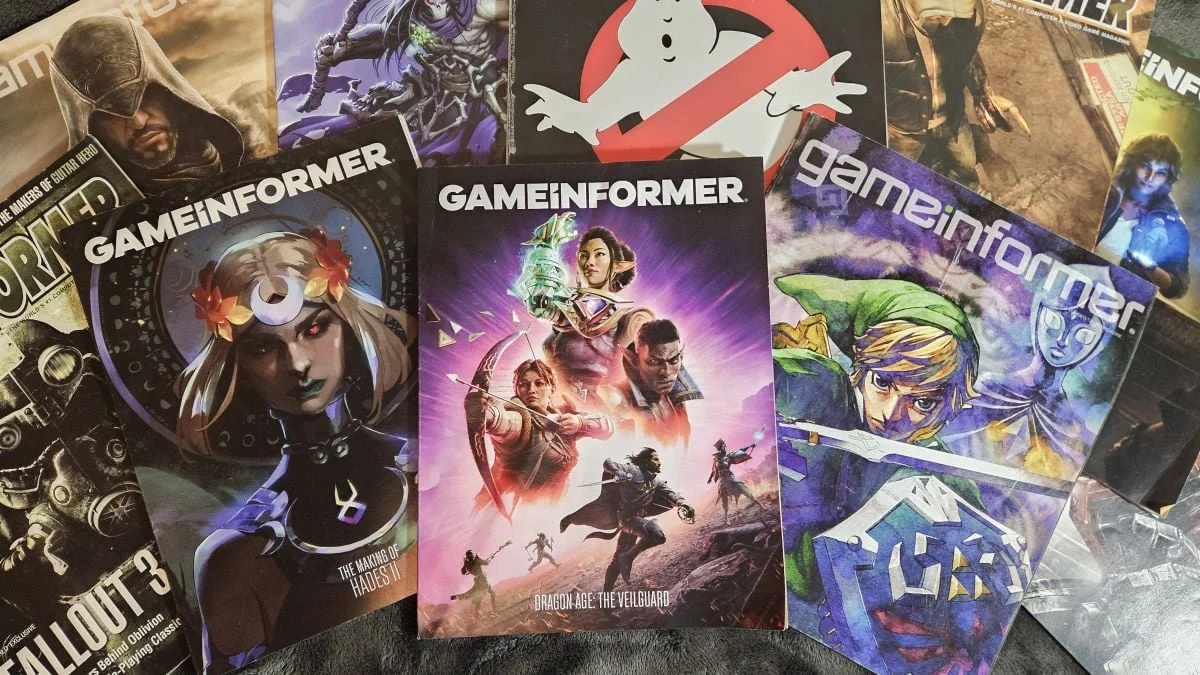
The venerable institution of video game journalism, Game Informer, has officially shuttered its operations today, marking the end of an era for a publication that has been a cornerstone of the industry for over thirty years. GameStop, the parent company, confirmed the closure this morning, informing all editorial staff of the decision. The abrupt termination of the magazine and its associated online content has resulted in the immediate layoff of the entire editorial team. Sources indicate that the next issue of the print magazine was substantially complete, reportedly around 70% finished, with a highly anticipated cover.
The confirmation of the closure was disseminated through Game Informer’s official social media channels, where a statement acknowledged the end of their print run. "While our presses may stop, the passion for gaming that we’ve cultivated together will continue to live on," the statement read, aiming to soften the blow for its dedicated readership and staff. Many writers formerly associated with the publication have also taken to their personal social media platforms to share the news and reflect on their time with the outlet.
Game Informer’s origins trace back to 1991, when it was initially launched as a modest, short-form magazine by FuncoLand, a now-defunct video game retailer. The publication began as an in-house newsletter, a promotional tool designed to engage with customers of its parent company. In the year 2000, GameStop acquired FuncoLand, inheriting Game Informer and integrating it into its burgeoning loyalty program. Over the subsequent years, Game Informer evolved from a mere promotional piece into a significant voice within the gaming media landscape, a transformation that saw its circulation and influence grow exponentially.
A Legacy Forged Over Three Decades of Gaming Coverage
For a significant portion of its existence, Game Informer was not just a magazine; it was an institution. Its impact on the industry and its readership is undeniable, with many professionals and enthusiasts citing it as their first exposure to in-depth games journalism. This author can attest to personal connections with individuals within the Game Informer staff, having appeared on several of their streaming and podcast programs, underscoring the publication’s deep integration within the gaming community. This personal connection serves not only as a matter of journalistic transparency but also as a testament to the widespread influence and interconnectedness that Game Informer fostered.
The scale of Game Informer’s reach was demonstrably evident in its circulation figures. By 2010, the magazine had achieved the remarkable feat of ranking as the fifth-largest magazine in the United States, a statistic that placed it ahead of prominent publications such as Time and Sports Illustrated. This achievement underscored its significant cultural and commercial impact, transcending the niche of video game enthusiasts to capture a broader audience.
Throughout its history, Game Informer demonstrated remarkable resilience, navigating a series of profound shifts within the media industry. It weathered the general decline in print journalism, adapted to the seismic shift towards online content consumption, and endured numerous cost-cutting measures and layoffs initiated by its parent company, GameStop. These internal challenges at GameStop often coincided with the company’s strategic pivots, including its foray into NFTs and blockchain technology, and its tumultuous journey through the volatile "meme stock" phenomenon. These corporate maneuvers, while aimed at survival and adaptation in a rapidly changing retail environment, frequently led to internal restructuring that impacted the editorial operations of Game Informer.
Despite these organizational pressures, Game Informer consistently produced high-quality content, including many memorable and critically acclaimed cover stories. In a recent effort to bolster its print presence, the staff had embarked on a project to revitalize its print magazine offerings, even re-launching a dedicated subscription service. This initiative, undertaken with apparent enthusiasm and commitment, makes the current closure all the more poignant.
To characterize Game Informer as merely an "institution" might, for some, sound like hyperbole. However, for a vast segment of its readership, it represented precisely that. For many, it served as the initial gateway into understanding the world of video game journalism. The magazine offered a comprehensive, cover-to-cover experience, filled with insightful previews, critical reviews, in-depth features, and analyses of the evolving gaming landscape. At its zenith, Game Informer was renowned for its visually stunning covers, featuring striking and memorable artwork that often provided early glimpses into the most anticipated game releases. These covers were more than just aesthetic; they were a curated introduction to the digital worlds that captivated millions.
Beyond the visual appeal, the true strength of Game Informer lay in its human element. Its pages were consistently populated with the voices and perspectives of the individuals who shaped the industry. Short opinion pieces, compelling interviews, expansive feature articles, and a particularly cherished "letters from the reader" section fostered a sense of community and dialogue. Examining old issues of Game Informer, as this author did in preparation for this report, serves as a powerful reminder of the profound influence these early publications had on shaping perspectives and careers within the gaming world. The meticulous curation of content, from the latest hardware reviews to retrospectives on classic titles, provided a comprehensive and accessible resource for gamers of all levels of engagement.
The Impact of the Closure on the Industry and its Workforce
The closure of Game Informer leaves its staff facing an uncertain future, seeking new employment opportunities as a significant bastion of gaming journalism disappears with alarming swiftness. This event occurs against a backdrop of persistent layoffs within the broader video game industry. In 2023 alone, estimates suggest that around 9,000 jobs were lost across the sector, a trend that shows little sign of abating. The discarding of established media outlets and the continued contraction of their operations raise serious questions about the long-term sustainability of professional games journalism and the stability of careers within it.
The implications of Game Informer’s closure extend beyond the immediate impact on its employees. It represents a loss for the entire gaming ecosystem, diminishing the diversity of voices and perspectives available to consumers. A publication with such a long and storied history provided a unique lens through which to view the industry’s evolution, offering historical context and a consistent point of reference. Its absence creates a void that will be difficult to fill.
Chronology of Key Events:
- 1991: Game Informer is launched as a short-form magazine and in-house newsletter by FuncoLand.
- 2000: GameStop acquires FuncoLand, taking ownership of Game Informer and integrating it into its loyalty program.
- Circa 2000s-2010s: Game Informer grows significantly in influence and circulation, becoming a major player in games media.
- 2010: Game Informer ranks as the 5th largest magazine in the United States.
- Ongoing: Game Informer navigates print media decline, the shift to digital, and internal restructuring and layoffs at GameStop.
- Recent Past: Efforts are made to revitalize the print magazine, including the re-launch of a subscription service.
- Today: GameStop announces the immediate closure of Game Informer, leading to the layoff of its entire editorial staff.
Supporting Data and Context:
The video game industry has experienced unprecedented growth in recent years, with global revenues reaching hundreds of billions of dollars annually. However, this growth has not translated into job security for many within the sector, particularly in media and development. The trend of layoffs, as noted, has been a stark reality in 2023 and continues into the current year. This phenomenon is often attributed to a combination of factors, including market saturation, shifts in consumer spending, over-hiring during periods of rapid expansion, and the consolidation of media companies.
GameStop’s own corporate history adds a layer of complexity to the closure. The company’s transformation from a traditional brick-and-mortar retailer to a publicly traded entity heavily influenced by social media and speculative trading has been well-documented. Its attempts to diversify its business model, including investments in emerging technologies like NFTs, have been met with mixed success. The decision to close Game Informer can be viewed within this broader context of corporate strategy and financial maneuvering, where legacy assets may be re-evaluated in light of evolving business priorities.
Official Responses and Industry Reactions:
GameStop’s official statement, while brief, emphasized the continuation of the "passion for gaming." This sentiment, though intended to be reassuring, offers little solace to those directly affected by the closure. The silence from GameStop’s executive leadership beyond the corporate statement has been notable, leaving many to speculate about the specific rationale behind this drastic decision.
Industry figures and former employees have expressed a mixture of sadness, nostalgia, and concern. Many have lauded Game Informer’s legacy, highlighting its contributions to game reviews, previews, and its role in fostering a community around gaming. The loss is seen by many as a significant blow to the journalistic landscape, particularly in an era where reliable and in-depth reporting on the gaming industry is more crucial than ever. The departure of a publication with such a long and established presence raises questions about the economic viability of traditional games media outlets and the challenges they face in the digital age.
Broader Impact and Implications:
The closure of Game Informer serves as a stark reminder of the precarious nature of media careers, especially within rapidly evolving industries. It underscores the challenges faced by print publications in adapting to the digital landscape and the impact of corporate ownership on editorial independence and stability. The loss of such a prominent voice in games media could lead to a homogenization of content and a reduction in critical analysis, potentially leaving consumers with fewer resources to navigate the complex world of video games.
Furthermore, the event contributes to a growing concern about job security within the gaming sector. As more established outlets face closure or significant downsizing, aspiring journalists and industry professionals may find it increasingly difficult to secure stable and fulfilling careers. The future of games journalism, therefore, appears to be at a critical juncture, demanding innovative business models and a renewed commitment to supporting quality reporting. The impact of this closure will likely be felt for years to come, as the industry grapples with the loss of a publication that played an integral role in its development and narrative.