

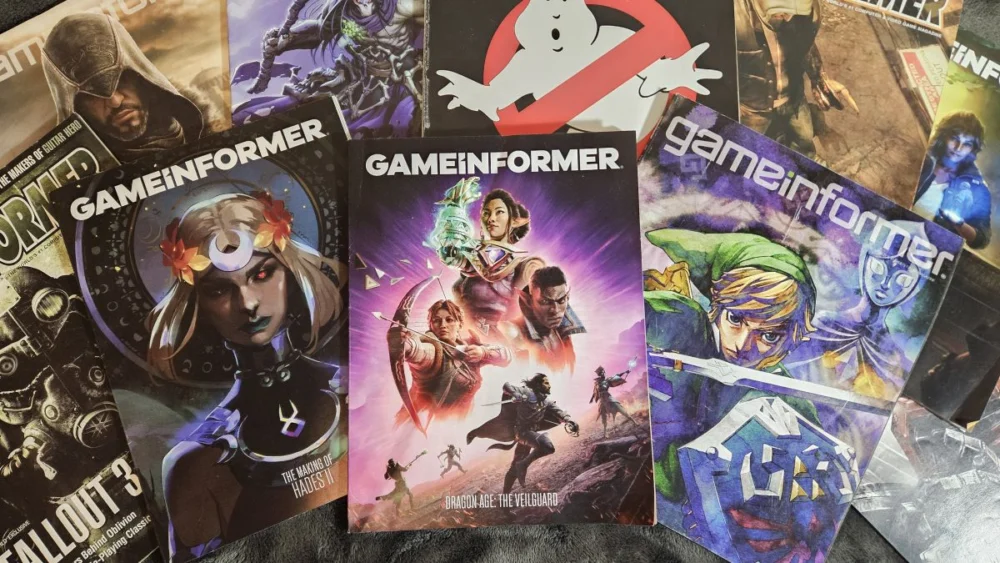
The landscape of video game journalism has experienced a seismic shift today with the abrupt closure of Game Informer, a publication that has been a cornerstone of the industry for more than thirty years. Parent company GameStop confirmed the cessation of all operations for the venerable magazine and its associated online presence, bringing an end to an era that saw Game Informer evolve from a niche retailer newsletter into one of the most influential voices in gaming media. The decision, announced this morning to editorial staff, marks the immediate termination of both the print magazine and the website, resulting in the layoff of the entire editorial team.
Sources close to the publication, including former magazine content director Kyle Hilliard, revealed that the next issue was reportedly nearing completion, with approximately 70% of its content finalized, including a cover described as "GREAT." This stark reality underscores the suddenness and finality of the closure. The official confirmation came via Game Informer’s social media channels, where a statement acknowledged the end of its print operations while attempting to convey a message of enduring passion for gaming. "While our presses may stop, the passion for gaming that we’ve cultivated together will continue to live on," the statement read, a sentiment echoed by many former writers who have shared the news across their personal platforms.
A Legacy Forged in Print and Pixels
Game Informer’s origins trace back to 1991, when it was launched as a modest in-house newsletter by FuncoLand, a now-defunct video game retailer. This humble beginning belied the publication’s future trajectory. In the year 2000, GameStop acquired FuncoLand, inheriting Game Informer and strategically integrating it into its burgeoning customer loyalty program. This integration proved to be a pivotal moment, transforming the publication from a simple promotional tool into a significant driver of customer engagement and a primary source of gaming news and reviews for millions of consumers.
Over the subsequent decades, Game Informer carved out a unique niche, becoming synonymous with in-depth coverage and often exclusive access to upcoming video game titles. Its distinctive cover art, frequently featuring early reveals and striking visuals of highly anticipated games, became a recognizable hallmark. The magazine’s commitment to its print format, even as the digital revolution swept through the media industry, allowed it to maintain a tangible presence in the lives of its readership, fostering a deep connection that digital-only outlets often struggled to replicate.
Navigating Industry Shifts and Corporate Fortunes
The journey of Game Informer was not without its challenges, mirroring the broader volatility of the media landscape and the turbulent corporate history of its parent company. By 2010, Game Informer had achieved remarkable success, ranking as the fifth-largest magazine in the United States, a remarkable feat that placed it ahead of established titans like Time and Sports Illustrated. This peak in print circulation highlighted the publication’s significant cultural and commercial impact within the gaming sphere.
However, the subsequent years saw Game Informer, like many print publications, grapple with the pervasive shift towards online content consumption and the declining advertising revenue associated with print media. Furthermore, the publication endured numerous staffing reductions and resource cuts implemented by GameStop corporate. These actions often coincided with GameStop’s broader corporate strategies, including ambitious ventures into the non-fungible token (NFT) and blockchain space, and its efforts to navigate the notoriety and financial instability stemming from its "meme stock" status. These corporate maneuvers, while aimed at diversifying and stabilizing the company, often created an environment of uncertainty for its media arm.
Despite these headwinds, Game Informer demonstrated resilience. In a notable effort to revitalize its print presence, the publication recently reintroduced a subscription service for its magazine, signaling a continued commitment to its core product and a desire to reconnect with its dedicated readership. This initiative, however, has now been abruptly curtailed by the closure.
An Enduring Institution in Gaming Culture
For a generation of gamers, Game Informer was more than just a magazine; it was an institution. For many, it served as their primary gateway into the world of video game journalism. The magazine offered a comprehensive editorial experience, from early previews and in-depth reviews to expansive feature articles that explored the evolving landscape of the gaming industry. Its commitment to showcasing stunning and memorable cover art, often featuring exclusive artwork for major releases, cemented its status as a coveted collectible for many enthusiasts.
Beyond the blockbuster reveals, Game Informer’s pages were also a platform for the voices that shaped the industry. It consistently featured opinion pieces, insightful interviews with developers and industry figures, and extensive features that delved into the cultural and technological trends driving gaming. A particularly beloved segment for many readers was the "Letters from Readers" section, which fostered a sense of community and direct engagement between the publication and its audience. The act of gathering old issues, as one former contributor recounted, served as a potent reminder of the profound influence these early publications had on shaping personal perspectives and fostering a lifelong passion for gaming.
The Broader Implications of the Closure
The closure of Game Informer arrives at a particularly challenging juncture for the video game industry. The past year has witnessed a significant wave of layoffs across numerous companies, from major publishers and developers to ancillary services and media outlets. According to industry estimates, approximately 9,000 video game jobs were lost in 2023 alone, a trend that appears to be continuing into the current year. In this climate, the disappearance of a long-standing bastion of games coverage like Game Informer is not merely the loss of a publication; it represents the erosion of institutional knowledge and a significant reduction in the diverse voices contributing to the discourse surrounding interactive entertainment.
The sudden cessation of operations leaves Game Informer’s talented staff seeking new opportunities in an increasingly competitive and uncertain job market. The closure also raises questions about the future viability of print media within the gaming sector and the long-term strategies of companies like GameStop. As more established institutions are either dismantled or significantly downsized, the industry faces a growing challenge in maintaining a robust and multifaceted media ecosystem capable of critically examining, celebrating, and shaping the future of video games. The void left by Game Informer’s departure will undoubtedly be felt by gamers and industry professionals alike, prompting reflection on the fragility of media legacies and the evolving nature of information dissemination in the digital age.