

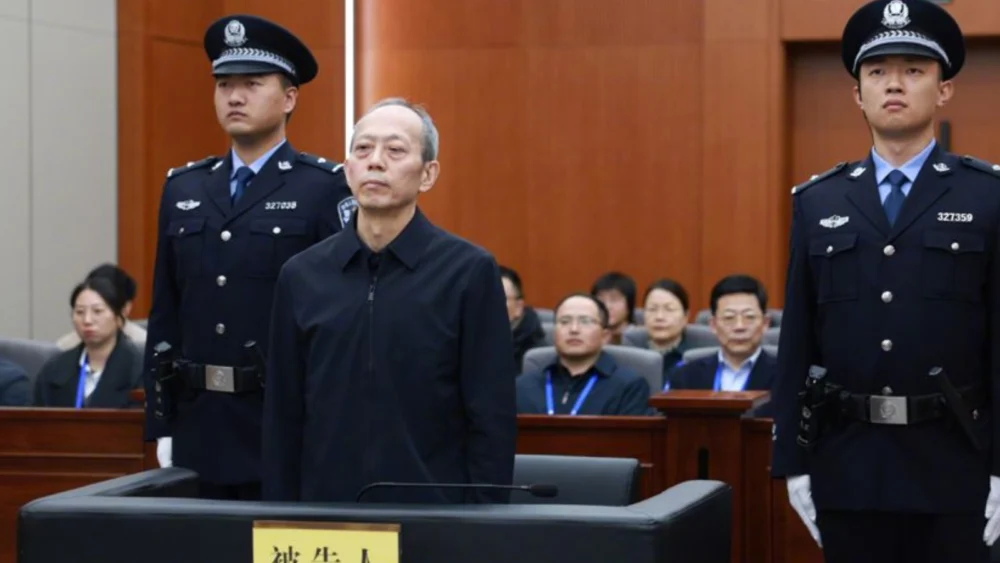
The former head of China’s General Administration of Sport, Gou Zhongwen, has been handed a death sentence with a two-year reprieve by a Chinese court, following his conviction on charges of large-scale bribery and abuse of power. The Yancheng Intermediate People’s Court delivered the verdict, marking a significant development in the country’s ongoing anti-corruption campaign that has swept through various sectors, including the realm of sports and the burgeoning esports industry. The severe sentence underscores the government’s commitment to eradicating corruption at the highest levels, even within bodies overseeing national sporting endeavors and emerging digital competitions.
The Magnitude of Corruption: A Financial and Social Reckoning
According to official reports citing China Daily, the court found that Gou Zhongwen accepted a staggering sum exceeding 236 million yuan (approximately 33.4 million U.S. dollars) in bribes. This illicit financial activity spanned a decade, from 2009 to 2024, a period during which Gou held considerable influence within China’s sporting apparatus. The indictment detailed how he leveraged his senior governmental positions to facilitate benefits for individuals and various departments. These benefits were reportedly secured through the manipulation of project approvals and strategic business operations, demonstrating a systemic pattern of corruption that permeated his decision-making processes.
The court’s judgment explicitly characterized the scale of Gou’s corruption as "extremely large," a damning assessment that highlights the profound impact of his actions on the integrity of the sports administration. Furthermore, the social repercussions were deemed "extremely negative," suggesting that his corrupt practices not only resulted in financial losses but also eroded public trust and undermined the principles of fair play and meritocracy within the sporting world. The 68-year-old official has also been permanently stripped of his political rights and had all of his personal assets confiscated, a common punitive measure in such high-profile corruption cases in China.
A Dual Conviction: Bribery and Abuse of Authority
In a separate but related ruling, Gou Zhongwen received a five-year prison sentence for abusing his authority during his tenure as a vice-mayor of Beijing between 2012 and 2013. This conviction stemmed from his actions concerning the acquisition of a public project, which officials stated resulted in significant financial losses to the state. While this conviction addresses a specific instance of malfeasance, it further contextualizes the broader pattern of misconduct that led to the more severe bribery charges.
The court’s decision to combine all penalties into a suspended death sentence is a nuanced legal outcome. In the Chinese legal system, a death sentence with a two-year reprieve typically serves as a probationary period. If the convicted individual demonstrates good behavior and commits no further offenses during this two-year window, the sentence is generally commuted to life imprisonment. However, the court’s pronouncement in Gou’s case carried an additional weight. Due to the exceptional severity of his actions, Gou will not be eligible for parole or sentence reductions, even after the death sentence is formally commuted. This effectively means that he is destined to spend the remainder of his life incarcerated, irrespective of his conduct during the reprieve period.
Confession and Mitigating Factors: Insufficient to Offset Gravity
The court’s judgment acknowledged that Gou Zhongwen confessed to the charges and voluntarily disclosed additional instances of bribery that had not yet been uncovered by investigators. He also reportedly returned illicit gains acquired through his corrupt activities. While these actions are often considered mitigating factors in legal proceedings, the court determined that they were insufficient to outweigh the gravity of his offenses. This ruling underscores the zero-tolerance approach adopted by the Chinese judiciary in cases involving high-ranking officials and substantial financial corruption. The sheer scale of the bribes and the abuse of power associated with them were deemed too egregious to warrant a lesser sentence, even with cooperation.
A Career in Sports Administration and the Esports Connection

Gou Zhongwen’s career was deeply intertwined with the development of sports in China. Before his role at the General Administration of Sport, he served as the president of the Chinese Olympic Committee. He also played a pivotal leadership role in the successful organization of the Beijing 2022 Winter Olympics, a testament to his administrative capabilities and influence within the national sporting framework.
His involvement with esports arose through his leadership of the General Administration of Sport, the government body responsible for overseeing a wide array of sporting disciplines, including the official recognition of esports as China’s 99th sport. This recognition marked a significant step in legitimizing competitive video gaming as a legitimate athletic pursuit within the country.
A Complex Stance on Gaming and Esports
Despite the official embrace of esports, Gou Zhongwen’s personal stance toward gaming and competitive esports was widely perceived as unsupportive. As noted by The Esports Advocate, Gou was not considered a champion of the industry, even as esports experienced an unprecedented surge in popularity across China. This apparent disconnect between official policy and his personal views raises questions about the true level of governmental support for the sector during his tenure.
The most stringent gaming restrictions in China were implemented in 2021. The National Press and Publication Administration (NPPA), a separate regulatory body with authority over game approvals, imposed a rule limiting players under the age of 18 to just three hours of gaming per week. This policy had profound implications for the esports industry. Because all professional players in China are required to be registered athletes, this rule effectively barred minors from entering the professional esports scene. This stands in contrast to traditional sports, where no such age caps exist for aspiring athletes.
The General Administration of Sport, under Gou Zhongwen’s leadership, had the potential to advocate for esports-specific exceptions or to push back against these restrictive measures. However, the absence of such actions during his tenure suggests a lack of proactive engagement or perhaps a tacit acceptance of the broader regulatory agenda concerning gaming. This inaction, coupled with his personal reservations, may have contributed to the perception that the esports industry was not a priority for him, despite its rapid growth and economic potential.
The Broader Implications of the Verdict
The sentencing of Gou Zhongwen sends a powerful message about the Chinese government’s commitment to combating corruption, particularly within influential state bodies. The inclusion of esports within the scope of his corruption charges also highlights the increasing scrutiny and regulation of the digital entertainment and competitive gaming sectors. As esports continues to mature and attract significant investment, governments worldwide are grappling with how to regulate it effectively while fostering its growth. China’s approach, as exemplified by this case, suggests a willingness to apply stringent anti-corruption measures to all sectors, regardless of their novelty or perceived importance.
The suspended death sentence, while ultimately likely to result in life imprisonment, serves as a stark warning to other officials who may be tempted to engage in illicit activities. The detailed breakdown of the financial scale of the bribes and the abuse of power involved provides concrete data points for understanding the extent of corruption within the sports administration. The fact that Gou’s confession and cooperation did not lead to a less severe outcome underscores the judicial system’s emphasis on the severity of the crimes committed.
The case also raises questions about the future of esports regulation in China. Will the General Administration of Sport, under new leadership, adopt a more supportive stance towards the industry? Will the stringent gaming restrictions for minors be revisited? The outcomes of these questions will have significant implications for the global esports landscape, given China’s substantial market share and influence. The verdict against Gou Zhongwen is not merely a legal judgment; it is a significant event that reflects the ongoing power struggles and policy shifts within China’s rapidly evolving sporting and digital entertainment sectors. The long-term impact of this case will undoubtedly shape the trajectory of sports governance and the regulation of emerging industries in the country.