

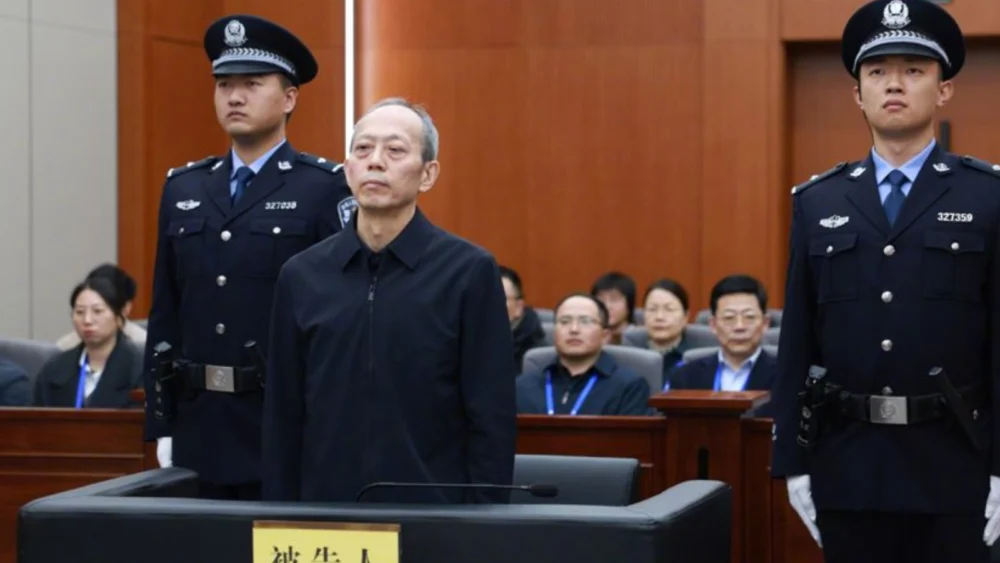
A seismic corruption scandal has rocked China’s sports governance, culminating in a death sentence with a two-year reprieve for Gou Zhongwen, the former head of the General Administration of Sport (GAS). The Yancheng Intermediate People’s Court found Gou guilty of large-scale bribery and abuse of power, handing down a judgment that underscores the government’s commitment to tackling deep-seated corruption, even within its highest echelons of sports leadership. The verdict, which includes the confiscation of all personal assets and lifelong revocation of political rights, sends a stark warning to officials across all sectors.
The gravity of Gou’s offenses, as detailed by China Daily, is staggering. Between 2009 and 2024, a period spanning his influential tenure, Gou is alleged to have accepted illicit payments totaling more than 236 million yuan, equivalent to approximately $33.4 million USD. This extensive period of alleged criminal activity allowed for the systematic exploitation of his senior government positions, where he wielded considerable influence over project approvals and the operational aspects of various sports-related businesses. The court characterized the scale of this corruption as "extremely large" and its societal repercussions as "extremely negative," highlighting the detrimental impact on public trust and the integrity of sports administration in China.
The 68-year-old former official’s downfall is a complex narrative woven through his leadership roles. His involvement in the General Administration of Sport, the powerful body responsible for overseeing everything from traditional athletic pursuits to the burgeoning esports industry, placed him at the nexus of significant financial flows and decision-making power. This position, coupled with his prior role as a Beijing vice-mayor from 2012 to 2013, provided ample opportunities for illicit gains and the manipulation of public resources. The court’s separate sentencing for abusing his authority during his vice-mayoral tenure, which resulted in substantial state losses from a related public project acquisition, further illustrates the breadth of his corrupt activities.
A Chronology of Corruption and Downfall
Gou Zhongwen’s ascent through the ranks of Chinese sports administration was marked by significant achievements, including his presidency of the Chinese Olympic Committee and his pivotal role in the successful organization of the Beijing 2022 Winter Olympics. His leadership within the GAS also coincided with a pivotal moment for esports in China, as the sport was officially recognized as the nation’s 99th official sport under his purview. However, this period of growth and recognition for esports was shadowed by Gou’s widely perceived unsupportive stance towards the industry, a sentiment echoed by The Esports Advocate. Despite the explosive growth of esports in China and its increasing integration into mainstream sports culture, Gou was not seen as a champion of the sector, leading to a disconnect between the administration’s official recognition and tangible support for its development.
The timeline of Gou’s alleged corrupt activities, spanning over a decade, paints a picture of entrenched malfeasance. The period from 2009 to 2024, during which the massive bribes were allegedly accepted, encompasses significant shifts in China’s economic landscape and its approach to sports development. This era saw increased investment in sports infrastructure, the privatization of some sports-related enterprises, and the formal integration of esports into the national sports framework. It was within this dynamic environment that Gou allegedly leveraged his authority to enrich himself and others, exploiting the opportunities presented by large-scale projects and business dealings.
The court’s decision to impose a suspended death sentence is a critical element of the legal proceedings. In China, a death sentence with a two-year reprieve is a unique judicial mechanism. Typically, if the convicted individual demonstrates good behavior and commits no further offenses during the two-year period, the sentence is commuted to life imprisonment. This provision is often seen as an indicator of the court’s recognition of potential mitigating factors, such as confession or cooperation.

Mitigating Factors and Unwavering Judgment
The court did acknowledge Gou’s confession, his voluntary disclosure of additional bribery activities not yet uncovered by investigators, and his cooperation in returning illicit gains. These actions are generally considered mitigating factors in Chinese jurisprudence. However, the court explicitly stated that these concessions were insufficient to outweigh the profound severity and extensive nature of his offenses. This ruling underscores a zero-tolerance policy towards corruption, particularly when it involves high-ranking officials and impacts the integrity of national institutions.
The court’s further stipulation that Gou will not be eligible for parole or sentence reductions, even after the commutation of his death sentence, is a significant aspect of the judgment. This effectively means that Gou will spend the remainder of his life in prison, regardless of his conduct during the reprieve period. This stringent condition highlights the court’s determination to ensure that Gou faces the full consequences of his actions, without the possibility of early release. This level of strictness is typically reserved for cases deemed exceptionally grave, where the damage inflicted on society and public trust is considered irreparable.
The Broader Impact on Esports and Sports Governance
The case of Gou Zhongwen carries profound implications, particularly for the esports industry in China. His leadership at the GAS coincided with a period of intense scrutiny and regulation of the gaming sector. In 2021, the National Press and Publication Administration (NPPA), a separate regulatory body, implemented stringent restrictions on underage gaming, limiting minors to three hours of play per week. Crucially, this regulation effectively barred minors from participating in professional esports, as all professional players are required to be registered athletes. This contrasted sharply with traditional sports, where no such age restrictions exist for aspiring athletes.
The fact that the GAS, under Gou’s leadership, did not advocate for esports-specific exceptions or push back against these restrictive measures is a point of significant criticism. While the GAS is not the primary regulator of gaming content, its mandate to promote and develop sports, including recognized esports, suggests a potential avenue for intervention. The lack of action under Gou’s tenure has led to a perception that the burgeoning esports industry was not a priority, or worse, was actively stifled by the very administration meant to support it.
The sentencing of Gou Zhongwen is likely to trigger a period of introspection and reform within the General Administration of Sport. The exposure of such deep-seated corruption at the highest level will inevitably lead to increased oversight and a demand for greater transparency in financial dealings and decision-making processes. For the esports community, the hope is that this upheaval might pave the way for a more supportive and progressive approach from sports authorities, fostering an environment where the industry can continue to flourish without the shadow of corruption or a perceived lack of official backing.
The scale of the bribery—over 236 million yuan—is a testament to the immense financial power wielded by sports officials and the potential for corruption when governance structures are weak or compromised. This figure dwarfs many previous corruption cases involving sports officials in China, placing Gou’s alleged malfeasance in a category of its own. The long duration of the alleged activity, spanning 15 years, suggests a systemic issue rather than isolated incidents, raising questions about the effectiveness of existing anti-corruption mechanisms within the GAS during that period.
The court’s decision, while severe, reflects China’s broader anti-corruption campaign, which has seen numerous high-profile officials, across various sectors, face prosecution and punishment. The targeting of a former head of a significant government body like the GAS signifies the state’s resolve to root out corruption at all levels, regardless of the individual’s past standing or contributions. The ultimate fate of Gou Zhongwen will be determined by his conduct over the next two years, but the current ruling ensures that his legacy will be forever intertwined with one of China’s most significant sports corruption scandals. The case serves as a potent reminder that even in areas of national pride and international prestige, the fight against corruption remains an unyielding priority.