

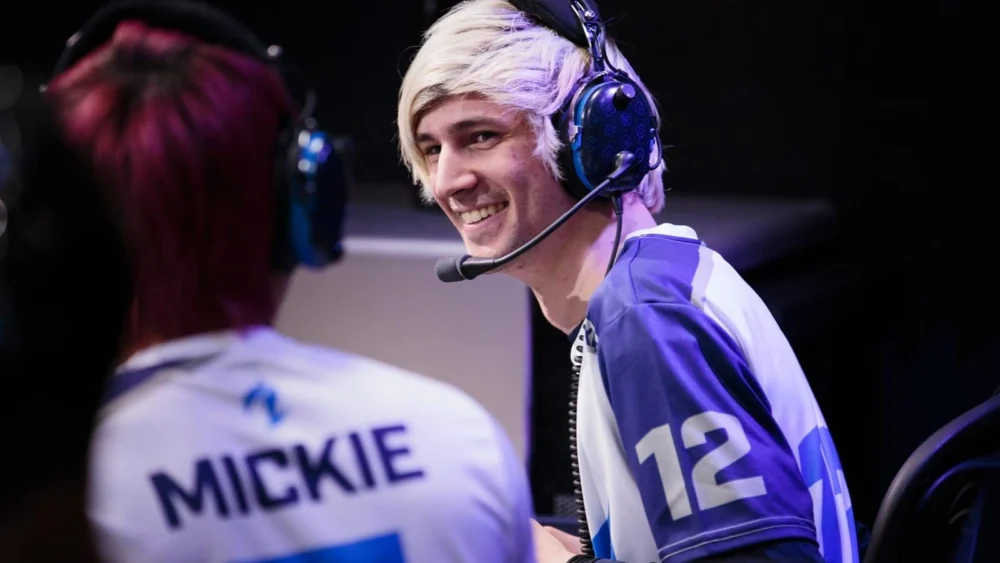
Before Felix "xQc" Lengyel ascended to become the undisputed titan of live streaming, a position he holds today as one of the most influential and highly compensated content creators globally, he harbored a genuine fear that his professional aspirations might be extinguished before they had truly ignited. This period of profound uncertainty unfolded in 2018, a pivotal year that saw Lengyel, then a burgeoning talent in the competitive Overwatch scene and a rising star on Twitch, make a significant career move by joining the Dallas Fuel for the inaugural season of the Overwatch League (OWL). At the time, the OWL represented the zenith of professional Overwatch, a meticulously crafted esports ecosystem designed to emulate traditional sports leagues, and securing a spot within it was widely regarded as the ultimate achievement for any aspiring player.
The trajectory of Lengyel’s OWL tenure, however, proved to be dramatically short-lived. Merely weeks into what would become a notoriously tumultuous first season for the league, Lengyel found himself embroiled in disciplinary issues, leading to two separate suspensions. The second of these suspensions precipitated his release from the Dallas Fuel, a decision Lengyel has since stated was influenced by pressure exerted by the league itself. While this precipitous exit from the OWL stage would, in retrospect, serve as a crucial inflection point, directly fueling his eventual ascent to unprecedented streaming fame, at the moment of his dismissal, Lengyel felt as though he had irrevocably sabotaged his future prospects, likening the experience to being treated as an outcast.
The Perilous Precipice: xQc’s Perspective on the OWL Ban
In an exclusive interview with Dexerto, xQc candidly articulated the profound significance that Overwatch held for him during that formative period. The abrupt severance from the OWL’s nascent and highly publicized structure felt akin to a total annihilation of his professional credibility, occurring virtually overnight. "I didn’t know what I was going to do," Lengyel confessed to Dexerto. "I genuinely thought I was done for. I thought that was going to be the end of my career pretty much." This sentiment underscores the immense pressure and emotional weight associated with his OWL commitments, which he viewed as the pinnacle of his competitive gaming ambitions.
Despite the palpable fear and the perceived finality of the situation, Lengyel maintained a surprising composure. He indicated that he did not engage in pleading or attempts to salvage his position within the league. Instead, he sought direct conversations with league and team executives. These discussions, he recounted, left him with an unambiguous impression: the league had effectively decided his tenure was over. This realization, while daunting, also seemed to unlock a peculiar, albeit self-destructive, sense of exhilaration. "I was almost excited," he recalled, describing a complex emotional response. "It’s a very weird self-destructive feeling that I sometimes will enjoy. I’m forced into a spot that’s very dangerous, but it’s exhilarating."

Lengyel further elaborated on this paradoxical feeling, drawing a vivid analogy to standing at the edge of a precipice. The immediate outlook offered no clear path forward, presenting a situation of extreme risk. Yet, within this perilous predicament lay the potential for an unforeseen leap, a chance to land in an entirely new and potentially more rewarding territory. This metaphorical "jump" would manifest in his very next streaming broadcast, marking the beginning of an unexpected chapter.
The Dawn of a New Era: Embracing Variety and Rebuilding
The broadcast that followed Lengyel’s dismissal from the Overwatch League was, by his own account, one of the most impactful of his burgeoning career. The controversy surrounding his exit ignited immense curiosity among his viewership, drawing massive numbers as fans tuned in to witness his response and observe his next moves. This surge in viewership, while significant, was recognized by Lengyel as a transient phenomenon, a consequence of the dramatic narrative rather than a sustainable indicator of long-term appeal. "I knew that things would fall off from that height because it’s a big ban moment, right? Everybody wants to see what he’s going to do next. I knew that I was at a crossroads where that big stream that I just did is going to be who I am now," he reflected.
Instead of attempting to artificially sustain the inflated viewership figures or chase fleeting trends, Lengyel adopted a strategy centered on consistent effort and rebuilding his presence. A crucial element in this rebuilding phase was his collaboration with fellow streamer M0xyy. This partnership provided Lengyel with a vital sense of confidence, empowering him to experiment with different content formats and games, even when the outcomes were uncertain. "When I was with M0xyy, it didn’t matter if we failed. It didn’t matter if we were doing good because we’re together, right? And it sounds a little bit corny, but we had such confidence in our cohesion that we could play a game that nobody wanted to watch, and people would want to watch," he explained.
This period of experimentation, often characterized by content that was not always polished but was undeniably authentic, served as a crucible for Lengyel’s development. It forced him to demonstrate his ability to thrive and entertain audiences outside the structured environment of professional esports. The focus shifted from solely chasing viewership numbers to cultivating a genuine connection with his audience and exploring the breadth of his entertainment capabilities. "We needed to show we can do something else. And that something else was sometimes complete garbage. But it mattered to some people. And if you do that thing that is good for some people every day, it’ll be good for a lot of people to the point where at one point variety is something that a lot of people care about," Lengyel articulated.
Ultimately, the pursuit of raw viewership numbers began to recede in importance for xQc. His focus crystallized on the shared creative process and the vision he and M0xyy were building together. "I cared about what me and him were doing. And that seeing that vision through was very rewarding because me and him ended up doing great things," he stated.

The Unforeseen Catalyst: From OWL Prospect to Global Streaming Phenomenon
The narrative of Felix "xQc" Lengyel’s career is a compelling testament to the unpredictable nature of the digital entertainment landscape. What initially felt like a career-ending sanction from the Overwatch League paradoxically transformed into the essential catalyst for his evolution. The ban propelled him from the confines of a professional esports league, where his future was dictated by team performance and league regulations, into the boundless expanse of live streaming. Here, his success would be determined by his personality, his ability to connect with a diverse audience, and his relentless pursuit of authentic content creation.
The Overwatch League, launched in 2018, was a monumental undertaking by Blizzard Entertainment, aiming to establish a global franchised league for its flagship title, Overwatch. The league featured twelve city-based franchises, including the Dallas Fuel, and was designed to foster a professional esports environment with significant investment and media coverage. Lengyel, a former professional Overwatch player with a reputation for both exceptional skill and a volatile personality, was a high-profile acquisition for the Dallas Fuel. His performance in the league, however, was overshadowed by a series of in-game and out-of-game disciplinary actions.
The first suspension for Lengyel occurred in January 2018 due to unsportsmanlike conduct. This was followed by a second, more severe suspension in March 2018 for "continued violations of the Overwatch League player code of conduct," as stated by the league at the time. The Dallas Fuel subsequently announced his release, a decision that sent shockwaves through the esports community. Reports at the time suggested that the league’s disciplinary committee was heavily involved in the decision-making process, indicating a desire from OWL officials to set a firm precedent for player conduct.
The implications of this ban extended beyond Lengyel’s immediate career prospects in professional Overwatch. It forced him to reconsider his entire professional identity. By moving away from the structured environment of the OWL and embracing the more fluid and unpredictable world of online streaming, Lengyel discovered an unparalleled platform for his unique brand of entertainment. His ability to engage with a massive audience, his unfiltered commentary, and his willingness to play a wide array of games resonated with millions. This freedom allowed him to cultivate a diverse content portfolio, moving beyond the confines of a single game and establishing himself as a premier variety streamer.
His subsequent success has been nothing short of extraordinary. By 2023, xQc had signed a reported $100 million deal with Kick, a rival streaming platform, solidifying his status as one of the highest-earning streamers in the world. This move underscored the immense commercial value and influence he had garnered through his streaming endeavors. The story of xQc’s journey from an ostracized Overwatch League player to a global streaming phenomenon serves as a powerful narrative of resilience, adaptation, and the transformative potential of embracing new opportunities, even when they emerge from the ashes of apparent professional failure. The league’s attempt to curb his disruptive tendencies inadvertently provided him with the ultimate stage to showcase his true potential and redefine the boundaries of online entertainment.