

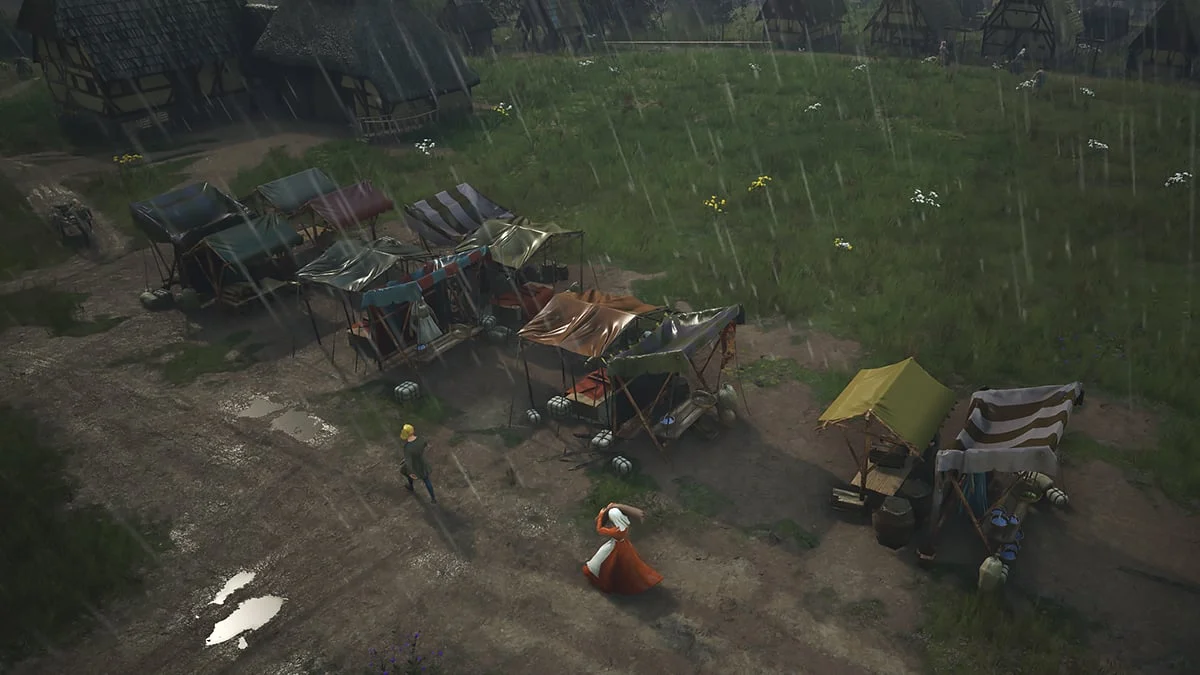
In the meticulously crafted medieval world of Manor Lords, a game lauded for its realistic city-building and strategic depth, players often encounter a seemingly minor yet persistently frustrating logistical challenge: the scattered piles of supplies. Whether arising from the demolition of a structure, the abandonment of a construction project, or simply the aftermath of resource gathering, these exposed goods — ranging from logs and stone to food and crafted materials — present more than just an aesthetic blight on an otherwise pristine settlement. They represent a tangible threat to a nascent economy, a bottleneck for urban development, and a constant source of consternation for players striving for optimal efficiency.
The core issue stems from Manor Lords’ commitment to realism, differentiating it from many contemporary city-builders that abstract resource movement. In this game, resources possess physical presence. When left exposed, they are vulnerable to the elements, leading to degradation and eventual destruction. This decay mechanism, while contributing to the game’s immersive quality, translates directly into material loss, impacting a settlement’s regional wealth and its capacity for growth. Furthermore, these abandoned piles frequently impede the construction of new buildings, blocking vital development sites and forcing players into awkward redesigns or protracted waiting periods. The irony is often palpable: a bustling medieval town, replete with idle villagers and a well-stocked storehouse nearby, may inexplicably leave valuable resources lying fallow, much to the exasperation of its virtual lord.
The Genesis of Logistical Headaches: When Supplies Go Astray
The problem of exposed goods in Manor Lords typically manifests through several common scenarios. Demolition is perhaps the most frequent culprit. When a player decides to dismantle an existing building – perhaps to relocate it, upgrade a district, or clear space for a new development – the resources used in its construction are often recovered. However, these recovered materials, instead of being automatically whisked away to storage, are left at the demolition site. Similarly, if a construction project is cancelled or abandoned, any materials already delivered to the site remain there, exposed to the elements.
Beyond construction, resource gathering operations can also contribute to the problem. Logging camps, stonecutting operations, and even foraging huts might, under certain circumstances, leave harvested materials on the ground if their associated storage buildings are full, inaccessible, or if the designated workers are preoccupied with higher-priority tasks. The game’s intricate simulation of villager AI and their task prioritization means that simply having "idle villagers" does not guarantee immediate action on every logistical oversight. Villagers have specific roles and assigned tasks, and moving scattered supplies, particularly if they are distant or if storage facilities are perceived as adequately staffed, may fall lower on their internal priority list. This behavior, while realistic in simulating the complexities of managing a medieval workforce, often creates a disconnect with the player’s immediate need for order and efficiency.
The Economic and Developmental Impact of Neglected Resources
The implications of unmanaged exposed goods extend beyond mere inconvenience. The most direct consequence is resource degradation. Logs might rot, stone might crumble, and perishable goods like food or hides will spoil much faster when left outside a granary or storehouse. This loss directly translates to a reduction in available materials for construction, crafting, and trade. In the early stages of a settlement, where every unit of timber or stone is crucial for survival and initial expansion, such losses can significantly hinder progress, delaying the establishment of essential infrastructure like housing, farms, or workshops.

Economically, lost resources mean lost regional wealth. Resources that decay cannot be sold at a trading post, nor can they be processed into more valuable goods. This diminishes the settlement’s overall economic output and its capacity to purchase necessary imports. Furthermore, the physical obstruction caused by these piles directly impacts urban planning. A critical plot of land earmarked for a new burgage plot, a crucial market, or a defensive tower might remain unusable until the debris is cleared. This forces players to either wait, redesign their layout, or undertake costly and time-consuming manual intervention, all of which represent inefficiencies in the broader developmental timeline of the manor.
Navigating the Logistical Maze: Player-Driven Solutions
While the game’s design intentionally presents these logistical challenges to enhance realism, Manor Lords also provides players with several mechanisms to exert control over their supply lines. Mastering these tools is paramount for maintaining a smooth-running, prosperous settlement.
1. Optimizing Storage and Worker Assignment:
The foundational step in managing exposed goods lies in the effective operation of storage facilities. Manor Lords distinguishes between various types of storage:
- Storehouse: For general materials like timber, planks, stone, iron, leather, and crafted goods.
- Granary: Specifically for food items like berries, meat, grain, bread, and vegetables.
- Logging Camp: Serves as the primary storage for raw timber logs.
- Warehouse: For trade goods.
The principle is simple: ensure these buildings are adequately staffed. Assigning more villagers to a Storehouse or Granary directly increases the workforce dedicated to hauling goods into these facilities. While this may seem intuitive, players sometimes hesitate to assign additional workers, fearing it will detract from other essential tasks. However, a properly staffed logistics chain prevents bottlenecks and minimizes resource decay. For logs, ensure your Logging Camp has active workers and, crucially, access to oxen.
2. The Critical Role of Roads and Oxen:
Transportation infrastructure is not merely aesthetic in Manor Lords; it is a vital component of logistical efficiency. Constructing a robust network of roads connecting resource points, production buildings, and storage facilities significantly reduces the travel time for villagers and their beasts of burden. A well-placed road can transform a lengthy, inefficient haul into a swift transfer, directly impacting how quickly exposed goods are moved.
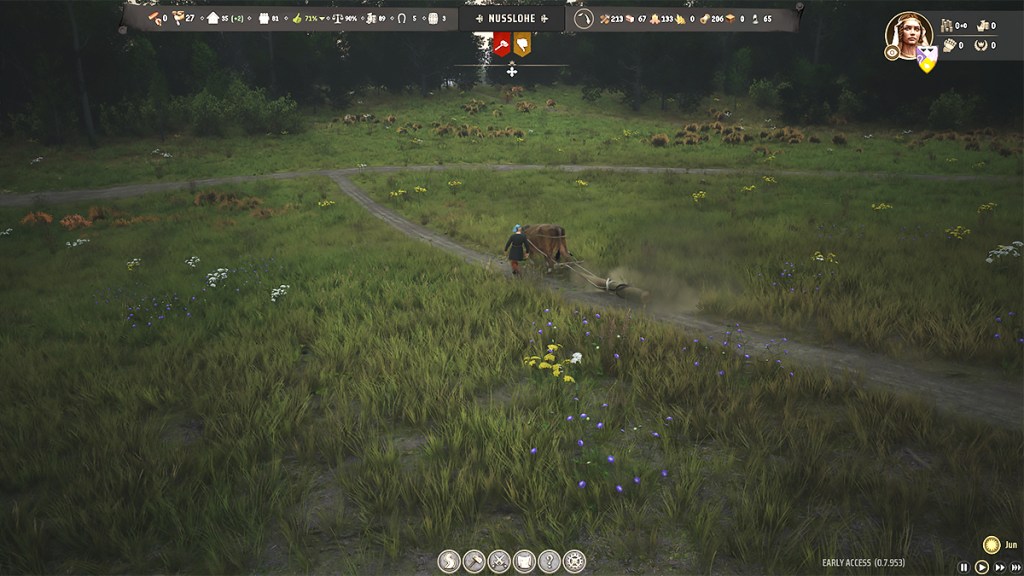
Oxen are indispensable for transporting heavy materials, particularly logs and stone. Each Logging Camp, Sawpit, and Stonecutter Camp benefits immensely from having an assigned ox. These animals dramatically increase the carrying capacity and speed of transport. Players should prioritize acquiring oxen early in their game, either through trade or breeding, and strategically assign them to facilities that handle bulky resources. An unassigned ox will often be utilized by general laborers for hauling tasks, including clearing exposed goods, making them a valuable asset for general logistical support.
3. Strategic Application of "Limit Work Area":
One of the most powerful and often underutilized tools for addressing specific piles of exposed goods is the "Limit Work Area" function. This feature, available in the interface of various production and storage buildings, allows players to designate a specific geographical zone where workers from that building will focus their efforts.
To effectively clear exposed goods:
- For General Materials (Storehouse): Select your Storehouse, click on the "Limit Work Area" option, and then draw a clear boundary around the specific pile of materials you wish to have moved. This forces the assigned Storehouse workers to prioritize hauling goods from within that designated area to the Storehouse.
- For Food Items (Granary): Similarly, select your Granary, activate "Limit Work Area," and encircle the exposed food items. Granary workers will then focus on moving those perishables to safety.
- For Logs (Logging Camp): If a pile of logs is cluttering a construction site or simply needs to be moved, select your Logging Camp, use "Limit Work Area" to highlight the log pile. The loggers, especially if they have an ox, will then prioritize moving those logs to the Logging Camp’s storage.
This micro-management technique provides a direct override to the default villager AI, ensuring immediate attention to critical areas. However, it is crucial to remember to "Clear Work Area" once the task is complete. Failing to do so can create new inefficiencies, as workers will continue to ignore resources outside their limited zone, potentially leading to bottlenecks elsewhere.
4. Temporary Structures and Worker Reassignment:
In scenarios involving particularly large concentrations of exposed goods, or if the nearest permanent storage facility is too distant, players can employ a more aggressive strategy: building temporary storage. Constructing a new, temporary Storehouse, Granary, or even a Logging Camp closer to the problematic pile can significantly reduce travel times for haulers, expediting the cleanup process. Once the goods are moved, the temporary structure can be demolished, recovering some of its initial build cost. This is a tactic often employed for clearing large demolition sites or preparing a new distant settlement area.
For logs specifically, an unconventional but effective method involves temporarily un-assigning workers from an existing Logging Camp. This action frees up the associated ox and turns the former loggers into general laborers. These newly unassigned villagers, especially with an ox at their disposal, may then prioritize hauling abandoned logs as a general task, particularly if other high-priority tasks are not immediately available. Once the logs are cleared, the workers can be reassigned to their Logging Camp.

The Broader Implications for Settlement Development
Mastering the art of resource logistics in Manor Lords transcends mere tidiness; it fundamentally impacts the long-term viability and prosperity of a settlement. An efficiently managed supply chain ensures a steady flow of resources to production buildings, prevents wastage, and facilitates continuous growth.
- Accelerated Development: By promptly clearing construction sites and ensuring materials are readily available, players can significantly accelerate the pace of their settlement’s expansion, rapidly establishing new burgage plots, workshops, and defensive structures.
- Enhanced Economic Stability: Minimizing resource decay directly contributes to a healthier economy. Fewer lost goods mean more resources available for processing into valuable trade items or for local consumption, bolstering regional wealth and trade capacity.
- Strategic Flexibility: A clean, organized settlement allows for greater strategic flexibility. Players can adapt to changing economic needs, military threats, or population demands without being hindered by logistical bottlenecks or unusable land.
- Player Satisfaction: While not an explicit game mechanic, a well-ordered and efficient town undoubtedly enhances the player’s sense of accomplishment and immersion. The satisfaction of seeing resources flow seamlessly and construction proceed unhindered is a reward in itself.
Developer’s Vision and Community Engagement
The logistical challenges presented by exposed goods are not accidental; they are a deliberate design choice by the developers of Manor Lords. The game aims to simulate the gritty realities of medieval life and the difficulties inherent in managing a growing settlement without modern infrastructure. The "Exposed Goods" warning icon, appearing in the info bar at the top of the screen, serves as a clear indication and a subtle nudge for players to address these issues proactively. It underscores the game’s philosophy: success in Manor Lords isn’t just about building, but about managing the intricate web of dependencies and challenges that arise from those constructions.
As an Early Access title, Manor Lords continues to evolve, with developers actively engaging with community feedback. While the core logistical mechanics are likely to remain, future updates may introduce refinements to villager AI prioritization, new quality-of-life features, or additional tools to streamline resource management, further enhancing the player experience without compromising the game’s commitment to realism.
In conclusion, the seemingly mundane task of clearing scattered supplies in Manor Lords is, in fact, a microcosm of the game’s deeper strategic layers. It demands attention to detail, proactive planning, and a judicious application of the available tools. By understanding villager AI, optimizing infrastructure, and strategically employing features like "Limit Work Area," players can transform a potential logistical headache into a well-oiled machine, paving the way for a prosperous and aesthetically pleasing medieval dominion. Mastering these seemingly small details is, ultimately, crucial for long-term success and enjoyment in the richly detailed world of Manor Lords.