

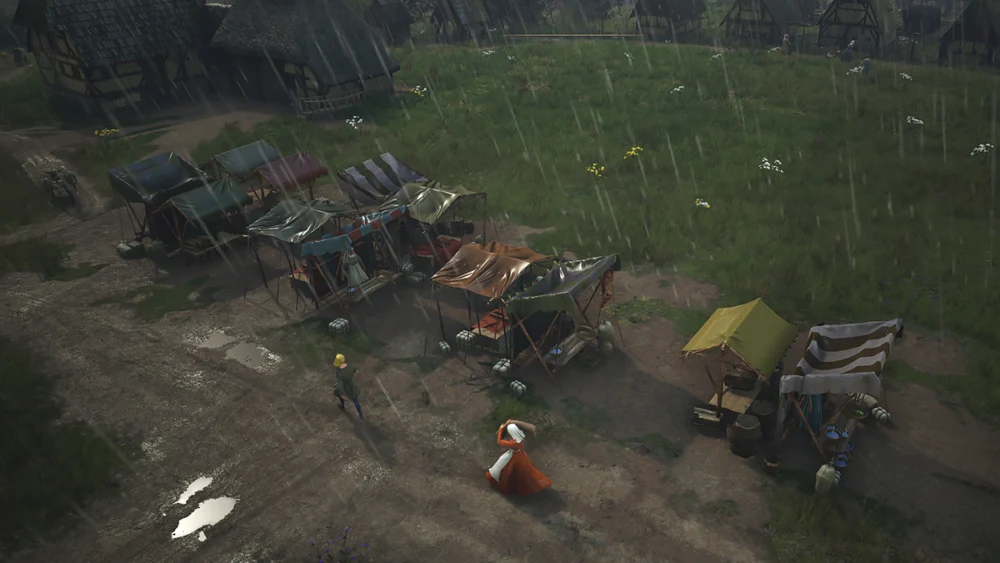
The burgeoning medieval city-builder Manor Lords, currently in early access, presents players with a compelling blend of tactical warfare and intricate settlement management. While lauded for its immersive realism and detailed mechanics, a persistent challenge that has frequently puzzled players involves the seemingly mundane yet impactful issue of lingering supplies. Piles of timber, stone, and other goods, often left behind after the demolition of structures or simply abandoned on the ground, pose more than just an aesthetic inconvenience. These exposed items are susceptible to weather degradation, leading to material loss, and critically, they can impede the construction of new buildings on their occupied sites. Despite the presence of nearby storehouses and an abundance of idle villagers, these supplies often remain stubbornly in place, creating a logistical bottleneck that can frustrate even the most meticulous town planners. This report delves into the mechanics behind this phenomenon and outlines effective strategies for players to manage and promptly clear these exposed resources, ensuring the smooth development of their burgeoning settlements.
The Challenge of Unmanaged Resources in a Growing Settlement
In Manor Lords, the meticulous management of resources is paramount to the prosperity and expansion of a medieval town. Unlike many city-builders that abstract resource handling, Manor Lords introduces a layer of realism where physical resources exist in the game world and must be transported, stored, and protected. This design choice, while contributing to the game’s immersive quality, also introduces specific operational challenges. When structures are dismantled, or when logging and mining operations leave surplus materials scattered, these resources become "exposed goods." The game actively warns players of these vulnerabilities through an icon in the info bar, indicating that materials are at risk.
The primary issues arising from uncollected supplies are twofold: economic loss and developmental obstruction. Economically, exposed goods, particularly those like timber and raw materials, are vulnerable to the elements. Over time, rain, snow, and general exposure can cause these materials to degrade and eventually disappear, representing a tangible loss of invested labor and potential wealth. From a developmental perspective, lingering piles of supplies prevent the placement and construction of new buildings. A prime building plot, earmarked for a new burgage plot, workshop, or vital infrastructure, can remain unusable simply because a few logs or stones haven’t been moved. This not only delays construction but can also force players into suboptimal town layouts, disrupting carefully planned expansion strategies.
Understanding Villager AI and Task Prioritization
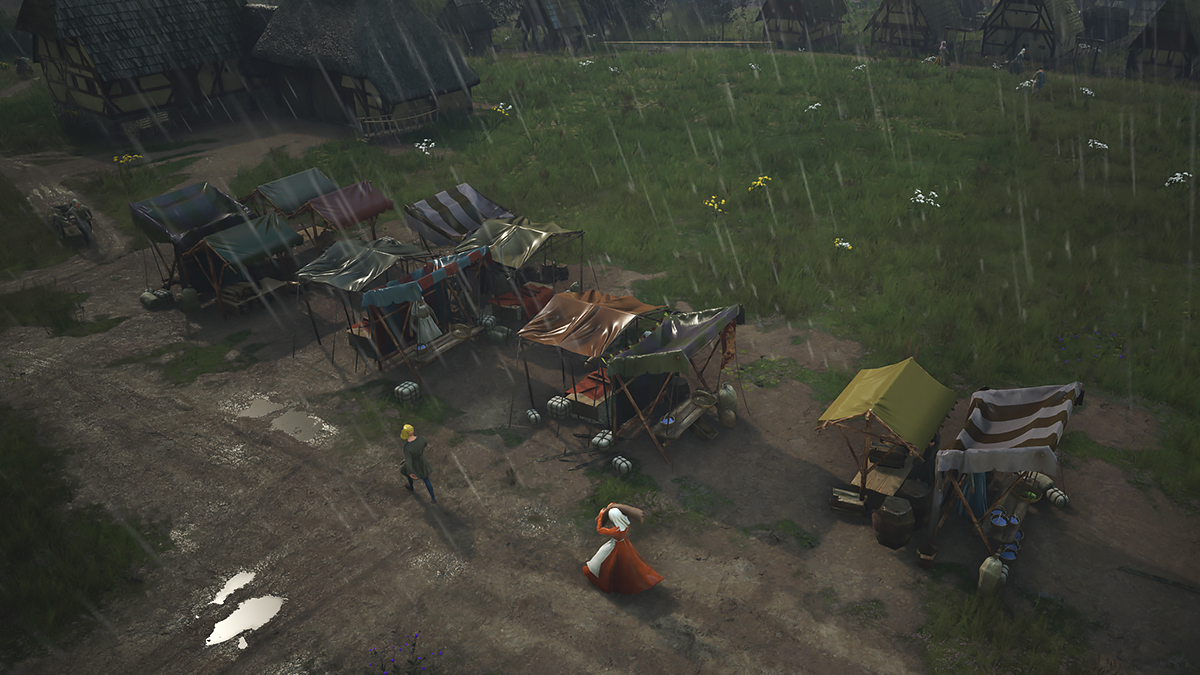
The root of the problem often lies in the game’s villager artificial intelligence (AI) and its task prioritization system. Villagers in Manor Lords operate on a complex hierarchy of needs and assigned tasks. When a player assigns villagers to specific buildings—such as a Storehouse, Granary, or Logging Camp—those villagers are primarily tasked with the core functions of that building. For a Storehouse, this means collecting general goods; for a Granary, it’s food; and for a Logging Camp, it’s felling trees and transporting logs.
The act of moving scattered, exposed goods is often a lower-priority task unless specifically emphasized or if other higher-priority tasks are not immediately available. While a Storehouse worker might eventually collect nearby general goods, and a Logging Camp worker might eventually collect stray logs, the "timely fashion" often desired by players is not always met by default. This can lead to situations where idle villagers are seen wandering around, seemingly oblivious to the valuable resources decaying or obstructing nearby, creating a disconnect between player expectation and game execution. The game’s early access status also implies that such AI behaviors are subject to ongoing refinement and optimization by the developer, Slavic Magic.
Strategic Solutions for Efficient Supply Removal
Addressing the issue of lingering supplies requires a proactive and sometimes micro-managerial approach. Players cannot simply expect the system to resolve itself quickly; rather, targeted interventions are necessary to streamline the flow of resources and maintain a tidy, efficient settlement.
Leveraging Storehouses and Granaries for General Goods
For general goods like timber, stone, planks, and hides (not including food items), the primary storage facility is the Storehouse. For food items like berries, meat, and grain, the Granary is essential. When these types of supplies are left exposed, the first line of defense is to ensure these buildings are adequately staffed and strategically located.
- Assign More Workers: The most straightforward method to increase the speed of collection is to assign additional villagers to the relevant storage building. If stone and planks are piling up, adding more workers to the Storehouse will increase the number of villagers actively seeking and transporting these goods. While this might temporarily divert labor from other tasks, the benefit of clearing obstructions and preventing decay often outweighs the short-term cost.
- Optimize Road Networks: Transportation efficiency is crucial. Villagers, especially those using ox carts, rely on clear and direct pathways. Ensuring a robust road network connects the locations where supplies are frequently exposed (e.g., demolition sites, logging areas, mining pits) to the nearest Storehouse or Granary significantly reduces travel time. A well-laid road can drastically cut down the time it takes for a villager to haul goods back and forth, thereby expediting the cleanup process.
- Strategic Placement of Storage: While not always feasible in an already established town, planning the placement of Storehouses and Granaries near areas of high resource generation or frequent demolition can prevent large accumulations of exposed goods. In larger settlements, establishing multiple storage facilities across different districts can help decentralize resource collection and reduce travel distances for villagers.
Optimizing Logging Camp Operations for Timber
Logs, being a fundamental raw material for construction and crafting, are handled by Logging Camps. These facilities are responsible for felling trees and transporting the resulting timber to designated storage areas or construction sites. When logs are left scattered, often after clearing a forest for expansion or demolishing a wooden structure, specific strategies are needed.
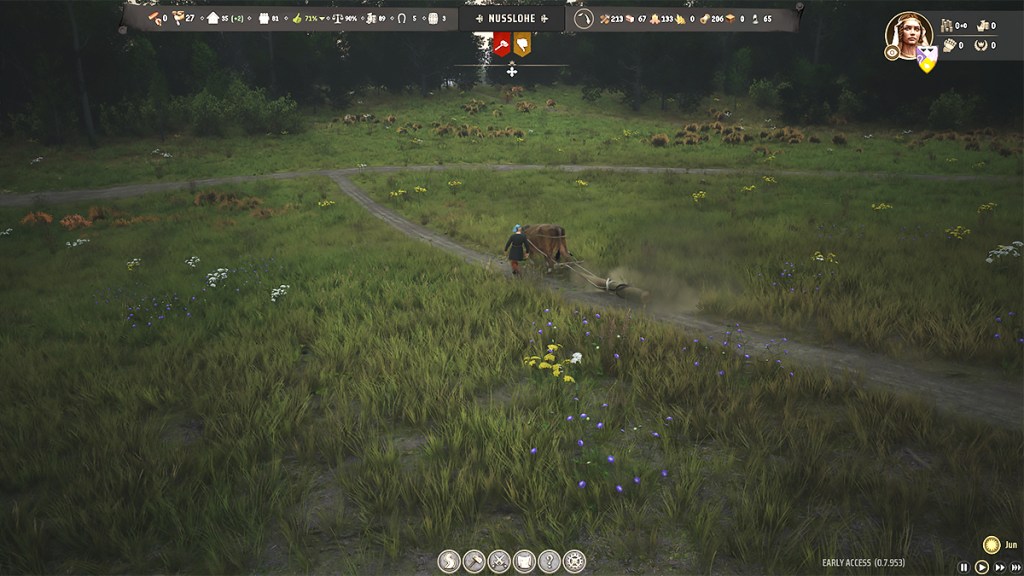
- Utilize the "Limit Work Area" Feature: This is arguably the most powerful tool for targeted cleanup. By selecting a Logging Camp, players can click the "Limit Work Area" button and then define a specific area on the map. If there are exposed logs within this defined zone, the loggers assigned to that camp will prioritize collecting those logs and transporting them. This forces workers to focus their efforts on the problem area, rather than felling new trees or collecting from distant sites. This feature is invaluable for clearing specific construction plots.
- Temporary Logging Camps: In situations where a large quantity of logs is exposed far from existing Logging Camps, or if existing camps are busy with other tasks, a temporary solution can be to construct a new, temporary Logging Camp closer to the problematic log piles. Assigning a couple of villagers and an ox to this new camp, and optionally limiting its work area to the log piles, can rapidly clear the area. Once the logs are collected, the camp can be dismantled, and the villagers reassigned.
- Reassigning Workers to Free Up Oxen: Oxen are critical for transporting heavy loads like logs. If all oxen are currently assigned to busy Logging Camps or other heavy-lifting tasks, they won’t be available to pick up stray logs. Temporarily un-assigning workers from an existing Logging Camp or even a Sawmill (which also uses oxen for log transport) can free up an ox. These now-idle villagers, along with the freed ox, might then prioritize collecting abandoned logs, as it becomes one of the more pressing available tasks. This "trick" leverages the game’s underlying prioritization of available resources.
The "Limit Work Area" Feature: A Deep Dive
The "Limit Work Area" function is a versatile micro-management tool applicable not only to Logging Camps but also to Storehouses and Granaries. Understanding its mechanics is key to efficient cleanup. When activated, this feature creates a localized zone where the workers of that specific building will focus their efforts.
- For Storehouses/Granaries: If you have exposed general goods or food items cluttering a specific plot, select the nearest Storehouse or Granary, click "Limit Work Area," and draw a box around the problematic area. Workers from that building will then prioritize collecting any relevant items within that box and transporting them to their respective storage. This is particularly effective for post-demolition cleanup or when resources from trade routes are dropped in inconvenient locations.
- For Logging Camps: As mentioned, this is ideal for clearing specific clusters of logs. It ensures that the valuable timber is collected before it degrades and frees up building space.
Crucially, once the area is cleared, it is vital to remember to "Clear Work Area" in the building’s interface. Failure to do so will keep your workers confined to that small zone, potentially hindering their broader efficiency (e.g., loggers won’t fell new trees outside the limited area, or storehouse workers won’t collect from newly developed areas). This reset allows them to resume their normal, broader operational tasks.
Broader Impact of Clutter: Economic and Aesthetic Implications
Beyond the immediate practicalities of construction and resource preservation, efficient supply management in Manor Lords has broader implications for the overall health and aesthetics of a settlement.
- Economic Efficiency: A town constantly bogged down by scattered resources is an inefficient town. Villagers spend more time traversing long distances, resources are lost to decay, and construction projects are delayed. This inefficiency translates directly into slower economic growth, as fewer goods are produced, fewer buildings generate taxes, and the overall prosperity of the region stagnates. Maintaining clean, clear pathways and organized storage contributes to a smoother logistical chain, which is the backbone of any thriving medieval economy.
- Aesthetic and Morale (Implied): While Manor Lords doesn’t explicitly track villager morale based on town cleanliness, a tidy, well-organized settlement undoubtedly contributes to a more immersive and satisfying player experience. The visual clutter of decaying logs and abandoned stone piles can detract from the sense of accomplishment and the beauty of a meticulously crafted town. For players who value visual order, proactive cleanup is a critical aspect of their gameplay.
- Expansion Potential: Unobstructed land is valuable land. The ability to quickly clear plots allows for flexible and rapid expansion. Whether it’s making way for a new pasture for sheep, a vital industrial building, or additional burgage plots to house a growing population, the efficiency of land clearing directly impacts a player’s strategic options and the pace of their territorial growth.
Developer’s Perspective and Community Feedback

The presence of these resource management nuances in Manor Lords reflects the developer’s commitment to a certain level of realism and strategic depth. Rather than simplifying resource handling to an abstract inventory system, the game forces players to contend with the physical realities of medieval logistics. This design choice, while sometimes challenging, is part of what gives Manor Lords its unique appeal.
From a community perspective, the issue of lingering supplies has been a recurring topic of discussion among players. Feedback often highlights the frustration of seemingly idle villagers ignoring critical tasks. As Manor Lords is in early access, it is reasonable to expect that the villager AI, task prioritization, and general quality-of-life features will continue to evolve through patches and updates. Developers often use early access periods to gather player data and refine game mechanics based on real-world gameplay experiences. Future updates might introduce more sophisticated AI routines for resource collection, or even dedicated "cleanup" roles for villagers, streamlining this aspect of town management further.
Conclusion
The challenge of uncollected supplies in Manor Lords is a microcosm of the larger strategic demands of the game. It underscores the importance of not just acquiring resources, but also efficiently managing their storage and movement. While the default villager AI may not always prioritize immediate cleanup, players are equipped with several powerful tools to take control. By strategically assigning workers, optimizing transport routes, and effectively utilizing the "Limit Work Area" function for both general goods and timber, players can transform cluttered zones into pristine building plots. This proactive approach not only prevents resource degradation and construction delays but also fosters a more organized, economically efficient, and visually appealing medieval settlement. Mastering these micro-management techniques is an essential step towards building a truly prosperous and resilient manor in the challenging world of Manor Lords.