

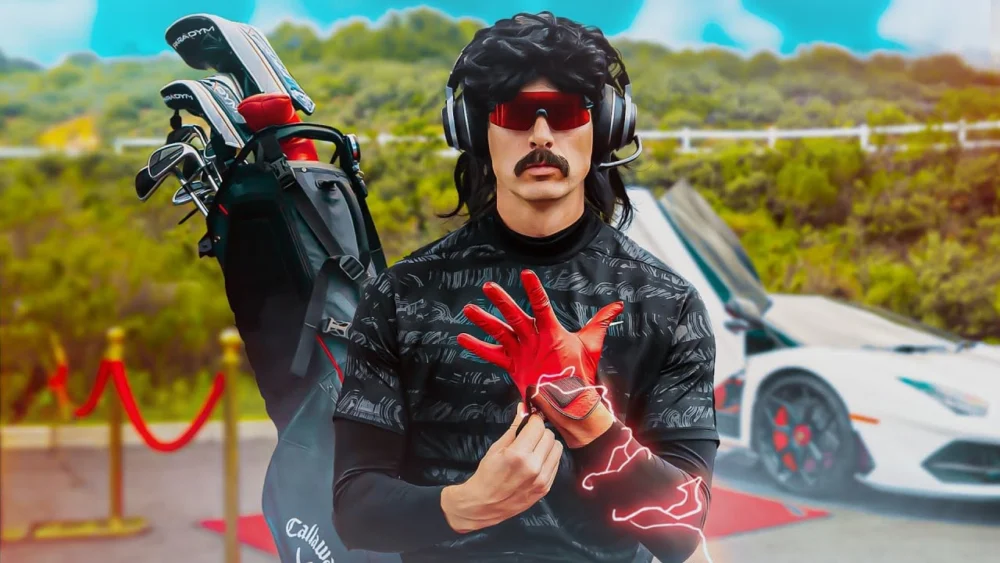
Video game streamer Guy “Dr. Disrespect” Beahm has broken his silence regarding the long-standing mystery surrounding his permanent ban from Twitch in 2020, issuing a detailed statement that confirms he engaged in direct messages with a minor in 2017. While acknowledging the inappropriate nature of these interactions, Beahm vehemently denies any illegal activity took place, stating unequivocally that "nothing illegal happened." This public admission comes amidst a cascade of professional repercussions, with two prominent companies, The Midnight Society and Turtle Beach, severing ties with the popular content creator in the wake of renewed allegations.
The Unfolding Controversy and Beahm’s Statement
The indefinite ban from Twitch, one of the world’s largest streaming platforms, was met with significant speculation in June 2020, as Twitch provided no explicit reasons for Beahm’s removal. This silence fueled a period of intense conjecture within the gaming community and media. The situation escalated dramatically in late June 2024, when an allegation surfaced from a former Twitch employee, reportedly shedding light on the circumstances leading to Beahm’s ban. This alleged revelation acted as a catalyst, prompting swift action from entities associated with the streamer.
On June 23rd, The Midnight Society, a game development studio co-founded by Beahm, announced it had severed ties with him following an internal investigation into the matter. The following day, Turtle Beach, a well-established manufacturer of gaming headsets and accessories, confirmed the termination of its partnership with Beahm, who had transitioned his streaming operations to YouTube following the Twitch ban. These developments coincided with a surge of reports from various media outlets, including The Verge and Bloomberg, which reinforced the narrative that Beahm’s ban was directly linked to his alleged communications with a minor.
In response to the mounting pressure and public scrutiny, Beahm addressed the situation directly through a lengthy statement posted on his X (formerly Twitter) account on June 25th. The statement, which has undergone revisions since its initial publication, serves as Beahm’s official explanation and defense.
Beahm’s Account of the 2017 Interactions
Within his statement, Beahm directly addresses the core allegation: "Were there twitch whisper messages with an individual minor back in 2017? The answer is yes." He immediately qualifies this admission by asserting, "Were there real intentions behind these messages, the answer is absolutely not." Beahm characterizes the exchanges as "casual, mutual conversations that sometimes leaned too much in the direction of being inappropriate, but nothing more." He emphatically denies any criminal wrongdoing, stating, "Nothing illegal happened, no pictures were shared, no crimes were committed, I never even met the individual."
Furthermore, Beahm clarified the legal context of his separation from Twitch, noting that he underwent a "lengthy arbitration regarding a civil dispute with twitch and that case was resolved by a settlement." He stressed that this was not a criminal case and that no criminal charges have ever been filed against him.
From a moral perspective, Beahm expressed accountability, stating he should have "never entertained" the conversations. He took personal responsibility, acknowledging, "that’s on me. That’s on me as an adult, a husband and a father. It should have never happened. I get it. I’m not perfect and I’ll fucking own my shit. This was stupid."
Addressing Accusations and Community Impact
Beahm’s statement also directly confronts the accusations and labels circulating on social media. He adamantly rejects characterizations of his actions, stating, "I’m no fucking predator or pedophile." He extended an apology to his community for the situation, while expressing indifference towards his detractors.
The streamer concluded his statement with a resolute declaration of his continued presence in the content creation space: "Finally, if you’re uncomfortable with this entire statement and think I’m a piece of shit, that’s fine. But I’m not fucking going anywhere. I’m not the same guy that made this mistake all those years ago. I’m taking an extended vacation with my family as mentioned on stream and I’m coming back with a heavy weight off my shoulders. They want me to disappear… yeah fucking right."
Reactions from Business Partners
The fallout from Beahm’s statement and the ongoing revelations has been significant. Robert Bowling, studio head of The Midnight Society, responded to Beahm’s statement on X shortly after its publication. Bowling’s personal statement, which he emphasized did not represent any of his companies and had not undergone legal or PR review, was clear and uncompromising: "If you inappropriately message a minor. I can not work with you. Period. I promised to only act on facts, and I did." This direct repudiation underscores the severity with which Beahm’s past actions are being viewed by his former business associates.
As of the time of this reporting, Twitch has maintained its silence and has not issued any official statement regarding the renewed attention on Beahm’s ban or the content of his recent admission. The platform’s long-standing policy of not disclosing specific reasons for account terminations has contributed to the ambiguity surrounding such cases.
Broader Implications and Industry Context
The case of Dr. Disrespect highlights the complex ethical considerations and stringent expectations placed upon public figures, particularly within the influencer and streaming industry. The swiftness with which his business partners have reacted suggests a zero-tolerance policy for any conduct deemed inappropriate or harmful, especially concerning minors. This trend reflects a broader societal shift towards greater accountability for online behavior, with companies increasingly scrutinizing the personal conduct of their sponsored personalities to protect their brand reputation and align with consumer values.
The streaming platform landscape has evolved significantly since 2017, with platforms like Twitch and YouTube implementing more robust community guidelines and enforcement mechanisms. While the specifics of Beahm’s case revolve around private messages, the incident brings to the forefront the responsibility of streamers to maintain professional conduct at all times, both on and off-platform. The public nature of streaming means that personal lives are often scrutinized, and past indiscretions can resurface with considerable force.
Beahm’s decision to move to YouTube after his Twitch ban demonstrated his resilience and commitment to his career. However, the current situation illustrates that escaping past controversies can be a protracted and challenging endeavor, especially when new information or allegations emerge. His assertion of continued dedication to his craft and his emphasis on personal growth suggest a strategy to navigate this crisis by focusing on his future work and his connection with his audience, while acknowledging the gravity of his past mistakes. The coming weeks and months will likely reveal the long-term impact of these events on his career and his standing within the online content creation community.