

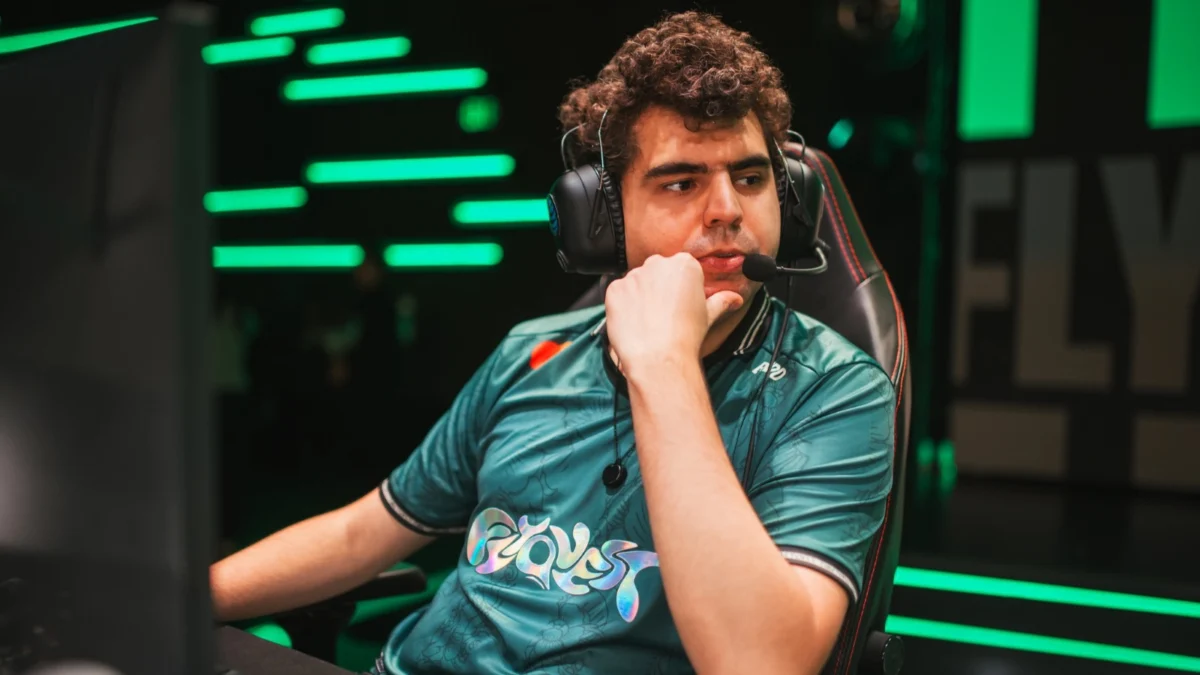
League of Legends professional player Gabriël "Bwipo" Rau has broken his silence regarding the significant controversy that erupted following his remarks suggesting that women should refrain from competing in professional gaming during their menstrual cycles. Speaking from China, where he is participating in the League of Legends World Championship with FlyQuest, Bwipo admitted to experiencing profound fear for his career and revealed that he did not genuinely believe the statements he made.
The controversy first ignited in early September when Bwipo, a prominent figure in the League of Legends European Championship (LEC) scene and now a member of North American team FlyQuest, articulated a view that women should avoid competitive gaming during certain times of the month. His comments, which specifically referenced menstruation, suggested that "there is a time of the month where you should not be playing competitive games as a woman," citing a perceived lack of adequate support for female players during "their monthly cycles." These statements, made during a period of intense competition for his team, quickly drew widespread criticism from across the esports spectrum.
The immediate fallout from Bwipo’s remarks was substantial. Numerous female players, analysts, and prominent figures within the gaming community vocally condemned his assertions as ignorant and misogynistic. One notable reaction came from fellow Belgian and esteemed esports caster Sjokz, who publicly labeled Bwipo’s comments as "ignorant." The backlash was swift and severe, leading to Bwipo issuing an apology on September 10th. However, the repercussions extended beyond a simple apology. His team, FlyQuest, opted to suspend him from participating in their LCS Proving Grounds playoff series against Vivo Keyd Stars, signaling a serious response to the gravity of his statements.
The impact of the controversy even reached Riot Games, the developer and publisher of League of Legends. In a move that underscored the widespread concern and the need to distance the brand from the problematic comments, Riot Games reportedly delayed the release of their official League of Legends Worlds Music Video to edit out Bwipo’s appearance. This decision highlighted the significant reputational risk associated with the player’s words and the league’s commitment to fostering an inclusive environment.
Bwipo’s recent statements to Sheep Esports, however, delve deeper into the personal impact of the controversy. He confessed to having "feared for his career" in the immediate aftermath of making the remarks. "At one point, I wasn’t sure what was going to happen. I feared for my career and didn’t know if I’d even be able to play at Worlds," Bwipo revealed to Armand Luque of Sheep Esports. This admission suggests a level of anxiety and uncertainty that went beyond the public apologies and team sanctions.
The most striking aspect of Bwipo’s current reflection is his assertion that he "didn’t believe what he said." He elaborated on this point, stating, "I listened back and thought, ‘what I said was ridiculous.’ It didn’t make sense." This declaration implies that his controversial statements were perhaps not a deeply held conviction but rather a momentary lapse in judgment or an ill-conceived articulation of an idea that he himself found flawed upon reflection. "Being scrutinized for something you don’t stand by is hard, but you still have to acknowledge and take responsibility for it," he added, acknowledging the obligation to own his words despite his internal disagreement with them.

This internal conflict between having spoken the words and not genuinely believing them presents a complex psychological dimension to the situation. For Bwipo, the difficulty lay not just in facing public condemnation, but in being held accountable for statements that he now considers to be "ridiculous" and lacking sense. He further explained, "Sometimes you’re running thoughts through your head, trying to reach a conclusion, and you say something before realizing it’s wrong. Obviously, that was a huge blunder on my part, and I feel really bad about it because I don’t believe it." This sheds light on the potential internal process that led to the ill-fated comments.
Bwipo characterized the entire episode as a "huge blunder" and expressed regret for "misrepresenting" the LTA (League of Legends Team Association) and his team with his pronouncements. His candid admission that he would have agreed it was a "terrible take" even in the absence of any consequences further emphasizes his current perspective. "That’s been the hardest part – not being able to defend myself and say, I don’t believe this. I know I said it, and even if there were no consequences, I would still agree it was a terrible take," he stated. This suggests a sense of frustration at being unable to fully disassociate himself from the words he uttered, even as he acknowledges their inherent wrongness.
The timeline of events leading to Bwipo’s current reflections can be reconstructed as follows:
- Early September: Bwipo makes controversial comments regarding women’s participation in competitive gaming during their menstrual cycles.
- Mid-September: Widespread backlash ensues. Prominent figures like Sjokz condemn his remarks. Bwipo issues an apology.
- September 10th: Bwipo formally apologizes for his statements.
- Following Apology: FlyQuest suspends Bwipo for their LCS Proving Grounds playoff series.
- Late September/Early October: Riot Games edits Bwipo out of the League of Legends Worlds Music Video.
- October: Bwipo, while in China for Worlds, speaks to Sheep Esports, expressing fear for his career and admitting he did not believe his own words.
The incident raises broader questions about the pressures and scrutiny faced by professional esports players, particularly concerning public discourse. The swift and severe consequences, while indicative of a growing awareness and intolerance for misogynistic or discriminatory remarks within the gaming community, also highlight the delicate balance between accountability and the potential for career-altering repercussions from poorly phrased or regretted statements.
Furthermore, Bwipo’s comments inadvertently brought to the forefront discussions about the challenges faced by female athletes in esports, including the need for more comprehensive support systems. While his initial statement was widely criticized for its basis, the subsequent apology and reflection acknowledge the underlying issue of inadequate support, albeit through a flawed initial expression. The esports industry, like traditional sports, is still grappling with how to ensure equitable conditions and adequate resources for all athletes, irrespective of gender.
The case of Bwipo serves as a stark reminder of the impact of public statements in the highly visible world of professional esports. His current admission of regret and fear underscores the personal toll such controversies can take, while also potentially offering a path towards greater understanding and a more nuanced approach to addressing problematic discourse within the community. The ongoing dialogue surrounding inclusivity and support for all athletes in esports will undoubtedly continue to evolve, informed by incidents like this. The fact that Bwipo now acknowledges the "ridiculous" nature of his own statements and expresses a desire to move past the incident, while still accepting responsibility, indicates a potential for growth and a more considered approach to public commentary moving forward.