

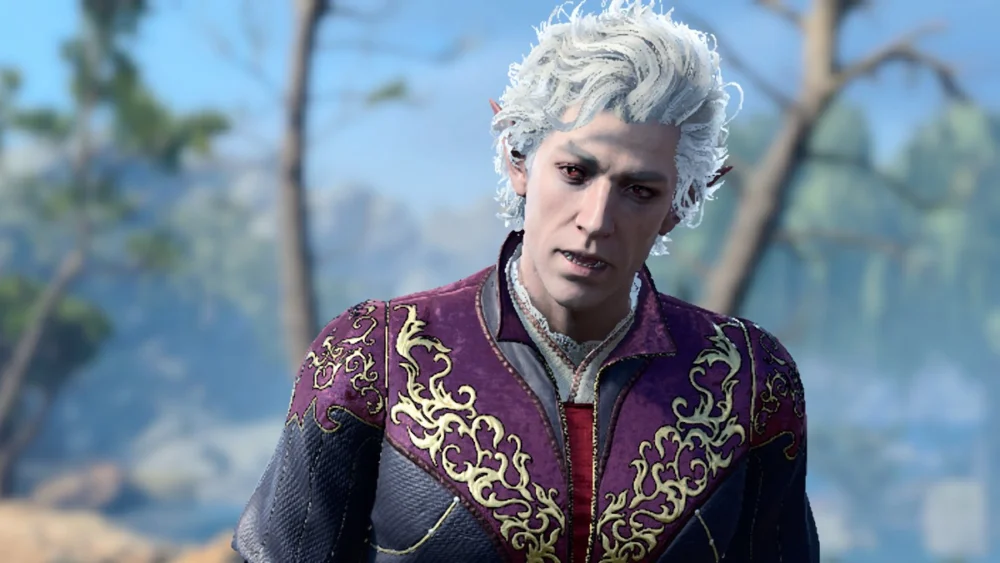
Following its highly anticipated stealth release on Xbox Series X|S platforms after The Game Awards, Larian Studios, the acclaimed developer behind the monumental role-playing game Baldur’s Gate 3, has firmly stated that the title will not be coming to Microsoft’s Xbox Game Pass subscription service. This declaration, made by Larian Studios boss Swen Vincke, underscores a strategic decision rooted in the game’s expansive scope, development investment, and a commitment to its premium pricing model.
Larian Studios Confirms No Game Pass Plans for Baldur’s Gate 3
In a recent interview with IGN, Swen Vincke articulated the studio’s stance, citing the colossal scale of Baldur’s Gate 3 as a primary factor in the decision to forgo a Game Pass inclusion. "We made a big game, so I think there’s a fair price to be paid for that, and I think that that is okay," Vincke stated. He further emphasized the game’s value proposition, noting, "We don’t charge you any micro-transactions on top of it, so you get what you pay for. Upfront, it’s a big meaty game. So I think that should be able to exist as it is. This is what allows us to continue making other games." This philosophy highlights Larian’s dedication to delivering a complete, uncompromised gaming experience without additional monetization schemes typically found in many modern AAA titles.
The game’s development journey, which included several years in early access on PC before its full launch, represents a significant investment of time, resources, and creative talent. The critical and commercial success that followed, culminating in its recent triumph at The Game Awards 2023, where it secured the coveted Game of the Year title alongside multiple other accolades, has solidified Larian’s belief in the value of their product. Their decision reflects a confidence in the game’s intrinsic worth and its ability to command a full retail price without relying on subscription service inclusion for market penetration.
The Phenomenal Success and Scope of Baldur’s Gate 3
Baldur’s Gate 3 launched on PC on August 3, 2023, to immediate and widespread critical acclaim, quickly followed by a PlayStation 5 release on September 6, 2023. Its arrival on Xbox Series X|S platforms on December 8, 2023, completed its current console rollout. The game consistently garnered perfect or near-perfect scores from critics, boasting an impressive Metacritic average of 96 for its PC version, placing it among the highest-rated games of all time. It swept The Game Awards, winning Best RPG, Best Multiplayer, Best Community Support, Player’s Voice, and the ultimate prize, Game of the Year, alongside other industry recognitions.
Player engagement data further validates Larian’s claims regarding the game’s immense scope. According to aggregated data from HowLongToBeat, the average Baldur’s Gate 3 playthrough spans at least 50 hours for the main story, with completionists easily sinking hundreds of hours into exploring every quest, dialogue option, and hidden secret. Many players report their initial runs exceeding 100 hours, even while acknowledging content they consciously skipped. This extensive playtime, combined with deep narrative choices, branching storylines, and unparalleled player agency, positions Baldur’s Gate 3 as a content-rich offering that justifies its premium price point in the eyes of many. The game is often cited as a benchmark for single-player RPGs, offering an experience that can rival multiple shorter titles in terms of sheer content and replayability.
A Developer’s Perspective: Valuing Creative Investment
Larian Studios has a long-standing reputation for crafting intricate, player-driven RPGs, notably with the Divinity: Original Sin series, which also achieved significant critical and commercial success. This history has fostered a development philosophy centered on creative freedom and delivering comprehensive, high-quality experiences without external pressures. Their independence has allowed them to pursue ambitious projects like Baldur’s Gate 3 on their own terms, investing deeply in development without the need to compromise on scope or quality to fit a subscription model’s financial structure.
Vincke’s statement, "This is what allows us to continue making other games," is particularly telling. It suggests that the revenue generated from direct sales of Baldur’s Gate 3 is crucial for funding Larian’s future endeavors and maintaining their creative autonomy. For a studio of Larian’s caliber, which prioritizes meticulous detail and player choice over rapid content cycles or microtransaction revenue, a premium upfront purchase model provides a stable and predictable financial foundation. This stands in contrast to the per-player engagement or fixed fee models often associated with subscription services, which might not always align with the long development cycles and extensive content offerings of a game like Baldur’s Gate 3.
The Xbox Launch and Game Pass Ecosystem
The Xbox Series X|S release of Baldur’s Gate 3 was a highly anticipated event, particularly after initial concerns regarding technical parity between the Series X and Series S versions delayed its simultaneous launch with the PlayStation 5. Microsoft and Larian Studios eventually found a solution, allowing the game to launch on both Xbox consoles without compromising the local split-screen co-op feature on the Series S. This commitment to delivering the full experience across the Xbox ecosystem underscores the importance of the platform to Larian, despite their decision regarding Game Pass.
Xbox Game Pass, with its reported subscriber base exceeding 30 million, is a cornerstone of Microsoft’s gaming strategy, offering a vast library of games for a monthly fee. It aims to provide immense value to players and a stable revenue stream for developers, often through upfront payments or engagement-based royalties. However, the decision by Larian to keep Baldur’s Gate 3 off the service highlights that not all developers, especially those with independently developed, highly successful titles, see Game Pass as the optimal fit for their specific business model or product. While Game Pass has been instrumental in boosting visibility and player numbers for many titles, for a game with Baldur’s Gate 3‘s proven market demand and critical acclaim, the perceived benefits of a subscription deal may not outweigh the potential revenue from direct sales.
Market Dynamics and Industry Trends
The discussion surrounding Baldur’s Gate 3 and Game Pass touches upon broader industry trends and the evolving financial models in video games. The $70 price point for new AAA titles has become standard, yet it continues to be a point of contention for consumers, particularly in an era where subscription services like Game Pass, PlayStation Plus, and even Netflix for games are gaining traction. These services promise access to a vast library for a fixed monthly cost, often conditioning consumers to expect "free" games as part of their subscription.
Larian’s decision signals a firm belief in the enduring viability of the premium, single-purchase model for high-quality, content-rich experiences. It suggests that for certain games that offer exceptional value in terms of playtime, narrative depth, and replayability, players are willing to pay the full retail price. This stance subtly challenges the narrative that all major titles must eventually find their way onto subscription services to maximize reach or revenue. It highlights a divergence in strategy: while some developers might leverage Game Pass for broader exposure and guaranteed funding, others, particularly those with established fan bases and critically acclaimed products, might prioritize direct sales revenue to maintain creative and financial independence.
Consumer Expectations and the CRPG Genre
For many Xbox fans, the news that Baldur’s Gate 3 will not be joining Game Pass may be disappointing. The service has cultivated an expectation among its subscribers that many top-tier games will eventually be available, offering significant savings compared to individual purchases. However, for a game like Baldur’s Gate 3, which represents a substantial investment of time and money from the player, Larian’s argument for a fair price holds weight.
The CRPG (Computer Role-Playing Game) genre, while experiencing a resurgence, can still be intimidating for newcomers. Its intricate mechanics, extensive lore, and often dense narrative can present a barrier to entry. While a $70 price tag might deter some potential players who are unsure if the genre or Dungeons & Dragons universe is for them, a Game Pass inclusion, perhaps even a limited-time demo, could have served as an accessible entry point. Such a demo might have allowed curious players to sample the game’s unparalleled depth and quality without the upfront financial commitment, potentially converting them into full-price purchasers. As of now, however, Larian has no plans for such a demo on Game Pass, leaving the full purchase as the primary gateway into Faerûn for Xbox players.
Looking Ahead: Larian’s Future and the Subscription Model
Larian Studios’ resolute stance on Baldur’s Gate 3‘s pricing and distribution model reinforces their identity as an independent developer committed to crafting expansive, premium RPG experiences. Their success with Baldur’s Gate 3 has not only provided substantial financial stability but also cemented their reputation as one of the leading RPG developers in the world. This financial independence is crucial, as it allows Larian to continue investing in ambitious projects without being beholden to external pressures that might dictate monetization strategies or development timelines.
The decision regarding Game Pass, while perhaps a missed opportunity for Microsoft to add a significant title to its service, is a clear statement from Larian about their long-term vision. It suggests a future where the studio will continue to prioritize deep, complete gaming experiences that command a full price, funded by the direct support of their player base. As the gaming industry continues to navigate the complexities of subscription models versus traditional retail, Larian’s Baldur’s Gate 3 stands as a powerful testament to the enduring appeal and financial viability of meticulously crafted, premium video games. Their path forward will likely serve as a case study for other developers weighing the benefits of subscription services against the creative and financial freedoms of independent, premium-priced releases.