
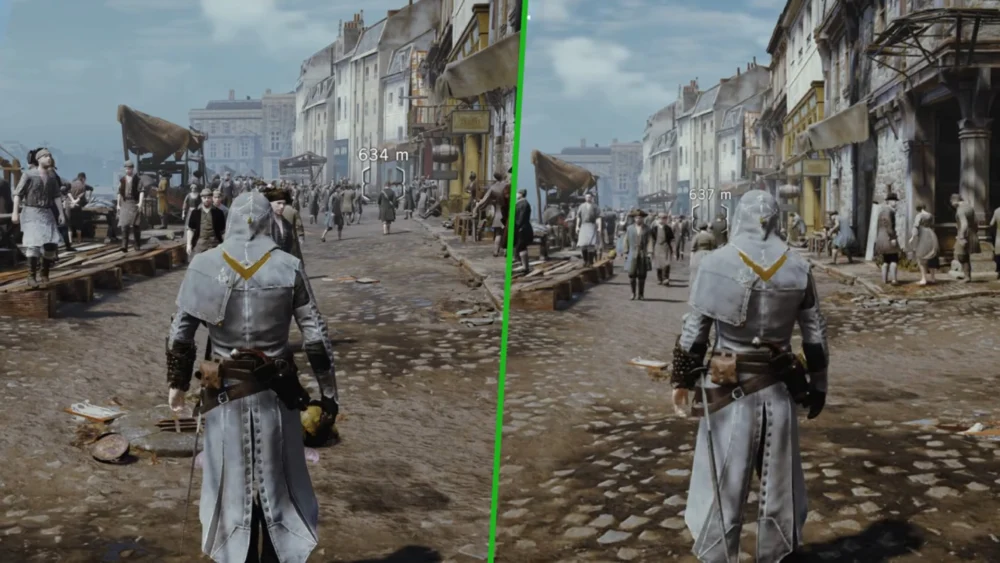
The acclaimed, yet historically scrutinized, open-world action-adventure title, Assassin’s Creed Unity, has received a complimentary upgrade for current-generation consoles, specifically the Xbox Series X, Xbox Series S, and PlayStation 5. This update, released recently, primarily targets a sustained 60 frames per second (FPS) performance, a significant enhancement designed to improve the fluidity and responsiveness of gameplay on modern hardware. While the 60 FPS target appears largely met across all updated platforms, a notable debate has emerged within the gaming community regarding the precise resolution at which the title now renders on Microsoft’s Xbox Series X|S consoles, contrasting with clearer affirmations for the PlayStation 5 version.
Initially, anticipation for the Xbox upgrade was tempered by the fact that Assassin’s Creed Unity already benefited from Xbox’s innovative FPS Boost program. This system-level enhancement, implemented by Microsoft, allowed numerous backward-compatible titles from previous generations to run at double their original frame rates on Series X|S, often without requiring developer intervention. Consequently, Unity was already capable of delivering 60 FPS on Xbox Series X prior to this official developer-issued patch. This led to initial speculation that the new upgrade might primarily benefit PlayStation 5 owners, who lacked a similar system-level FPS boost solution for this particular title, and where the game typically ran at its original 30 FPS on the newer console via backward compatibility.
However, the new patch represents a native, developer-implemented optimization, distinct from the system-level application of FPS Boost. This distinction is crucial, as native optimizations can potentially unlock higher resolutions, improved graphical settings, or more stable frame rates that FPS Boost, being a hardware-level trick, might not fully achieve without direct game code modifications.
Historical Context: Assassin’s Creed Unity’s Tumultuous Launch and Enduring Legacy
To fully appreciate the significance of this current-generation upgrade, it is essential to revisit the original launch of Assassin’s Creed Unity. Released in November 2014, the game was a flagship title for the then-new PlayStation 4 and Xbox One consoles, showcasing the ambitious graphical capabilities of the AnvilNext 2.0 engine. Set against the backdrop of the French Revolution, the game promised unprecedented crowd densities, intricate Parisian architecture, and a darker, more mature narrative for the franchise.
Despite its ambitious scope, Unity‘s launch was plagued by widespread technical issues. Players reported significant frame rate drops, numerous graphical glitches, character model pop-ins, and a host of bugs that severely hampered the gameplay experience. These performance problems were so pervasive and well-documented that they became a significant talking point in the gaming industry, leading to a public apology from Ubisoft, a season pass compensation program, and a reevaluation of development cycles within the company. The game, despite its innovative co-op mechanics and richly detailed world, struggled to shake off its reputation for technical instability.
Over time, subsequent patches from Ubisoft significantly improved the game’s stability and performance on the original platforms. However, the initial impression lingered, often overshadowing its narrative strengths, detailed world design, and bold artistic direction. As newer console generations emerged, the game found a second life through backward compatibility, where the increased raw power of the PlayStation 5 and Xbox Series X|S could brute-force better performance even without specific optimizations. Xbox’s FPS Boost program further cemented Unity‘s playable status on Microsoft’s current-gen machines, allowing it to finally achieve a consistent 60 FPS, albeit often at its original 900p resolution.
This latest developer-issued upgrade, therefore, can be viewed as both a continued commitment by Ubisoft to support its extensive back catalogue and an acknowledgment of the enduring appeal of Assassin’s Creed Unity, despite its rocky start. It represents an opportunity for both veteran players and newcomers to experience the game in its most polished form to date, leveraging the full potential of current-generation hardware.
Technical Analysis: Performance and the Resolution Quandary on Xbox Series X|S
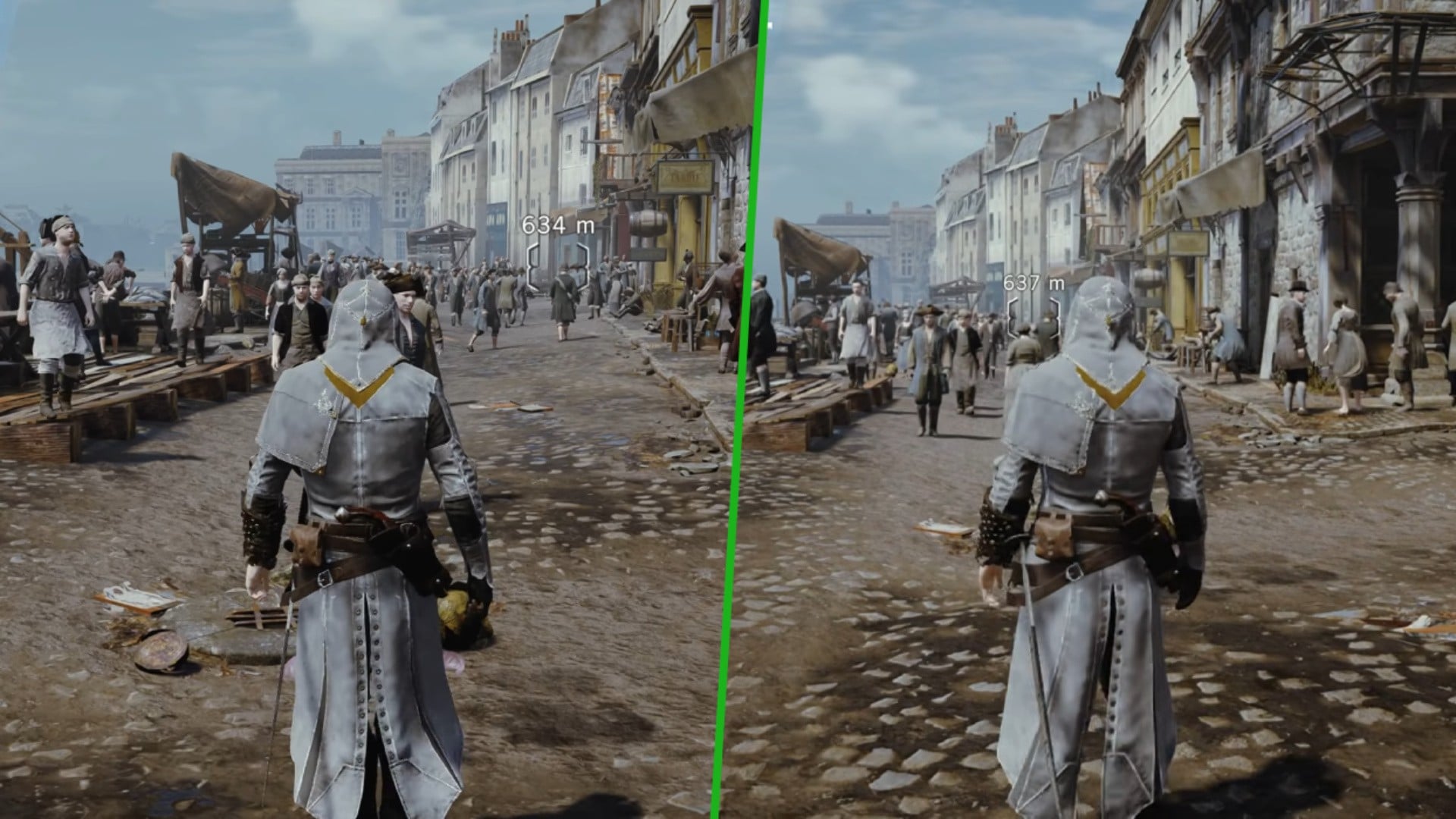
Following the release of the upgrade, reports from various technical analysts and community testers have provided initial insights into the game’s performance. On both Xbox Series X and Xbox Series S, the 60 FPS target appears to be largely met, offering a remarkably smooth and responsive experience compared to the original release. This consistent frame rate significantly enhances the parkour mechanics, combat fluidity, and general exploration of revolutionary Paris. The game also continues to support Auto HDR on Xbox, providing a richer, more vibrant color palette for compatible displays.
However, the resolution on Xbox Series X|S has become a focal point of discussion and uncertainty. The original article highlights conflicting reports from prominent YouTube testing channels. Fuzion Xbox Testing suggests that the game has "seemingly been upgraded to a 4K resolution," indicating a substantial visual leap. In contrast, The Games Tester posits that the game maintains its "base 900p resolution but with some upscaling in play." This discrepancy has led to considerable confusion among players and technical enthusiasts, who eagerly await a definitive analysis.
The concept of "upscaling" is crucial here. Modern consoles and displays often employ various upscaling techniques, such as checkerboard rendering or spatial upscaling, to present a higher-resolution image from a lower native render. While upscaled images can look significantly sharper than their native resolution on a 4K display, they are not equivalent to a true native 4K render, which typically offers superior clarity and detail. The question for Xbox Series X|S users is whether the game is rendering at a higher native resolution (e.g., 1440p or 1800p) that is then upscaled to 4K, or if it remains at 900p, relying solely on basic upscaling techniques for 4K displays.
For the Xbox Series S, similar performance observations have been made regarding the 60 FPS target, with the game running very smoothly. However, the resolution on the Series S remains even more opaque. Given the console’s lower graphical horsepower compared to the Series X, it is highly probable that its resolution target would be lower than the Series X, perhaps adhering to 900p or 1080p, with further upscaling to display on higher-resolution screens.
The industry’s gold standard for definitive technical analyses, Digital Foundry, is widely anticipated to release a comprehensive breakdown. Their meticulous pixel counting and performance metrics will be instrumental in resolving the current resolution ambiguity on Xbox Series X|S and providing a clear picture of the technical enhancements. Until then, players rely on anecdotal evidence and initial community reports.
PlayStation 5: A Clearer Picture of Enhancement
In stark contrast to the resolution debate surrounding the Xbox versions, the PlayStation 5 upgrade appears to offer a more straightforward and unambiguously improved experience. According to update history logs for the game on PS5, the patch explicitly states that Assassin’s Creed Unity now runs at "4K, 60FPS." This clear communication from Ubisoft, embedded within the console’s own system, provides a definitive answer for PlayStation players.
The PS5, unlike the Xbox Series X, did not benefit from a system-level FPS Boost program for Assassin’s Creed Unity. Therefore, the game was previously limited to its original 30 FPS when played via backward compatibility. This native 4K/60FPS upgrade represents a substantial leap for PS5 owners, bringing the game’s visual fidelity and performance up to modern standards. The fact that the PS5 version explicitly confirms 4K resolution, while the Xbox versions face a debate, is a point of interest for cross-platform comparisons and might suggest different optimization approaches or targets from Ubisoft for each ecosystem.
Developer Intent and Broader Industry Implications
Ubisoft’s decision to release this free next-generation upgrade for Assassin’s Creed Unity years after its initial release speaks to several broader trends within the gaming industry. Firstly, it underscores the increasing importance of backward compatibility and game preservation. As console generations progress, developers and platform holders are recognizing the value in ensuring that older titles remain playable and, ideally, enhanced for new hardware. This not only respects the investment of long-time players but also introduces classic titles to new audiences.

Secondly, it reflects a strategy to leverage existing intellectual property. The Assassin’s Creed franchise is one of Ubisoft’s most valuable assets, with a continuous pipeline of new releases. By updating older titles like Unity, Ubisoft can maintain player engagement with the brand, potentially encouraging sales of newer installments or re-engaging players who may have drifted away. The timing of such an upgrade could also be strategic, perhaps building hype for an upcoming announcement related to the franchise or coinciding with a period where new major releases are sparse.
Thirdly, the free nature of the upgrade aligns with current industry practices, where developers often provide complimentary next-gen patches for titles from the previous generation. This consumer-friendly approach stands in contrast to earlier practices where "remasters" or "definitive editions" might have been sold as separate products. It fosters goodwill within the player community and encourages adoption of the latest console hardware.
The differing resolution affirmations between PS5 and Xbox Series X|S could imply several things. It might suggest that Ubisoft faced different technical hurdles or made different resource allocation decisions for each platform’s optimization. Alternatively, it could simply be a matter of communication clarity, where the PS5’s update notes were more explicit, while the Xbox team’s public communication focused primarily on the 60 FPS aspect, leaving resolution to community discovery. Given the historical performance of the AnvilNext 2.0 engine, optimizing for stable 4K/60FPS across all demanding scenes can be challenging, even on current-gen hardware.
Accessibility and Future Opportunities: Xbox Free Play Days
Adding another layer of accessibility to this enhanced experience, Assassin’s Creed Unity is slated to be part of Xbox Free Play Days starting in early April. This initiative allows Xbox Game Pass Core and Ultimate subscribers to play select full games for a limited period without additional cost. The timing of this Free Play Days inclusion, immediately following the next-gen upgrade, is a shrewd move by Microsoft and Ubisoft.
This synergy provides a perfect opportunity for players who do not already own Unity to experience the newly enhanced version. It allows hesitant players to test the technical improvements firsthand, potentially leading to increased sales of the game once the Free Play Days period concludes. It also serves as a strong incentive for current Xbox Game Pass subscribers, adding value to their subscription and potentially attracting new subscribers who are keen to try the upgraded title. This kind of cross-promotional activity is increasingly common in the gaming industry, leveraging platform features to boost game visibility and player engagement.
Conclusion and Community Outlook
The free next-generation upgrade for Assassin’s Creed Unity marks a significant moment for a game that, despite its initial controversies, has garnered a dedicated following for its unique setting and ambitious design. The confirmation of a stable 60 FPS across Xbox Series X|S and PS5 dramatically improves the core gameplay experience, finally allowing players to fully immerse themselves in revolutionary Paris without the performance hitches of the past.
While the PlayStation 5 version enjoys a clear confirmation of 4K resolution alongside its enhanced frame rate, the Xbox Series X|S versions are currently mired in a debate over their exact rendering resolution. This ambiguity highlights the ongoing complexity of cross-platform optimizations and the differing ways developers and platform holders communicate technical specifications. The community eagerly awaits a detailed analysis from trusted sources like Digital Foundry to provide definitive answers for Xbox users.
Regardless of the final resolution specifics on Xbox, this upgrade, coupled with its inclusion in Xbox Free Play Days, ensures that Assassin’s Creed Unity will reach a broader audience in its most polished form yet. It serves as a testament to the enduring power of game preservation and the commitment of publishers to breathe new life into their storied franchises, offering both nostalgic returns for veterans and an enticing entry point for newcomers. The ongoing conversation in comments sections and forums demonstrates a strong appetite from players for continued support and enhancement of beloved titles, cementing Unity‘s place not just in Assassin’s Creed lore, but also in the broader narrative of video game evolution and redemption.