
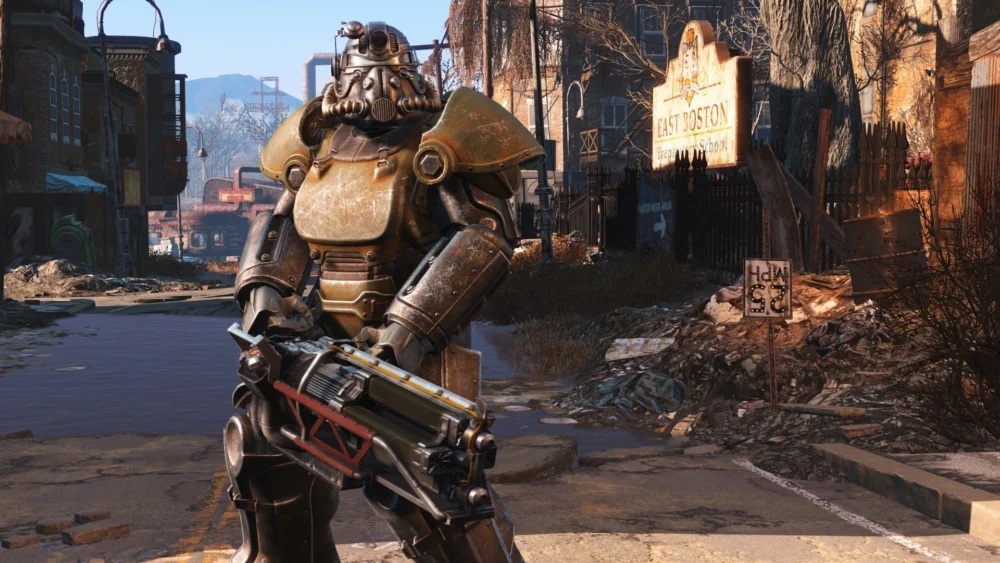
More than a decade after its initial critically acclaimed debut on Xbox One, Bethesda’s sprawling post-apocalyptic epic, Fallout 4, has received yet another significant iteration in 2026, making its way to Nintendo’s latest hybrid console, the Nintendo Switch 2. This unexpected port, arriving over ten years after the game first captivated players on previous-generation hardware, has naturally drawn considerable scrutiny from technical analysts eager to assess its fidelity and performance. Renowned digital forensics outlet Digital Foundry has recently published a comprehensive review, meticulously comparing this new Switch 2 edition against its more powerful current-generation counterpart, the Xbox Series S, shedding light on the compromises and achievements inherent in bringing such a demanding title to a portable format.
Fallout 4’s Enduring Legacy and Bethesda’s Porting Challenges
Fallout 4, initially launched in November 2015, quickly cemented its place as a tentpole release for Bethesda Game Studios. Set in a post-nuclear Boston, the game offered an expansive open world, deep character customization, a robust crafting and settlement-building system, and the signature dark humor and moral ambiguity characteristic of the Fallout series. Its blend of exploration, combat, and role-playing elements earned it widespread commercial success and numerous accolades, ensuring its enduring popularity over the subsequent decade. The game’s intricate world design and demanding physics engine, however, have historically presented significant challenges for hardware optimization, particularly on less powerful platforms.
Bethesda Softworks, the publisher behind Fallout 4, has a mixed but generally ambitious history with porting its large-scale titles to Nintendo’s hardware. The original Nintendo Switch saw successful, albeit compromised, versions of Skyrim and DOOM (2016), which were celebrated for bringing such technically demanding games to a portable console. These early efforts established a precedent for what players could expect: impressive feats of optimization that often involved significant visual downgrades but maintained core gameplay integrity. However, the path to the Switch 2 has not been without its reported stumbling blocks. Digital Foundry’s report implicitly references a "disastrous launch of Skyrim on the same system" (Switch 2) in late 2025, suggesting that Bethesda faced considerable hurdles in adapting its older engines to the new console’s architecture. This context makes the generally positive reception of the Fallout 4 port all the more noteworthy, indicating a potential learning curve and improved optimization strategies within Bethesda’s development teams.
The Nintendo Switch 2: A New Frontier for Third-Party Titles
The Nintendo Switch 2, released earlier in 2026, represents Nintendo’s latest endeavor to bridge the gap between dedicated home consoles and portable gaming. While specific technical specifications remain proprietary, the console is understood to offer a substantial upgrade over its predecessor, designed to attract a broader array of third-party AAA titles. For developers like Bethesda, bringing a flagship title like Fallout 4 to the Switch 2 is a strategic move, expanding the game’s reach to a new audience and maximizing its commercial lifecycle. The success of such a port is crucial not only for Bethesda’s continued engagement with Nintendo platforms but also for Nintendo’s own narrative regarding the Switch 2’s capabilities and its appeal to a diverse gaming ecosystem.
Digital Foundry’s Comprehensive Technical Breakdown
Digital Foundry’s analysis, presented in both video and written formats, delved deep into the performance metrics and visual fidelity of Fallout 4 on the Switch 2, offering a direct comparison to the Xbox Series S, a console known for its efficient current-generation performance. The review highlighted several key areas of performance, including frame rate stability, resolution scaling, and various graphical settings.
Frame Rate Modes and Performance Dynamics:
One of the most striking revelations from Digital Foundry’s review is the Switch 2’s ability to offer multiple frame rate configurations: 30, 40, and 60 frames per second (FPS) modes. This level of flexibility is commendable for a hybrid console, particularly for a title of Fallout 4’s complexity. However, the analysis quickly clarified that while the options exist, the execution varies significantly between platforms.
The 60FPS mode, often considered the gold standard for fluid gameplay, proved to be the most challenging for the Switch 2. While sparse, less demanding areas of the game could indeed hit the 60FPS target, dense environments or intense combat sequences frequently triggered noticeable frame rate lurches. Digital Foundry’s rigorous testing, exemplified by the classic Corvega factory benchmark – a notoriously demanding area within Fallout 4 due to its intricate geometry, numerous light sources, and active enemies – revealed a stark contrast. In this test, the Switch 2 typically hovered around 40FPS, whereas the Xbox Series S and PlayStation 5 versions managed to maintain a more consistent 53FPS. This difference, while not a complete halving of performance, represents a tangible impact on the player’s perception of fluidity and responsiveness during critical gameplay moments.
A contributing factor to these frame rate fluctuations on the Switch 2, especially in docked mode, is the absence of Variable Refresh Rate (VRR) technology. VRR dynamically adjusts the display’s refresh rate to match the game’s output, effectively smoothing out minor frame rate dips and reducing screen tearing. Its absence means that any deviation from the target frame rate becomes more overtly noticeable, particularly in the aforementioned demanding scenarios. This limitation is a hardware-level consideration for the Switch 2 in its docked configuration, impacting the perceived smoothness of gameplay even when the average frame rate is respectable.
Resolution Scaling and Visual Compromises:
Resolution, another critical aspect of visual fidelity, also demonstrated a clear hierarchy between the consoles. In its 60FPS mode, the Xbox Series S maintains a dynamic resolution range between 1080p and 1440p, adapting to scene complexity to preserve frame rate while largely retaining visual sharpness. The Switch 2, by contrast, employs a more aggressive Dynamic Resolution Scaling (DRS) strategy, particularly in its 60FPS mode.
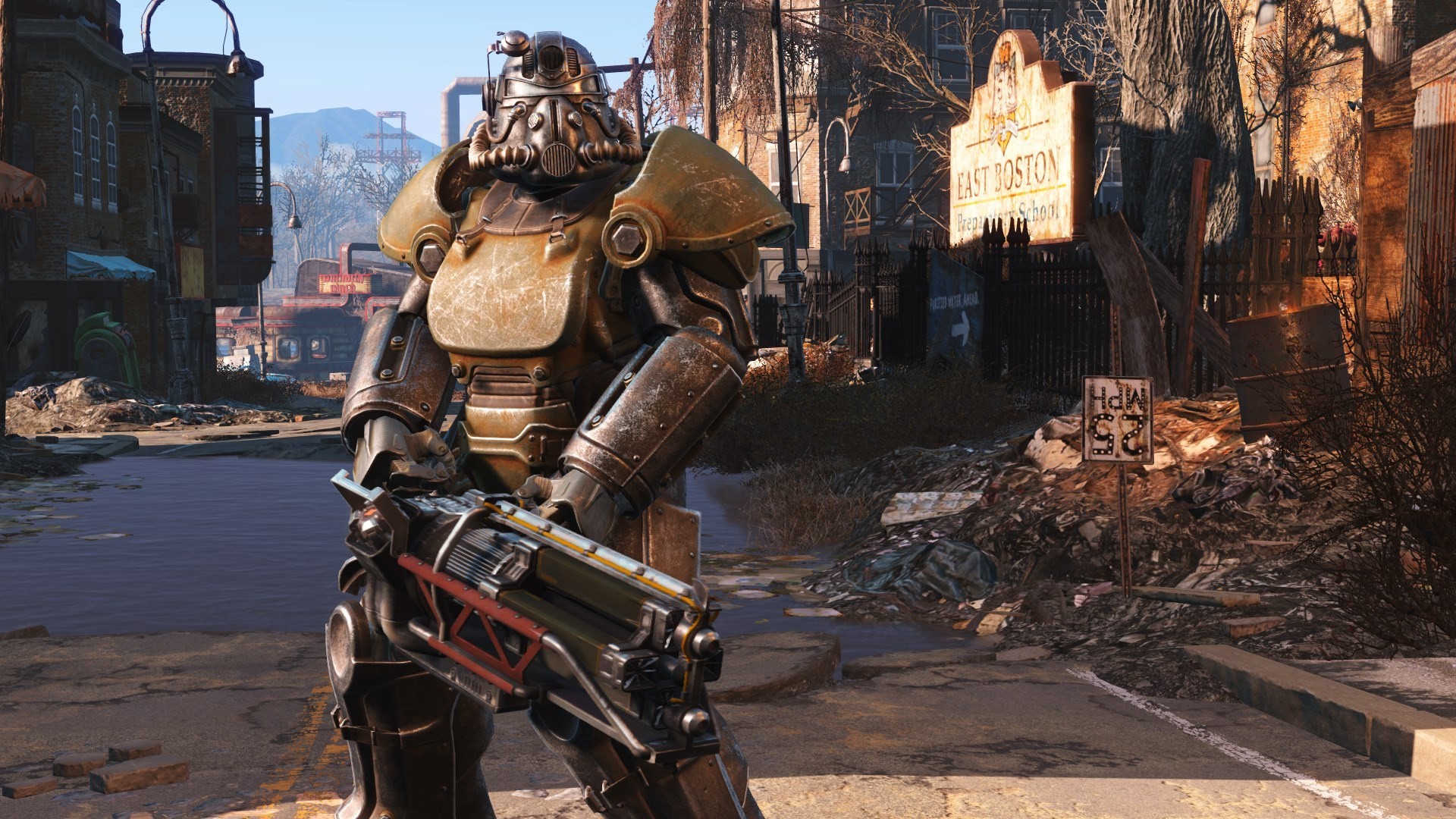
When docked, the Switch 2’s resolution range for the 60FPS mode spans from 720p to 1440p. While reaching 1440p in less demanding scenes is impressive, the frequent drops to 720p, especially during intense action or in graphically dense areas, result in a visibly softer image. The portable mode introduces even more significant scaling, with resolutions fluctuating between 504p and 1080p. Playing Fallout 4 on a handheld screen at resolutions dipping below 720p, while functional, inevitably sacrifices much of the fine detail and environmental richness that characterizes the game’s post-apocalyptic aesthetic. This disparity underscores the inherent trade-offs involved in achieving portability for a game originally designed for more powerful, stationary hardware.
Graphical Fidelity: Untouched Assets and Targeted Cutbacks:
Digital Foundry’s analysis revealed that the core texture and shadow quality on the Switch 2 port largely matches those found on the Xbox Series S and PlayStation 5. This is largely attributed to the fact that these fundamental assets appear to be untouched from the game’s original 2015 release, designed for last-generation hardware. This approach ensures a baseline level of visual detail that is consistent across platforms, preventing the Switch 2 version from appearing drastically outdated.
However, specific cutbacks were necessary to accommodate the Switch 2’s hardware. Draw distance, which dictates how far into the game world detailed objects and environments are rendered, is notably curtailed on the Switch 2, aligning more closely with the PlayStation 4’s capabilities than those of the Series S or PS5. This reduction manifests as more obvious "pop-in," where objects and environmental details abruptly appear into view as the player approaches them, detracting from the immersion of a seamless open world.
Volumetric effects, such as fog, smoke, and god rays, which add significant depth and atmosphere to the game world, are also curtailed on the Switch 2. While present, they exhibit more noise and flicker, particularly in dynamic lighting scenarios. These subtle but impactful visual compromises are strategic decisions made by the developers to maintain acceptable performance without completely redesigning the game’s fundamental art style. They are a testament to the challenge of porting a game not originally built with hybrid console limitations in mind.
Inferred Statements and Community Reception:
The positive conclusion from Digital Foundry – that "Bethesda’s new ‘porting effort to Switch 2 is a success’" – carries significant weight. Digital Foundry is globally recognized for its objective and technically rigorous evaluations, making their endorsement a strong indicator of the port’s quality within its hardware constraints. This assessment, especially when contrasted with the implied difficulties of the "disastrous" Skyrim Switch 2 launch, suggests that Bethesda has refined its optimization pipeline and better understood the nuances of the new Nintendo hardware.
While no direct official statements from Bethesda or Nintendo were provided in the original excerpt, one can logically infer their reactions. Bethesda would likely express satisfaction at successfully bringing one of its flagship titles to a new, important platform, extending its commercial life and reaching a broader audience. This success could rebuild confidence after previous porting challenges and pave the way for future releases on the Switch 2. Nintendo, in turn, would highlight the Fallout 4 port as a prime example of robust third-party support for the Switch 2, reinforcing the console’s capability to host major AAA experiences and diversify its gaming library beyond first-party offerings.
The gaming community’s reaction is anticipated to be largely positive, particularly among those who prioritize portability. The prospect of playing a full-fledged, expansive open-world RPG like Fallout 4 on the go is a significant draw. While some players will inevitably point to the graphical and performance compromises compared to more powerful consoles, many will appreciate the technical achievement and the convenience of a portable experience. Debates will likely ensue regarding the acceptable balance between visual fidelity and portability, a common discussion point for hybrid consoles.
Broader Implications for the Industry:
The successful port of Fallout 4 to the Nintendo Switch 2 carries several broader implications for the video game industry:
- Longevity of Titles: It underscores the continued economic viability of re-releasing popular, older titles on new hardware. Developers can tap into existing fan bases and attract new players who may have missed the original release, maximizing revenue streams from established intellectual property.
- Nintendo Switch 2’s Market Position: A well-executed port like Fallout 4 reinforces the Switch 2’s credibility as a platform for major third-party games. This is crucial for Nintendo in attracting and retaining a diverse player base and countering the narrative that its consoles are primarily for first-party titles. It demonstrates that the Switch 2, despite being a hybrid, can handle technically demanding experiences, even if with compromises.
- Evolution of Porting Technology: Bethesda’s journey from the implied difficulties with Skyrim on Switch 2 to the "success" of Fallout 4 highlights the continuous evolution of optimization techniques and developer expertise. As hardware architectures become more complex, the art of porting requires sophisticated understanding and dedicated resources, pushing the boundaries of what’s possible on different systems.
- Player Choice: The availability of Fallout 4 on the Switch 2 offers players more choice. They can opt for the highest fidelity and performance on platforms like the Xbox Series S or PlayStation 5, or embrace the unparalleled portability and unique hybrid experience offered by the Switch 2, accepting the necessary trade-offs. This democratizes access to major titles across different gaming preferences and lifestyles.
Conclusion:
Ultimately, Digital Foundry’s comprehensive review paints a clear picture: Bethesda’s Fallout 4 port for the Nintendo Switch 2 is a commendable technical achievement. While the Xbox Series S maintains a definitive edge in raw performance and graphical fidelity, particularly in its ability to deliver a more consistent 60FPS experience at higher resolutions and with fewer visual compromises, the Switch 2 version stands as a triumph of optimization. Its ability to offer various frame rate modes and deliver a largely stable, albeit compromised, experience for such a vast open-world game on a portable console is impressive.
This port not only offers Switch 2 owners the unprecedented opportunity to dive into the irradiated wastes of Boston on the go but also serves as a crucial validation for Bethesda’s porting capabilities and for the Nintendo Switch 2’s potential as a platform for major third-party titles. Following the implied challenges with Skyrim, the Fallout 4 port represents a significant step forward, setting a positive precedent for future third-party support on Nintendo’s newest hardware. The choice for players now boils down to prioritizing raw power and visual fidelity versus the unparalleled convenience and portability that the Switch 2 so effectively offers.