


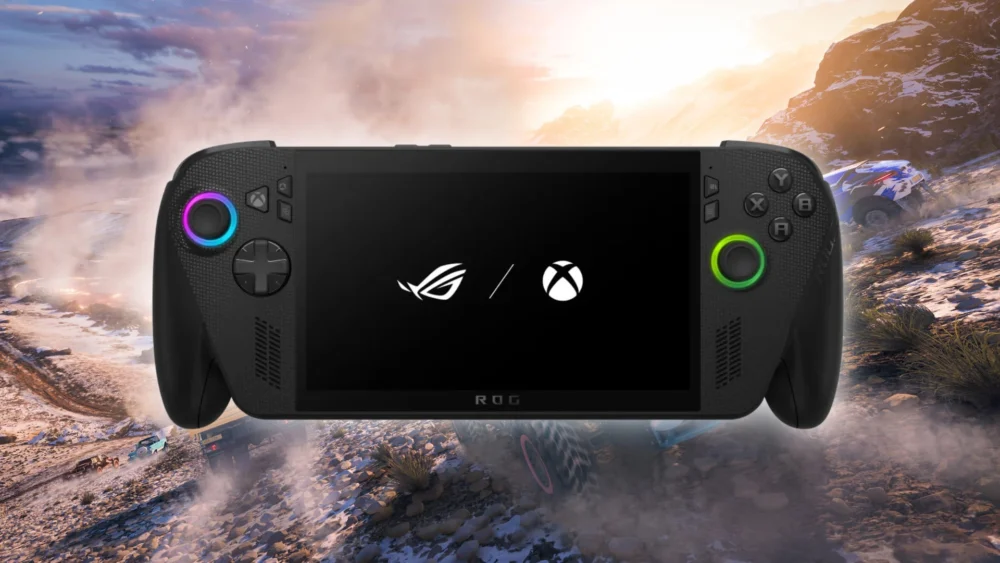
The realm of portable gaming PCs is poised for a significant leap forward with the advent of Microsoft’s Auto Super Resolution (Auto SR) technology, set to enhance the performance of devices like the ROG Xbox Ally X. Recent demonstrations at the Game Developers Conference (GDC) showcased a remarkable "up to 30% FPS boost" for the critically acclaimed open-world racing title, Forza Horizon 5, when running on the ROG Xbox Ally X equipped with Auto SR and docked. This development signals a new era for handheld gaming, leveraging artificial intelligence and dedicated hardware to deliver smoother, more visually engaging experiences.
Understanding Auto SR: Microsoft’s AI-Powered Performance Solution
Auto Super Resolution, or Auto SR, represents Microsoft’s sophisticated approach to optimizing game performance through AI-driven upscaling. The core principle behind Auto SR is to intelligently reduce a game’s internal rendering resolution, thereby easing the computational load on the device’s graphics processing unit (GPU). Subsequently, advanced AI algorithms are employed to reconstruct and enhance the visual output, effectively upscaling the lower-resolution image to a higher-definition display with minimal perceivable loss in quality. This dual-pronged strategy aims to significantly increase framerates without compromising the immersive graphical fidelity that modern gamers expect.
Unlike traditional upscaling methods or even some competitor technologies that require explicit game integration, Auto SR is designed for "automatic" application. This means it can function across a broad spectrum of DirectX 11 and DirectX 12 titles, even those not specifically optimized for super-resolution technologies. While it is initially being integrated by default into certain titles on CoPilot+ Windows PCs, its broader compatibility promises to extend its benefits to a vast library of existing games, offering a performance uplift to titles that might otherwise struggle to maintain high frame rates on portable hardware.
The Crucial Role of the Neural Processing Unit (NPU)
A pivotal element enabling Auto SR’s advanced capabilities is the Neural Processing Unit (NPU). An NPU is a specialized processor designed to accelerate artificial intelligence and machine learning workloads, operating with far greater efficiency for AI tasks than a general-purpose CPU or even a GPU. For Auto SR, the NPU is indispensable for executing the complex, real-time AI algorithms required for intelligent upscaling and image enhancement. These algorithms analyze frames, predict missing pixel data, and reconstruct the image with high accuracy and low latency, all of which demand substantial parallel processing power that NPUs are uniquely built to provide.
This hardware dependency is why Auto SR will initially be exclusive to the ROG Xbox Ally X, rather than the original, more affordable ROG Xbox Ally model. The "X" variant incorporates a dedicated NPU, providing the necessary computational backbone for Auto SR to function effectively. This strategic integration positions the ROG Xbox Ally X at the forefront of a new wave of AI-enhanced gaming devices, aligning with Microsoft’s broader vision for CoPilot+ PCs, which emphasize on-device AI capabilities across various applications, not just gaming. The inclusion of an NPU marks a significant architectural shift in consumer electronics, signaling a future where AI accelerators become as common and critical as CPUs and GPUs.
A New Era for the ROG Xbox Ally X: Unleashing Performance
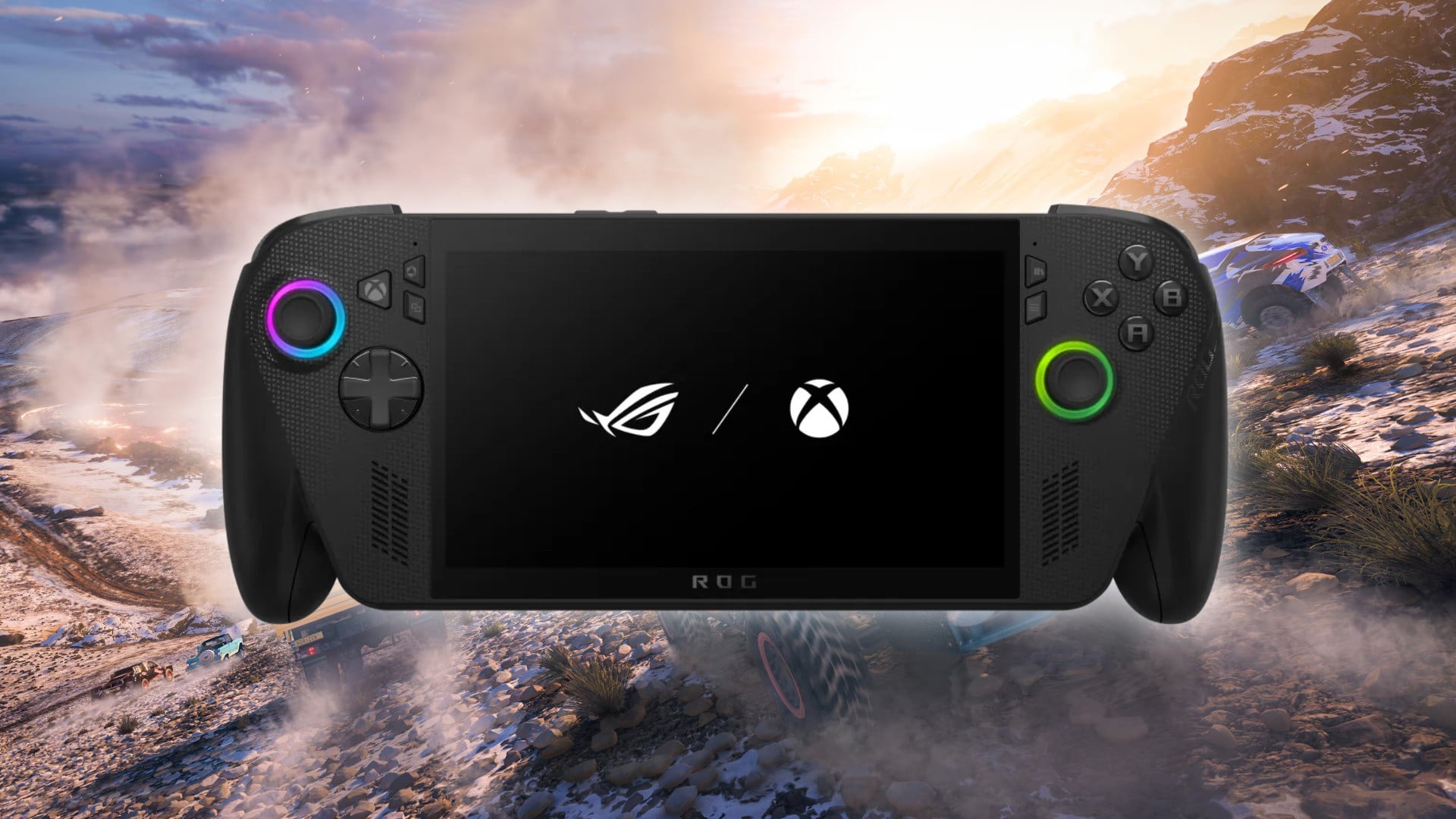
The ROG Xbox Ally X has already garnered acclaim as a formidable handheld gaming PC, celebrated for its robust performance and ergonomic design. Reviewers and users alike have praised its ability to run a wide array of demanding PC titles, often requiring manual adjustments to visual settings and the utilization of existing upscaling technologies like AMD’s FidelityFX Super Resolution (FSR) or Radeon Super Resolution (RSR) to achieve optimal frame rates. However, Auto SR introduces a new, potentially more streamlined and potent layer of performance enhancement.
The GDC demonstration, featuring Forza Horizon 5, served as a powerful testament to Auto SR’s potential. Achieving an "up to 30% FPS boost" on a graphically intensive open-world racing game like Forza Horizon 5 is a substantial accomplishment. This magnitude of performance increase can transform a borderline playable experience into a silky-smooth one, particularly crucial for fast-paced genres where every frame matters. For instance, a game struggling at 40-50 FPS could potentially jump to a much more consistent 60+ FPS, offering a significantly more enjoyable and responsive gameplay experience. The demonstration specifically highlighted performance gains when the Ally X was "docked," suggesting that these benefits are particularly pronounced when targeting higher output resolutions on external displays, though similar proportional gains are anticipated in handheld mode.
The Broader Landscape of Upscaling Technologies: Auto SR in Context
The concept of super-resolution is not entirely new to the gaming world. Over the past few years, major GPU manufacturers have introduced their own proprietary and open-source upscaling technologies, each with its unique approach and compatibility.
- NVIDIA DLSS (Deep Learning Super Sampling): NVIDIA’s flagship technology leverages dedicated Tensor Cores on its RTX GPUs and sophisticated AI models trained on supercomputers. DLSS is renowned for its exceptional image quality and performance, but it requires specific NVIDIA RTX hardware and per-game integration by developers.
- AMD FSR (FidelityFX Super Resolution): AMD’s FSR offers a more hardware-agnostic solution, compatible with a wide range of GPUs from both AMD and its competitors. FSR achieves its upscaling through spatial algorithms rather than AI, making it easier for developers to implement, but sometimes resulting in slightly less refined image quality compared to DLSS, particularly in earlier iterations.
- Intel XeSS (Xe Super Sampling): Intel’s entry into the upscaling arena utilizes AI-powered upscaling, optimized for its Arc GPUs but also compatible with other vendors’ hardware through DP4a instruction sets. XeSS aims to strike a balance between performance, image quality, and broad compatibility.
Auto SR distinguishes itself from these established players primarily through its "automatic" application and its reliance on a dedicated NPU. While DLSS, FSR, and XeSS require developers to explicitly integrate them into games, Auto SR aims to work seamlessly in the background across a wider range of titles without developer intervention. This "set it and forget it" approach could significantly lower the barrier to entry for performance enhancements, benefiting a vast library of games that may never receive official DLSS or FSR support. Furthermore, its NPU dependency implies a highly optimized and efficient AI process, potentially leading to strong image quality and minimal latency overhead. However, this also limits its immediate availability to NPU-equipped devices, unlike FSR which enjoys near-universal GPU compatibility.
The evolution of these technologies underscores a critical trend in game development: the ever-increasing demand for graphical fidelity often outpaces raw hardware power in the consumer market. Super-resolution techniques have become indispensable tools for bridging this gap, allowing gamers to experience higher resolutions and frame rates without needing to invest in the absolute bleeding edge of hardware.
Market Implications and Future Prospects for Handheld Gaming

The introduction of Auto SR carries significant implications for the burgeoning handheld PC gaming market. Devices like the ROG Xbox Ally X, Valve’s Steam Deck, and Lenovo’s Legion Go are locked in a fierce competition to offer the best portable PC gaming experience. Auto SR could serve as a powerful differentiator for NPU-equipped Windows handhelds, potentially offering a more consistent and robust performance advantage across a wider game library.
From a developer perspective, the automatic nature of Auto SR is particularly appealing. While major AAA titles often receive explicit integration for DLSS or FSR, thousands of indie games and older titles do not. Auto SR could provide a "free" performance boost to these games, enhancing the user experience without requiring any development effort. The mention of God of War as a game of interest for Auto SR’s capabilities further underscores its potential to improve a broad spectrum of PC titles, including critically acclaimed console ports.
Microsoft’s strategic play with Auto SR is multi-faceted. It reinforces the company’s commitment to enhancing the Windows gaming experience across diverse form factors, from high-end desktops to portable handhelds. By tying Auto SR to NPUs and the broader CoPilot+ PC ecosystem, Microsoft is actively encouraging the adoption of new hardware generations that integrate these AI accelerators. This move positions AI as a fundamental component of the future computing experience, not just a niche feature. For consumers, this translates to potentially more accessible high-performance gaming on portable devices, improved battery life due to lower native rendering resolutions, and a simplified approach to optimizing game settings.
The Road Ahead: Preview and Beyond
The anticipated arrival of Auto SR in preview form for ROG Xbox Ally X owners in April 2026 marks an important milestone. As with any new technology, the preview phase will be crucial for gathering real-world user feedback, identifying potential bugs, and refining the AI models and implementation. Users can expect ongoing updates and optimizations as Microsoft works to expand game compatibility, improve image quality, and further enhance performance.
Looking beyond the preview, the long-term vision for Auto SR likely includes broader integration into more Windows devices as NPU-equipped hardware becomes standard. The AI models powering Auto SR will undoubtedly evolve, potentially leading to even greater performance gains, superior image quality, and perhaps even advanced features like AI-driven frame generation or intelligent anti-aliasing. The synergy between Microsoft’s software expertise, AI advancements, and hardware partners like ASUS points towards a future where intelligent performance optimization becomes a ubiquitous and seamless part of the gaming experience.
In conclusion, Auto Super Resolution represents a significant leap forward in the quest for optimal gaming performance on portable devices. Its ability to deliver substantial FPS boosts through AI-driven upscaling, particularly demonstrated with titles like Forza Horizon 5 on the ROG Xbox Ally X, heralds a new era for handheld gaming. As the technology moves from demonstration to a public preview, the gaming community eagerly awaits the opportunity to experience this intelligent enhancement firsthand, cementing AI’s role at the core of the future gaming landscape. Stay tuned for upcoming hands-on impressions and deeper dives into this transformative technology.