


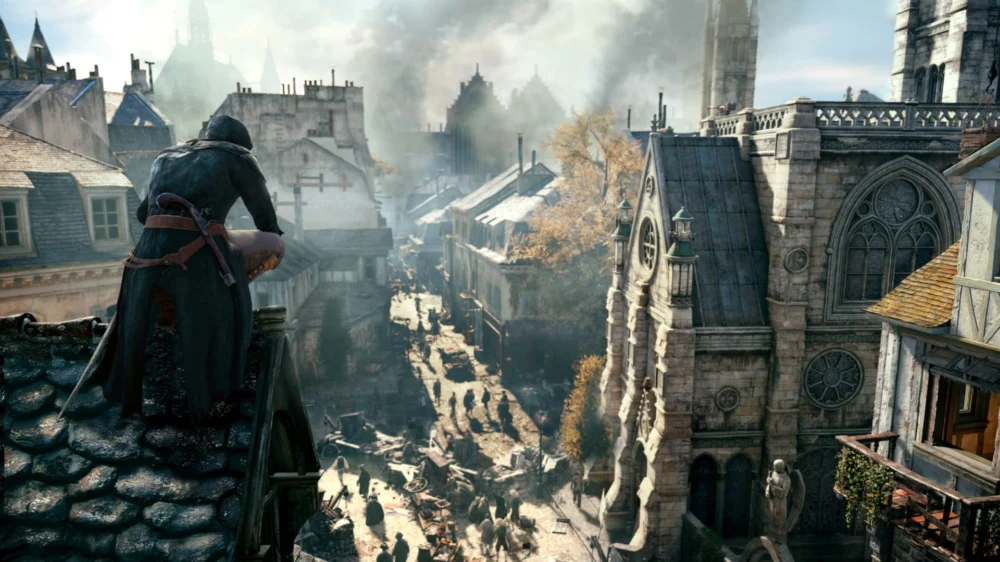
Ubisoft’s long-anticipated technical refresh for Assassin’s Creed Unity, intended to bring the 2014 title into the modern era with a smooth 60 frames-per-second (FPS) output, has encountered significant visual hurdles on the Xbox Series X and Xbox Series S platforms. While the update successfully achieves the promised frame rate targets, early reports and side-by-side comparisons indicate a substantial failure in the game’s lighting engine specifically on Microsoft’s hardware. This discrepancy has left the Xbox community with a "washed-out" visual experience that stands in stark contrast to the stable and visually accurate versions recently deployed on the PlayStation 5 and PlayStation 5 Pro.
The update, which arrived as a free enhancement for owners of the original game, was designed to leverage the high-speed processing power of current-generation consoles. For years, Assassin’s Creed Unity remained a controversial yet beloved entry in the franchise, famed for its dense crowds and sophisticated lighting system that was often hampered by the hardware limitations of the eighth console generation. The move to unlock the frame rate was seen as the final step in "fixing" the legacy of a game that was famously unpolished at launch. However, this latest development suggests that the technical debt of the AnvilNext engine continues to present challenges for Ubisoft’s engineers more than a decade after the game’s initial release.
Technical Discrepancies and Visual Degradation
The primary issue reported by players involves a breakdown of the game’s global illumination and shadow depth. On the Xbox Series X and Series S, the lighting model appears to be failing to render high-dynamic-range (HDR) data correctly, or is perhaps defaulting to a broken shader state. This results in a "flat" image where shadows lack the necessary darkness to provide depth, and highlights appear overexposed or grayed out. In architectural interiors—one of Unity’s most celebrated visual achievements—the atmospheric volumetric lighting that once defined the Parisian setting is reportedly absent or severely glitched.
In contrast, the PlayStation 5 version of the update appears to have transitioned to 60FPS without compromising the original artistic intent. Comparisons show that the PS5 and the new PS5 Pro maintain the "moody," high-contrast lighting that Ubisoft Montreal originally crafted to simulate 18th-century Paris. Furthermore, the legacy Xbox One version, running via backward compatibility without the new patch, does not exhibit these lighting issues, confirming that the glitch is a direct byproduct of the new performance-focused code.
The resolution of the game also remains a point of contention. While the frame rate is now a fluid 60FPS, the base resolution on Xbox Series X appears to be locked to the original 900p output of the 2014 Xbox One version. When combined with the broken lighting model, the lower resolution becomes more apparent, as the lack of shadow definition fails to mask the aliasing and softer textures inherent in the decade-old assets.
A Chronology of Assassin’s Creed Unity’s Technical Journey
To understand the weight of this current issue, one must look at the historical context of Assassin’s Creed Unity’s development and post-launch support.
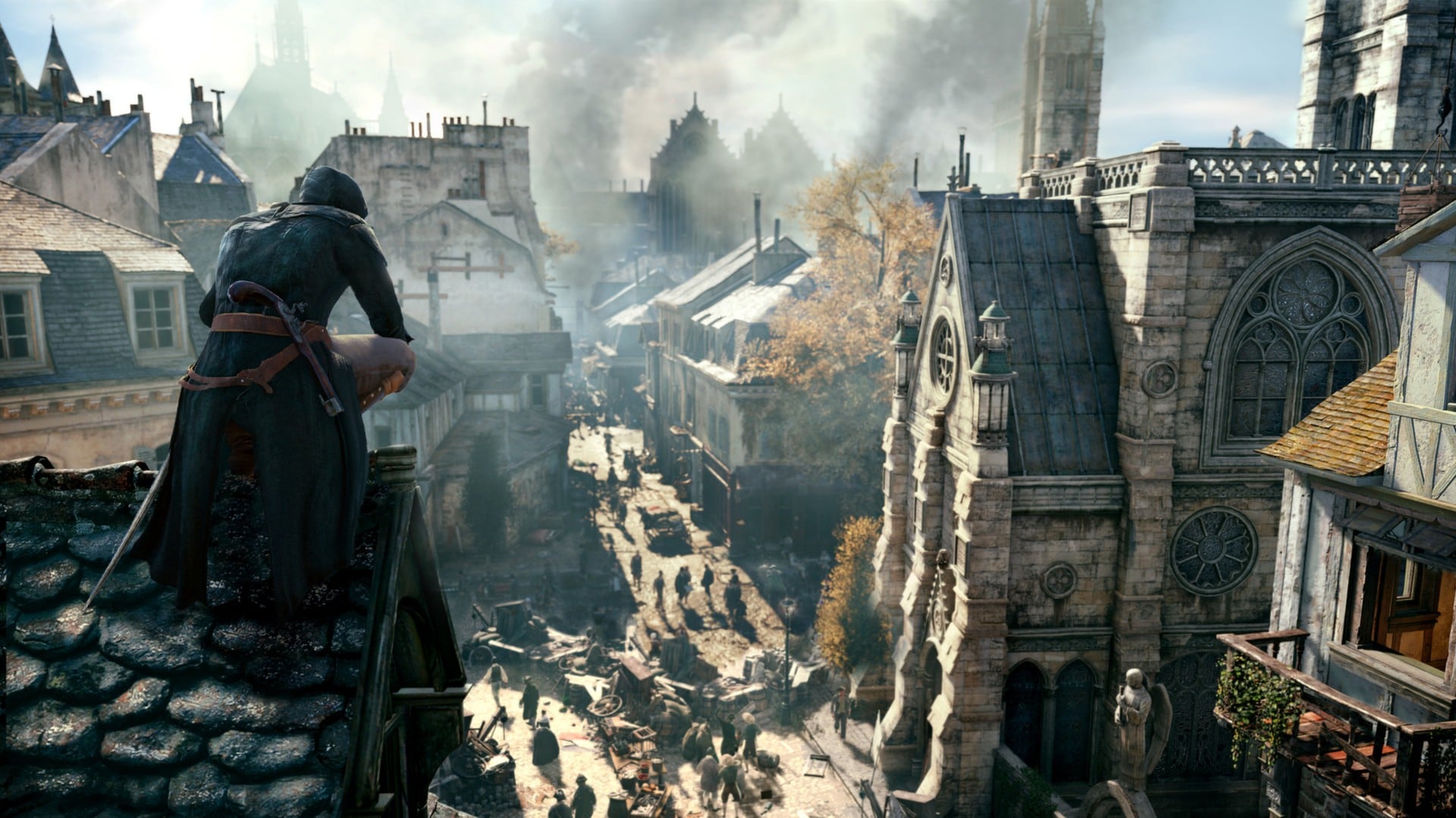
- November 2014: Assassin’s Creed Unity launches to widespread criticism due to severe technical bugs, including the infamous "missing face" glitch and frame rates that frequently dipped into the low 20s on PS4 and Xbox One.
- 2015: Ubisoft releases a series of massive patches (Patch 4 and 5) that stabilize the game but do not fully resolve the performance issues due to the weak CPUs of the era.
- 2021: Microsoft introduces "FPS Boost" for several titles, but Unity is notably absent from the initial high-profile lists because its engine required more bespoke intervention than a simple system-level toggle.
- March 2026: Ubisoft officially announces a native current-gen patch for Xbox Series X|S and PS5, promising a "definitive" 60FPS experience.
- Release Week: The patch is deployed. Within hours, players on Reddit and specialized gaming forums like ResetEra begin documenting the lighting failures on Xbox consoles.
This timeline illustrates a game that has spent twelve years in a state of perpetual refinement. The 2026 update was meant to be the "victory lap" for Unity, which has gained a cult following for having the most complex parkour and crowd systems in the entire series.
Community Reaction and Evidence
The outcry from the Xbox community has been swift. On the r/xbox and r/AssassinsCreed subreddits, users have posted extensive video evidence showing the "bleached" look of the French Revolution. One prominent thread, titled "The recent AC Unity patch has broken the lighting," features side-by-side screenshots of the Xbox Series X version versus the PS5 version. In these images, the Xbox version displays a strange gray haze over the environment, particularly during the game’s "Golden Hour" time-of-day settings.
"It’s frustrating because the 60FPS feels incredible," wrote one user on the Pure Xbox forums. "The parkour is finally as responsive as it was always meant to be, but the game looks like it’s been put through a bleach wash. All the grit and atmosphere of Paris is gone."
Digital analysis from independent tech reviewers suggests that the issue might stem from how the Xbox’s "Auto HDR" feature interacts with the new patch, or potentially a mismatch in the API calls between the game’s engine and the Xbox’s DirectX 12-based environment. Because the PlayStation 5 uses a different graphics API (GNM/GNMX), it may have avoided this specific shader compilation error.
Broader Implications for Legacy Game Support
The failure of the Xbox Series X|S lighting model in Assassin’s Creed Unity highlights a growing concern in the industry regarding the long-term maintenance of "Live" or "Legacy" titles. As hardware continues to evolve, the software layers required to keep old games running becomes increasingly complex.
Ubisoft has a mixed record with legacy updates. While Assassin’s Creed Odyssey and Origins received flawless 60FPS patches in recent years, Assassin’s Creed Syndicate suffered from a flickering shadow bug on PS5 for over a year before a fix was finally issued. The current situation with Unity suggests that the AnvilNext engine—specifically the version used in 2014—is particularly temperamental when interfaced with modern hardware features like Variable Refresh Rate (VRR) and advanced system-level upscaling.
For Xbox users, the situation is particularly stinging given Microsoft’s historical branding as the "best place for backward compatibility." The Xbox Series X was marketed on its ability to enhance older games automatically. When a developer-led patch actually degrades the visual quality, it undermines the value proposition of the hardware’s compatibility layers.

Technical Analysis of the Lighting Glitch
Lighting in Assassin’s Creed Unity was revolutionary for its time because it utilized pre-baked Global Illumination (GI) for its static environments while using dynamic light probes for moving objects. This allowed for a level of bounce-light realism that few games achieved in 2014.
The "washed-out" effect seen on Xbox Series X|S suggests that the game is failing to correctly load the lightmap textures or is incorrectly calculating the gamma curve. In rendering, if the black levels are raised or if the "ambient" light value is set too high by a glitch, the entire scene loses its contrast. This is often a result of a "broken pipe" in the rendering sequence where the final post-processing pass (which handles color grading and tone mapping) is being bypassed or fed incorrect data.
Official Response and Expected Resolution
As of the current writing, Ubisoft has not issued a formal "hotfix" schedule, though community managers on the Ubisoft Support forums have acknowledged that they are "collecting data" regarding the Xbox visual issues. Historically, Ubisoft has been responsive to these types of high-profile technical failures, but the timeline for a fix can range from weeks to months depending on whether the issue lies in the game’s code or requires a system-level update from Microsoft.
Industry analysts expect that Ubisoft will likely release a "Patch 1.06" (or equivalent) to address the shader issues. The primary goal for the development team will be to re-align the Xbox Series X|S visual profile with the PlayStation 5 version, ensuring that the lighting engine respects the original "baked" lightmaps while maintaining the newly achieved 60FPS target.
Conclusion
The 60FPS upgrade for Assassin’s Creed Unity was intended to be a celebration of one of the most ambitious titles in the Ubisoft catalog. While the performance gains are undeniable and provide the smooth gameplay experience fans have wanted for over a decade, the visual regressions on Xbox Series X|S represent a significant oversight in quality assurance.
For players on the Xbox platform, the recommendation remains to exercise patience. Replaying the game in its current "washed-out" state diminishes the artistic achievement of the Paris setting. Until Ubisoft provides a follow-up patch to restore the lighting model, the "definitive" way to experience the French Revolution remains on the PlayStation 5 or a high-end PC. This incident serves as a reminder that in the era of perpetual digital updates, the transition to newer hardware is rarely as simple as flipping a switch. The complexity of modern game engines ensures that even twelve years later, the ghosts of the past can still haunt the machines of the future.