


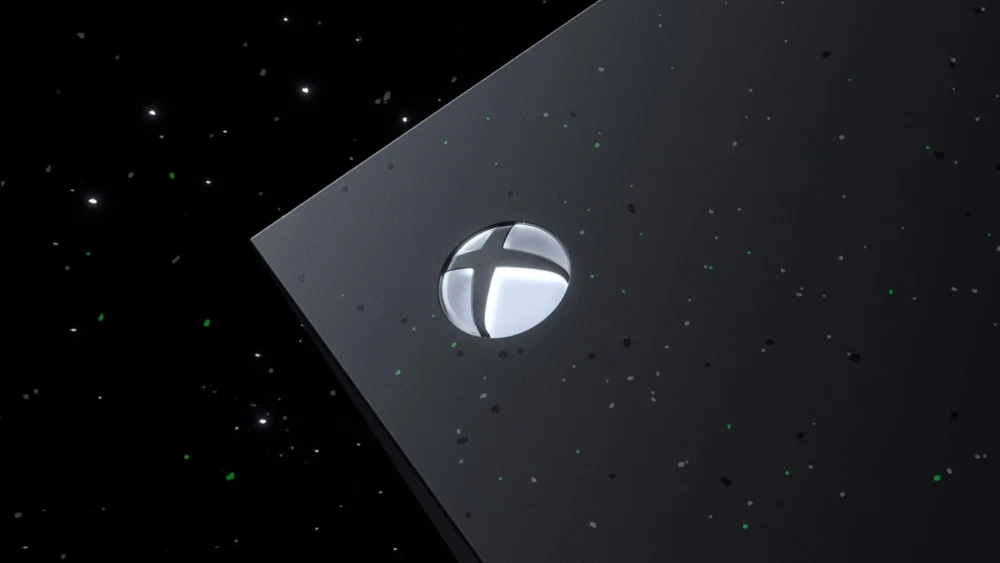
Speculation surrounding the next-generation Xbox console, codenamed Project Helix, has intensified following a detailed analysis by prominent tech journalist "Moore’s Law Is Dead." The analyst posits that Microsoft’s upcoming console could command a retail price ranging from $1,000 to $1,500, a significant departure from traditional console pricing structures. This projection aligns with earlier statements from Xbox President Sarah Bond, who characterized the future hardware as a "premium" and "high-end device," suggesting a strategic shift for the gaming division.
The prediction, disseminated through a comprehensive technical breakdown, points to advanced internal components and a deliberate market positioning as key drivers for the elevated cost. While the journalist acknowledged a theoretical minimum bill of materials (BOM) cost around $900 if manufactured at an exceptionally large scale and sold at cost, the realistic retail estimate incorporating profit margins and market strategy places Project Helix firmly in the four-figure bracket. This potential pricing strategy positions the next Xbox not merely as an incremental upgrade but as a distinct, high-performance offering aimed at a discerning segment of the gaming market.
Detailing the Project Helix Pricing Projections
"Moore’s Law Is Dead," known for their insights into hardware roadmaps and industry trends, presented a granular breakdown of potential pricing tiers for Project Helix. The core of their argument hinges on the anticipated specifications and Microsoft’s declared intent for a "premium" product. According to their analysis, a price point of $1,000 is considered a conservative expectation, with a more aggressive, yet still profitable, target potentially reaching $1,200. The upper bound of their realistic forecast extends to $1,500, reflecting what they believe Microsoft would deem a justifiable price for the console’s advanced capabilities and market position.
The journalist elaborated on the factors contributing to these figures. They suggested that if Microsoft were to pursue an "aggressive" pricing strategy aimed at wider adoption while still making a minimal profit, a $999 price point would be plausible. However, considering the "premium" branding and the likely inclusion of cutting-edge technology, a higher price of $1,200 is deemed more probable. The analyst explicitly dismissed the notion of a $2,000 price tag, asserting that the Bill of Materials (BOM) cost for even a high-end console would not support such an exorbitant figure, even with typical retail markups. This detailed range provides a framework for understanding the economic considerations that are likely shaping Microsoft’s strategic decisions regarding Project Helix.
Xbox’s Strategic Shift: The "Premium" Vision
The narrative surrounding Project Helix’s high price tag did not emerge in a vacuum. It gained significant traction following Xbox President Sarah Bond’s pronouncements regarding the company’s next-generation hardware. In a notable address, Bond articulated a vision for a console that would be "very premium" and "informed by ROG Xbox Ally," a reference to ASUS’s high-performance handheld gaming PC. This statement, made earlier in the development cycle, served as an initial indicator that Microsoft was contemplating a significant departure from the price-sensitive strategies often associated with mainstream console launches.

Bond’s comments underscored a broader strategic realignment within Xbox, emphasizing innovation and high-fidelity gaming experiences. By invoking the "premium" descriptor, she effectively signaled a shift towards catering to a segment of the market that prioritizes cutting-edge performance and advanced features over strict affordability. This strategy suggests a potential move to differentiate Xbox in a market increasingly saturated with diverse gaming platforms, from traditional consoles to powerful PCs and cloud gaming services. The Project Helix, under this vision, is not just another iteration but a statement of intent to lead in hardware innovation, even if it means a higher barrier to entry for consumers.
Historical Context: Console Pricing Trends and Market Evolution
To fully appreciate the implications of a $1,000+ console, it is crucial to examine the historical trajectory of console pricing. For decades, the industry has largely operated within a price ceiling, typically ranging from $299 to $599 at launch. Early consoles like the original PlayStation and Nintendo 64 launched in the $299 range (equivalent to approximately $500-600 today when adjusted for inflation). More recently, the PlayStation 5 and Xbox Series X both debuted at $499, while their digital-only counterparts were priced at $399.
Even prior to the current generation, consoles that pushed price boundaries, such as the original PlayStation 3 at $599 (equivalent to over $850 today), faced initial sales challenges, highlighting consumer sensitivity to cost. The Xbox 360 launched at $399, and the Xbox One at $499, often accompanied by peripherals like the Kinect, which contributed to its initial higher cost compared to the PS4. Nintendo, with its unique strategy, often launched its consoles like the Switch at $299, targeting a different market segment.
The predicted price of Project Helix significantly surpasses these historical benchmarks. A $1,000 to $1,500 console would place it squarely in the territory of high-end gaming PCs, which typically start from $1,000 and can easily exceed $2,000 for top-tier configurations. This strategic pivot suggests Microsoft is either confident in the console’s ability to justify such a premium or is targeting a much narrower, more affluent demographic. This move could also be seen as an attempt to capture market share from the PC gaming segment, offering a more streamlined, console-like experience with PC-level performance.
The Technical Justification: What Drives High Costs?
The anticipated high price tag for Project Helix is intrinsically linked to the underlying technology and components expected to power it. While specific details remain under wraps, industry analysts infer that a "premium" console at this price point would incorporate cutting-edge hardware to deliver unparalleled gaming experiences. Key areas of technological advancement likely driving the cost include:
- Next-Generation GPU Architecture: Project Helix is expected to feature a highly advanced Graphics Processing Unit (GPU), potentially leveraging the latest RDNA or a custom-designed architecture. This would enable superior ray tracing capabilities, higher resolutions (e.g., native 4K or even 8K scaling), and significantly improved frame rates, potentially pushing towards 120fps consistently.
- Powerful CPU: A multi-core, high-frequency Central Processing Unit (CPU) would be essential to complement the GPU, ensuring smooth game logic, physics, and AI processing. Custom AMD Zen architectures are a likely candidate.
- Advanced Memory Solutions: High-bandwidth memory, such as GDDR6X or even HBM, would be crucial for feeding data to the powerful GPU and CPU, minimizing bottlenecks and maximizing performance. The quantity of RAM would also likely be higher than current-gen consoles.
- Ultra-Fast Storage: NVMe SSDs are standard in current-gen consoles, but Project Helix could incorporate even faster, higher-capacity solutions, potentially leveraging PCIe Gen 5 or beyond, drastically reducing load times and enabling new streaming techniques for game worlds.
- Sophisticated Cooling Systems: Power-hungry components generate significant heat, necessitating advanced cooling solutions (vapor chambers, liquid metal, larger heatsinks, more efficient fans) to maintain optimal performance and acoustics. These specialized cooling systems add to the manufacturing cost.
- AI Accelerators and Machine Learning Co-processors: With the growing emphasis on AI in gaming (e.g., upscaling technologies like DLSS/FSR, intelligent NPCs, procedural generation), Project Helix could integrate dedicated AI hardware, similar to NPUs found in modern CPUs, further enhancing visual fidelity and gameplay mechanics.
- High-Quality Materials and Industrial Design: A "premium" device often implies premium build quality, durable materials, and sophisticated industrial design, all of which contribute to manufacturing complexity and cost.
- Research & Development (R&D) Investment: The development of custom silicon and integrated software ecosystems requires substantial R&D investment, which is ultimately amortized into the console’s retail price.
These components, individually and collectively, represent a substantial increase in the Bill of Materials (BOM) compared to previous console generations, providing a tangible basis for the analyst’s high price predictions.

The Competitive Landscape and Market Implications
The projected pricing for Project Helix also needs to be viewed in the context of the broader gaming hardware market. Sony’s PlayStation 5 Pro, for instance, launched at $699 without the disc drive add-on. While still a premium over the base PS5, it remains significantly below the speculated price point for Project Helix. This disparity highlights a potential strategic divergence between the two console giants. Sony appears to be targeting a high-end console within traditional console pricing norms, whereas Microsoft might be venturing into a distinct, ultra-premium segment.
This strategy could have several implications:
- Target Audience Shift: A $1,000+ console inherently targets a more affluent, enthusiast demographic. This could mean a smaller, but potentially more profitable, install base. It might also appeal to PC gamers looking for a more streamlined, console-like experience without compromising on raw power.
- Market Share Impact: Historically, higher prices have correlated with slower adoption rates. If Project Helix indeed launches at such a premium, Microsoft might concede the mass-market segment to more affordably priced competitors, including existing Xbox Series X/S consoles, the PS5 family, and even Nintendo Switch.
- Game Pass Strategy: The role of Xbox Game Pass becomes even more critical with a high-priced console. A robust subscription service offering a vast library of games could help mitigate the initial hardware cost, providing value to consumers who might otherwise hesitate. It could also reinforce the idea that the console is an entry point into a broader ecosystem rather than just a standalone gaming machine.
- Cloud Gaming Integration: Microsoft’s significant investment in cloud gaming (Xbox Cloud Gaming) could also play a role. A premium console might serve as a flagship device for the most demanding cloud-hybrid experiences, further blurring the lines between local and streamed gameplay.
- Developer Considerations: A powerful, premium console provides developers with significant headroom for innovation, enabling them to create more graphically intensive and feature-rich games. However, a potentially smaller install base might also influence development priorities, especially for third-party studios who aim for the largest possible audience.
Microsoft’s Official Silence and Future Outlook
It is crucial to reiterate that, as of now, Microsoft has not released any official pricing figures or detailed specifications for Project Helix. All discussions regarding specific price points remain within the realm of industry analysis and informed speculation. Microsoft’s typical strategy involves a carefully orchestrated reveal closer to the launch window, often at major industry events or dedicated showcases.
However, the consistent messaging from Xbox leadership regarding a "premium" device, coupled with the detailed technical analyses from reputable sources like "Moore’s Law Is Dead," strongly suggests that consumers should prepare for a significant investment if they intend to be early adopters of Project Helix. The coming months are expected to bring further leaks, rumors, and eventually, official announcements from Microsoft that will either confirm or refute these high-end price predictions.
The trajectory of Project Helix represents a potentially pivotal moment for Xbox and the console industry at large. By seemingly opting for a high-performance, high-cost strategy, Microsoft appears poised to redefine what a "next-generation console" can be, moving beyond incremental upgrades to offer a truly premium, cutting-edge gaming experience. The success of this strategy will ultimately depend on Microsoft’s ability to justify the price with unparalleled performance, innovative features, and a compelling ecosystem that resonates with a new generation of discerning gamers. The market will keenly watch how this ambitious vision unfolds and what it means for the future of console gaming.