


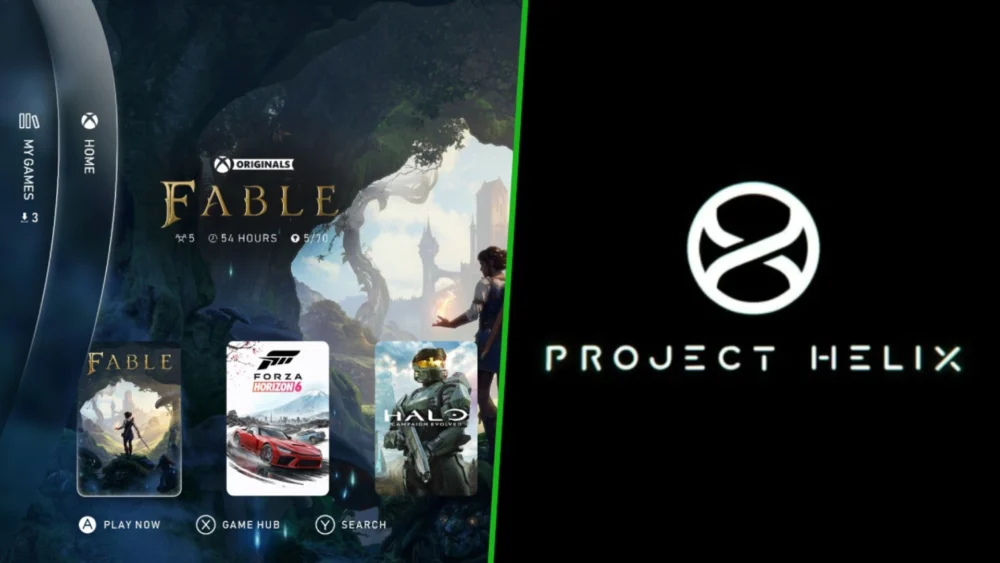
Amidst the growing anticipation surrounding Microsoft’s enigmatic "Project Helix" console, a prominent Xbox superfan, known online as Klobrille, has ignited widespread discussion by sharing a compelling concept for a "Blades" inspired dashboard. This speculative design emerges at a pivotal time for Xbox, as the company endeavors to forge an unprecedented merger between console and PC gaming, prompting significant curiosity about the user interface that will define this ambitious new ecosystem. The fan-made concept not only taps into a deep well of nostalgia for long-time Xbox enthusiasts but also aligns remarkably with recent hints from new Xbox President, Asha Sharma, regarding a potential revival of the iconic UI style.
The Resurgence of Blades: A Nostalgic Vision for Project Helix
Klobrille’s "Blades Concept" for Project Helix, unveiled on social media, presents a sophisticated reimagining of the beloved Xbox 360 interface. It artfully blends the distinctive background aesthetic of the original Blades dashboard with a contemporary, tile-based display positioned prominently in the foreground. This fusion aims to offer a clean, intuitive, and visually appealing user experience, addressing common desires for a streamlined interface while paying homage to a golden era of Xbox gaming. The concept immediately resonated within the gaming community, drawing praise for its aesthetic appeal and the potential for a fresh, yet familiar, dashboard experience on the forthcoming hardware. The design challenges Microsoft to consider how it might integrate modern functionalities, such as extensive Game Pass libraries, social features, and multimedia applications, within a more minimalist and nostalgic framework.
Project Helix: Redefining the Console-PC Divide
The mere mention of "Project Helix" has already galvanized the gaming industry, signaling Microsoft’s strategic intent to blur the traditional lines separating console and PC gaming. While details remain scarce, the overarching concept points towards a device designed to bridge these two powerful gaming platforms in ways previously unexplored. This initiative is expected to offer a more unified gaming experience, potentially allowing users greater flexibility in how and where they access their games, whether through native console applications or enhanced PC game compatibility. The user interface, therefore, becomes a critical component in realizing this vision, needing to seamlessly navigate the complexities of both ecosystems. An effective UI for Project Helix must not only be intuitive for console gamers but also robust enough to accommodate the diverse functionalities typically associated with PC gaming, from broader application support to more granular system controls. The speculation around a Blades-like UI suggests a desire for simplicity and directness that could potentially cut through the complexity of a hybrid platform.
A Look Back: The Evolution of Xbox Dashboards
To fully appreciate the significance of a "Blades" revival, it is essential to trace the evolutionary path of Xbox’s user interfaces. The original Xbox dashboard was functional but relatively rudimentary. It was with the launch of the Xbox 360 in 2005 that Microsoft introduced the groundbreaking "Blades" interface. Characterized by its horizontal scrolling panels – "Xbox Live," "Games," "Media," "System" – each represented by a distinctive blade-like tab, it was celebrated for its elegant simplicity, speed, and intuitive navigation. The visual flair and distinct sound effects associated with the Blades left an indelible mark on a generation of gamers, becoming synonymous with the early success of the Xbox 360.
However, as the Xbox ecosystem expanded, the Blades eventually gave way to the "New Xbox Experience" (NXE) in 2008, which introduced the now-familiar avatar system and a more expansive, vertically scrolling interface. This was followed by iterations influenced by Microsoft’s "Metro" design language, which emphasized large, live tiles and a more content-rich, dynamic display, first seen on Windows Phone and Windows 8. The current Xbox Series X|S dashboard, while refined over several years, largely retains this tile-based structure, prioritizing immediate access to games, apps, and social features. While functional, it has faced periodic criticism for feeling somewhat cluttered or less distinctive compared to the minimalist elegance of its predecessors, fueling a persistent desire among some fans for a refresh, or even a nostalgic return to simpler times.
Leadership Signals: Asha Sharma and the UI Refresh
The timing of Klobrille’s concept is particularly noteworthy given recent developments within Xbox leadership. Asha Sharma, who recently stepped into the role of President of Xbox, has subtly hinted at the possibility of revisiting the Blades dashboard style. In her initial social media engagements following her appointment, Sharma acknowledged the enduring appeal of the Blades, suggesting that such a UI might be explored in future iterations. While these comments were not explicit commitments, they were widely interpreted as an openness to leveraging the brand’s heritage and responding to community sentiment. This shift in leadership, coupled with the ongoing development of Project Helix, creates a fertile ground for significant changes to the Xbox user experience. A move to reintroduce elements of the Blades could be a strategic play to connect with long-standing fans, differentiate Project Helix, and signal a new era of user-centric design under Sharma’s guidance. It suggests a potential departure from the incremental updates seen on the current generation of consoles, opting instead for a more impactful design overhaul.
Community Engagement and the Power of Fan Concepts
The gaming community has a long history of actively engaging with and shaping the future of their beloved platforms. Fan-made dashboard concepts for Xbox are not a new phenomenon; numerous designers have shared their visions over the years, often aiming to simplify, modernize, or otherwise improve the existing interface. These concepts, like Klobrille’s, serve multiple purposes. Firstly, they act as a creative outlet for passionate fans, allowing them to visualize their ideal gaming experience. Secondly, they serve as a valuable barometer of community sentiment, highlighting areas of frustration or desire for change within the current UI. For platform holders like Microsoft, these concepts offer a rich source of feedback and inspiration, providing insights into what resonates with their core audience. While not directly dictating official design, such widespread positive reception to a nostalgic concept can certainly influence internal discussions and potentially accelerate design explorations that align with user preferences. The viral nature of Klobrille’s concept underscores the collective longing for an Xbox interface that is both functionally robust and aesthetically distinctive.
Strategic Implications for Microsoft’s Future UI
The potential adoption of a Blades-inspired UI for Project Helix carries several strategic implications for Microsoft. From a branding perspective, leveraging the nostalgia associated with the Blades could be a powerful way to re-energize the Xbox brand, particularly among an older demographic of gamers who fondly remember the Xbox 360 era. It could also help Project Helix establish a unique visual identity distinct from its predecessors and competitors, such as PlayStation, which maintains its own distinct UI philosophy.
Technically, integrating a Blades-like design into a modern, hybrid console-PC environment presents both opportunities and challenges. A minimalist design could potentially lead to a snappier, more responsive interface, crucial for a system that aims to merge diverse functionalities. However, it would require careful consideration of how to present the vast amount of content available through Xbox Game Pass, the Microsoft Store, and various media applications without overwhelming the user or sacrificing the clean aesthetic. Developers would need to ensure that the new UI is highly customizable and accessible, catering to a broad spectrum of users with varying preferences and needs. The balance between simplicity, functionality, and future-proofing will be paramount.

Furthermore, a significant UI overhaul for Project Helix could signal Microsoft’s commitment to user experience as a core differentiator in the highly competitive gaming market. In an era where hardware specifications are increasingly converging, the user interface and overall platform experience become crucial battlegrounds for consumer loyalty. A well-received, innovative, yet nostalgic UI could become a key selling point for Project Helix, appealing to both veteran gamers and newcomers alike.
The Broader Impact and What to Expect
The discourse surrounding Klobrille’s Blades concept and Asha Sharma’s hints highlights a broader trend in technology: the cyclical nature of design and the enduring power of nostalgia. In an increasingly complex digital landscape, there’s often a yearning for the elegance and straightforwardness of past designs. For Xbox, this could mean a strategic pivot towards a more user-centric design philosophy that values both heritage and innovation.
As Microsoft continues to develop Project Helix, the user interface will undoubtedly be a central focus. The company faces the delicate task of balancing the demands of a modern, interconnected gaming ecosystem with the desire for a distinctive and beloved user experience. While fan concepts like Klobrille’s may not be adopted verbatim, they undoubtedly contribute to the conversation and provide valuable insights into community desires.
The full unveiling of Project Helix in the coming months will be a moment of significant clarity, not just for the hardware itself, but for the software experience that will define it. Whether Microsoft opts for a complete Blades revival, a modern interpretation, or an entirely new direction, the user interface will play a critical role in how the "console and PC in a bigger way than ever before" vision is perceived and adopted by gamers worldwide. The anticipation is palpable, and the design choices made for Project Helix’s dashboard will echo across the gaming landscape for years to come.