


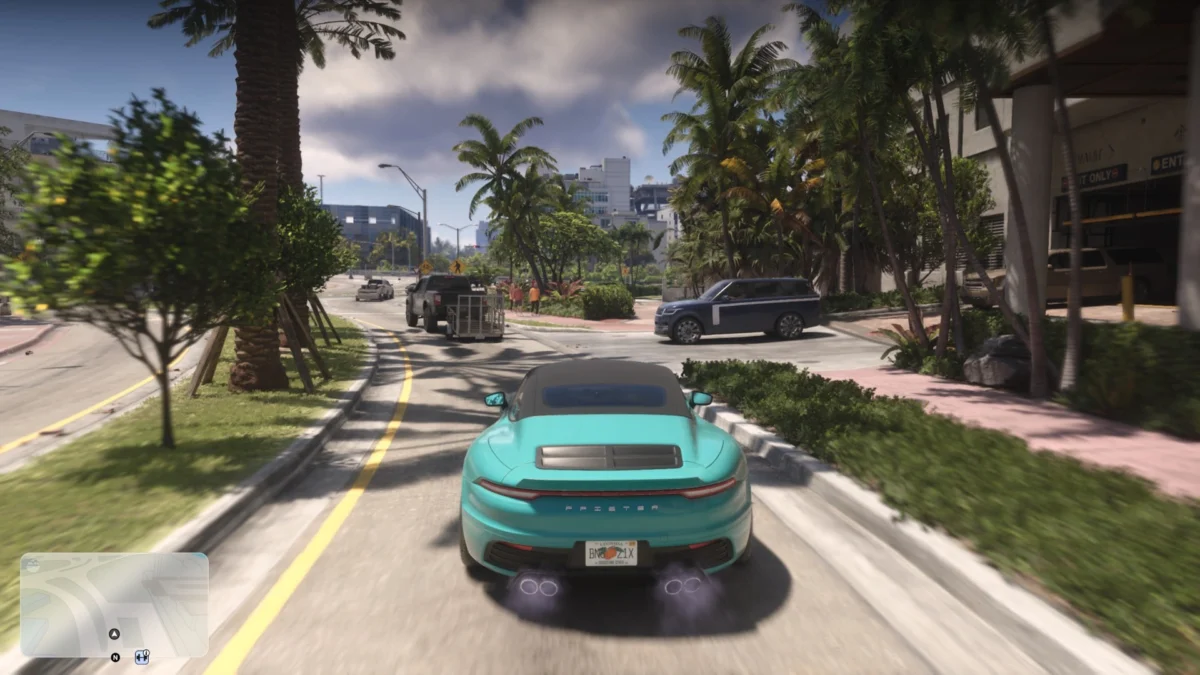
The highly anticipated technical breakdown of Grand Theft Auto 6’s early builds has been unveiled by Digital Foundry, providing an exhaustive look at its performance and visual fidelity across the Xbox Series X, Xbox Series S, and PlayStation 5 Pro. This in-depth analysis, presented through a 23-minute YouTube video and a supplementary article on their official website, offers critical insights into how Rockstar Games’ next-gen title leverages the capabilities of current-generation consoles, setting preliminary benchmarks for what players can expect. The findings come at a crucial juncture for the gaming industry, as discussions around console optimization, the efficacy of mid-generation refreshes like the PS5 Pro, and the viability of entry-level consoles such as the Xbox Series S continue to intensify.
Digital Foundry, renowned for its meticulous frame-rate tests, resolution analysis, and deep dives into graphics technologies, has positioned its latest report as an essential guide for prospective players and industry observers. Their methodology involves rigorous side-by-side comparisons, employing specialized capture hardware and software to scrutinize every pixel and frame, thereby offering an objective assessment of a game’s technical execution. For Grand Theft Auto 6, a title poised to redefine open-world gaming, such an analysis is not merely informative but foundational in shaping consumer expectations ahead of its eventual release. The gaming community has been abuzz with speculation regarding GTA 6’s technical demands, making Digital Foundry’s detailed evaluation a pivotal moment in the pre-release information cycle.
Xbox Series X Performance: A Solid Foundation with Minor Fluctuations
The analysis commences with a detailed examination of Grand Theft Auto 6 on the Xbox Series X, Microsoft’s flagship current-generation console. Digital Foundry’s experts largely commend the Series X version, describing it as a "great-looking game for the most part." Key visual highlights include the sophisticated lighting models, realistic reflections, and an "incredible hair system"—elements that collectively contribute to a highly immersive and graphically rich experience. These observations underscore Rockstar’s commitment to pushing visual boundaries, even in what is presumed to be an early development build. The game’s ability to render complex environments with such fidelity on the Series X suggests a robust underlying engine designed to maximize modern console hardware, aiming for photorealism in its expansive, dynamic world.
However, the assessment is not without its minor caveats. Digital Foundry noted occasional instances of missing shadows and a "blurry appearance" in certain contexts. While these are minor imperfections that may be refined before launch, they indicate the immense computational demands of GTA 6’s expansive world. From a performance standpoint, the Xbox Series X largely adheres to its target frame rate of 30 frames per second (FPS). This stable performance is a critical factor for an open-world game, where consistent input response and fluid visuals are paramount for player immersion. Yet, the analysis revealed that the frame rate is susceptible to dips in "busy situations," particularly during high-octane sequences involving chases and large-scale explosions. In these moments of peak graphical stress, the console struggles to maintain a locked 30 FPS, momentarily falling below the target. Despite these transient drops, the overall verdict on the Series X is positive, with Digital Foundry noting, "Generally speaking, the game acquits itself quite well on Microsoft’s senior current-gen console. Visual settings seem pretty solid across the board." This suggests a well-optimized experience that largely delivers on the promise of next-generation visuals, providing a strong baseline for the game’s graphical ambitions.
Xbox Series S: Visual Ingenuity Versus Performance Compromises
The Xbox Series S, positioned as the more affordable, digital-only counterpart to the Series X, has been a subject of ongoing debate regarding its capability to handle graphically intensive titles since its launch. Digital Foundry’s report on Grand Theft Auto 6 provides further context to this discussion. Visually, the Series S version is described as "pretty good," commendably retaining the "core features that make GTA 6 such a great game visually." This indicates that Rockstar has managed to scale down the graphical demands without fundamentally altering the game’s aesthetic character. Players on the Series S will still experience the distinctive art direction, character models, and environmental detail that define the GTA universe, albeit with evident cutbacks in resolution and potentially some advanced effects.
However, the most significant divergence between the Series S and its more powerful siblings lies in its frame rate stability. Digital Foundry explicitly states that the Series S offers the "loosest 30fps lock," with substantial portions of gameplay operating at frame rates ranging from the mid to high 20s. Furthermore, scenarios involving extensive vehicular destruction can depress the frame rate to approximately 20 FPS. This variability leads to a less consistent and fluid gameplay experience compared to the Series X or PS5. The analysis highlights that while the other consoles "do a credible job of hitting 30fps," the Series S "often lies in a 25-30fps no-man’s-land." This phrase encapsulates the core challenge facing the Series S: while it can render impressive visuals for its price point, maintaining a stable performance target for demanding titles remains a significant hurdle. The resolution output for the Series S is also noted at 1080p, a common target for the console, which contributes to a "long list of visual cutbacks" when compared to the higher-resolution outputs of the Series X and PS5. Despite these compromises, the report acknowledges that the "overall character of the game’s visuals still shines through," suggesting that for players prioritizing accessibility and cost, the Series S still offers a visually recognizable GTA 6 experience, albeit one with a more variable performance profile. This ongoing challenge for developers to optimize for the Series S, with its significantly less powerful GPU and unified memory architecture compared to its peers, has been a recurring theme throughout this console generation.
PlayStation 5 Pro: Setting the Benchmark for Console Gaming
For players seeking the absolute pinnacle of console performance for Grand Theft Auto 6, Digital Foundry’s analysis unequivocally crowns the PlayStation 5 Pro as the superior platform. This finding aligns with the PS5 Pro’s design philosophy, which focuses on enhanced GPU capabilities, faster memory, and dedicated AI accelerators to deliver a more premium gaming experience. The PS5 Pro version boasts "solid frame-rates, 4K-like image quality, and a noticeable visual upgrade thanks to ray-traced shadows." The inclusion of ray-traced shadows is a significant enhancement, as ray tracing is a computationally intensive rendering technique that simulates the physical behavior of light, resulting in incredibly realistic shadows, reflections, and global illumination. Its implementation on the PS5 Pro suggests a level of graphical fidelity that pushes beyond the capabilities of the base PS5 and Xbox Series X, offering a glimpse into the future of console visuals.
The "4K-like image quality" implies either native 4K resolution or a highly effective upscaling technique that renders an image visually indistinguishable from native 4K to the average observer. This, combined with the ray-traced shadows, creates a visually stunning and immersive experience that leverages the PS5 Pro’s increased processing power. The report’s emphasis on "solid frame-rates" also indicates that the PS5 Pro manages to achieve these visual enhancements without compromising on performance stability, a crucial aspect for a fast-paced action game like GTA 6. The PS5 Pro’s advantage stems from its more powerful GPU, which is estimated to be over 45% faster than the standard PS5’s, alongside its AI-driven upscaling technology (PSSR – PlayStation Spectral Super Resolution), designed to deliver higher fidelity images from lower input resolutions efficiently. This analysis serves as a strong validation for Sony’s mid-generation console refresh, demonstrating its capacity to deliver a premium experience for one of the industry’s most demanding titles. The Pro’s capabilities are strategically aimed at developers to incorporate more advanced graphical features, ensuring that the highest visual fidelity is achieved on console hardware.
Cross-Platform Comparison: Nuances Between Consoles
While the PS5 Pro takes the lead, Digital Foundry stresses that both the Xbox Series X and the standard PlayStation 5 versions of Grand Theft Auto 6 "look and play well." These consoles deliver a respectable experience, albeit with a "softer image" compared to the PS5 Pro, typically rendering at 1440p resolution. This resolution target is a common compromise for demanding titles on these base consoles, balancing visual sharpness with performance. Interestingly, the report highlights a subtle advantage for the Xbox Series X in specific configurations: when the console is set to 120Hz with a Variable Refresh Rate (VRR) display, the Series X is "actually slightly smoother." VRR technology synchronizes the display’s refresh rate with the console’s frame rate, mitigating screen tearing and reducing input lag, thereby enhancing perceived fluidity even when frame rates fluctuate. This specific detail showcases the intricate optimizations and display technologies that can influence a player’s experience, even between seemingly similar powerful consoles. It suggests that while raw power is a factor, the holistic ecosystem of console and display technology plays an increasingly significant role.
The consensus remains that the Xbox Series S is the "hardest to recommend" for Grand Theft Auto 6. This stark assessment is primarily due to its "consistent frame-rate drops to the mid-20s, a 1080p output resolution, and a long list of visual cutbacks." Despite these technical limitations, Digital Foundry acknowledges that the "overall character of the game’s visuals still shines through," suggesting that Rockstar has made commendable efforts to ensure the game remains recognizable and enjoyable even on the entry-level hardware. The comparison underscores the challenges developers face in scaling ambitious titles across a diverse range of console hardware, balancing visual fidelity with performance targets on each platform. This is a crucial design and engineering challenge that affects resource allocation during game development.
The Significance of Digital Foundry’s Analysis
Digital Foundry’s role in the gaming ecosystem extends beyond mere technical reporting; it acts as a critical arbiter of performance and graphical standards. For a title as monumental as Grand Theft Auto 6, their analysis carries significant weight, influencing consumer purchasing decisions and shaping industry discourse. Their findings provide a transparent, data-driven perspective, cutting through marketing hype to deliver a grounded assessment of a game’s technical merits. The meticulous detail in their reports, from pixel counts to frame-time graphs, allows players to make informed choices about which platform best suits their expectations for a given title. This level of scrutiny fosters greater transparency in an industry often characterized by marketing-driven messaging.
The timing of this analysis is also pertinent. As Grand Theft Auto 6 moves closer to its projected release, early technical assessments help developers gauge public reaction and potentially inform further optimization efforts. For Rockstar Games, a developer known for pushing technical boundaries, these insights can be invaluable. It also frames the ongoing conversation about the console generations themselves. The PS5 Pro’s strong showing here, for instance, provides a compelling argument for its existence, demonstrating its capacity to deliver a genuinely enhanced experience. Conversely, the challenges faced by the Xbox Series S highlight the inherent trade-offs involved in designing a budget-friendly console that must still run the latest AAA titles. The long-term implications for these console strategies are significant, as they dictate market positioning and appeal to different segments of the gaming audience.
Implications for Console Ecosystems and Player Choices
The findings from Digital Foundry hold significant implications for both console manufacturers and the broader gaming community. For Sony, the PS5 Pro’s performance with GTA 6 serves as a powerful validation of its mid-generation upgrade strategy. It demonstrates that the investment in more powerful hardware can translate into a visibly superior gaming experience, particularly for flagship titles. This could encourage more developers to leverage the PS5 Pro’s advanced capabilities, potentially setting a new standard for graphical fidelity on consoles. This strategic move by Sony aims to capture the high-end market segment, offering an unparalleled console experience.
For Microsoft, the Xbox Series X’s strong showing, despite being edged out by the PS5 Pro, reinforces its position as a highly capable current-gen console. The note about its smoother performance with VRR at 120Hz is a subtle but important detail, highlighting that certain display technologies can unlock additional benefits for Xbox users. However, the consistent struggles of the Xbox Series S with frame rate stability in GTA 6 further solidifies the perception that while it is an excellent entry-point console, it often requires significant compromises for the most demanding games. This could influence Microsoft’s future console strategies and how it positions the Series S to developers and consumers. The challenge for Microsoft and developers is to ensure that the Series S does not become a bottleneck for the entire Xbox ecosystem, requiring disproportionate optimization efforts that could divert resources from pushing the graphical envelope on the Series X. The long-term viability of the Series S as a true "next-gen" console for all major releases remains a point of contention within the industry.
From a player’s perspective, this analysis provides clarity. Those prioritizing the absolute best visual fidelity and smoothest performance for GTA 6 now have a clear frontrunner in the PS5 Pro. Players with an Xbox Series X or a standard PS5 can be confident in a largely excellent experience, with minor trade-offs. The Series S owner, however, is presented with a more nuanced picture: a visually impressive game for its hardware, but one that demands a tolerance for more variable frame rates. This reinforces the idea that hardware choice increasingly dictates the quality of the gameplay experience, especially as games become more graphically ambitious. The growing disparity between console tiers means that the "same game" can offer vastly different experiences, influencing purchasing decisions and potentially shaping future console upgrade cycles.
Conclusion: A Glimpse into Grand Theft Auto 6’s Technical Prowess
Digital Foundry’s exhaustive technical analysis of Grand Theft Auto 6 provides an invaluable early look into the game’s ambitious technical scope and its performance across key current-generation consoles. It paints a picture of a title poised to deliver a visually spectacular experience, particularly on higher-end hardware like the PlayStation 5 Pro and Xbox Series X. The game’s ability to render complex environments, sophisticated lighting, and detailed character models is a testament to Rockstar Games’ engineering prowess, demonstrating the potential of modern game development.
While the PS5 Pro undeniably claims the top spot with its enhanced visuals and ray-traced features, the Xbox Series X and standard PS5 demonstrate their capability to deliver a compelling and largely stable experience. The Xbox Series S, while visually impressive for its class, faces inherent performance challenges, manifesting in more variable frame rates. This report is not just a benchmark for Grand Theft Auto 6 but a significant data point in the ongoing evolution of console gaming, highlighting the distinct advantages and compromises across different hardware tiers. As the gaming community eagerly awaits the full release of Grand Theft Auto 6, Digital Foundry’s insights provide a robust foundation for understanding the technical landscape of this monumental title. The industry will continue to watch closely how Rockstar refines and optimizes the game across all platforms, ensuring that the final product lives up to the immense expectations placed upon it.