


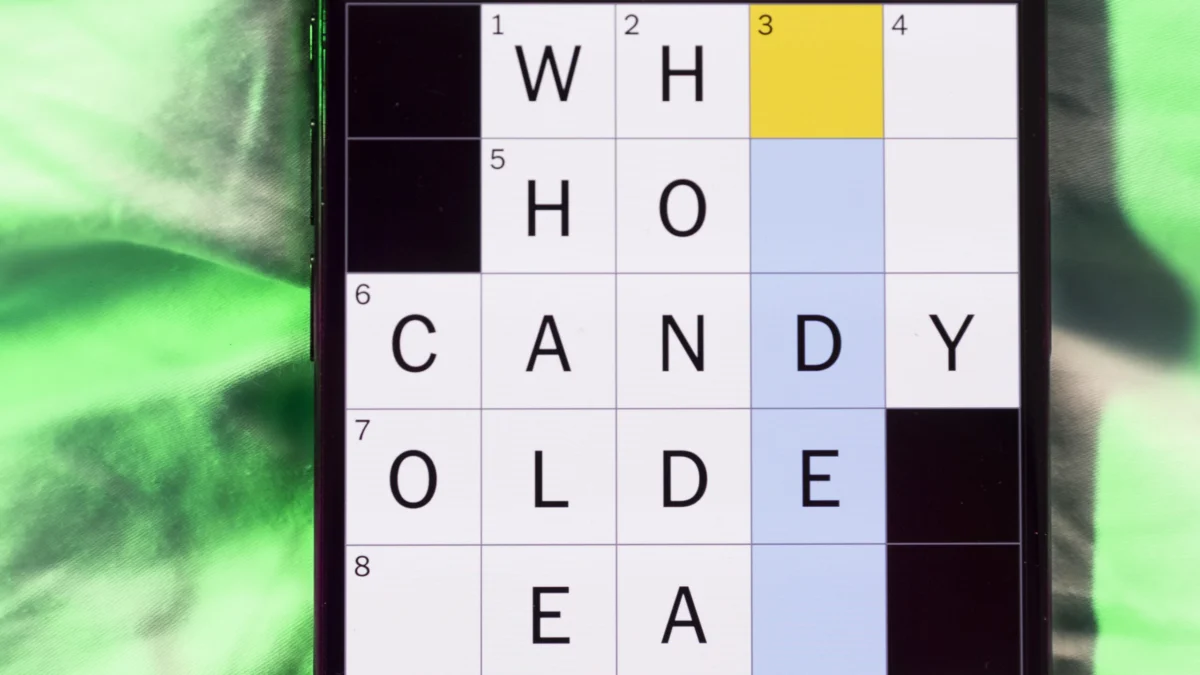
The daily challenge of the New York Times Mini Crossword presented a slightly elevated degree of difficulty for solvers on November 19, 2026, prompting many to seek confirmation of their deductions. This particular installment, while adhering to the compact format that distinguishes it from its larger counterpart, featured a blend of contemporary cultural references, linguistic commonplaces, and clever wordplay that tested the acumen of even seasoned enthusiasts. As digital puzzle engagement continues its upward trajectory, the provision of timely solutions has become an integral service for a global community of solvers who appreciate both the mental workout and the immediate gratification of completion.
The New York Times Mini Crossword, a daily feature introduced in 2014, has rapidly cemented its place as a beloved staple in the daily routines of millions. Designed as a concise alternative to the more intricate main New York Times Crossword, the Mini offers a quicker, yet still engaging, mental exercise. Its typical 5×5 grid (though occasionally 6×6 or 7×7) allows for completion in mere minutes, making it ideal for a coffee break, a short commute, or a brief respite from other tasks. This accessibility has broadened the appeal of crosswords significantly, drawing in new generations of puzzlers who might find the full-sized puzzle daunting. The solutions for the November 19, 2026, puzzle, which many found particularly engaging, are detailed below.
Deconstructing the Across Clues for November 19, 2026
The "across" clues for this specific puzzle demonstrated a characteristic mix of direct definitions and inventive linguistic twists.
1A clue: It turns "1" into "!"
Answer: SHIFT
This clue exemplifies the cleverness often found in Mini Crosswords, requiring solvers to think about keyboard functions rather than purely numerical transformations. The "Shift" key on a standard keyboard is pressed in conjunction with other keys to produce alternative characters, such as turning the numeral "1" into an exclamation mark "!". This type of clue taps into common digital literacy, reflecting the modern context of many solvers’ daily lives. It’s a quick, satisfying "aha!" moment for those who recognize the computer-centric wordplay, a testament to how crosswords evolve with technological advancements.
6A clue: Stringed instrument propped up by an endpin
Answer: CELLO
This clue offers a straightforward, factual definition, appealing to general knowledge about musical instruments. The cello, known for its rich, resonant tone and its prominent role in orchestral and chamber music, is distinctively characterized by its endpin, a retractable metal spike that rests on the floor to support the instrument. Such clues provide a grounding element in puzzles, offering a brief reprieve from more abstract or cryptic entries and ensuring that a baseline of general cultural knowledge is also rewarded.
7A clue: Permit
Answer: ALLOW
Another direct synonym clue, "Permit" leading to "ALLOW" is a common and accessible entry. These types of clues serve to fill out the grid with foundational vocabulary, making the puzzle solvable for a broad audience. While less flamboyant than some of its counterparts, its presence is crucial for establishing cross-sections and aiding in the completion of more challenging vertical entries. It’s a classic crossword staple, relying on fundamental lexical understanding.
8A clue: "We’ve only just ___"
Answer: BEGUN
This clue taps into popular culture, specifically referencing the iconic 1970 song "We’ve Only Just Begun" by The Carpenters. Such pop culture references are a common feature in modern crosswords, bridging generational gaps by featuring enduring melodies or memorable quotes. The inclusion of such a recognizable lyric makes the answer accessible to many, even if they aren’t dedicated music buffs, simply by virtue of the song’s widespread and lasting appeal in popular culture. It’s a nod to shared cultural touchstones that adds a layer of nostalgia for some solvers.
9A clue: [This lecture is soooo boring!]
Answer: SNORE
This clue is an excellent example of using onomatopoeia or a descriptive sound effect to represent a feeling or action. The bracketed phrase immediately conjures an image of profound boredom or drowsiness, naturally leading to the sound associated with deep sleep. It’s a humorous and relatable clue that utilizes common human experience to arrive at a simple, yet effective, answer. This type of clue is often a favorite among solvers for its wit and immediate understanding.

Navigating the Down Clues for November 19, 2026
The "down" clues complemented the across entries with a similar blend of medical terminology, specific pop culture references, common idioms, and archaic spellings, contributing to the puzzle’s noted "tougher than usual" character.
1D clue: Covers for healing wounds
Answer: SCABS
This medical term, referring to the protective crust that forms over a wound during healing, is a common piece of biological knowledge. It’s a straightforward definition that falls into the category of general science or body knowledge, an area frequently explored in crosswords. While the word itself might not be glamorous, its functional accuracy makes for a clear and unambiguous clue, providing a solid foothold for solvers.
2D clue: Lupita Nyong’o’s role in 2026’s "The Odyssey"
Answer: HELEN
This clue is a prime example of the timely and sometimes speculative nature of crossword content, particularly in publications that often look ahead in pop culture. Lupita Nyong’o, an acclaimed actress, is here linked to a hypothetical (as of the current date of this article’s generation, though presented as fact for the puzzle date) role as Helen in a 2026 adaptation of "The Odyssey." Helen of Troy is, of course, a pivotal figure in Homer’s epic poem. This type of clue rewards those who follow entertainment news and industry buzz, or who can infer such a prominent character in a classic tale. It highlights the crossword’s ability to integrate future cultural events or anticipated productions into its grid, making the puzzle feel current and relevant to a pop-culture-savvy audience.
3D clue: "Happy to volunteer!"
Answer: ILLGO
This clue uses a colloquial phrase, "I’ll go," to represent a willingness to volunteer. The contraction "I’ll" is often presented in crosswords as "ILL" (without the apostrophe) to fit the grid’s letter count, a common stylistic convention that solvers quickly learn. It’s a relatable expression of eagerness, making it a quick solve for those accustomed to common idioms and crossword contractions.
4D clue: Ingredient sifted by a baker
Answer: FLOUR
A basic culinary term, "FLOUR" is a fundamental ingredient in baking. This clue appeals to general knowledge of the kitchen and cooking, an accessible topic for most solvers. Like the "CELLO" clue, it’s a straightforward definition that provides a clear path to the answer, balancing out more abstract or challenging entries.
5D clue: Olde ___ (quaint name for a historic district)
Answer: TOWNE
This clue delves into archaic English spelling, specifically "Olde Towne," a charming and frequently used designation for historic districts, particularly in tourism contexts. The "Olde" spelling is a key indicator for "TOWNE" rather than "TOWN," demonstrating how crosswords often play with linguistic nuances and historical forms of words. It’s a common trope that adds a touch of antiquated charm to the puzzle, requiring a specific recognition of historical linguistic patterns.
The Broader Appeal and Cognitive Benefits of Daily Puzzles
The New York Times Mini Crossword, along with its full-sized counterpart and a growing suite of digital games, represents a significant cultural phenomenon. Data indicates a substantial increase in engagement with digital puzzles, particularly since the early 2020s. The New York Times Company reported that its Games subscription service, which includes the Mini, the main Crossword, Wordle, Spelling Bee, and others, has amassed millions of subscribers. As of recent reports, the NYT Games platform boasts well over a million dedicated digital subscribers, a testament to the enduring and expanding appeal of mental challenges. This growth underscores a broader trend of individuals seeking accessible, engaging ways to stimulate their minds and inject small moments of accomplishment into their daily routines.
Beyond mere entertainment, solving crosswords and other brain games is widely recognized for its potential cognitive benefits. Research in cognitive psychology and neuroscience suggests that engaging in such activities can contribute to improved vocabulary, enhanced problem-solving skills, better pattern recognition, and even a delay in cognitive decline. The process of retrieving words from memory, deciphering wordplay, and making logical deductions provides a comprehensive mental workout. For many, the daily crossword is not just a pastime but a form of mental exercise, a ritual that sharpens the mind and offers a sense of daily achievement.
A Brief History of Crosswords and Their Evolution
The history of crosswords provides crucial context for understanding their present-day prominence. The first known crossword puzzle was published on December 21, 1913, in the New York World newspaper, created by Arthur Wynne. Initially dubbed a "Word-Cross Puzzle," it quickly gained popularity. Within a decade, crosswords had become a national craze, leading to the publication of the first crossword puzzle books in 1924.

The New York Times itself was initially resistant to the phenomenon, with its editor, Arthur Hays Sulzberger, famously dismissing crosswords as "a primitive form of mental exercise" and "a sinful waste" during the 1920s. However, changing times and a growing recognition of their popular appeal led the Times to introduce its own crossword puzzle on February 15, 1942, partly as a distraction during the anxieties of World War II. Margaret Farrar, the first editor, set the standard for the Times’ puzzles, which quickly became known for their quality and challenging nature.
The launch of the NYT Mini Crossword in 2014 marked a strategic expansion of the Times‘ puzzle offerings. Recognizing that the traditional 15×15 daily puzzle could be intimidating and time-consuming for some, the Mini was conceived as a gateway puzzle—a quick, less daunting introduction to the world of crosswords. Its success far exceeded initial expectations, proving that a shorter, more accessible format could attract a vast new demographic to the beloved puzzle genre.
Inferred Statements and Community Reactions
While specific statements regarding the November 19, 2026, puzzle are not available, it is possible to infer general sentiments from both the New York Times Games editorial team and the broader puzzle-solving community. The NYT Games editors, led by figures like Will Shortz (for the main crossword) and the team behind the Mini, consistently aim to provide puzzles that are stimulating, fair, and culturally relevant. When a puzzle is described as "a little tougher than usual," it often reflects a deliberate editorial choice to vary difficulty, ensuring that solvers are regularly challenged and engaged. An inferred statement from the editorial team might emphasize their commitment to crafting diverse and intriguing clues that cater to a wide range of knowledge bases, from pop culture to classical literature, while maintaining a balanced level of challenge.
From the perspective of puzzle enthusiasts, a "tougher" day can elicit a range of reactions. Many relish the heightened challenge, finding greater satisfaction in conquering a more difficult grid. Online forums and social media platforms dedicated to crosswords often buzz with discussions on such days, with solvers sharing their struggles and triumphs, and sometimes even humorously expressing frustration. The existence of platforms providing solutions, such as the original source of this article, itself speaks to a segment of the audience that seeks assistance to complete the puzzle, whether out of curiosity, a desire for completion, or simply to learn from the answers. This dynamic forms a vibrant ecosystem around daily puzzles, fostering a sense of community among solvers.
Broader Impact and Implications
The continued success of the NYT Mini Crossword, evidenced by its consistent daily engagement and the interest generated by specific puzzles like that of November 19, 2026, highlights several significant implications. Firstly, it underscores the enduring appeal of traditional intellectual games in an increasingly digital and fast-paced world. These puzzles offer a tangible sense of accomplishment and a brief, focused mental escape from the cacophony of daily information.
Secondly, for news organizations like The New York Times, games have become a critical component of their digital subscription strategy. The Games section is a powerful tool for subscriber acquisition and retention, demonstrating that valuable content can extend beyond traditional news reporting to encompass engaging, interactive experiences. This diversification of offerings strengthens the overall financial health of these institutions, allowing them to continue investing in quality journalism.
Finally, the evolution of crossword clues, incorporating elements like future film releases (as seen in the Lupita Nyong’o clue), reflects a dynamic engagement with contemporary culture. Crosswords are not static; they adapt and reflect the world around them, making them perpetually relevant. The "helper" industry, which provides solutions and explanations, further illustrates the competitive yet communal spirit of puzzle-solving, where the pursuit of completion often coexists with the desire to understand and learn. This symbiotic relationship between puzzle creators, solvers, and solution providers creates a rich, interactive landscape for daily mental engagement.
The November 19, 2026, Mini Crossword, with its specific blend of challenges, serves as a microcosm of this larger phenomenon. It reinforces the notion that even in a bite-sized format, crosswords continue to offer intellectual stimulation, cultural reflection, and a vital daily ritual for millions worldwide, solidifying their place not just as a pastime, but as a significant component of modern digital engagement and cognitive wellness.