

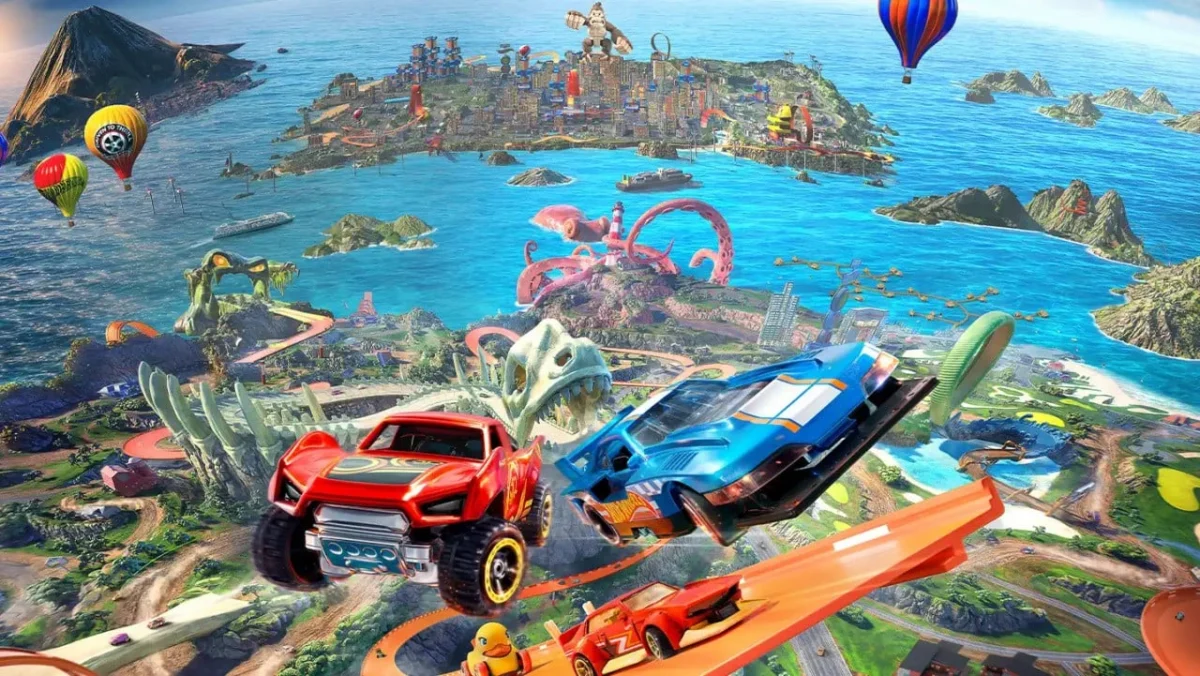
Milestone, the Italian development studio renowned for its expertise in the racing genre, has officially launched its latest entry in the iconic toy-car series, Hot Wheels: Infinite Rush. Following the commercial and critical success of Hot Wheels Unleashed (2021) and Hot Wheels Unleashed 2: Turbocharged (2023), the developer has opted for a significant shift in design philosophy. While previous entries focused on high-octane racing along the franchise’s signature orange plastic tracks within indoor environments, Hot Wheels: Infinite Rush introduces an expansive open-world structure. This new title invites players to explore four distinct islands, moving the action "beyond the orange track" and into a scaled-up world designed specifically for the die-cast vehicles.
The game is scheduled for a wide release on Thursday, September 10th, across Xbox Series X, Xbox Series S, and PC. In a move that benefits the Microsoft ecosystem, the title supports Xbox Play Anywhere, allowing consumers who purchase the digital version to access the game on both Xbox consoles and Windows PCs at no additional cost. For enthusiasts seeking immediate access, the Ultimate Edition was made available in an early-access window starting today, several days ahead of the standard global launch.
Product Tiers and Market Positioning
Milestone and publisher Mattel have structured the release of Hot Wheels: Infinite Rush across three distinct price points to cater to different consumer segments. The Standard Edition is priced at £44.99 / $49.99, positioning it as a mid-to-high-tier arcade racing title. For players seeking additional content, a Deluxe Version is available, though the specific digital bonuses vary by region.
The most comprehensive package is the Ultimate Edition, retailing for £89.99 / $99.99. This premium tier serves two primary functions: it includes a season pass for future downloadable content (DLC) and provides early access to the full game. This pricing strategy reflects a growing trend in the gaming industry where publishers leverage early-access windows to incentivize higher-margin pre-orders. By offering the game nearly a week early to its most dedicated fans, Milestone aims to generate organic word-of-mouth momentum ahead of the September 10th general release.
A Chronological Shift in Franchise Direction
The Hot Wheels gaming franchise has undergone a notable evolution since Milestone took the reins in 2021. The first Unleashed title was praised for its "room-scale" perspective, where cars raced through kitchens, garages, and bedrooms, making the toys feel authentic to their real-world scale. The sequel, Turbocharged, refined these mechanics by adding jumping and lateral dashing.
However, Hot Wheels: Infinite Rush marks the most radical departure in the series’ history. The transition to an open-world format with four explorable islands suggests an attempt to compete with established arcade giants such as Forza Horizon and The Crew Motorfest. By removing the constraints of indoor tracks, Milestone is betting on "environmental storytelling" and exploration as the new pillars of the Hot Wheels experience. Players are no longer confined to the orange plastic; they can now navigate natural terrain, urban landscapes, and hidden shortcuts scattered across the islands.
Critical Reception and Performance Metrics
As the early access window opens, initial reviews from major gaming outlets have begun to paint a detailed picture of the game’s strengths and weaknesses. The critical consensus currently sits at a Metacritic average of 73 for the Xbox Series X, PlayStation 5, and the newly mentioned Nintendo Switch 2 platforms. Interestingly, the PC version has outperformed its console counterparts slightly, maintaining a higher average of 78, likely due to superior graphical fidelity and frame-rate stability on high-end hardware.
The Outerhaven provided one of the most enthusiastic endorsements, awarding the game a 9/10. Their review highlighted the game’s dual appeal as both a competitive racer and a family-friendly exploration tool. The publication noted that the "biggest success is how well it works as both a fun racing game and something I can enjoy exploring and collecting with my son," suggesting that the open-world format facilitates a more relaxed, "collect-a-thon" style of gameplay that resonates with younger audiences and their parents.
CGM (8.5/10) praised the technical execution of the "toys-to-life" concept. Unlike previous industry attempts to integrate physical toys with digital software—such as the now-defunct Skylanders or Starlink: Battle for Atlas—Hot Wheels: Infinite Rush relies entirely on in-game progression. CGM noted that the game brings the toys to life "without relying on real-world gimmicks or NFC-powered figurines," allowing for a pure arcade experience that focuses on digital collection and customization.
DualShockers (8/10) focused on the nostalgic appeal of the title, describing it as a "colorful, chaotic playground." While the review acknowledged that the game "isn’t perfect," it emphasized that Milestone successfully captured the "sense of speed" and the "freedom to let our imaginations run wild," which are core tenets of the Hot Wheels brand.
Divergent Views on the Open-World Transition
Despite the generally positive scores, some critics expressed reservations regarding the shift away from traditional track-based racing. Day One (7.5/10) described the game as a "pure arcade racer" that does not necessarily "reinvent the wheel" but offers enough content to keep players engaged in clearing events and collecting vehicles.
More critical voices, such as Finger Guns (7/10), suggested that the move to expansive islands might have diluted the unique charm of the series. The review argued that "the magic seems to be a little lost when you’re not just playing Hot Wheels on your bedroom floor," indicating that the "room-scale" perspective of previous games provided a sense of groundedness that an open world struggles to replicate.
Push Square (6/10) offered the most conservative assessment, stating that the open-world structure "does little to add to the experience" and may actually "detract from it." However, even in this lower-scored review, the core handling mechanics—inherited from the Unleashed titles—were praised as "great." The consensus among more critical reviewers appears to be that while the open world is a divisive choice, the fundamental "feel" of the cars remains top-tier for the genre.
Technical Innovations and Platform Support
From a technical standpoint, Hot Wheels: Infinite Rush utilizes the latest iteration of Milestone’s proprietary engine, optimized for current-generation hardware. The Xbox Series X and PlayStation 5 versions target 4K resolution with high-dynamic-range (HDR) support to accentuate the vibrant, metallic paint jobs of the die-cast cars.
The inclusion of the "Nintendo Switch 2" in Metacritic’s initial tracking is a significant detail for the industry, suggesting that Milestone is among the first wave of developers optimizing their titles for Nintendo’s next-generation hardware. This version is expected to offer a more robust visual experience than the original Switch was capable of, narrowing the gap between the handheld and home console versions.
The Xbox Play Anywhere support is another key feature. By allowing cross-buy and cross-save functionality between Xbox and PC, Milestone is catering to a modern audience that values flexibility. A player can begin a championship on their Xbox Series X in the living room and continue their progress on a gaming laptop while traveling, a feature that has become a staple of Microsoft’s consumer-friendly "ecosystem" strategy.
Analysis of Implications for the Racing Genre
The release of Hot Wheels: Infinite Rush reflects a broader trend in the gaming industry: the "open-worldification" of established franchises. As players increasingly demand more value and longevity from their purchases, developers are moving away from linear experiences in favor of large, systemic maps that offer dozens of hours of side content.
For Milestone, this is a calculated risk. By moving away from the "bedroom" aesthetic that defined the first two Unleashed games, they are attempting to broaden the IP’s appeal to fans of open-world exploration games. However, as noted by several critics, there is a risk of losing the specific identity that made Hot Wheels stand out in a crowded market. The success of Infinite Rush will likely be measured by how well players respond to the island-based exploration versus the traditional track-based racing that made the franchise a household name in the digital space.
Furthermore, the game’s emphasis on "ridiculous cars" and "imagination" serves as a counterpoint to the hyper-realistic simulation racers like Gran Turismo 7 or Forza Motorsport. There remains a significant market for "pure" arcade racers that prioritize fun, physics-defying stunts, and accessibility over tire-pressure management and fuel-consumption telemetry.
Conclusion and Future Outlook
Hot Wheels: Infinite Rush arrives at a pivotal moment for Milestone. With a Metacritic average in the mid-70s, the game is positioned as a solid, entertaining entry that may not reach the "spectacular" heights of its predecessors but offers a substantial amount of content for its asking price. The four islands provide a fresh canvas for the franchise, even if the transition to an open world remains a point of contention among veteran fans.
As the standard edition prepares for its September 10th launch, the gaming community will be watching to see how the title performs commercially. If the open-world gamble pays off, it could set a new trajectory for future Hot Wheels titles, potentially leading to even larger environments and more complex social features. For now, Hot Wheels: Infinite Rush stands as a vibrant, high-speed celebration of one of the world’s most enduring toy brands, successfully making the leap from the playroom floor to the great outdoors.