


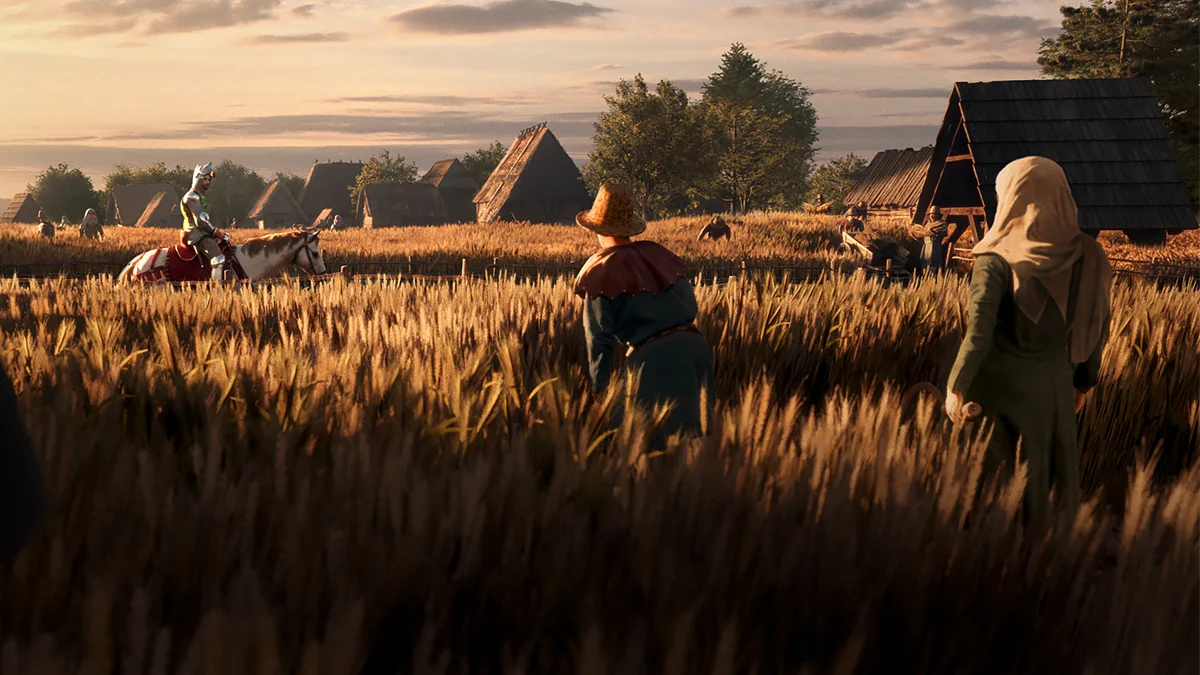
Farming stands as one of the foundational activities players must prioritize in Manor Lords, serving as the primary sustenance for a burgeoning digital populace and a crucial component for the production of goods that ensure both their survival and their contentment. The intricacies of medieval agriculture are faithfully simulated, demanding strategic foresight and meticulous resource management from the earliest stages of settlement development.
The Cornerstone of Survival: Early Game Agricultural Strategy
Upon establishing a new settlement, the immediate focus must invariably turn to food production. Wheat, or more accurately, Emmer, an ancient variety of wheat, emerges as the primary crop due to its direct utility in feeding the townsfolk. Its successful cultivation and subsequent processing are paramount, particularly in ensuring the survival of villagers through the unforgiving winter months. Manor Lords incorporates a realistic seasonal cycle where no harvest occurs during winter. This necessitates the accumulation of a substantial grain surplus by late autumn. To transform raw grain into edible bread, players must construct a Windmill to mill grain into flour, followed by a Communal Oven (or individual Burgage Plot upgrades with bakeries) to bake the flour into bread. This early infrastructure chain is non-negotiable for sustained population growth and stability.
Once a reliable supply of wheat-based foodstuffs is secured, the strategic imperative shifts towards diversification. Barley cultivation becomes the next logical step, primarily for its role in ale production. Ale is not merely a luxury; it is a vital component of villager happiness and, subsequently, regional approval, which influences tax revenue and the overall stability of the settlement. The ability to produce ale locally reduces reliance on trade and creates a more self-sufficient economy.
Understanding Crop Types and Their Strategic Applications
Manor Lords features a limited yet strategically significant selection of crops, each serving distinct purposes within the settlement’s economy and survival matrix. These include Emmer (Wheat), Barley, Flax, and Rye.
Emmer (Wheat)
Emmer is the archaic term for a foundational grain, essentially wheat. It is the most critical crop in the early game, directly converted into flour and then bread, forming the staple diet for the entire population. High fertility for Emmer ensures a robust food supply, which is directly linked to population growth and the prevention of starvation during lean seasons. Its continuous cultivation requires careful soil management to maintain yields.
Barley
Primarily used for brewing ale, Barley contributes significantly to the morale and satisfaction of the populace. A steady supply of ale helps maintain public order, prevents dissent, and can unlock further Burgage Plot upgrades. While not a direct food source, its economic and social value cannot be overstated, especially as settlements grow and villager demands become more sophisticated.
Flax
Flax is cultivated for its fibers, which are processed into linen. Linen is essential for producing clothing, a fundamental requirement for villagers as the settlement expands. Beyond local consumption, surplus linen can become a valuable trade commodity, bolstering the regional economy and generating much-needed regional wealth. Growing Flax efficiently allows players to avoid expensive imports and establish a profitable export industry.
Rye
Rye is a hardier grain compared to wheat, known for its resilience and ability to grow in less fertile or harsher conditions. While not explicitly detailed as a primary food source in the same way as wheat, its presence as a fertility indicator suggests its potential as an alternative grain crop, particularly useful in regions with suboptimal soil for Emmer or as a rotation crop that might be less demanding on soil nutrients. Its role often comes into play when optimizing yields across varied terrains.
Essential Agricultural Infrastructure
Effective farming in Manor Lords is not solely about planting seeds; it requires a robust supporting infrastructure to process and store agricultural output.
Farmhouse
The Farmhouse is the central hub for all agricultural operations. It houses the families assigned to work the fields, managing planting, harvesting, and crop rotation. Upgrading the Farmhouse can increase the efficiency of farmers, allowing them to manage larger areas or perform tasks more quickly. Its strategic placement near fields is crucial for minimizing travel time and maximizing productivity.
Windmill
Grain harvested from the fields must be processed into flour before it can be baked. The Windmill serves this vital function, grinding raw grain. Its efficiency is tied to the availability of grain and the number of assigned workers. Positioning it centrally to your farming operations, or near your Granary, can optimize workflow.
Communal Oven
The final step in the bread production chain, the Communal Oven, converts flour into baked bread. While individual Burgage Plots can also be upgraded with small bakeries, a Communal Oven provides a centralized, efficient solution for feeding a larger population. Ensuring a constant supply of flour to the oven is key to preventing food shortages.
Granary
The Granary is the primary storage facility for raw agricultural products, including grain (wheat, barley, rye) and other unprocessed farm goods. Adequate granary capacity is essential to store the autumn harvest, protecting it from decay and ensuring sufficient stock for the winter months and for processing.
Storehouse
While the Granary handles raw goods, the Storehouse is where processed agricultural products like flour, bread, and ale are stored. It acts as a distribution point for these goods to be consumed by villagers or moved to trading posts. Proper management of both granaries and storehouses is critical for an organized and efficient supply chain.
Fields
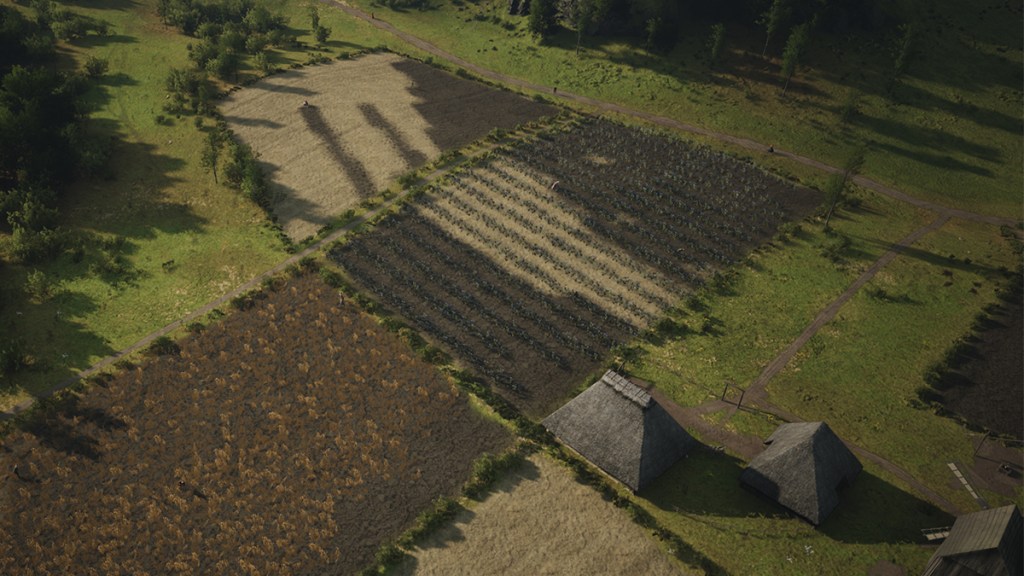
The physical plots of land dedicated to cultivation. Their size, placement, and fertility are the most fundamental aspects of farming. Optimizing field layout to leverage fertile land and minimize farmer travel distance is a core strategic challenge.
Navigating Soil Fertility and Crop Rotation
One of the most realistic and impactful mechanics in Manor Lords is the dynamic soil fertility system. Understanding and managing this system is central to long-term agricultural success.
The Fertility Indicator
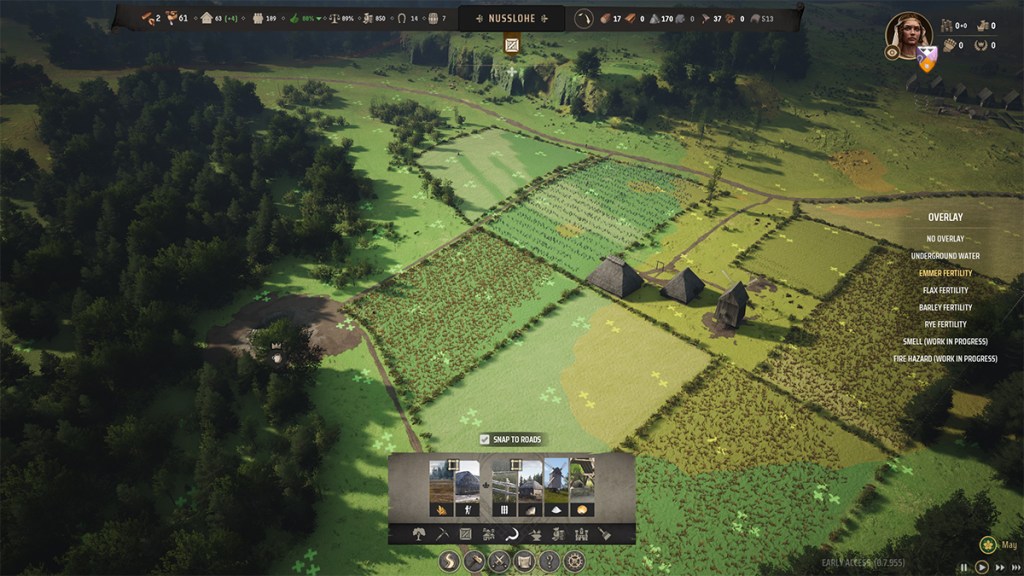
Within the Construction menu, under the Farming tab, players can access a detailed fertility overlay for various crops: Emmer, Flax, Barley, and Rye. This color-coded map is an indispensable tool, visually representing the suitability of land for each crop. Bright green indicates highly fertile ground, promising abundant yields, while shades of orange and red denote increasingly barren areas where cultivation would be inefficient or impossible. Strategically, fields should always be laid out on the brightest green patches to maximize output.
Emmer: An Old Term for Wheat
A point of clarity for new players: the "Emmer Fertility" indicator directly corresponds to Wheat fertility. The game utilizes this historically accurate, albeit less common, terminology, adding a layer of authenticity while potentially causing initial confusion. This design choice underscores the game’s commitment to historical immersion.
The Dynamics of Soil Degradation and Renewal
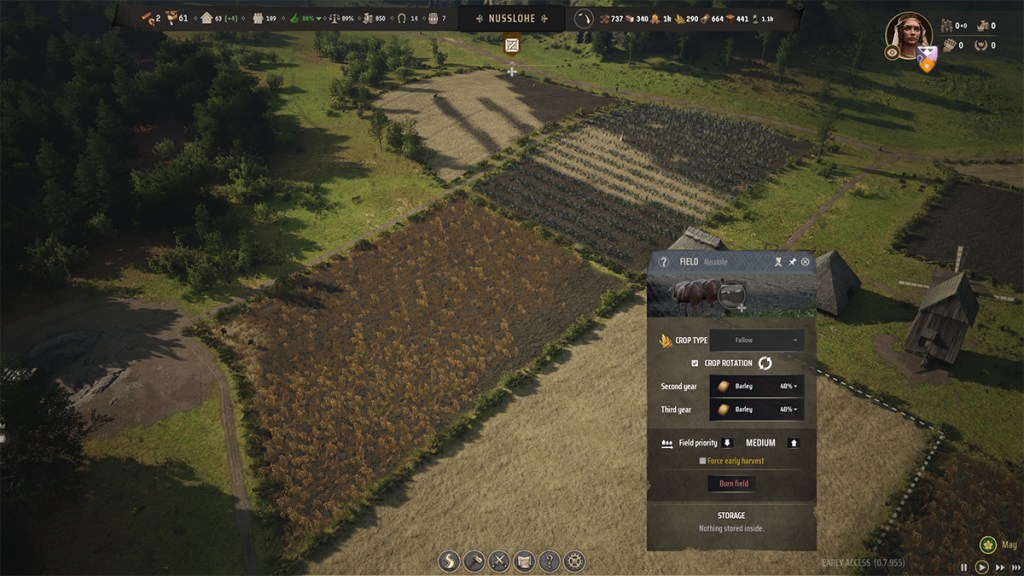
The fertility of a field is not static; it diminishes with each successive harvest. Continuous planting of the same crop without intervention will rapidly deplete the soil of vital nutrients, leading to drastically reduced yields. To counteract this, Manor Lords implements a robust crop rotation system, allowing players to schedule a field’s activity over a three-year cycle.
The most effective method for soil replenishment is to let a field lie fallow for at least one year within this cycle. A fallow year allows the soil to naturally recover its nutrient levels, preparing it for higher yields in subsequent planting seasons. Alternatively, fields can be designated as pasture during their recovery year, allowing livestock (such as sheep or cattle, if available) to graze. This not only provides additional resources (meat, hides, wool) but also contributes to soil enrichment through natural fertilization, offering a dual benefit.
The Morgen: A Unit of Labor and Land
Fields in Manor Lords are measured in morgen, an ancient unit of land area, roughly equivalent to what a single ox could plow in a morning (approximately 0.6 to 1 acre). The game stipulates that a single family can efficiently manage about 2/3 of a morgen per year. A common early-game tooltip advises creating fields of 1 morgen in size. A single 1-morgen plot of wheat, on highly fertile land, can initially produce enough grain to sustain a small town.
However, due to the inevitable decline in soil fertility, relying on just one field is unsustainable. To implement effective crop rotation and maintain consistent food production, players will ideally need at least three fields for every unit of farming output required: two fields actively growing crops in rotation, and one field left fallow or used for pasture to regenerate its fertility. This three-field system is a historical agricultural practice accurately reflected in the game’s mechanics, offering a realistic challenge and strategic depth.
Leveraging Development Options for Agricultural Advancement
As a settlement grows and Burgage Plots are upgraded, players earn Development Points, which can be invested across various skill trees. One of these trees offers crucial upgrades directly benefiting agricultural productivity and efficiency. Strategic investment in these farming-focused developments can significantly enhance a settlement’s food security and economic output.
Heavy Plough
This early-game development is a game-changer for expanding agricultural operations. Unlocking the Heavy Plough allows farmhouses to utilize plows pulled by oxen. This dramatically increases the speed at which fields can be prepared for planting, making it feasible to manage larger fields or a greater number of fields with the same workforce. It’s an essential upgrade for any aspiring agricultural powerhouse, reducing the labor burden and improving seasonal timing.
Fertilization
The Fertilization development provides a direct means to boost soil fertility beyond natural fallow periods. While the exact mechanics might vary, this typically involves the application of manure from livestock or other organic matter to enrich the soil. This can accelerate fertility recovery, potentially reducing the need for lengthy fallow periods or enabling higher yields from less fertile land. It offers flexibility in crop rotation planning and can be crucial for maximizing output in dense settlements with limited arable land.
Improved Fallow
Building upon the basic concept of fallow land, the Improved Fallow development enhances the rate or extent of soil fertility recovery during a fallow year. This means fields return to optimal fertility more quickly or achieve a higher maximum fertility level, leading to consistently better harvests over time. This development is a long-term investment in sustainable agriculture, ensuring that land remains productive for generations of villagers.
Each of these development options presents a strategic choice, influencing the pace and scale of agricultural expansion. Players must carefully consider their settlement’s needs, available resources, and long-term goals when allocating these valuable points.
The Broader Impact and Strategic Implications of Farming
Farming in Manor Lords is far more than a simple resource-gathering mechanic; it is the beating heart of the settlement, influencing every aspect of its development and survival.
Economic Backbone
A thriving agricultural sector forms the economic backbone of any successful manor. Abundant food supplies directly translate into population growth, as hungry villagers are less likely to settle or reproduce. Surplus grain, flour, and bread can be traded for other essential goods or converted into regional wealth. Beyond sustenance, the production of barley for ale and flax for linen provides valuable trade commodities, enabling players to establish a robust internal economy and profitable external trade routes. This economic self-sufficiency is key to weathering market fluctuations and hostile encounters.
Population Stability and Growth
The direct correlation between food supply and population growth is stark. A consistent and ample food supply ensures villager satisfaction, leading to an increase in families settling in the manor. Conversely, food shortages can lead to starvation, disease, and a rapid decline in population, crippling the settlement’s workforce and defense capabilities. Strategic farming planning, therefore, is intrinsically linked to the demographic trajectory of the manor.
Regional Specialization and Trade
The variable fertility across different regions in Manor Lords encourages specialization. A region highly fertile for flax might become a hub for linen production, while another with exceptional barley fertility could become renowned for its ale. This regional specialization fosters inter-regional trade, adding another layer of economic strategy and promoting a dynamic in-game world where players must adapt to their local environment.
Historical Authenticity and Game Design
The meticulous detail given to farming mechanics, from the use of "Emmer" and "morgen" to the necessity of crop rotation and fallow fields, reflects the game’s commitment to historical authenticity. Medieval agriculture was a challenging and labor-intensive endeavor, constantly battling against the elements, soil depletion, and the ever-present threat of famine. Manor Lords effectively translates these historical realities into engaging gameplay mechanics, forcing players to think like true medieval lords, prioritizing sustenance and long-term sustainability over short-term gains. This design philosophy creates a deeply immersive city-building experience that rewards thoughtful planning and adaptation.
Advanced Agricultural Strategies and Best Practices
To truly master farming in Manor Lords, players should consider several advanced strategies:
- Early Expansion Planning: Identify and claim highly fertile land early in the game, even if not immediately used, to secure future agricultural capacity.
- Balancing Production: As the settlement grows, balance the production of staple foods (wheat) with luxury goods (ale) and trade items (linen). A purely food-focused economy might struggle to generate wealth, while neglecting food leads to collapse.
- Labor Management: Efficiently assign families to farmhouses. During peak seasons (planting, harvesting), consider reassigning some villagers from less critical tasks to farming to ensure timely operations. The game’s seasonal cycle means labor needs fluctuate significantly.
- Seasonal Awareness: Plan activities according to the seasons. Spring is for plowing and sowing, summer for growth, autumn for harvest, and winter for processing and planning. Neglecting these timings can lead to catastrophic losses.
- Resilience through Diversification: While wheat is primary, consider cultivating rye in less ideal plots or as a rotation crop to add a layer of resilience against unforeseen challenges or specific soil conditions.
In conclusion, farming in Manor Lords is a multi-faceted system that underpins all other aspects of settlement growth and prosperity. It demands a deep understanding of soil mechanics, crop cycles, infrastructure requirements, and strategic development choices. By mastering these elements, players can transform barren lands into thriving agricultural hubs, ensuring their villagers are well-fed, content, and ready to contribute to the enduring legacy of their manor. The vast farmlands stretching to the horizon, so often depicted in medieval illustrations, are not merely an aesthetic choice in Manor Lords; they are a testament to meticulous planning and a deep appreciation for the complex realities of medieval sustenance.