


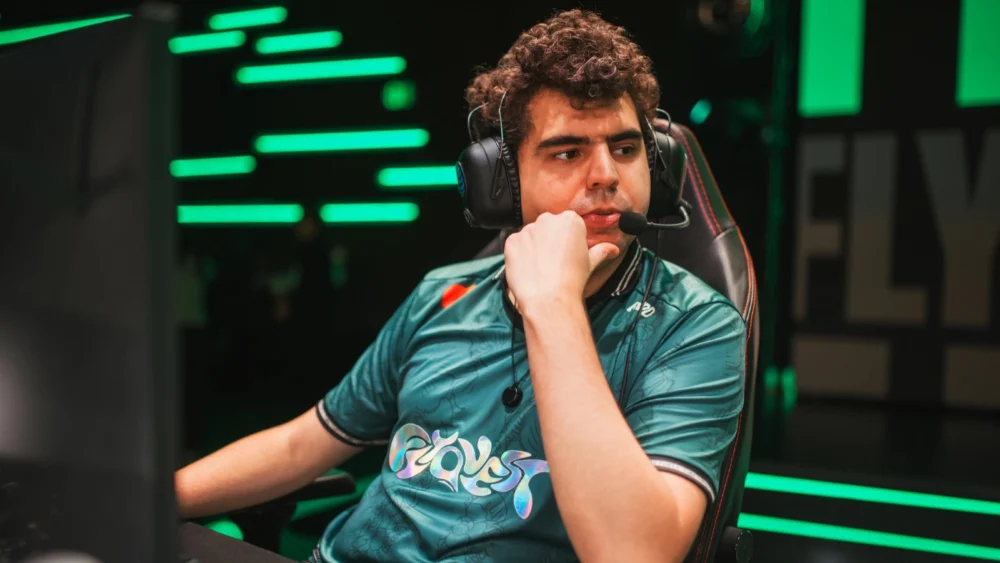
League of Legends professional Gabriël "Bwipo" Rau has broken his silence on the severe backlash he faced for his controversial remarks concerning women in competitive gaming, admitting that he "didn’t believe" the words he uttered and that the experience deeply impacted his mental state and career prospects. The FlyQuest top laner’s comments, made in early September, suggested that women should avoid competing in professional esports during their menstrual cycles, citing a perceived lack of adequate support for female players during these times. This statement ignited a firestorm within the esports community, drawing sharp criticism from prominent figures and leading to significant repercussions for the player.
The controversy originated from an interview where Bwipo articulated his belief that "there is a time of the month where you should not be playing competitive games as a woman." He further elaborated, stating, "there’s just not enough support for female pro players" during "their monthly cycles." These remarks, perceived by many as ignorant and discriminatory, quickly spread across social media and gaming news outlets, eliciting widespread condemnation.
A Chronology of Controversy and Consequence
The initial comments, made in early September, immediately drew fire. Among the most vocal critics was fellow Belgian and prominent esports caster, Eefje "Sjokz" Depoortere, who labeled Bwipo’s statements as "ignorant." The ensuing public outcry placed significant pressure on Bwipo’s team, FlyQuest, and the broader esports ecosystem.
On September 10, Bwipo issued a formal apology for his remarks. However, the apology was not enough to avert disciplinary action. FlyQuest, in response to the gravity of the situation and the damage to their reputation and the team’s morale, suspended Bwipo from participating in their League of Legends Tour of the Americas (LTA) playoffs series against Vivo Keyd Stars. This suspension underscored the seriousness with which the organization viewed the incident and its impact on the competitive integrity and inclusivity of the sport.
The repercussions extended beyond team-level sanctions. Riot Games, the publisher of League of Legends and organizer of its major international tournaments, also took action. In a notable move, Riot Games reportedly delayed the release of their official League of Legends World Championship music video to edit out Bwipo’s presence, a decision that highlighted the global scale of the controversy and Riot’s commitment to addressing issues of discrimination within their flagship esport. This decision further emphasized the potential long-term damage to Bwipo’s standing within the professional League of Legends scene.
Bwipo’s Regret and Fear for His Career
Speaking from China, where FlyQuest is competing in the World Championship, Bwipo revealed the depth of his personal struggle following the incident. He admitted to experiencing significant fear for his professional future, stating to Sheep Esports that "At one point, I wasn’t sure what was going to happen. I feared for my career and didn’t know if I’d even be able to play at Worlds." This admission sheds light on the intense psychological toll the controversy took on him.
The most striking aspect of Bwipo’s recent statements is his assertion that he did not genuinely believe his own controversial claims. "It was really rough, especially because I didn’t believe what I said," he confessed. "I listened back and thought, ‘what I said was ridiculous.’ It didn’t make sense." This introspection suggests a profound sense of regret and a realization of the absurdity and harm caused by his words, even before external judgment.
Bwipo elaborated on the difficulty of facing criticism for something he himself recognized as flawed. "Being scrutinized for something you don’t stand by is hard, but you still have to acknowledge and take responsibility for it," he stated. This acknowledgment of personal accountability, even when coupled with a denial of internal conviction, is a crucial element in his ongoing attempt to navigate the aftermath of the scandal.
He described his previous apology as for a "huge blunder" and for "misrepresenting" the LTA, indicating a desire to rectify the professional and reputational damage. "Sometimes you’re running thoughts through your head, trying to reach a conclusion, and you say something before realizing it’s wrong," Bwipo explained. "Obviously, that was a huge blunder on my part, and I feel really bad about it because I don’t believe it."

The player further articulated the internal conflict he experienced. "That’s been the hardest part—not being able to defend myself and say, I don’t believe this. I know I said it, and even if there were no consequences, I would still agree it was a terrible take." This statement underscores a desire for self-exoneration based on his internal beliefs, while still accepting the external consequences of his spoken words.
Broader Context: Inclusivity and Support in Esports
Bwipo’s comments, regardless of his personal beliefs, tapped into a long-standing and sensitive debate within the esports industry regarding gender inclusivity and the challenges faced by female players. The esports landscape has historically been male-dominated, and efforts to foster a more equitable and welcoming environment have been ongoing.
While Bwipo’s specific remarks were widely condemned, the underlying issue of support for athletes, irrespective of gender, is a critical one. Professional esports, like traditional sports, demands peak physical and mental performance. However, the specific biological realities faced by women, such as menstrual cycles, are often overlooked or stigmatized in discussions about athlete welfare. The lack of dedicated resources and understanding within esports organizations for these physiological experiences can indeed present unique challenges for female competitors.
Data from various studies on athletic performance indicate that hormonal fluctuations during the menstrual cycle can influence energy levels, mood, cognitive function, and physical capacity in some individuals. While the impact varies significantly from person to person, it is a factor that athletes in any demanding field may need to consider and manage. The failure of many sports organizations, including esports, to adequately address and support these physiological realities contributes to a less-than-ideal environment for female athletes.
The backlash against Bwipo’s statements, therefore, was not solely about the offensive nature of his words but also highlighted a systemic issue: the need for greater awareness, research, and concrete support structures for all athletes, acknowledging the diverse physiological needs within the competitive gaming community. The incident served as a stark reminder that even in a rapidly evolving digital domain, traditional biases and a lack of understanding can persist, hindering progress towards true inclusivity.
Implications for the Esports Industry
The Bwipo controversy has several significant implications for the esports industry. Firstly, it reinforces the critical need for comprehensive diversity and inclusion training for all professional players and staff. Such training can help prevent the recurrence of discriminatory remarks and foster a more respectful and understanding environment.
Secondly, it underscores the responsibility of organizations, including teams and game publishers, to take swift and decisive action against discriminatory behavior. FlyQuest’s suspension of Bwipo and Riot’s decision to edit him out of promotional material demonstrate a commitment to upholding standards of conduct and protecting the integrity of the sport.
Thirdly, the incident has amplified the conversation around women’s participation and support in esports. While Bwipo’s specific comments were misguided, they have inadvertently brought attention to the need for better resources and understanding for female athletes regarding their unique physiological experiences. This could, in the long term, spur further investment in sports science and athlete welfare programs tailored to the needs of all competitors.
Finally, Bwipo’s admission of not believing his own words, while offering a degree of personal reflection, also raises questions about the role of media and public discourse in shaping perceptions and the pressure that public figures face. His struggle highlights the complex interplay between personal accountability, public scrutiny, and the pursuit of a more inclusive and equitable future for professional gaming. As the industry continues to grow, such incidents serve as crucial learning opportunities, pushing for greater maturity and responsibility from all stakeholders.