


The digital underworld of Welcome to the Game 3 presents players with a perilous landscape, where survival hinges on strategic acquisition of tools and software. At the onset of the game, players are presented with an initial inventory of 26 items available for purchase through the enigmatic DarkDrop marketplace. Navigating this marketplace is not merely a matter of spending in-game currency, DOS Coin, but a crucial strategic decision-making process. The tiered nature of many software upgrades means that unlocking the most advanced functionalities necessitates a methodical progression through preceding tiers, akin to assembling a sophisticated digital defense system. This guide aims to provide a detailed breakdown of the DarkDrop’s offerings, their functionalities, and the strategic priorities players should consider to fortify their defenses against the relentless digital and physical threats that permeate the game’s narrative.

The DarkDrop Marketplace: A Gateway to Survival
The DarkDrop serves as the primary conduit for players to acquire the essential tools and upgrades required to survive the night within the world of Welcome to the Game 3. Every item procured from this clandestine digital bazaar is paid for in DOS Coin, the game’s in-game cryptocurrency. The availability of 26 distinct items at the start of the game underscores the immediate need for players to engage with this system, establishing a baseline of security and operational capability before the more intense challenges of the night unfold. The tiered upgrade system, a common mechanic in many strategic games, is particularly pronounced here, demanding foresight and resource management. Players are strongly encouraged to adopt a proactive stance, akin to an "Inspector Gadget" of the digital realm, meticulously building their defenses and expanding their capabilities before the inevitable onslaught of hostile entities.

Essential Tools for Early Game Dominance
The initial hours of gameplay, often spanning from 9 PM to 10 PM in-game time, are critical for establishing a foundational defense. During this period, players must strategically invest in surveillance tools and robust online security measures. The DarkDrop offers a diverse array of items, each with a specific cost in DOS Coin and a defined function, categorized by their unlock priority.

Core Functionality Software:
- VirtMesh (50 DOS): This foundational software allows players to hijack external computers. These compromised machines can then be utilized for two primary purposes: mounting (gaining access to their resources) or mining DOS Coin, a vital activity for sustaining further purchases. Its "Essential" unlock priority highlights its indispensable role in the early game economy.
- ShadowFetch (20 DOS): In a game where information is power, ShadowFetch offers a unique utility by converting website URLs into MP4 video files. This capability is crucial for fulfilling various in-game objectives and contracts. Its "Essential" status reinforces its importance in progressing through the game’s narrative and objectives.
- A.C.R.S (30 DOS): The "All-Chat Room & Resource System" provides a dedicated chat interface for players to interact with dealers, hackers, and Non-Player Characters (NPCs) who are actively seeking specific video content. This serves as a vital communication hub for information exchange and the initiation of in-game transactions, earning it an "Essential" unlock priority.
Defensive and Offensive Utility Software:

- Backdoor Hack (5 DOS): This low-cost item offers a potent countermeasure against incoming hacking attempts. When a player successfully repels a hacker, the Backdoor Hack allows them to steal a portion of the attacker’s DOS Coin. Despite its single-use nature, its affordability and the potential for immediate financial gain make it a crucial early-game purchase, especially given its rapid replenishability through VirtMesh mining.
- Motion Sensor (30 DOS): A physical security element, the Motion Sensor is designed to detect movement within its vicinity. When linked with the Motion Alert software, it provides crucial early warnings of approaching threats. The ability to purchase up to six of these sensors per game run emphasizes their importance. Strategic placement, such as in an alleyway or near a motel room, can provide invaluable early alerts against specific antagonists like Lucas or Tanner. Its "Essential" unlock priority is well-earned.
Surveillance and Information Gathering Tools:

- SecCam (40 DOS): This software provides access to footage from GoCam devices, akin to surveillance cameras in other contexts. This allows players to monitor their surroundings remotely, offering a crucial layer of situational awareness. Its "Medium" unlock priority suggests it becomes more vital as the game progresses and threats become more sophisticated.
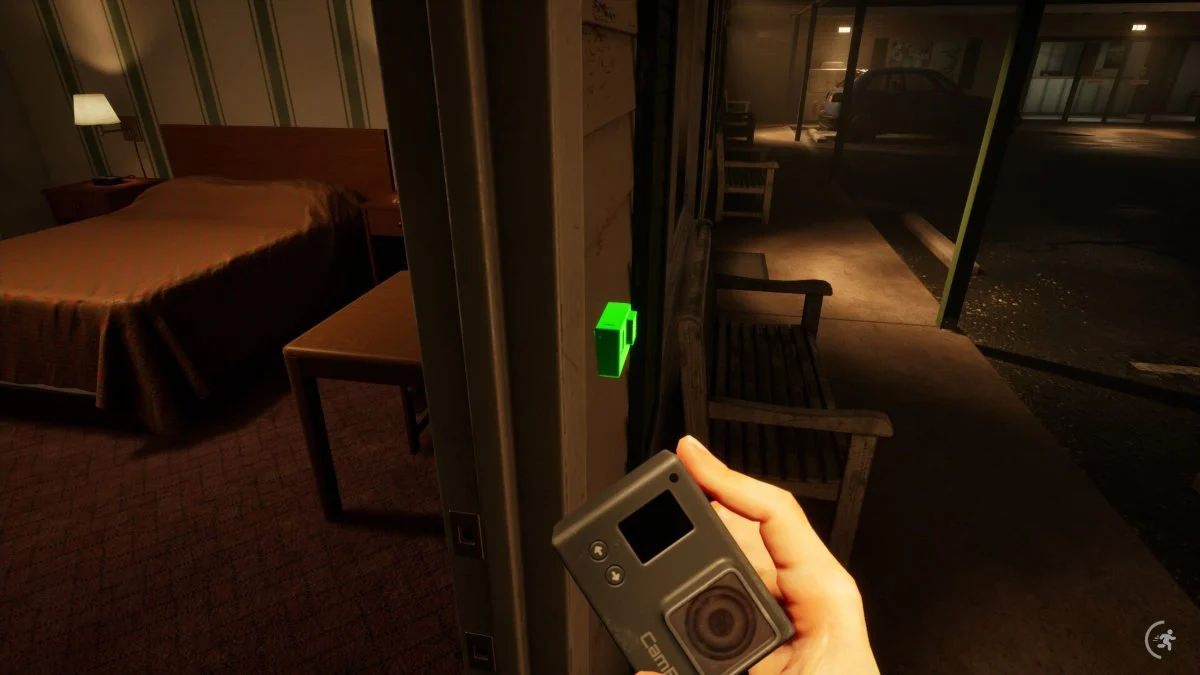
- GoCam (40 DOS): Complementing SecCam, the GoCam is a portable camera that can be deployed in designated "green spots" within the game environment. Footage from these cameras can then be viewed via SecCam, allowing for real-time monitoring of specific areas. Its "Medium" priority aligns with its role in expanding surveillance capabilities.
- Key Cue (100 DOS): For players facing significant hacking threats, Key Cue is an invaluable tool. It displays a small key icon in the A.N.N. browser when a "Key Hash" is present on a website. This allows for rapid identification of high-value targets or crucial information, contributing to its "High" unlock priority.
- Key Cue Plus (50 DOS): An enhancement to Key Cue, this upgrade causes the key icon to glow gold when a Key Hash is present on the currently viewed page. This provides an even more immediate and visually distinct alert, further cementing its "High" unlock priority for those focused on rapid information acquisition.
Resource Generation and Enhancement Software:
- NOP Sled (15 DOS): This utility offers a unique way to bypass hacking attempts entirely, using mouse scroll mechanics. Crucially, it does not consume a Backdoor Hack charge, making it an efficient tool for avoiding direct confrontation with digital adversaries. Its "High" unlock priority reflects its potent defensive capability.
- VM Grid Tier II (75 DOS) & VM Grid Tier III (250 DOS): These upgrades significantly expand the capabilities of VirtMesh. Tier II enhances access and increases the time players can remain mounted or mining on compromised computers, while Tier III offers even greater expansion. These are critical for maintaining a steady flow of DOS Coin and reducing the risk of being ejected from hijacked systems. Their "High" and "Medium" priorities respectively highlight their importance for long-term resource management.
- VM Mount Tier II (40 DOS) & VM Mount Tier III (85 DOS): These upgrades directly address the number of computers a player can simultaneously mount using VirtMesh. Tier II increases the limit from two to four, and Tier III further expands it to six. Maintaining a robust DOS Coin income is paramount, making these upgrades essential for sustained progress. Their "High" unlock priority is justified by their direct impact on resource generation.
- VM Crypto Miner (50 DOS): This software transforms a hacked computer on VirtMesh into a dedicated crypto miner, passively generating DOS Coin over time. While its unlock priority is listed as "Low," it represents a valuable passive income stream that can supplement active mining efforts.
Strategic Prioritization: Building a Resilient Defense
The initial hours of Welcome to the Game 3 are a race against time and a test of strategic foresight. While the core functionalities of VirtMesh, ShadowFetch, and A.C.R.S. form the bedrock of player interaction, a comprehensive understanding of other DarkDrop items is crucial for survival. The period between 9 PM and 10 PM is pivotal for establishing a robust perimeter of surveillance and bolstering online defenses.

The Backdoor Hack, despite its single-use nature, offers an immediate return on investment by turning an attacker’s attempt into a financial gain. Its low cost and the ability to quickly replenish DOS Coin through VirtMesh mining make it a highly efficient tool for early-game financial stability. Players should aim to acquire these early and often.

Investments in VirtMesh upgrades, specifically VM Mount and VM Grid, are not merely about expanding access but about ensuring a consistent and substantial flow of DOS Coin. The ability to simultaneously engage with multiple hijacked computers for both data acquisition and mining significantly reduces the risk of being caught off-guard and enhances the player’s economic resilience.
Motion Sensors are unequivocally a top priority, particularly for players aiming to survive encounters with specific antagonists like Lucas or Tanner. The ability to preemptively detect their presence and prepare accordingly can be the difference between survival and failure. Prioritizing the purchase of two sensors initially, and then acquiring more as resources permit, is a sound strategy. Placement is key; deploying them in vulnerable entry points or approach vectors, such as an alleyway or near the motel entrance, provides critical early warnings.

Finally, Key Cue and its enhanced variant, Key Cue Plus, are indispensable for players who lack a formidable defense against advanced hacking techniques. These tools enable players to efficiently identify and acquire "Key Hashes" – critical pieces of information or items within the game’s progression system. Upgrading this software promptly ensures players are always aware of high-priority targets, maximizing their efficiency in navigating the game’s challenges.
Broader Implications and Player Reactions
The intricate web of software and hardware available through the DarkDrop in Welcome to the Game 3 reflects a deliberate design choice by developers, Reflect Studios, to emphasize strategic planning and resource management. The tiered upgrade system encourages a long-term perspective, rewarding players who invest wisely in foundational tools before attempting to acquire more specialized or powerful items.

Player reactions, as observed in online communities and forums, often highlight the steep learning curve associated with mastering the DarkDrop. Early game frustration can stem from misallocating DOS Coin, leading to vulnerability. However, once players grasp the symbiotic relationship between VirtMesh mining, defensive software, and surveillance tools, a sense of empowerment and strategic mastery emerges. Discussions frequently revolve around optimal build orders for different playstyles, with some players prioritizing aggressive information gathering, while others focus on creating an impenetrable digital fortress.

The game’s narrative, which places players in a constant state of high alert due to both digital and physical threats, imbues each DarkDrop purchase with a sense of urgency. The developers have effectively created a feedback loop where successful navigation of threats leads to resource acquisition, which in turn enables greater survival capabilities. This cyclical progression is a core tenet of the game’s design, ensuring continuous engagement and a constant need for adaptation.

Conclusion: A Strategic Imperative
In the perilous digital landscape of Welcome to the Game 3, the DarkDrop is not merely a shop but a strategic battlefield. Every DOS Coin spent is an investment in survival, a calculated risk against the ever-present dangers. By understanding the function, cost, and unlock priority of each item, players can transcend the role of a mere victim and become a formidable architect of their own digital defense. Prioritizing essential tools like VirtMesh, ShadowFetch, A.C.R.S., Backdoor Hack, and Motion Sensors in the early game provides a solid foundation. Subsequent investments in VirtMesh upgrades, surveillance enhancements, and information-gathering tools like Key Cue will further solidify a player’s ability to not only survive but to thrive within the game’s dark and unforgiving world. Mastering the DarkDrop is, in essence, mastering the game itself.