



In the shadowy depths of the digital underworld simulated within "Welcome to the Game 3" (WTTG3), players are tasked with navigating a perilous landscape where time is a critical resource and every keystroke can have life-altering consequences. Developed by Reflect Studios, this installment introduces a complex web of mechanics designed to test players’ resourcefulness, strategic thinking, and nerve. The ultimate objective, as players are urged to discover, is to locate and secure elusive Key Hashes before their rivals, a race against the clock and the shadowy figures that inhabit this virtual Dark Net. This comprehensive guide delves into the core elements of WTTG3: the acquisition and protection of DOS Coins, the strategic cultivation of Reputation, the critical hunt for Key Hashes, and the ruthless elimination of competition, all while examining the new mechanics introduced by Reflect Studios.
The Digital Economy: Farming and Protecting DOS Coins
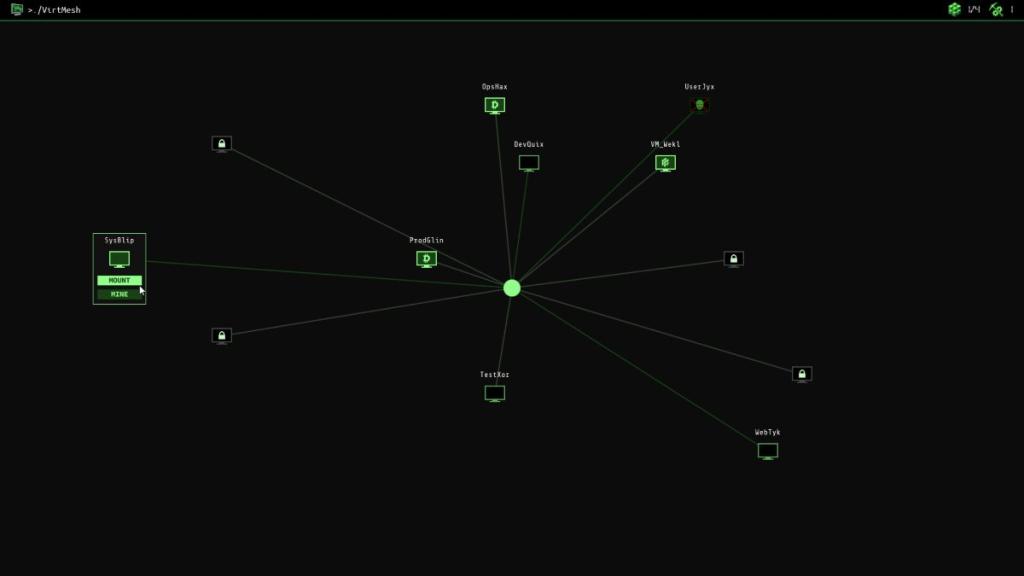
DOS Coins are the lifeblood of any successful endeavor within WTTG3, serving as the primary in-game currency. Their importance cannot be overstated, as they are instrumental in acquiring vital resources through DarkDrop and provide numerous opportunities to disrupt and hinder the progress of competing players. The most fundamental method for accumulating DOS Coins is through the VirtMesh application, a crucial early-game tool. VirtMesh allows players to either "mount" (hack into) or "mine" (extract) DOS Coins from networked computers. However, the digital landscape is dynamic, and prolonged engagement with any single compromised system is ill-advised. Mirroring the real-world risks of prolonged digital activity, staying on a hijacked computer indefinitely is not an option. VirtMesh enforces a rotation system, requiring players to shift between different machines for mining or mounting to prevent being locked out of a system.
The process of hijacking computers involves navigating the INJ3KT-R minigame. This involves a grid-based challenge where players must plot a path from point A to point B using arrow keys. The crucial rule is that the path must strictly alternate between light and dark tiles. Failure to adhere to this pattern will result in the immediate closure of access to that particular computer. Within the base network of VirtMesh, players are advised to prioritize mining from NetVorn (offering 1.45 DOS), UserJyx (offering 1.80 DOS), and WebTyk (offering 1.84 DOS) for optimal early returns. Beyond direct mining, DOS Coins can also be earned through the completion of in-game requests, a mechanic that will be explored further.

The acquisition of DOS Coins, however, is only half the battle. Protecting these digital assets from both in-game antagonists and rival players is paramount. The character Lucas, a persistent threat, will attempt to pilfer DOS Coins during his visits to the player’s motel. More significantly, rival players, eager to secure the Key Hashes first, will deploy hackers to steal accumulated funds.
To thwart Lucas’s attempts, players can employ a simple yet effective strategy: powering down their computer when his presence is detected at the back door. This can be achieved by interacting with the power button located in the bottom-left corner of the screen. The strategic placement of motion sensors can provide crucial early warnings, granting players sufficient time to shut down their systems before Lucas can initiate his theft. For those seeking a more direct counter, the NOP Sled utility can be used to bypass the security measures that might otherwise lead to coin loss.
Furthermore, WTTG3 introduces a mechanism for direct retaliation against competitors. By utilizing the A.C.R.S. (a simulated Dark Net communication platform), players can contract hackers to target specific rival players, thereby disrupting their financial stability. The consequences of a failed hack attempt are also significant. If a player attempts to hack a competitor who has a Backdoor installed, the intrusion can backfire, resulting in a deduction of DOS Coins from the attacker’s account. Conversely, a successful hack against an NPC without a Backdoor, or one that fails to defend against the intrusion, can result in the attacker seizing a portion of the victim’s DOS supply. This can critically impede a rival’s ability to purchase essential items from DarkDrop or hire the services of killers.
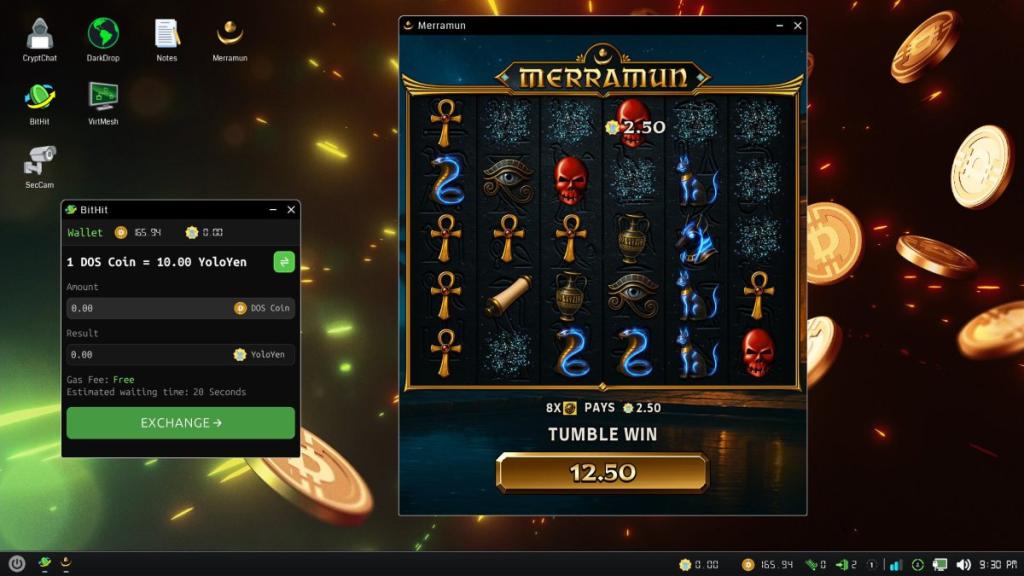
In more extreme scenarios, players can leverage their DOS Coins for high-stakes gambles. By converting DOS Coins into YoloYen via the BitHit exchange and then engaging with the gambling application, Merramun, players can potentially multiply their wealth. The subsequent conversion of winnings back to DOS Coins on BitHit offers a pathway to significant financial gains, albeit with inherent risks. This illustrates the multi-faceted economic system Reflect Studios has woven into WTTG3, where strategic investment and calculated risks are essential for survival and dominance.
Cultivating Influence: The Strategic Importance of Reputation (Rep)
Beyond monetary wealth, a player’s Reputation (Rep) serves as a crucial indicator of their standing within the Dark Net ecosystem. A higher Rep level unlocks access to more lucrative opportunities, enhances credibility with certain digital denizens, and can even influence the effectiveness of certain in-game actions. Two key applications, ShadowFetch and A.C.R.S., are instrumental in the strategic cultivation of Rep.
ShadowFetch’s primary function is to convert URLs into MP4 video files. These videos can then be disseminated to users contacted via A.C.R.S. The conversion process incurs a DOS Coin fee, necessitating a calculated approach; players should only expend resources on conversions when they are confident that the target user specifically requires the content.
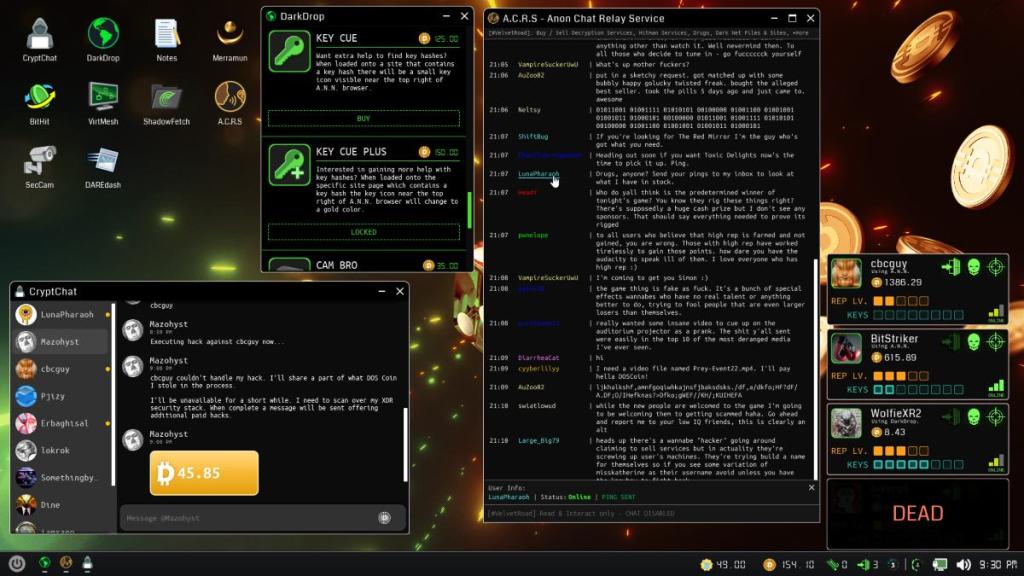
The most effective method for elevating one’s Rep level lies in the diligent completion of NPC requests found on A.C.R.S. This platform acts as a bustling global chat room, frequented by a diverse cast of characters including competitors, hackers, dealers, and various Dark Web inhabitants. A.C.R.S. can be analogized to a hub for "side quests" in a role-playing game. It’s important to note that the chat room resets every half hour. Therefore, players must actively "PING" any user whose request seems promising to ensure its continued availability. Successfully evading incoming hacks also contributes to a player’s Rep XP, reinforcing the importance of defensive capabilities.
While A.C.R.S. is generally a useful tool for managing various interactions, including dealing with figures like "Cletus," the most valuable opportunities are the requests for video files. To fulfill these, players must first locate Fetch URLs on the Dark Net. These URLs are then converted into downloadable MP4 files using ShadowFetch. Subsequently, these video files can be sold for both DOS Coins and Rep.
NPCs will often request specific website URLs or video content. The Dark Wiki serves as a primary resource for uncovering such information. Even if direct access to a particular website is blocked by network restrictions, players can still copy and paste the relevant URL. The A.C.R.S. chat room is a critical hunting ground for identifying and fulfilling these requests. Any dealer whose Rep level aligns with the player’s, or any user seeking URLs, videos, or offering jobs, can be selected via their username. Pinging them will initiate a private messaging session on CryptChat, facilitating direct communication and transaction. This intricate network of applications and communication channels underscores Reflect Studios’ commitment to creating a deep and interconnected in-game world.
The Hunt for Truth: Locating and Decrypting Key Hashes
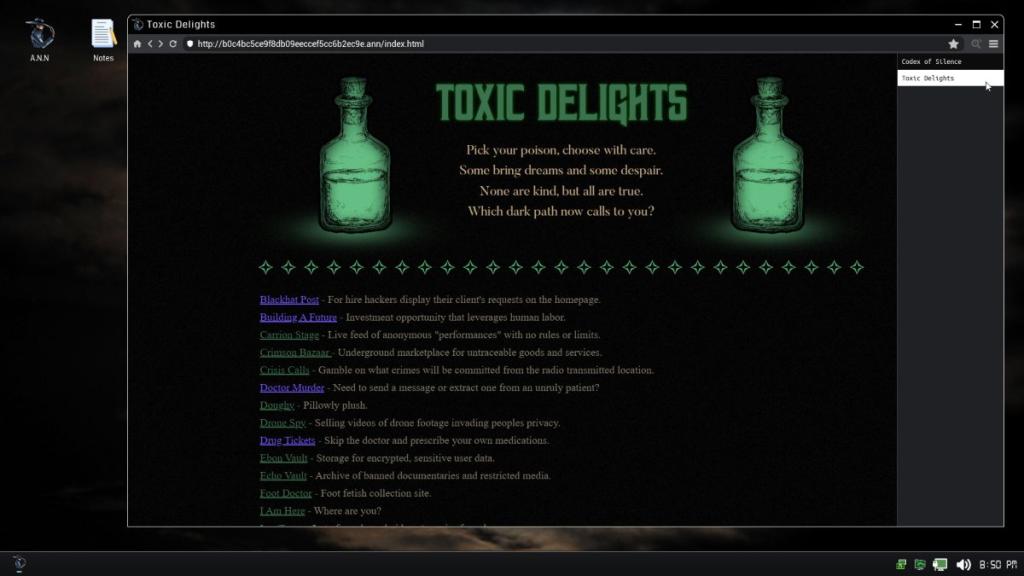
The ultimate objective in WTTG3 is the acquisition of eight unique Key Hashes. This pursuit necessitates a systematic exploration of the Dark Net, uncovering additional Dark Wikis that serve as gateways to new websites and potential Key Hash locations. Wiki pages typically manifest as ".ann" URLs, which can be directly copied and pasted into the A.N.N. browser to access a curated list of websites. This journey is not solitary; four other players are concurrently engaged in the same race, transforming the task into a high-stakes competition against both the clock and other ambitious Dark Net navigators.
The spawn points for Keys are randomized at the commencement of each new game. Websites can be categorized as either perpetually open, time-sensitive, or completely inaccessible. Understanding these characteristics is crucial to avoid wasting valuable time. Keys themselves can appear in plain sight, often denoted by a number between one and eight, followed by a random alphanumeric string.
When a Key is concealed behind page elements, players must employ a multi-pronged approach to reveal it. Hovering over letters and images can sometimes expose hidden Keys. A more direct method involves inspecting the page’s source code by utilizing the magnifying glass icon in the top-right corner of the A.N.N. browser. On a standard webpage, hovering directly over a hidden Key Hash will make the cursor clickable, indicating its presence. Within the Source Code Viewer, Key Hashes are displayed in their entirety, providing a definitive method for identification.
A significant departure from previous iterations of the "Welcome to the Game" series is the requirement for decryption. In WTTG3, merely finding a Key Hash is insufficient. Players must then engage an agent within A.C.R.S. to decrypt the found Hash, a service that comes at a cost in DOS Coins. This adds another layer of resource management and strategic decision-making to the core objective.
The Gauntlet of Security: Blocking and Deploying Hacks
As the simulated clock ticks towards 9:30 PM, players can anticipate the commencement of a relentless barrage of hacks. These digital assaults are designed to disrupt operations, steal resources, and increase player vulnerability. The intensity and sophistication of these hacks are expected to escalate as the game progresses, reflecting the increasing desperation and investment of opposing players aiming to sabotage the player’s progress and potentially orchestrate assassination attempts.
The nature of these hacks varies, each presenting a unique challenge. For instance, the Tokenine minigame, often encountered during hack attempts, requires players to defend their systems through a series of intricate puzzles or rapid response sequences. Successfully defending against these intrusions not only safeguards the player’s current assets but also contributes to their Rep XP, as previously mentioned. Conversely, failed defense can lead to the loss of DOS Coins, data corruption, or even direct threats to the player’s in-game avatar. The developers at Reflect Studios have clearly invested significant effort in creating a dynamic and challenging threat landscape, forcing players to constantly adapt and fortify their digital defenses. The temporal aspect of these hacks, initiating at a specific in-game time, adds a sense of urgency and necessitates proactive preparation.
Eliminating the Opposition: Ruthless Tactics and Competitive Dominance
In the cutthroat environment of WTTG3, simply surviving is often not enough. To secure victory, players may find it necessary to actively eliminate their competition. This can be achieved through various means, with one of the most potent being the orchestration of killer attacks.
Players can identify and contact specific users on A.C.R.S. who specialize in doxxing (revealing personal information) rival players. Following a successful doxxing operation, the player must then secure the services of another contact capable of dispatching a hit, utilizing the gathered doxxing information. While this strategy is among the most expensive within the game, its effectiveness in removing persistent rivals, particularly in the late stages of a challenging playthrough, can be invaluable. This facet of the game highlights the ethical grey areas and high-stakes decisions players are forced to make, mirroring the darker themes often associated with the Dark Net. The developers’ inclusion of such extreme measures underscores the unforgiving nature of the WTTG3 experience, where alliances are fragile and betrayal is a constant possibility. The ability to leverage the criminal elements of the simulated Dark Net against other players adds a layer of strategic depth that goes beyond mere technical proficiency.
The introduction of these multifaceted mechanics – a robust digital economy, a dynamic reputation system, a challenging information-gathering objective, and aggressive competitive interactions – positions "Welcome to the Game 3" as a significant evolution in the series. Reflect Studios has crafted an immersive and demanding experience that requires players to master not only the technical aspects of navigating the Dark Net but also the psychological and strategic elements of survival and dominance in a world where every decision carries weighty consequences. The game’s intricate design encourages a constant state of vigilance, adaptation, and calculated risk, ensuring that players who seek to become true Dark Net masters will find a deeply engaging and challenging journey ahead.