



The digital shadows of Welcome to the Game 3 beckon players into a high-stakes race against time and competitors to unearth crucial "Key Hashes." This intricate underworld simulation, developed by Reflect Studios, introduces a complex web of mechanics that demand strategic resource management, shrewd navigation of the Dark Net, and proactive defense against ever-present threats. This guide aims to demystify the core gameplay loops of farming vital DOS Coins, building reputation, locating elusive Key Hashes, and ultimately outmaneuvering rivals in this demanding virtual environment.
The Pillars of Survival: DOS Coins and Reputation
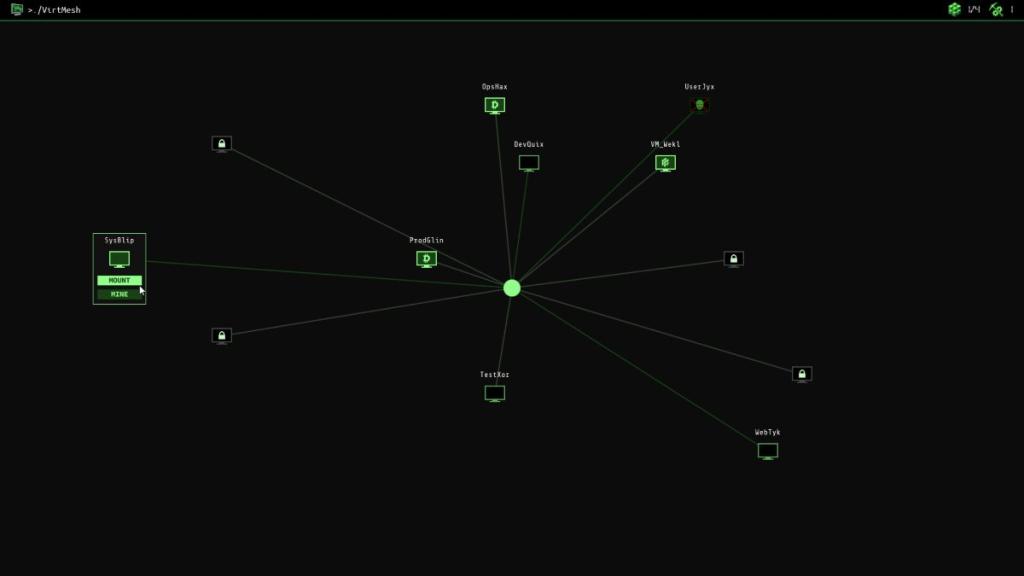
At the heart of a player’s progression in Welcome to the Game 3 lies the acquisition and strategic deployment of DOS Coins. These digital tokens serve as the primary currency, underpinning almost every significant action within the game, from acquiring essential tools to hindering opponents. The most fundamental method for accumulating DOS Coins is through the VirtMesh application. This digital marketplace allows players to either "mount" computers by hacking into them or directly "mine" them for their coin reserves.

The VirtMesh system operates on a principle of impermanence, mirroring the transient nature of the Dark Net itself. Players cannot remain connected to a single hijacked computer indefinitely. To prevent lockout and ensure a continuous stream of income, frequent rotation between different machines is paramount. This dynamic necessitates a constant vigil and an understanding of the underlying network architecture to identify optimal mining and mounting opportunities.
The hacking mechanic within VirtMesh, known as INJ3KT-R, presents a unique challenge. Players must successfully navigate a grid-based puzzle, plotting a path from a starting point (A) to an endpoint (B). The crucial rule is that the path must strictly alternate between light and dark tiles. Failure to adhere to this pattern results in immediate access denial to the targeted computer, underscoring the importance of precision and pattern recognition. Within the initial VirtMesh network, specific nodes like NetVorn (offering 1.45 DOS), UserJyx (1.80 DOS), and WebTyk (1.84 DOS) are identified as particularly lucrative for mining. Beyond direct mining, DOS Coins can also be obtained through completing various in-game requests, a mechanism that further intertwines resource acquisition with player interaction and objective completion.
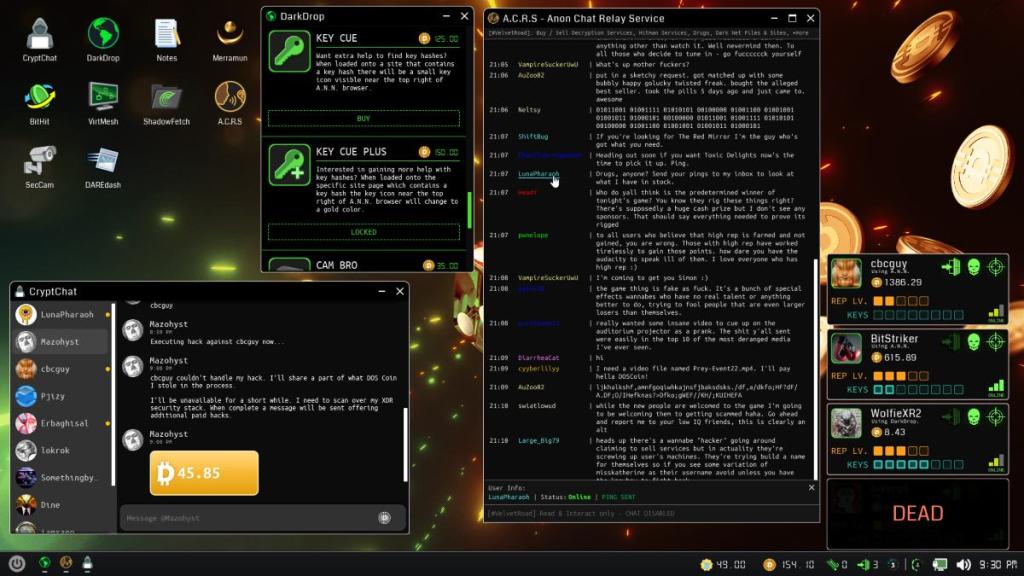
Complementing the economic foundation is the concept of Reputation (Rep). Building a robust reputation is crucial for unlocking more advanced interactions and opportunities within the game’s ecosystem. Two key applications facilitate this: ShadowFetch and A.C.R.S. (Advanced Communication and Reporting System). ShadowFetch allows players to convert Universal Resource Locators (URLs) into MP4 video files. These videos can then be utilized on A.C.R.S. to engage with other users. While this conversion incurs a DOS Coin cost, it is a strategic investment, particularly when targeting users who are actively seeking specific content.
The most effective method for bolstering Rep levels involves actively engaging with NPC requests found on A.C.R.S. This platform functions as a dynamic hub, frequented by competitors, hackers, dealers, and other Dark Net denizens. Treating A.C.R.S. as a virtual quest board is highly advisable. The chat room undergoes a reset every thirty minutes, emphasizing the need for timely engagement. "Pinging" users of interest ensures their requests remain active and visible. Furthermore, successfully evading incoming hacks also contributes to a player’s Rep experience points, reinforcing the importance of defensive capabilities.
NPCs often solicit specific website URLs and video content. The Dark Wiki serves as a primary resource for identifying these targets, even when direct network access is restricted. Copying and pasting URLs from blocked sites into the A.N.N. (Advanced Network Navigator) browser allows players to discover new websites and potential leads. The A.C.R.S. chat room becomes a critical hunting ground for these requests. Dealers matching a player’s Rep level or users explicitly seeking URLs, videos, or offering tasks can be identified by their usernames. Initiating private messages through CryptChat allows for direct negotiation and task execution.
Navigating the Perilous Depths: Finding Key Hashes and Managing Threats
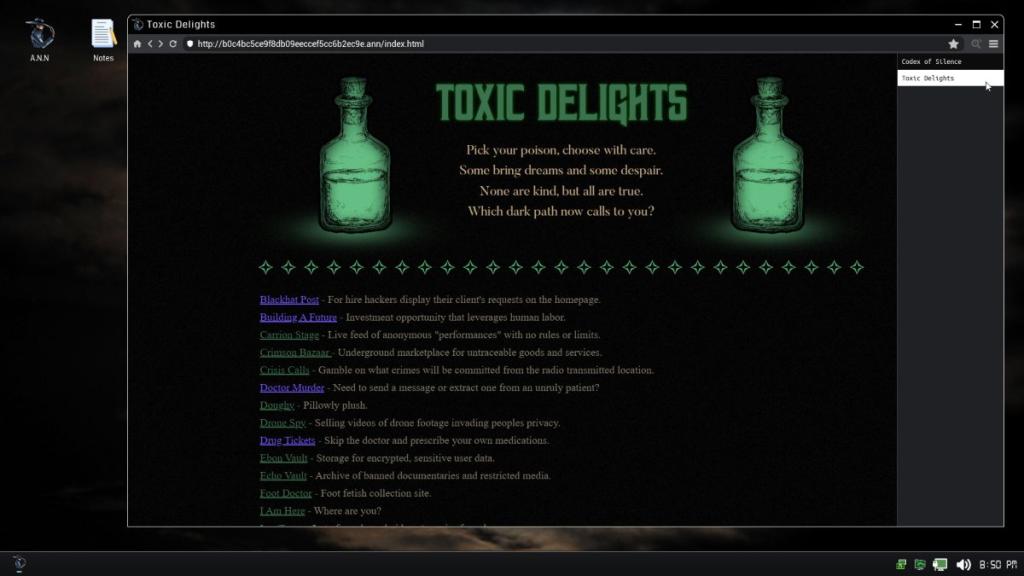
The ultimate objective in Welcome to the Game 3 is the discovery and decryption of eight crucial Key Hashes. This quest necessitates extensive exploration of the Dark Net, with players constantly searching for additional Dark Wikis that host potential Key Hashes. These wikis typically manifest as ".ann" URLs, which, when entered into the A.N.N. browser, reveal new lists of websites. The competitive nature of the game is amplified by the presence of four other players actively pursuing the same goal, transforming the search into a multi-faceted race against both the clock and human adversaries.
Key Hashes are procedurally generated at the start of each new game, adding an element of unpredictability. Websites can be openly accessible, subject to time limits, or completely inaccessible, demanding a flexible and adaptive search strategy. Keys themselves can appear in various forms: a visible number from one to eight, followed by a random alphanumeric string. When a Key is concealed behind page elements, players must employ careful hovering over letters and images. Accessing the source code via the magnifying glass icon in the A.N.N. browser’s top-right corner is another crucial method for uncovering hidden Keys. Within the source code, Key Hashes are presented in their full, unencrypted form.
A significant departure from previous installments, Welcome to the Game 3 requires players not only to find the Keys but also to have them decrypted by an agent within A.C.R.S., a service that incurs a fee. This adds an additional layer of resource management and strategic planning to the endgame.
The Dark Net is not merely a place of discovery; it is a landscape rife with danger. Hacks represent a constant threat, typically commencing around 9:30 PM in-game time. These attacks escalate in intensity as the game progresses, reflecting the increasing willingness of opponents to invest resources in disrupting player progress and even orchestrating assassination attempts. Players must develop robust defensive strategies to counter these digital assaults.
One of the primary concerns for players is the protection of their accumulated DOS Coins. Both the persistent antagonist, Lucas, and competing players pose significant threats. Lucas will attempt to pilfer DOS Coins whenever he visits the player’s motel. The most effective countermeasure is to quickly shut down the computer upon hearing his approach, accessible via the power button in the bottom-left corner of the screen. The strategic placement of motion sensors can provide early warnings, granting players sufficient time to secure their systems. The NOP Sled tool offers an alternative, allowing players to bypass the mini-game associated with preventing Lucas’s theft.
Competitors, conversely, employ hackers to steal money. The A.C.R.S. platform offers a means of retaliation. Players can hire hackers to target specific rivals, disrupting their operations and potentially siphoning their DOS Coin reserves. This aggressive tactic, however, carries inherent risks. If a competitor has a "Backdoor" installed, an unsuccessful hack attempt will backfire, resulting in a DOS Coin deduction from the attacker’s account. Conversely, a successful hack against an unprepared NPC can yield a portion of their DOS supply, setting them back considerably in their own pursuits.
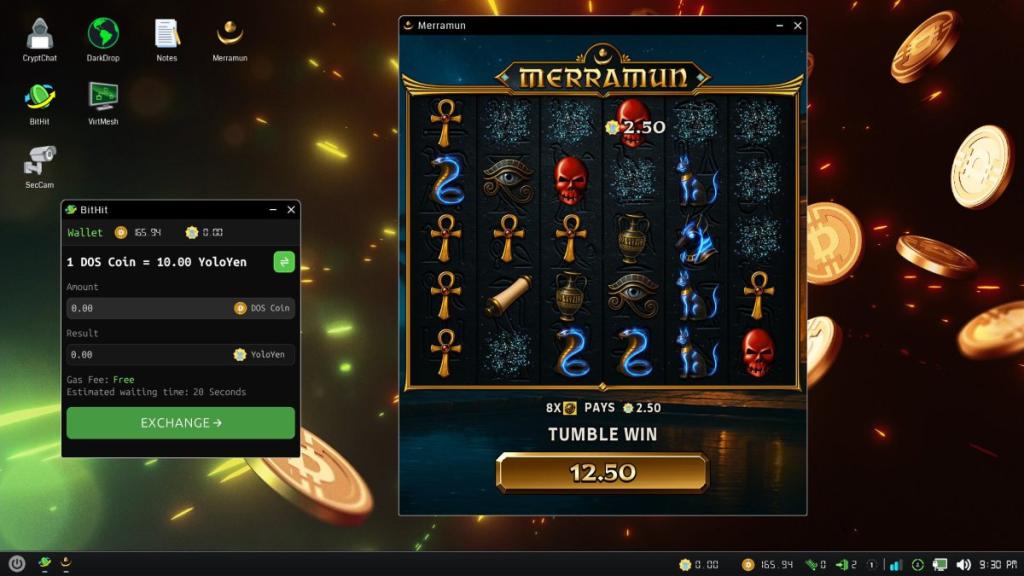
In more extreme scenarios, players can leverage Merramun, a gambling application accessible through the BitHit platform. By converting DOS Coins into YoloYen, players can engage in high-stakes gambling, with the potential to convert winnings back into DOS Coins for a profit. This high-risk, high-reward strategy can be a volatile but effective method for rapid wealth accumulation.
The Escalation of Conflict: Taking Down the Competition
Beyond passive defense and resource management, Welcome to the Game 3 allows for direct offensive actions against competitors. In certain critical junctures, particularly as the game approaches its conclusion, players may need to dispatch a killer to a rival’s location. This process involves engaging with users on A.C.R.S. to facilitate a "doxxing" operation, gathering sensitive information about the target. Subsequently, another contact is employed to leverage this information and initiate a "hit." This represents one of the most resource-intensive but potentially game-altering strategies available to players, offering a decisive advantage in the final stages of the competition.
The introduction of these advanced offensive and defensive mechanics, coupled with the intricate resource management and exploration elements, positions Welcome to the Game 3 as a deeply strategic and immersive experience. Reflect Studios has clearly aimed to evolve the series by layering these complex systems, demanding a holistic approach from players who wish to master the intricacies of the Dark Net and emerge victorious. The game’s design encourages a constant state of learning and adaptation, rewarding those who can effectively balance economic growth, reputational advancement, threat mitigation, and aggressive pursuit of the ultimate objective: the acquisition and decryption of the elusive Key Hashes.