


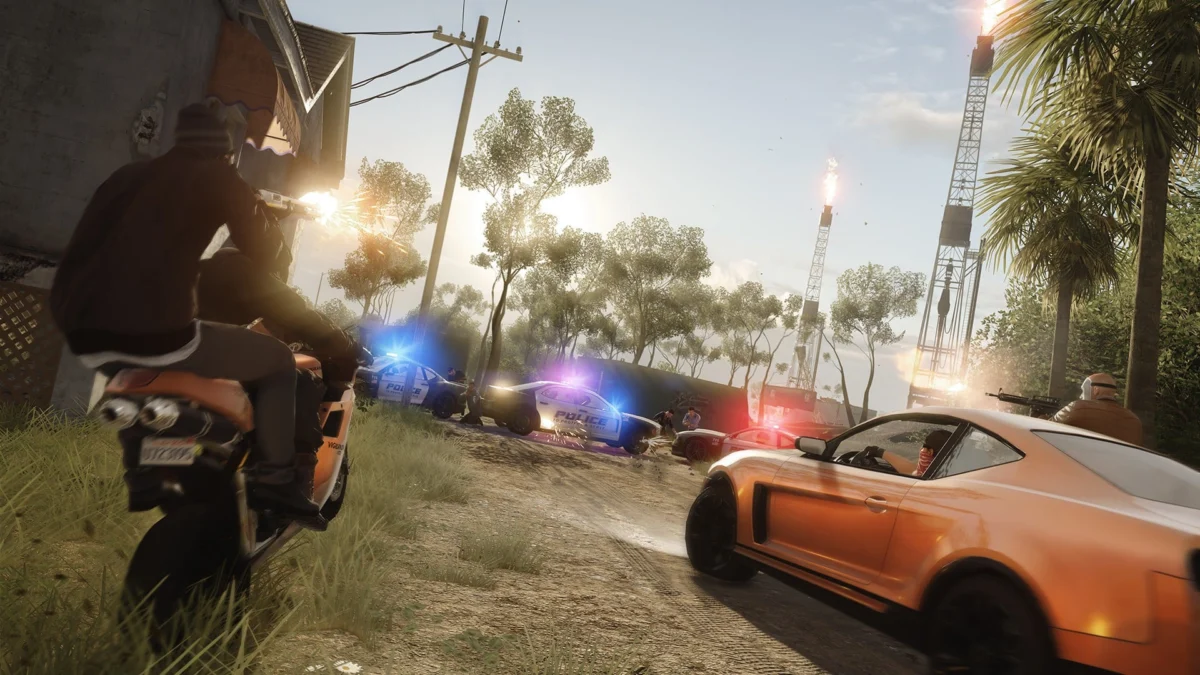
Electronic Arts (EA) has officially announced the impending delisting and server shutdown for its 2015 shooter, Battlefield Hardline, specifically impacting the Xbox One and PlayStation 4 versions of the game. This decision marks a significant milestone in the lifecycle of the title, which ventured into a unique "cops and robbers" thematic departure for the long-running Battlefield franchise. Players will no longer be able to purchase the game digitally on these platforms after May 22nd, 2026, with online multiplayer services ceasing just one month later, on June 22nd, 2026. The move underscores the challenges of long-term support for older online-centric games in an evolving digital landscape, prompting discussions around game preservation, digital ownership, and the lifecycle management of a vast game library by major publishers.
The announcement, initially disseminated through official channels and subsequently highlighted by community platforms, details a clear two-phase process for the game’s sunset. As of Friday, May 22nd, 2026, Battlefield Hardline on Xbox One and PlayStation 4 will be entirely removed from their respective digital storefronts. This delisting encompasses not only the base game but also all associated downloadable content (DLC) and extra related content, rendering it unavailable for new digital purchases. Following this, on Monday, June 22nd, 2026, the online multiplayer servers for these platforms will be permanently shut down. While the online functionality will cease, EA has confirmed that players who already own the game will still be able to access and play the single-player campaign component, ensuring that at least a portion of the game remains playable offline.
This impending shutdown does not affect all versions of Battlefield Hardline equally. The PC release of the game is notably exempt from this announcement, meaning its digital availability and online servers are currently slated to continue operating beyond June 2026. Conversely, the older generation versions, specifically for Xbox 360 and PlayStation 3, have already been delisted from digital storefronts and had their online services discontinued at an earlier, unspecified date, indicating a phased approach to the game’s retirement across different platforms.
A Unique Entry in the Battlefield Saga: The Genesis of Hardline
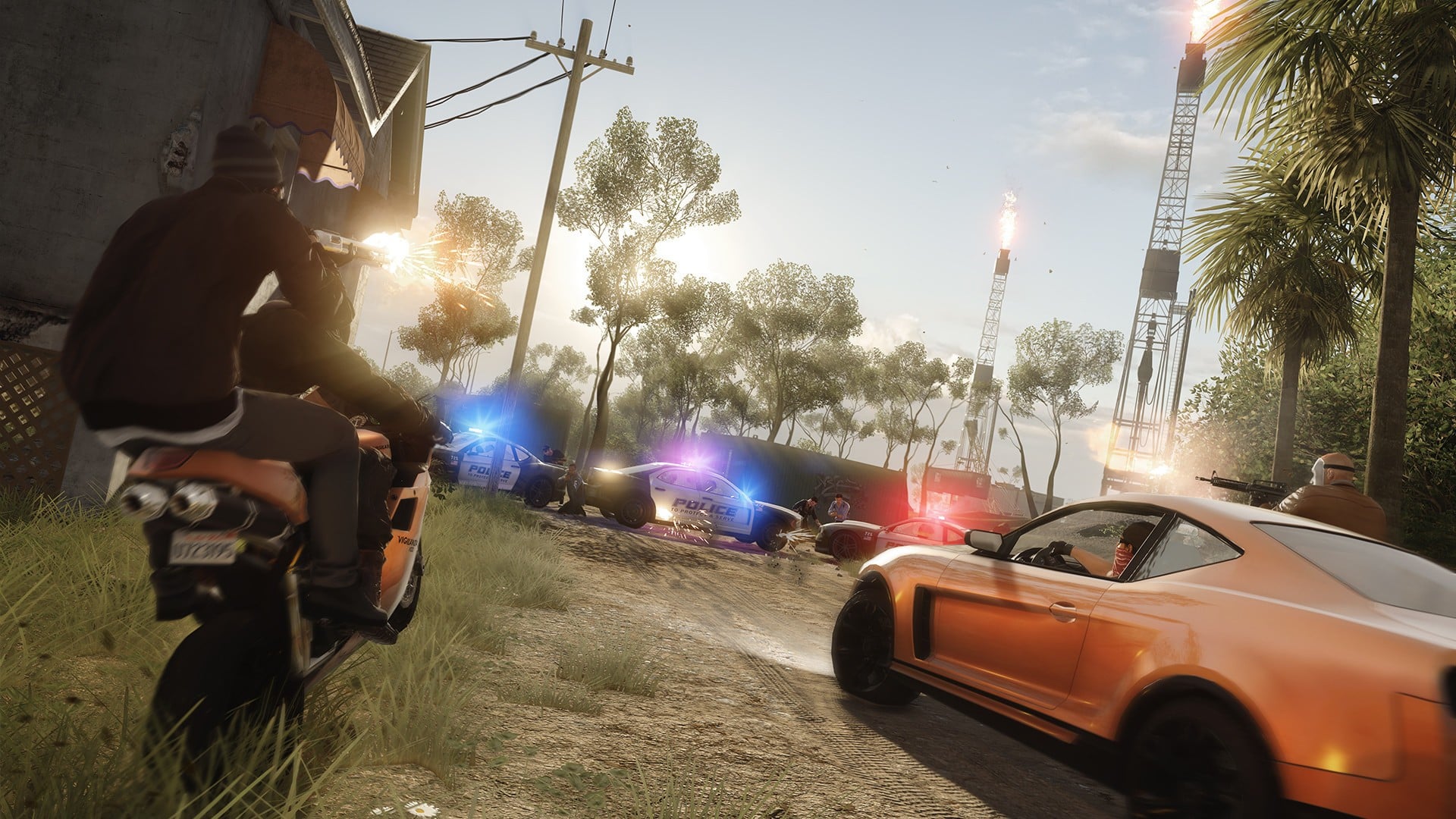
Battlefield Hardline was released globally in March 2015, representing a significant strategic pivot for the Battlefield series, traditionally known for its large-scale military conflicts. Developed by Visceral Games, the studio acclaimed for the Dead Space series, in collaboration with the franchise’s perennial developer, DICE, Hardline sought to inject fresh thematic blood into the established formula. Its premise revolved around a dramatic "cops and robbers" narrative, offering a distinct departure from the conventional warfare settings of its predecessors, Battlefield 3 and Battlefield 4. The game featured a single-player campaign that followed detective Nick Mendoza through a story of betrayal and revenge, alongside a robust multiplayer suite that introduced new modes tailored to its law enforcement and criminal themes, such as "Heist," "Blood Money," and "Hotwire."
Upon its launch, Battlefield Hardline garnered a mixed reception from critics and players alike. While many praised Visceral Games for attempting an innovative spin on the Battlefield experience, particularly commending its engaging single-player narrative and the fresh dynamic of its multiplayer modes, others found it to be a deviation too far from the core Battlefield identity. Concerns were raised about the scale of its maps, the pacing of its combat, and its perceived lack of the signature "Battlefield moments" that fans had come to expect. Despite these varying opinions, the game did achieve commercial success, reportedly selling 1.4 million units in its first week in the UK, although precise global sales figures over its lifetime have not been consistently published by EA.
The Lifecycle of a Digital Game: Economic Realities and Technical Challenges
The decision to delist Battlefield Hardline and shut down its servers is not an isolated incident but rather a common occurrence in the modern gaming industry, particularly for titles that are several years old and heavily reliant on online infrastructure. Major publishers like EA routinely evaluate the viability of maintaining servers for their older titles. Several factors typically influence such decisions:
- Declining Player Base: Over time, the active player count for most online multiplayer games naturally dwindles as newer titles are released and player preferences shift. Maintaining servers for a very small user base becomes economically inefficient.
- Maintenance Costs: Running and supporting online servers involves significant ongoing costs, including server hosting, bandwidth, cybersecurity, and technical staff.
- Technical Obsolescence: Older game engines and network architectures can become challenging to maintain and secure against modern threats, or may become incompatible with updated operating systems and hardware.
- Resource Allocation: Publishers often prefer to reallocate development and support resources towards newer, actively supported titles or upcoming releases that generate more revenue and engagement.
- Licensing Agreements: In some cases, third-party licenses for music, intellectual property, or middleware used in a game may expire, making it legally problematic to continue selling the game digitally. While not explicitly cited for Hardline, this is a frequent cause for delistings.
EA, in particular, has a history of sunsetting older online titles. This includes other games within its extensive portfolio, such as various FIFA installments, Mass Effect 3‘s multiplayer, and other Battlefield titles from earlier generations. These actions reflect a broader industry trend where the "games as a service" model, while extending a game’s lifespan, also inherently ties its full functionality to the publisher’s ongoing support, which is not infinite.
Visceral Games and the End of an Era
The impending shutdown of Battlefield Hardline servers carries an additional layer of poignancy given the fate of its primary developer, Visceral Games. In October 2017, just over two years after Hardline‘s release, Electronic Arts announced the closure of Visceral Games. The studio had been working on a highly anticipated Star Wars game, codenamed "Project Ragtag," which was ultimately cancelled. EA cited a need to "pivot the design" of the game to a "broader experience that allows for more variety and player agency," indicating a shift away from Visceral’s traditional single-player, linear narrative strengths towards a more open-ended, "games as a service" model that EA was increasingly favoring. The closure of Visceral Games meant that Battlefield Hardline stands as one of the studio’s final completed projects, making its server shutdown not just the end of a game’s online life but also a quiet coda to a developer’s legacy.
The Digital Preservation Conundrum
The delisting and server shutdown of Battlefield Hardline reignites the ongoing debate surrounding digital game preservation and the implications for digital ownership. In an era where physical media is becoming less prevalent, and digital storefronts serve as the primary distribution channel for games, the concept of "owning" a game has become increasingly nuanced. When a game is delisted, it disappears from digital storefronts, meaning new players cannot purchase it. When servers shut down, the online components of games become unplayable, often rendering significant portions of the experience inaccessible, even for those who already own the title.

For Battlefield Hardline, the continued availability of its single-player campaign offers a partial reprieve, allowing those who possess the game to still experience its narrative. However, the loss of multiplayer functionality means that a substantial part of the game’s intended design and replayability—the dynamic, player-versus-player engagements—will be permanently lost. This raises critical questions for consumers: What does it mean to purchase a digital license for a game if its full functionality can be revoked at the publisher’s discretion? And for future generations of players and researchers, how will games that are entirely dependent on online servers be preserved or even understood when those servers are no longer operational? Initiatives by academic institutions, libraries, and fan communities often attempt to archive games, but official server shutdowns present a formidable barrier to preserving the complete, authentic experience of online-centric titles.
Community Sentiment and Final Opportunities
The announcement of server shutdowns typically elicits a range of reactions from the gaming community. For long-time fans, there’s often a sense of nostalgia and disappointment at the impending loss of a beloved online space. For others, particularly those who may have only recently discovered the game through subscription services like Xbox Game Pass or EA Play, it represents a missed opportunity to fully experience a title before its online components are retired. There’s also an element of pragmatic understanding, with many players acknowledging the business realities that drive such decisions.
Currently, Battlefield Hardline remains accessible to subscribers of Xbox Game Pass Ultimate and PC Game Pass through the EA Play program. This offers a window of opportunity for curious players to experience the game’s full functionality before its online services are retired. Furthermore, the game’s retail price on the Xbox Store has seen significant reductions over the years, currently listed at £14.99 / $19.99 at full price. Historically, EA has sometimes offered deep discounts on games prior to their delisting or server shutdown as a final farewell gesture. The community, therefore, holds a hopeful expectation that Battlefield Hardline might see a final "lowest ever price" discount, potentially bringing it down to figures like £0.74 / $0.99, allowing more players to acquire the single-player campaign for preservation or to experience its online modes one last time.
Looking Ahead: The Future of Legacy Titles
The delisting and server shutdown of Battlefield Hardline serves as a stark reminder of the finite lifespan of online games. As the gaming industry continues to embrace digital distribution and "games as a service" models, the preservation of these experiences becomes an increasingly complex challenge. Publishers face the economic realities of maintaining infrastructure for dwindling player bases, while consumers grapple with the implications for their digital purchases.
This event underscores the enduring value of robust single-player experiences, which remain accessible regardless of server status. It also highlights the critical role of platforms like Xbox Game Pass and EA Play in providing access to a broad library of games, albeit with the understanding that even these services cannot indefinitely guarantee the full functionality of every title. As technology advances and gaming libraries expand, the industry, preservationists, and players will continue to navigate the intricate balance between innovation, accessibility, and the enduring legacy of digital entertainment.