


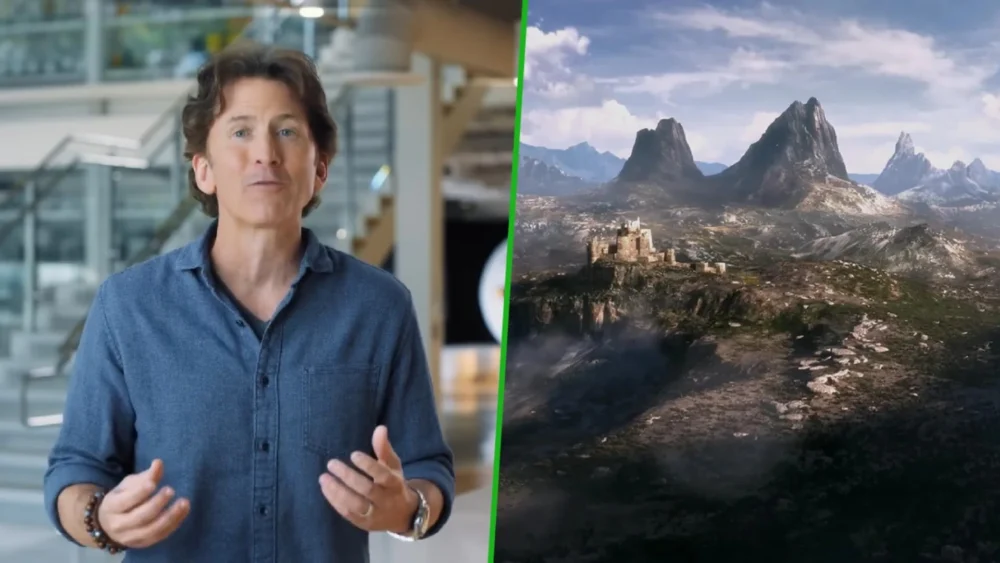
Bethesda Game Studios has confirmed a significant shift in its internal development priorities, moving the majority of its creative and technical resources toward the production of The Elder Scrolls VI. In a recent detailed discussion regarding the studio’s current trajectory, Todd Howard, Bethesda’s Executive Producer, revealed that the project has reached a critical internal milestone, signaling a transition from pre-production and conceptualization into a more robust phase of active development. This update comes as the studio seeks to return to the "classic" role-playing game (RPG) structure that defined its earlier successes, following what Howard described as "creative detours" with more recent titles such as Fallout 76 and Starfield.
A Return to the Classic Bethesda Formula
The development philosophy for The Elder Scrolls VI appears to be a direct response to both internal reflections and external player feedback regarding the studio’s recent output. For over two decades, Bethesda Game Studios established a reputation for a specific style of open-world exploration—one characterized by dense, handcrafted environments, non-linear storytelling, and a high degree of player agency within a singular, contiguous landmass.
Speaking on the Kinda Funny Gamescast, Howard acknowledged that while Starfield and Fallout 76 allowed the team to experiment with different mechanics—specifically multiplayer infrastructure and procedural planetary generation—the studio is eager to return to the fundamental design pillars of the Elder Scrolls franchise. Howard noted that the team missed the specific "style" of exploration found in titles like The Elder Scrolls V: Skyrim and Fallout 3. This "classic" style emphasizes a more traditional, grounded sense of discovery where players navigate a curated world, encountering environmental storytelling and interconnected questlines that feel integral to the geographical landscape.
The pivot suggests that The Elder Scrolls VI will likely eschew the vast, segmented exploration model used in Starfield, which relied on fast travel between discrete planetary locations, in favor of the seamless, province-based exploration that made Skyrim a cultural phenomenon.
Technical Evolution: Transitioning to Creation Engine 3
Central to the development of The Elder Scrolls VI is the evolution of Bethesda’s proprietary technology. Howard confirmed that the studio is moving to "Creation Engine 3" for the upcoming fantasy epic. This marks a rapid progression in the studio’s technical stack; Starfield was the debut title for Creation Engine 2, which featured significant upgrades to lighting, character animation, and physics.
The move to Creation Engine 3 indicates that Bethesda is tailoring its software to meet the specific demands of a next-generation Elder Scrolls experience. While specific technical specifications remain under wraps, industry analysts suggest that the new engine will likely focus on improving "world persistence"—the ability of the game to remember the state of thousands of individual items—and enhancing the AI systems that govern non-player character (NPC) behavior.
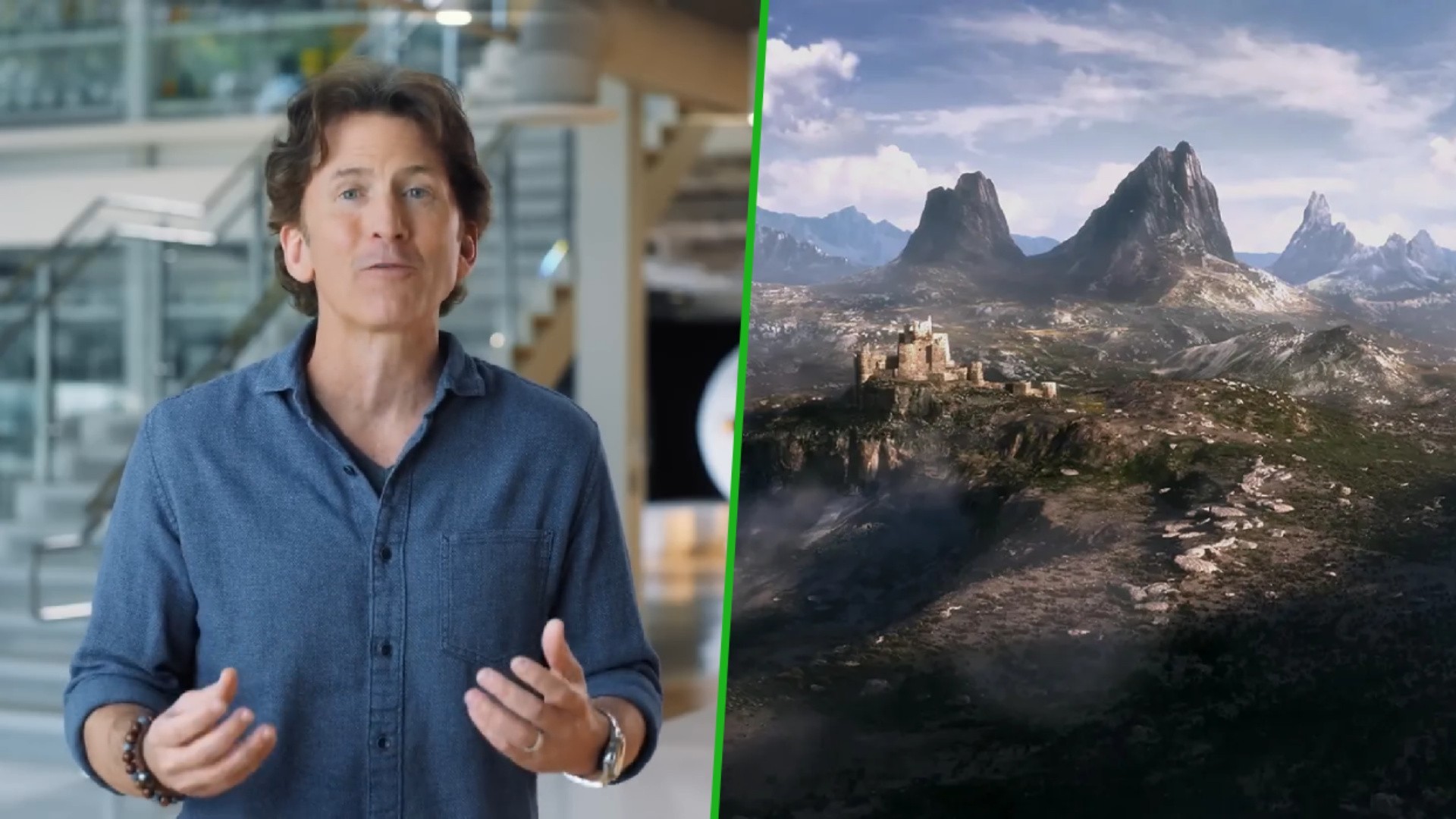
Howard stated that the team is "happy with where we’ve pushed the technology," noting that the engine’s current state allows the game to be in a playable form internally. Passing a "big milestone" suggests that the core systems of the game—combat, movement, and world interaction—are now sufficiently integrated to allow for full-scale content creation.
Chronology of Development: The Long Road Since 2018
The journey toward The Elder Scrolls VI has been one of the longest in modern gaming history. The title was officially announced with a brief teaser trailer at E3 2018, a move Howard later admitted was intended to reassure fans that the studio remained committed to single-player RPGs despite the then-imminent launch of the multiplayer-focused Fallout 76.
Since that announcement, the timeline of Bethesda Game Studios has been defined by three major phases:
- The Fallout 76 Era (2018–2020): Following a tumultuous launch, a significant portion of the studio was dedicated to the "Wastelanders" update and ongoing live-service support to stabilize the title.
- The Starfield Push (2020–2023): With the acquisition of ZeniMax Media (Bethesda’s parent company) by Microsoft for $7.5 billion in 2021, Starfield became a flagship title for the Xbox ecosystem. The vast majority of Bethesda’s 450-plus employees were focused on completing this new IP.
- The Shift to The Elder Scrolls VI (2023–Present): Following the September 2023 release of Starfield and its subsequent updates, the studio has successfully migrated the bulk of its workforce back to the land of Tamriel.
This chronology highlights the "one game at a time" approach Bethesda has historically favored, though the studio has grown significantly in size and now utilizes multiple satellite offices and external partners to manage its workload.
Resource Allocation and Studio Dynamics
The scale of The Elder Scrolls VI requires a massive mobilization of talent. Howard confirmed that the "majority" of the main studio is now focused on the project. This is supplemented by "some of our partners," which likely includes support studios such as those within the Xbox Game Studios publishing wing or external outsourcing firms that have assisted on previous Bethesda titles.
This resource shift does not mean Starfield has been abandoned. A dedicated team remains assigned to the space RPG to develop the "Shattered Space" expansion and provide ongoing technical updates. However, the "center of gravity" for Bethesda’s creative leadership, including lead designers and programmers, has clearly moved to the next Elder Scrolls entry.
The involvement of Microsoft’s infrastructure is also a critical factor. As a first-party Xbox title, The Elder Scrolls VI has access to the Advanced Technology Group (ATG) at Microsoft, which assists with optimization for Xbox Series X|S consoles and Windows PC hardware. This partnership is expected to help the studio navigate the complexities of the Creation Engine 3 transition.

Industry Implications and Market Expectations
The pressure on Bethesda Game Studios to deliver a landmark experience is immense. The predecessor, The Elder Scrolls V: Skyrim, has sold over 60 million copies since its 2011 release, making it one of the best-selling video games of all time. It set a benchmark for the "open-world" genre that has influenced everything from The Legend of Zelda: Breath of the Wild to The Witcher 3: Wild Hunt.
The return to a "classic" style suggests Bethesda is aware of the shifting competitive landscape. In the years since Skyrim, the RPG genre has seen a resurgence in complex, choice-driven narratives, exemplified by the success of Larian Studios’ Baldur’s Gate 3. By returning to its roots, Bethesda appears to be doubling down on its unique market niche: the "life simulator" RPG, where the player can ignore the main quest entirely to live a virtual life within a highly reactive world.
Furthermore, the exclusivity of the title remains a point of significant public interest. While Microsoft has historically honored existing contracts, internal documents released during the FTC v. Microsoft legal proceedings suggested that The Elder Scrolls VI is being developed as an Xbox and PC exclusive, skipping the PlayStation 5. This positioning makes the game a vital pillar of Microsoft’s long-term strategy for the Xbox Game Pass subscription service.
Projected Timeline and Future Milestones
Despite the positive news regarding the internal milestone, Howard cautioned that the game is still "going to be a while yet." Historically, Bethesda’s primary development cycle for major titles spans four to five years between releases. Given that Starfield launched in late 2023, industry analysts generally project a release window no earlier than 2026 or 2027.
The next major milestone for the public will be a formal gameplay reveal. Bethesda typically follows a "short reveal-to-release" marketing strategy, often showing deep-dive gameplay in the summer and releasing the game in the following autumn. Until then, the studio’s focus remains on refining the Creation Engine 3 and building out the world—rumored to be set in the provinces of Hammerfell or High Rock, based on the 2018 teaser’s geography.
As Bethesda Game Studios moves past its "creative detours," the transition back to the Elder Scrolls franchise represents more than just the development of a new sequel; it is a return to the studio’s core identity. With the majority of the studio now engaged and the technology reaching a stable state, the path toward the next chapter in the Elder Scrolls saga is finally becoming clear.