


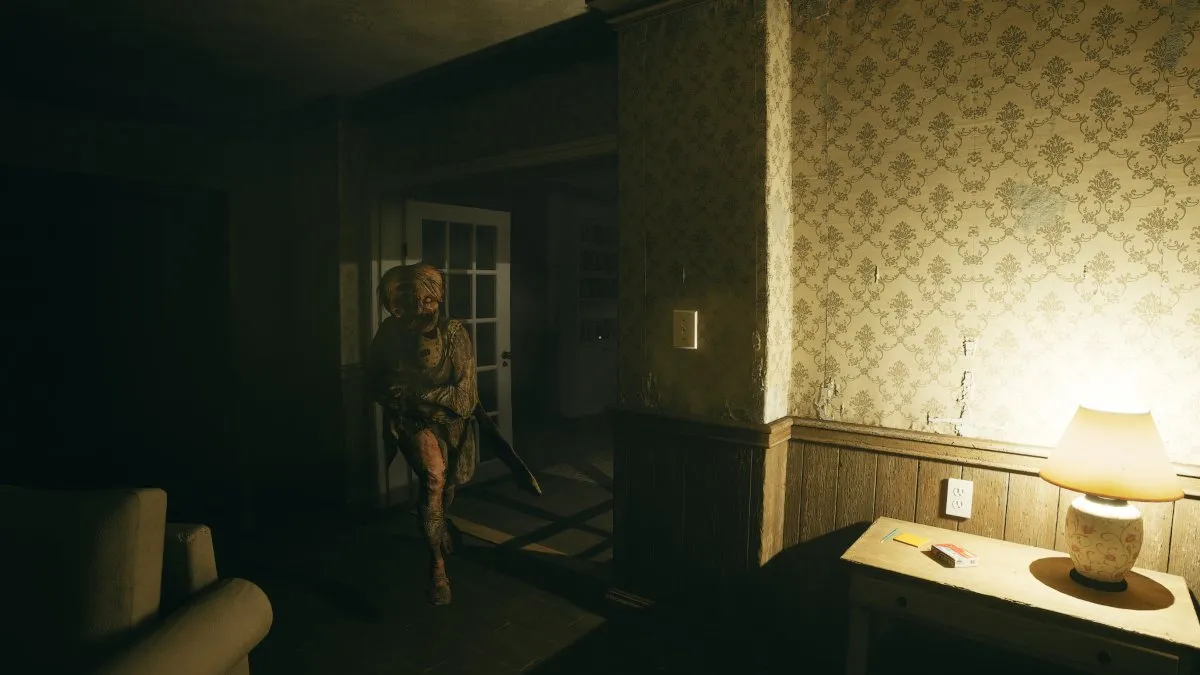
The sterile, white room of OBEY THE VOICE presents a chilling paradox: a stark environment governed by four explicit rules, yet simultaneously infiltrated by a cacophony of competing voices and the lurking presence of monstrous entities. This enigmatic premise, developed by the studio behind the surreal IN THE FACADE WE TRUST, immediately plunges players into a psychological labyrinth, forcing them to question the very nature of reality and their own sanity. This analysis delves into the intricate narrative and thematic layers of OBEY THE VOICE, exploring its environmental design, the symbolic representation of its monstrous figures, and the profound implications of its fractured narrative.
The Confines of a Manufactured Reality
The game’s environment in OBEY THE VOICE masterfully blends the familiar comfort of domestic spaces with the sterile, almost clinical atmosphere of a high-security facility. This deliberate juxtaposition, reminiscent of titles like The Cabin Factory, creates a disorienting dreamscape. The stark white walls and the precise, rule-based progression suggest an experimental procedure, a controlled environment designed for observation or rehabilitation. However, this perceived order is constantly undermined by the introduction of grotesque monsters and the insidious whispers of untrustworthy voices. This dichotomy between imposed order and encroaching chaos mirrors the internal struggle of the protagonist, blurring the lines between an external facility and the internal landscape of the mind. The environment itself becomes a manifestation of psychological distress, a surreal stage where internal conflicts play out with terrifying consequence.
Echoes of Trauma: The Monsters Within
The design and thematic elements of OBEY THE VOICE draw clear parallels to influential psychological horror experiences, most notably the cancelled Silent Hills P.T. The recurring looping corridors and the claustrophobic nature of the environments evoke a sense of inescapable dread. Furthermore, the game incorporates potent psychological elements that delve into the protagonist’s psyche. Radio broadcasts offer fragmented glimpses into the protagonist’s past, hinting at the traumatic "incident" that serves as the narrative’s catalyst. The monsters, much like those in Silent Hill 2, are not mere external threats but rather manifestations of the protagonist’s inner turmoil, deeply rooted in his psychological state and distorted perception of reality.
Each monster encountered in OBEY THE VOICE is not simply an obstacle but a carefully crafted symbol, a visual representation of the protagonist’s fractured mental state and the distorted reality he inhabits. These entities serve as tangible embodiments of guilt, trauma, and fragmented memories, forcing the player to confront these internal demons directly.
The Duality of the Self: "Hot and Cold"
The entity known as "Hot and Cold" is immediately striking in its presentation: bound by a straitjacket, adorned with a restraint mask, and bearing a head split cleanly in two. This visual metaphor is potent, strongly suggesting an internal conflict within the protagonist. The straitjacket and mask represent a forced containment, a struggle to control an individual deemed too volatile or dangerous. The split head symbolizes a profound internal division, a person of conflicting minds and irreconcilable thoughts warring against each other. This entity likely embodies the protagonist’s internal struggle to reconcile his violent impulses with his capacity for reason, a duality amplified by the incident. The straitjacket and mask can be interpreted as the societal or self-imposed restraints the protagonist wears in his waking life, a consequence of his perceived instability following the traumatic event.

Fragmented Identity: "Spot the Difference"
The "Spot the Difference" encounters introduce mannequins and a shadowy figure. The mannequins, often appearing in unsettling arrangements, can be interpreted as representing the protagonist’s profound loss of identity. They are devoid of individuality, faceless automatons mirroring a self that feels increasingly lost and indistinct. The shadowy figure, in contrast, may symbolize the protagonist’s fragmented and distorted memories of the traumatic incident itself. These memories are not clear recollections but rather elusive and incomplete specters, haunting the edges of his consciousness. This element of the game directly addresses the psychological impact of trauma on memory and self-perception.
The Weight of Guilt: "The Voice Says" and "Red Light, Green Light"
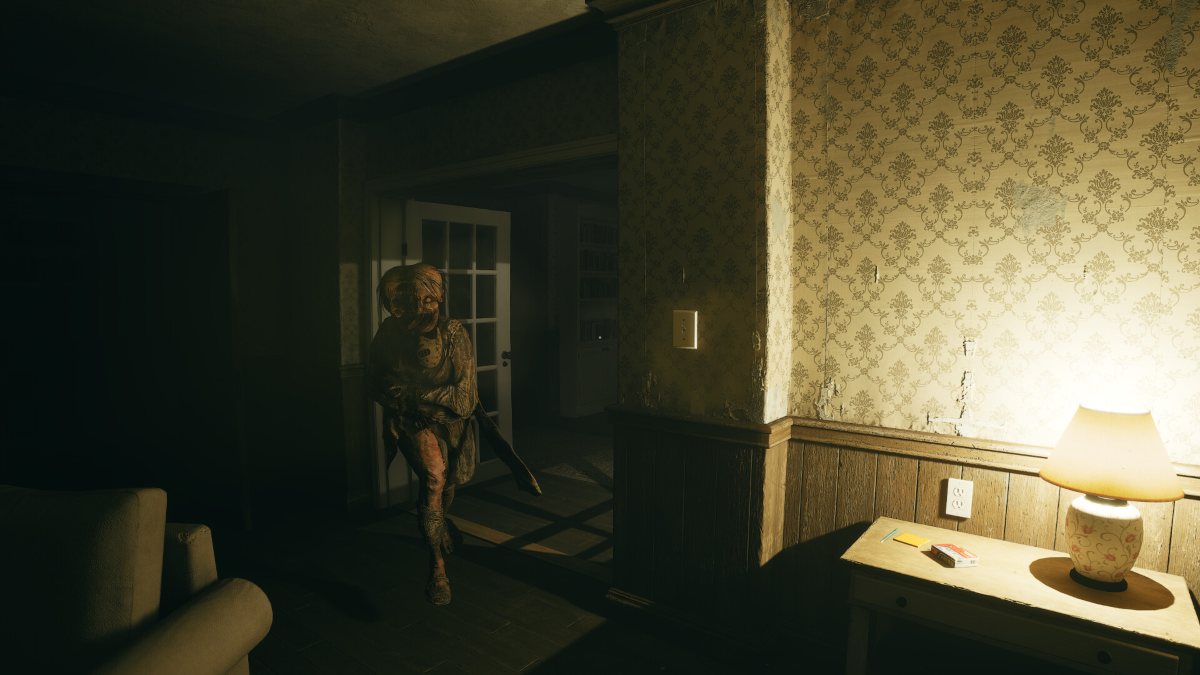
The tall, female entity encountered in "The Voice Says" level, carrying a fetus and limping, is a deeply unsettling figure. Her backstory reveals her as the protagonist’s mother, murdered by him during the incident. The entity’s persistent pursuit and increasing speed upon player error underscore the inescapable nature of guilt. This encounter is a visceral representation of the protagonist’s remorse and the lingering presence of his mother’s memory, twisted by the violence of her death. The "Red Light, Green Light" iteration of this entity presents a chilling evolution. Here, her hands are fused to her abdomen in a protective embrace around the fetus. This imagery directly references the mother’s final moments, her instinct to shield her unborn child even in the face of fatal violence. It transforms the entity from a purely accusatory figure into a tragic symbol of maternal love tragically interrupted.
The Unraveling Psyche: "Find the Melody" and "Morse Code"
The "Find the Melody" entity, visible only through a camera flash, is a grotesque amalgamation of two fused human forms. Its body appears to be in the process of birthing a new head and limbs, with remnants of the original form dangling precariously. This disturbing visual strongly suggests the internal struggle for control within the protagonist’s mind. It may represent a burgeoning, aggressive persona attempting to assert dominance, a new, darker identity seeking to emerge from the fractured psyche. The "dangling" remnants signify the dying vestiges of his former self, overshadowed by this new, intrusive presence. This entity embodies the protagonist’s confused and conflicted sense of self, a desperate struggle for identity amidst profound psychological fragmentation.
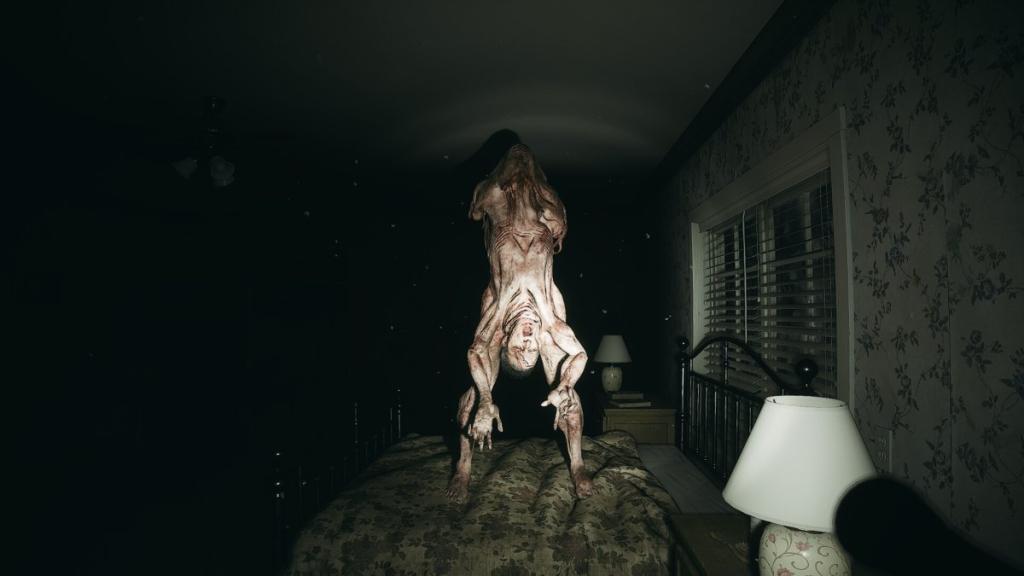
The "Morse Code" entity, a multi-armed figure devoid of facial features save for a gaping mouth integrated into its ribcage, represents a more abstract manifestation of psychological distress. This entity symbolizes the protagonist’s inability to confront his trauma directly. The lack of a distinct face suggests a loss of self, while the monstrous mouth signifies an overwhelming, inarticulable pain. This creature embodies the deep-seated psychological damage that prevents direct engagement with painful memories, a psyche that recoils from its own unacknowledged suffering.
The Chorus of Internal Conflict: The Voices
OBEY THE VOICE features three distinct voices that shape the player’s experience and reveal the depth of the protagonist’s psychological fragmentation.
The Overseer: "The Voice"
The primary authoritative voice, known simply as "The Voice," acts as the game’s overseer. This entity dictates objectives, guides the player through levels, and observes progress. While presented as a real person guiding the protagonist through some form of therapeutic or experimental procedure, its pronouncements are constantly challenged by the other, more insidious voices. The Voice represents the external attempt to impose order and control, a perceived reality that the internal chaos of the protagonist actively seeks to dismantle.

The Rescuer: The Female Voice
The female voice offers a counterpoint to The Voice’s directives. This entity actively challenges and questions every command, attempting to guide the protagonist away from the prescribed path. This voice represents a desire for survival and a rejection of the controlling narrative. It can be interpreted as a remnant of the protagonist’s innate will to live, a part of his consciousness resisting the oppressive forces at play.
The Usurper: The Male Voice
The third voice, a male presence, expresses a clear desire for control. This voice is aggressive and demanding, seeking to seize command of the protagonist’s actions. Its presence intensifies the internal conflict, representing the darker, more destructive impulses that have taken root within the protagonist’s psyche.
Unraveling the Narrative: The "Incident" and Its Aftermath
The game’s narrative is deeply rooted in a traumatic "incident" that occurred approximately one week before the events depicted. This incident involved the protagonist, his teenage sister, and their mother. The mother was fatally stabbed by the protagonist. The surviving teenage sister and the protagonist were both present. The game suggests that a week prior to this violent act, something external, beyond the protagonist’s established persona, began to exert influence.
The contradictory voices that the player is instructed to ignore are not external entities but rather distinct identities co-existing within the protagonist’s mind. This revelation points towards Dissociative Identity Disorder (DID), a severe mental health condition where an individual develops multiple distinct personality states. The game’s narrative frames the trials and puzzles within OBEY THE VOICE as a form of cognitive assessment designed to stabilize Patient 10 (the protagonist) and facilitate a "consciousness transfer procedure." These tests rigorously examine memory, attention, problem-solving, and decision-making abilities, aiming to consolidate the protagonist’s fractured identity into a primary, stable persona.
The Grim Resolution: The "OBEY THE VOICE" Ending Explained
The revelation of the protagonist’s DID introduces a disturbing twist to the game’s conclusion. The other identities, while actively interacting with the protagonist and often clashing with each other or defying The Voice, were not in direct communication with one another. This inability for the fragmented personalities to communicate amongst themselves is a critical observation made by The Voice. It leads The Voice to conclude that the protagonist is being manipulated and controlled by the aggressive, perpetrator persona – the one directly responsible for the violent act.
The purpose of the "consciousness transfer procedure" appears to be the isolation and elimination of the non-perpetrator identities. While these other identities were innocent bystanders to the violent crime, they are deemed expendable and are systematically "deleted" from the protagonist’s consciousness. This leaves only the guilty persona, the perpetrator, as the sole remaining identity. This manufactured singularity simplifies the process of judgment. With only one discernible identity remaining, that individual can be unequivocally blamed for the murder of his mother, streamlining the path towards a definitive, albeit morally complex, resolution. The game’s ending thus presents a chilling commentary on the manipulation of identity, the subjective nature of reality, and the potentially devastating consequences of attempting to "cure" psychological trauma by eradicating its manifestations. The protagonist’s journey through OBEY THE VOICE is not merely a fight for survival against external monsters, but a harrowing descent into the deepest recesses of his own fractured mind, where the true horrors lie.